Harman Kardon Turntables (1975 Era)
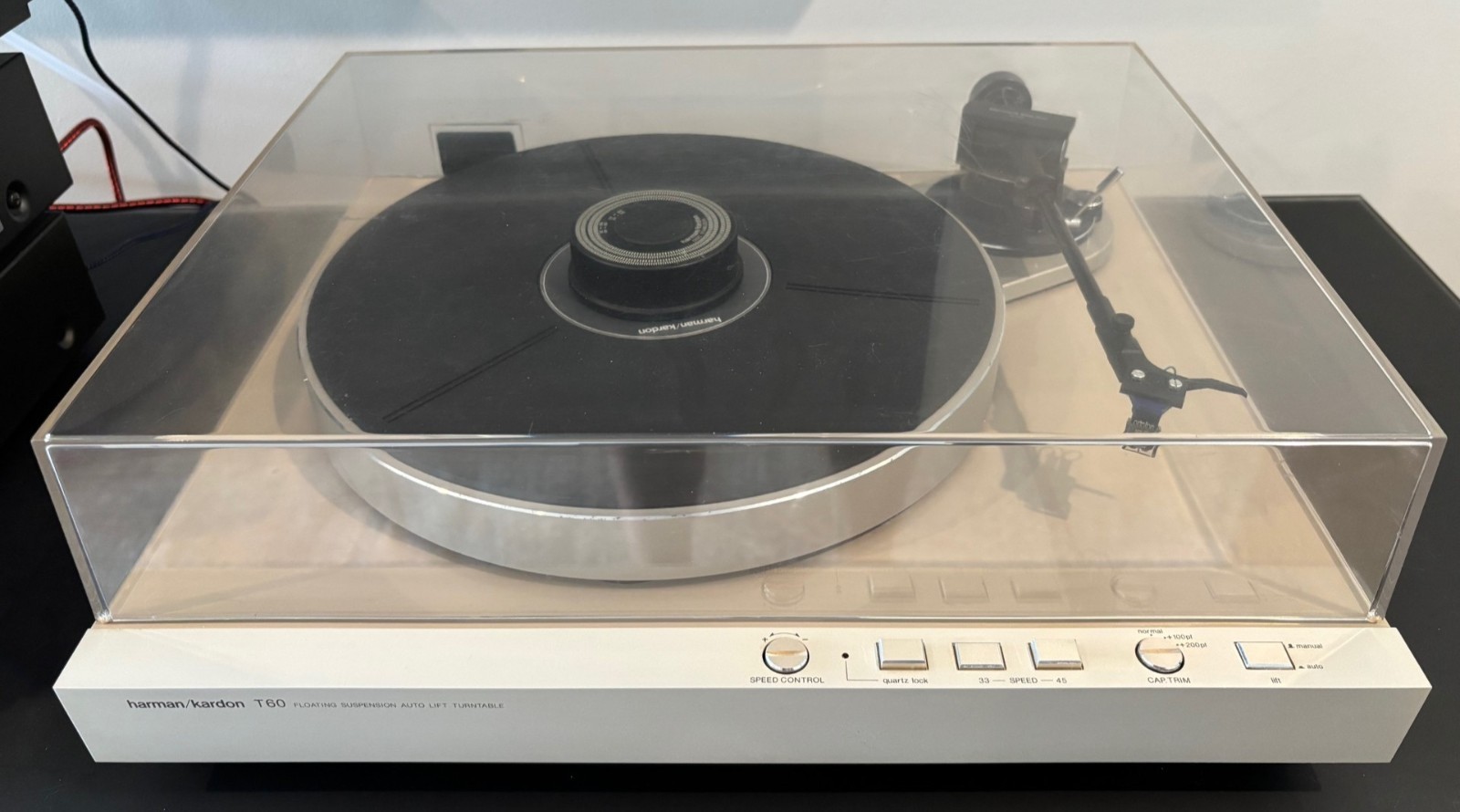
Harman Kardon, widely celebrated for its high-performance amplifiers and audio systems, also produced a range of turntables during the 1960s through the 1980s. While not as iconic as their amplification gear, Harman Kardon turntables were engineered with the same attention to detail and fidelity. These turntables catered to audiophiles seeking reliable, well-built vinyl playback systems during the height of the stereo era.
Though often grouped with amplifiers in vintage audio setups, turntables are passive playback devices and do not provide amplification. Nevertheless, their role in the signal chain is critical to overall sound quality.
Specifications
| Feature | Specification |
| Year of Production | 1960s–1980s (model-dependent) |
| Drive System | Belt-drive and direct-drive (model-dependent) |
| Speed Settings | 33⅓, 45 RPM (some models include 78 RPM) |
| Platter Material | Acrylic or aluminum (varies by model) |
| Tonearm Type | S-shaped or straight, adjustable tracking force and anti-skate |
| Automatic Functions | Semi-automatic or fully automatic (auto-return on select models) |
| Speed Control | Quartz-locked precision (T-series and higher-end models) |
| Subchassis Design | Suspended for vibration isolation |
| Output Level | 2–5 mV (dependent on phono cartridge, typically MM) |
| Signal-to-Noise Ratio | High (low rumble and wow/flutter) |
| Power Requirements | 120V AC, 60Hz (North American models) |
| Dimensions (approx.) | 17" x 6" x 14" (varies by model) |
| Weight | 15–25 lbs (depending on construction and isolation) |
Historical Context
During the 1970s, Harman Kardon was a dominant force in the high-fidelity audio market. While best known for amplifiers like the HK 630 and receivers such as the RM series, the company also developed turntables that matched their electronics in build quality and sonic neutrality.
Models like the Harman Kardon T-25, T-35, and T-85 featured advanced engineering for their time, including quartz-locked speed control to ensure pitch accuracy and low wow/flutter. The suspended subchassis design minimized external vibrations, a hallmark of high-end turntable engineering.
Although Harman Kardon turntables didn't achieve the legendary status of brands like Technics or Thorens, they were respected for their reliability, clean aesthetics, and consistent performance. They were often bundled with Harman Kardon receiver systems, offering a complete, matched audio solution for the discerning listener.
Sound Signature
Harman Kardon turntables deliver a neutral and accurate sound profile. Their low mechanical noise—evidenced by minimal rumble and speed variation—ensures that the cartridge and vinyl source are the primary factors in tonal character. With proper setup and a quality moving magnet (MM) cartridge, these turntables reproduce music with clarity, tight bass, and well-defined imaging.
Because turntables themselves do not amplify, the perceived "sound signature" is largely influenced by the cartridge, tonearm alignment, and associated phono preamp.
Common Issues and Maintenance Tips
Like all vintage mechanical audio equipment, Harman Kardon turntables require periodic maintenance to perform optimally:
Common Issues:
- Belt degradation: Belt-drive models (e.g., T-series) often suffer from dried, cracked, or stretched belts, leading to speed instability.
- Motor wear: Older motors may develop noise or inconsistent rotation.
- Tonearm stiffness: Bearings can dry out, causing restricted movement or tracking errors.
- Cartridge misalignment: Poor alignment increases record wear and degrades stereo imaging.
- Dust and grime: Accumulation on the platter, stylus, and grooves affects sound quality and longevity.
Maintenance Tips:
1. Replace worn belts: Use OEM or high-quality aftermarket belts designed for your model.
2. Clean the stylus regularly: Use a soft brush or stylus cleaner to remove debris.
3. Lubricate moving parts sparingly: Only use recommended lubricants on motor shafts and lift mechanisms.
4. Check alignment: Use a protractor to ensure cartridge is correctly aligned.
5. Level the turntable: Place on a stable, flat surface and use a bubble level.
6. Calibrate tracking force: Use a precision scale to set the correct downforce per cartridge specs.
7. Store properly: Keep covered and in a dust-free, climate-stable environment.
Market Value and Collectibility
Harman Kardon turntables are moderately collectible, rated around 5/10 on the collectibility scale. They are appreciated more for their functionality and integration into vintage systems than as standalone collector's items.
- Market Value: $50–$300, depending on model, condition, and included cartridge.
- Most Sought-After Models: T-85 (quartz precision, full auto), T-35 (balanced performance and features).
- Best Value: Fully functional units with replaced belts and a known cartridge.
While not commanding premium prices like vintage Technics SL-1200s, Harman Kardon turntables offer excellent entry points into analog audio for beginners and complement vintage Harman Kardon amplifier setups beautifully.
Conclusion
Harman Kardon turntables from the 1970s represent a solid chapter in the company’s legacy of high-fidelity audio. Though overshadowed by their amplifiers, these turntables deliver reliable, accurate vinyl playback and remain a practical choice for vintage audio enthusiasts. With proper care and maintenance, they continue to offer a satisfying analog listening experience.
eBay Listings



As an eBay Partner, we earn from qualifying purchases. This helps support our independent vintage technology research.
Related Models
- Luxman PD-272 (1983)
- Garrard 2025tc (1968)
- Onkyo CP-1010 (1976)
- Pioneer PL-15R (1975)
- Pioneer PL-250 (1979)
- Pioneer PL-40 (1977)
- Pioneer PL-514 (1978)
- Pioneer PL-516 (1978)
- Pioneer PL-61 (1973)
- Pioneer PL-6A (1977)