Harman Kardon Cassette Decks
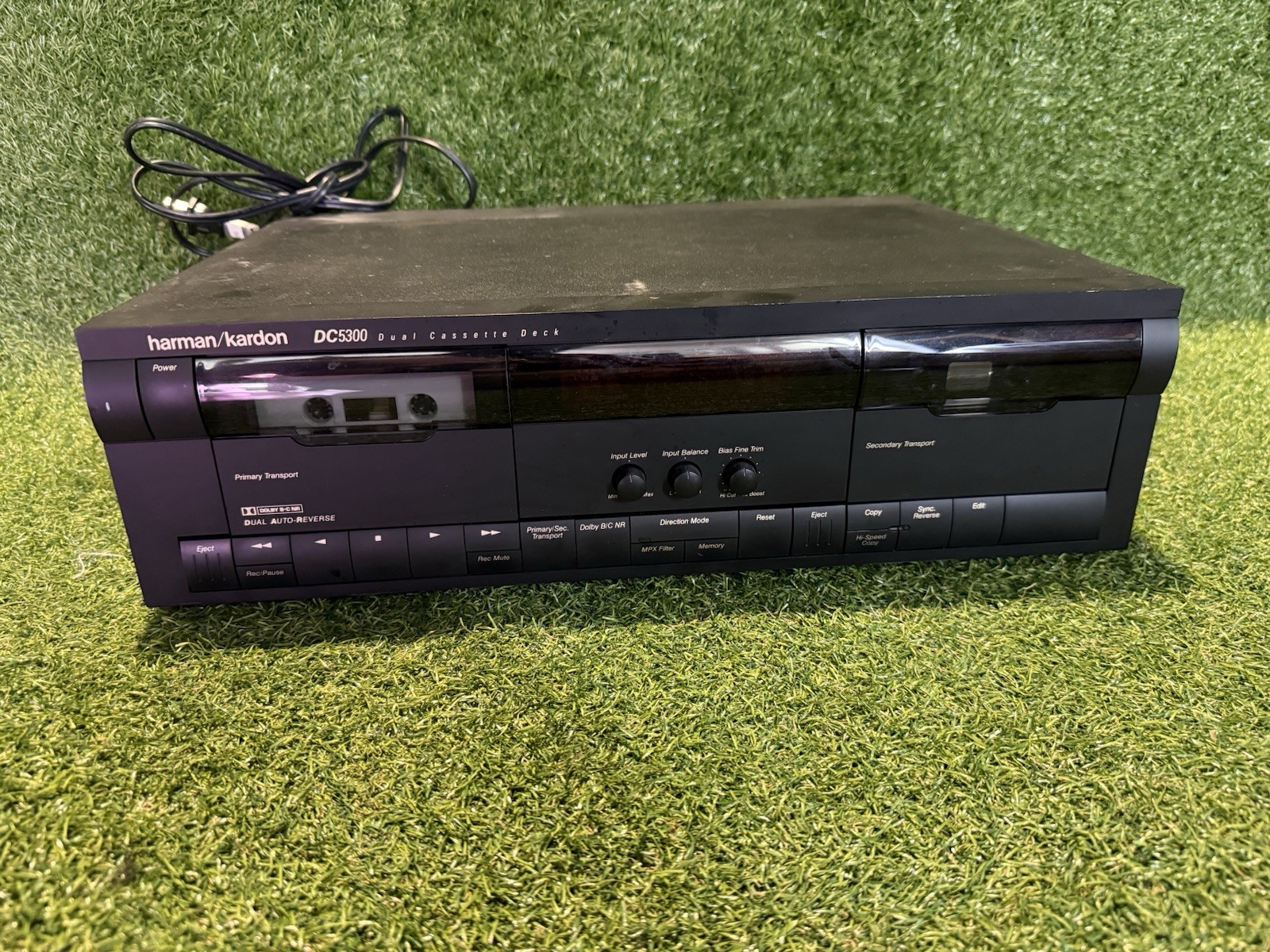
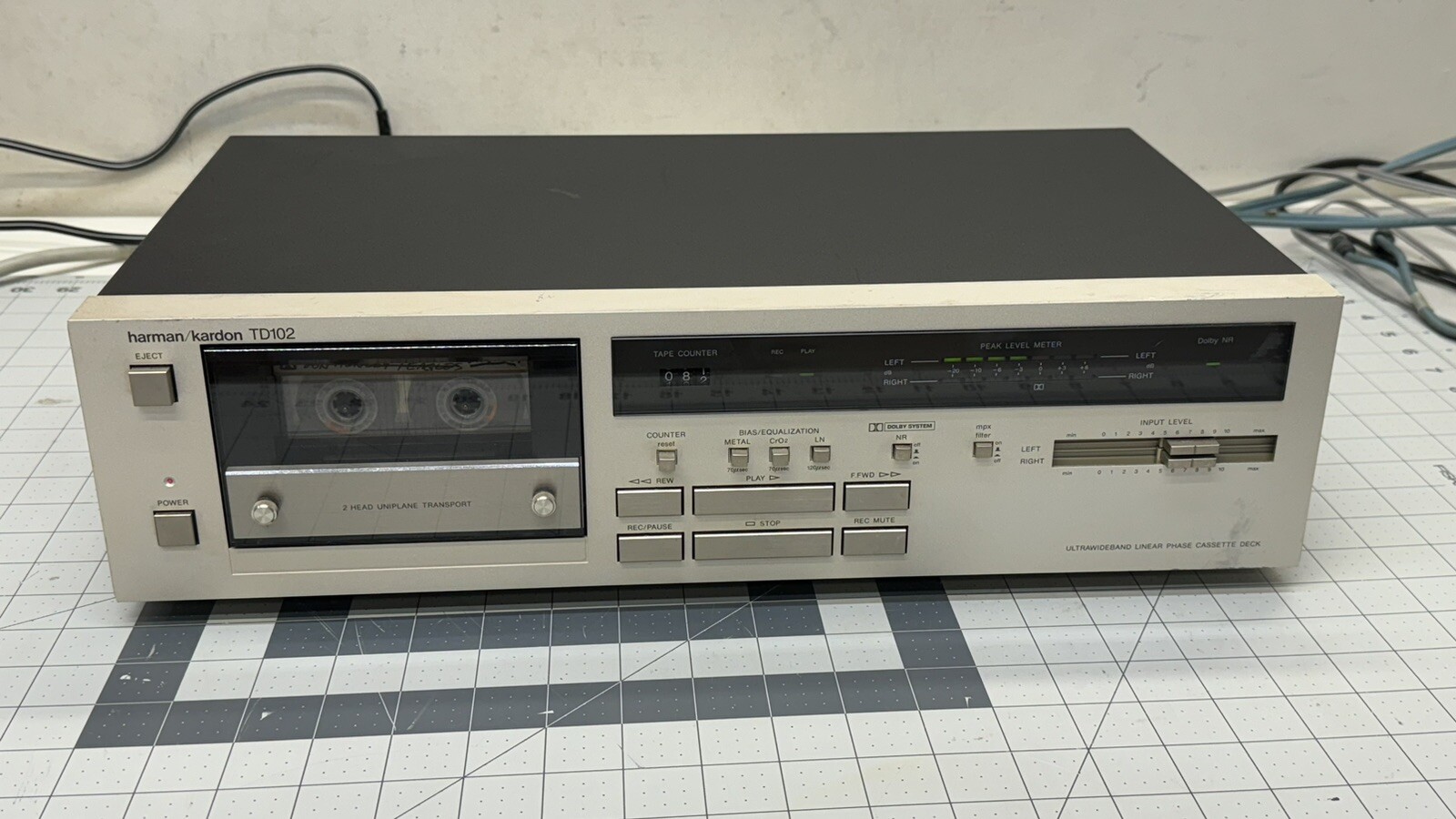
Harman Kardon, a name synonymous with refined audio engineering, played a pivotal role in elevating the cassette deck from a portable convenience to a high-fidelity component within the home audio system. During the 1970s through the 1990s, Harman Kardon produced a series of cassette decks that combined precision mechanics, advanced tape technology, and elegant design. Models such as the CD491 and TD392 became benchmarks for performance, reliability, and sonic accuracy in their era.
These decks were engineered for audiophiles who demanded faithful tape reproduction, offering features typically reserved for professional equipment. With their clean sound signature and robust build quality, Harman Kardon cassette decks remain sought after by vintage audio enthusiasts and tape collectors.
Specifications
| Feature | Specification |
| Production Years | 1970s–1990s |
| Power Requirements | Line-level operation (external amplifier required) |
| Input Impedance | Typically 10kΩ |
| Output Impedance | Typically 1kΩ |
| Noise Reduction Support | Dolby B, C, and S |
| Headroom Extension | HX Pro (Headroom Extension Professional) |
| Tape Head Configuration | Three-head design (separate record, playback, erase heads) on high-end models |
| Drive System | Quartz-locked direct drive (on select models) |
| Reversal Mechanism | Auto-reverse (on select models) |
| Tape Compatibility | Type I (Ferric), Type II (Chrome), Type IV (Metal) |
| Calibration Options | Adjustable bias and equalization settings |
| Transport Controls | Soft-touch mechanical buttons |
| Wow and Flutter | < 0.08% (WRMS), among the lowest in consumer decks |
| Frequency Response | Up to 20kHz (depending on tape type and model) |
Historical Context
Harman Kardon entered the cassette deck market at a time when compact cassettes were transitioning from voice recording and portable use to serious high-fidelity music reproduction. While many manufacturers treated cassette decks as secondary components, Harman Kardon invested heavily in refining tape transport mechanics, head alignment, and electronic circuitry.
The introduction of Dolby B and C noise reduction, combined with HX Pro technology, allowed Harman Kardon decks to achieve dynamic range and signal-to-noise ratios that rivaled open-reel tape. The three-head design on flagship models enabled independent optimization of record and playback functions, ensuring superior duplication and monitoring capabilities.
Models like the CD491 (late 1980s) showcased quartz-locked servo control, minimizing speed fluctuations and ensuring exceptional time stability. These innovations positioned Harman Kardon as a leader in the high-end cassette market, competing directly with brands like Nakamichi, Revox, and Tandberg.
Sound Signature
Harman Kardon cassette decks are known for their neutral, clean, and detailed sound reproduction. Unlike some brands that imparted a warm or colored character, Harman Kardon prioritized accuracy and transparency. The low wow and flutter, precise azimuth alignment, and high-quality tape heads contributed to a listening experience that closely mirrored the original source.
With proper calibration and tape selection (especially metal tapes), these decks could deliver a wide frequency response, tight bass, and clear highs—making them ideal for archiving vinyl or playing pre-recorded music cassettes with audiophile-grade results.
Maintenance and Tips
Due to their age, vintage Harman Kardon cassette decks require careful maintenance to perform optimally. Common issues include:
- Belt degradation: Rubber belts and idler tires dry out and crack over time. Replacement with modern equivalents is essential.
- Head alignment: Misaligned heads cause loss of high frequencies and stereo imaging. Professional demagnetization and alignment are recommended.
- Capacitor aging: Electrolytic capacitors in power supplies and signal paths may leak or fail. A full recap by a qualified technician improves reliability.
- Lubrication: Precision gears and transport mechanisms require periodic cleaning and lubrication to prevent sticking or erratic behavior.
- Pinch roller hardening: The rubber pinch roller can glaze or harden, leading to speed instability. Cleaning or replacement restores proper tape tension.
Tips for Owners:
- Use isopropyl alcohol (99%) and lint-free swabs to clean tape heads, capstans, and guides.
- Demagnetize the heads and tape path every 50–100 hours of use with a quality tape demagnetizer.
- Store tapes and decks in a cool, dry place to prevent mold and corrosion.
- Calibrate bias and EQ when using different tape types for optimal results.
- Consider professional servicing for full restoration, especially on high-end models.
Collectibility and Market Value
Harman Kardon cassette decks hold moderate collectibility, rated 6/10, due to their strong build quality and reputation among audiophiles. While not as rare or coveted as Nakamichi's Dragon, models like the CD491 and TD392 command respect in the vintage audio community.
Market Value Range: $50–$300
- Entry-level models in working condition: $50–$100
- High-end models with three-head design and full functionality: $150–$300
- Fully restored or mint-condition units may exceed $300
Collectors value decks with original parts, clean mechanics, and full feature sets (e.g., auto-reverse, metal tape support, and HX Pro). Original packaging and manuals can also increase resale value.
Conclusion
Harman Kardon cassette decks represent a golden era of analog audio innovation. Combining advanced engineering with user-friendly design, they brought studio-grade tape performance into the living room. Whether you're digitizing a vintage tape collection or building a classic hi-fi system, a well-maintained Harman Kardon deck remains a reliable and sonically rewarding choice.
eBay Listings


As an eBay Partner, we earn from qualifying purchases. This helps support our independent vintage technology research.
Related Models
- Sony TC-2050SD (1978)
- Aiwa AD-F990 (1993)
- Kenwood KX-3060 (1982)
- Sony TC-2130A (1974)
- Sony TC-2220 (1972)
- Sony TC-FX6 (1982)
- Sony TC-K96R (1986)
- Stromberg-Carlson RS-404 (1975)
- Akai CS-F33R (1985)
- Akai DX-59 (1983)