Harman Kardon Citation XX (1982–1986)
The American-built audiophile receiver that fused brute power with surgical precision, defining the golden age of the high-wattage integrated amplifier.
Overview
The Harman Kardon Citation XX wasn’t just another receiver from the early '80s—it was a statement. Released in 1982 at a time when audiophiles were demanding both raw power and pristine fidelity, the Citation XX delivered on both fronts with a level of engineering rigor that bordered on the obsessive. Weighing in at a back-straining 47 pounds and clad in a brushed aluminum faceplate, this 125-watt-per-channel behemoth was built like a tank and sounded like a symphony. It occupied a rarefied space in the high-end audio hierarchy: not merely a component, but a centerpiece. If your living room had a pair of Citation 8s or JBL L100s, the Citation XX was the beating heart that made them sing.
What set the Citation XX apart wasn’t just its specs—it was the philosophy behind them. While many manufacturers were beginning to cut corners with integrated circuits and shared power supplies, Harman Kardon doubled down on discrete design and dual-mono architecture. The result was a receiver that didn’t just drive speakers—it controlled them, with a damping factor of 80 and a signal-to-noise ratio of 106 dB that silenced background grunge. Critics at the time, including Stereo Review and Audio Magazine, hailed it as “the thinking man’s monster receiver,” a nod to its ability to balance brute force with refinement. It was the kind of component that made you rediscover your vinyl collection, revealing textures and spatial cues you’d forgotten were there.
Specifications
| Power Output | 125 watts per channel into 8 ohms |
| Total Harmonic Distortion | 0.05% at full power |
| Frequency Response | 20 Hz - 20 kHz, ±0.5 dB |
| Signal to Noise Ratio | 106 dB |
| Input Sensitivity | 2.5 mV (phono), 150 mV (line) |
| Input Impedance | 47 kΩ (line), 10 kΩ (tape) |
| Output Impedance | 0.05 Ω |
| Damping Factor | 80 |
| Tone Controls | Bass ±12 dB at 50 Hz, Treble ±12 dB at 15 kHz |
| Phono Equalization | RIAA |
| Speaker Impedance | 4–8 ohms |
| Dimensions | 17.25 in × 6 in × 15.5 in (438 mm × 152 mm × 394 mm) |
| Weight | 47 lbs (21.3 kg) |
| Power Consumption | 800 watts |
| Country of Manufacture | USA |
| Original MSRP | $1,200 (1982) |
Key Features
- Dual-mono power supply with oversized toroidal transformer: This wasn’t just a big transformer—it was a 1.2-kilogram toroidal unit that delivered clean, regulated current to each channel independently. The result? Rock-solid voltage under load, minimal hum, and the ability to slam transients without flinching. In an era when many receivers shared a single supply, this was overkill—and we loved it.
- Discrete amplifier circuitry, zero ICs in the signal path: While competitors were embracing op-amps and integrated preamp stages, Harman Kardon stuck with discrete transistors throughout. Every gain stage, every buffer, every phase splitter was hand-placed and hand-soldered. The payoff? A transparency and three-dimensionality that modern IC-laden designs still struggle to match. If you’ve ever heard a Citation XX drive a pair of electrostats, you know what “analog bloom” really means.
- Industrial-grade build and layout: Open the chassis (if you dare—the screws are torqued to NASA standards), and you’ll find point-to-point wiring, gold-plated RCA jacks, and a layout that prioritizes signal purity over cost. The heat sinks alone are machined from solid aluminum blocks. This wasn’t assembled—it was engineered.
Historical Context
The Citation XX arrived at a pivotal moment in audio history. The late 1970s had seen the rise of the “monster receiver”—high-wattage, feature-laden integrated amps from brands like Marantz 2600 and Pioneer SX-1980—but by 1982, the market was shifting. Digital audio was on the horizon, and many manufacturers began cutting analog corners to fund CD input development. Harman Kardon, however, doubled down on analog excellence. The Citation XX was the antithesis of cost-cutting—it was a last hurrah for American high-end receiver design before outsourcing and miniaturization took over.
It stood in direct lineage to its predecessor, the Harman Kardon Citation XV (1979–1981), which had already established the Citation series as a benchmark for performance. But the XX wasn’t just an upgrade—it was a rethinking. Where the XV was refined, the XX was authoritative. It competed not just on specs, but on authority: it could drive difficult loads, handle complex orchestral crescendos, and still deliver the whisper-quiet background needed for late-night listening. Its successor, the Harman Kardon Citation 24 (1986–1989), would introduce digital inputs and a sleeker aesthetic, but many purists argue the XX was the last true analog flagship.
Collectibility & Value
Today, the Citation XX is a sought-after relic of American audio engineering. With production running from 1982 to 1986 and no official production numbers released, it’s considered uncommon—but not rare. However, working, fully serviced units in good cosmetic condition command respect. As of 2025, a clean Citation XX typically sells for $800 to $1,500, with the Citation XX Limited Edition (1984) fetching premiums at the top end. That model, with its black anodized front panel, upgraded internal wiring, and individually numbered badge (limited to 1,000 units), is the grail for collectors.
But beware: time has not been kind to all units. The most common issues are capacitor degradation in the power supply—which can lead to hum, channel imbalance, or catastrophic failure—and dried lubrication in the tuner bandswitch, causing scratchy tuning or intermittent reception. A unit that powers on doesn’t mean it’s healthy. When buying, insist on a recent service report, check for consistent channel output, and listen for background noise. If it’s been recapped and the pots cleaned, you’re holding a piece of audio history that still outperforms many modern receivers at twice the price. And if you find a Limited Edition with its original remote and manual? That’s not just a receiver—it’s a museum piece with a warranty from the golden age of hi-fi.
eBay Listings

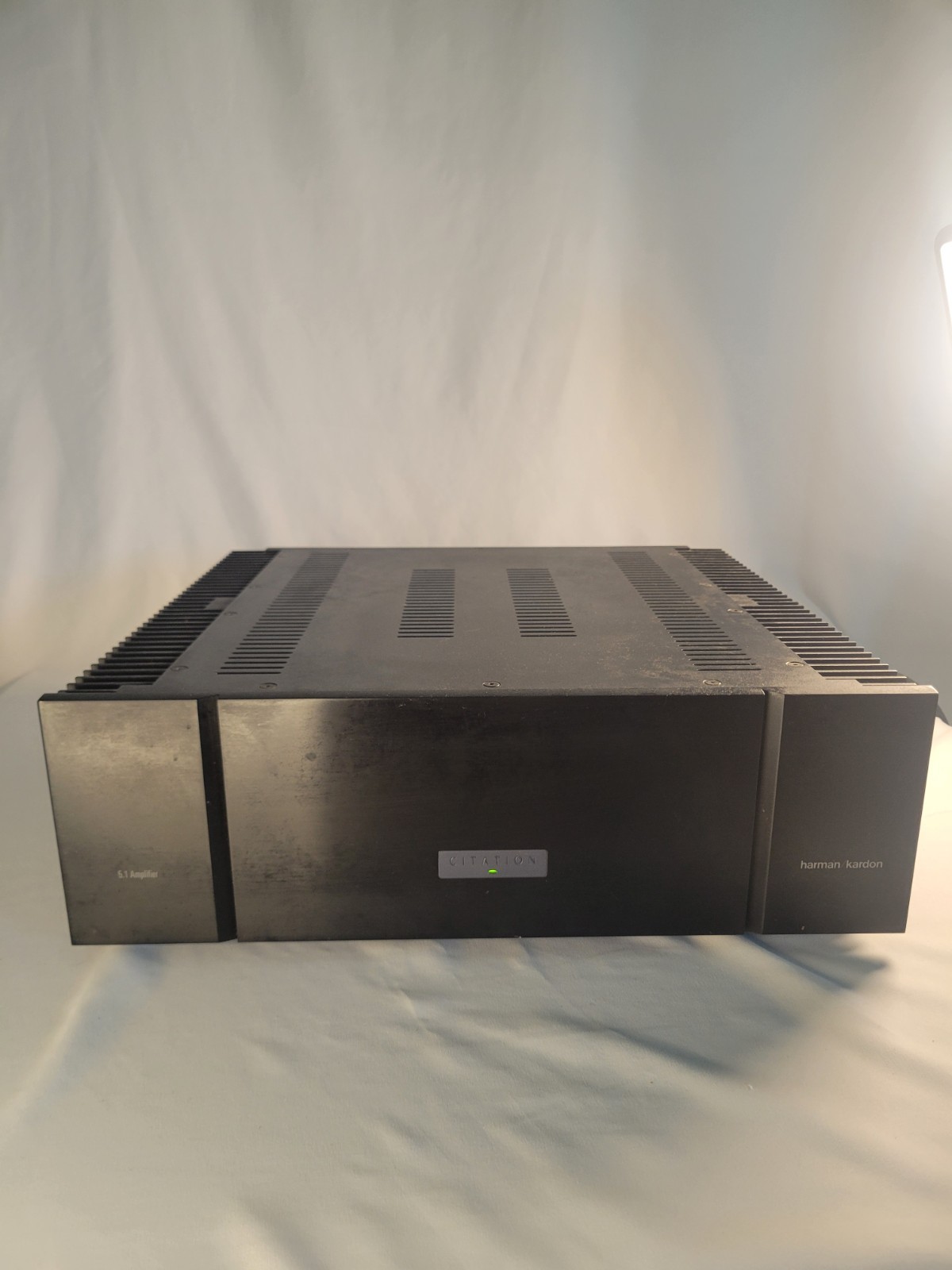


As an eBay Partner, we earn from qualifying purchases. This helps support our independent vintage technology research.
Related Models
- Harman Kardon kardon-tube-amplifiers (1975)
- Harman Kardon TWIN-POWERED-SERIES-1970S (1970)
- Luxman L-530 (1975)
- Luxman R-404 (1975)
- Luxman RV-371 (1975)
- Luxman SQ-38U (1975)
- Luxman T-14 (1972)
- Luxman T-530 (1975)
- Luxman TX-101 (1975)
- Denon DRA-800 (1985)