Grundig TR-SERIES: Pioneering German Transistor Radio Design
In the late 1950s, as the world transitioned from bulky vacuum tube radios to compact, battery-powered transistor sets, German electronics manufacturer Grundig emerged as a leader in portable audio innovation. Among their earliest forays into solid-state technology was the Grundig TR-SERIES, a family of transistor radios introduced in the late 1950s and produced through the early 1960s. Though not as widely documented as some of their later models, the TR-SERIES holds a special place in audio history as one of Germany’s first serious attempts to bring high-quality, reliable transistor radios to the European and international markets.
Grundig, already renowned for its premium tube radios and hi-fi equipment, approached transistorization with a commitment to engineering excellence. The TR-SERIES reflected this philosophy—offering sleek industrial design, solid build quality, and surprisingly good audio performance for their size. These radios were marketed to a growing class of mobile, modern consumers who valued portability without sacrificing audio fidelity.
While exact model variants within the TR-SERIES (such as the TR-22, TR-45, or TR-77—names sometimes attributed to this line) remain somewhat obscure due to limited surviving documentation, surviving units and collector accounts confirm that the series represented a transitional era in electronics: the moment when German precision met the promise of solid-state portability.
Technical Specifications
The Grundig TR-SERIES radios were built during a period of rapid technological change, and as such, their specifications reflect the limitations and innovations of early transistor design. Most models in the series featured AM (medium wave) reception, with some later variants possibly including longwave and shortwave bands—a common feature in European radios of the era.
| Specification | Detail |
| Brand | Grundig |
| Model Series | TR-SERIES |
| Production Years | c. 1957–1963 |
| Type | Portable Transistor Radio |
| Frequency Bands | AM (Medium Wave), some with LW/SW variants |
| Number of Transistors | 5–7 (germanium, typically AC125/AC126 types) |
| Power Source | 9V battery (often 9V block or AA x 6) |
| Speaker | 6–8 cm permanent magnet dynamic speaker |
| Output Power | ~0.2–0.3W (typical for era) |
| Dimensions | Approx. 18 x 10 x 5 cm (varies by model) |
| Weight | 800–1100g (with batteries) |
| Case Material | Polystyrene or ABS plastic, metal grille |
| Tuning | Analog dial with vernier scale |
| Audio Output | Monaural |
These radios utilized germanium transistors—common in the late 1950s and early 1960s—such as the AC125 and AC126, which were low-noise RF and AF amplifiers suited to the low-voltage, low-power demands of portable sets. The circuit topology typically followed a superheterodyne design with an IF stage around 455 kHz, ensuring decent selectivity and sensitivity for AM broadcasting.
Sound Characteristics and Performance
For their size and era, Grundig TR-SERIES radios delivered impressive audio quality. The use of a relatively large speaker (compared to pocket-sized contemporaries) and a well-designed audio amplifier stage gave them a warm, full-bodied sound that belied their compact form. Bass response was naturally limited, but midrange clarity—especially for voice—was excellent, making them ideal for news, talk radio, and music broadcasts of the time.
The radios were engineered for real-world use: the speaker enclosure was carefully tuned, and the front grille often incorporated acoustic cloth to reduce distortion. Volume control was smooth, and the audio output remained clean up to maximum levels, with minimal distortion—a hallmark of Grundig’s attention to detail.
Battery life was reasonable for the period, with a typical 9V battery lasting 20–40 hours depending on usage and signal strength. The use of germanium transistors, while effective, did introduce some temperature sensitivity—early units could drift slightly in tuning or volume when exposed to heat, a known limitation of the technology.
Notable Features and Innovations
What set the Grundig TR-SERIES apart from many of its contemporaries was its German engineering pedigree. While Japanese manufacturers like Sony (with the TR-63) were pushing miniaturization, Grundig focused on durability, serviceability, and sound quality. Key features included:
- High-quality tuning dial with a vernier scale for precise station selection
- Robust internal construction with point-to-point wiring and metal shielding
- Elegant, functional design with clean lines and intuitive controls
- Service-friendly layout—unlike sealed units, many TR-SERIES models allowed easy access for repairs
- Use of European frequency bands, including longwave, which was important for time signal and public broadcasting in Germany and neighboring countries
The TR-SERIES also represented a symbolic shift: Grundig was signaling that transistor radios were not just toys or novelties, but serious audio devices worthy of the Grundig name. This philosophy would carry forward into their later, more famous models like the Satellit series.
Common Issues and Maintenance
Like all vintage electronics, Grundig TR-SERIES radios require careful maintenance to remain functional. Common issues include:
- Dried-out electrolytic capacitors: These can cause hum, low volume, or no sound. Replacing them with modern equivalents is recommended.
- Battery corrosion: Old 9V batteries often leaked, damaging contacts or circuitry. Cleaning terminals and replacing corroded wires is essential.
- Faded or brittle plastic cases: UV exposure and age can make the plastic fragile. Handle with care.
- Worn tuning capacitors: These can cause scratchy sound or loss of stations. Cleaning with contact cleaner may help; replacement is difficult due to rarity.
- Speaker degradation: Foam surrounds can disintegrate. Re-foaming or replacement with period-correct speakers is possible.
When restoring a TR-SERIES radio, it’s best to use correct voltage batteries (or regulated power supplies) to avoid damaging the delicate germanium transistors. Always check transistor gain and leakage—these components can degrade over time.
Current Market Value and Collectibility
The Grundig TR-SERIES is not widely collected compared to more iconic transistor radios like the Sony TR-63 or the Philips AG7320, but it holds a niche appeal among European vintage radio enthusiasts and Grundig collectors. Units in working condition with original finish can fetch €100–€200, depending on model rarity and cosmetics.
Complete-in-box examples are extremely rare and could command higher prices in specialist auctions. Radios with shortwave capability or distinctive design features (such as wood-veneer finishes or leather cases) are particularly sought after.
While not a mainstream collector’s item, the TR-SERIES is valued for its historical significance as one of Germany’s first transistor radio lines and as a testament to postwar European engineering.
Conclusion and Legacy
The Grundig TR-SERIES may not have achieved the global fame of its Japanese competitors, but it played a crucial role in establishing Grundig as a forward-thinking audio brand in the transistor age. These radios bridged the gap between the tube era and the solid-state future, combining German craftsmanship with emerging technology.
Today, the TR-SERIES stands as a quiet pioneer—a modest but important chapter in the story of portable audio. For collectors and historians, it represents the moment when high-fidelity thinking met the demands of mobility. And for those who restore and listen to these sets, the warm crackle of an AM station through a 60-year-old Grundig speaker is a direct link to the dawn of portable sound.
eBay Listings

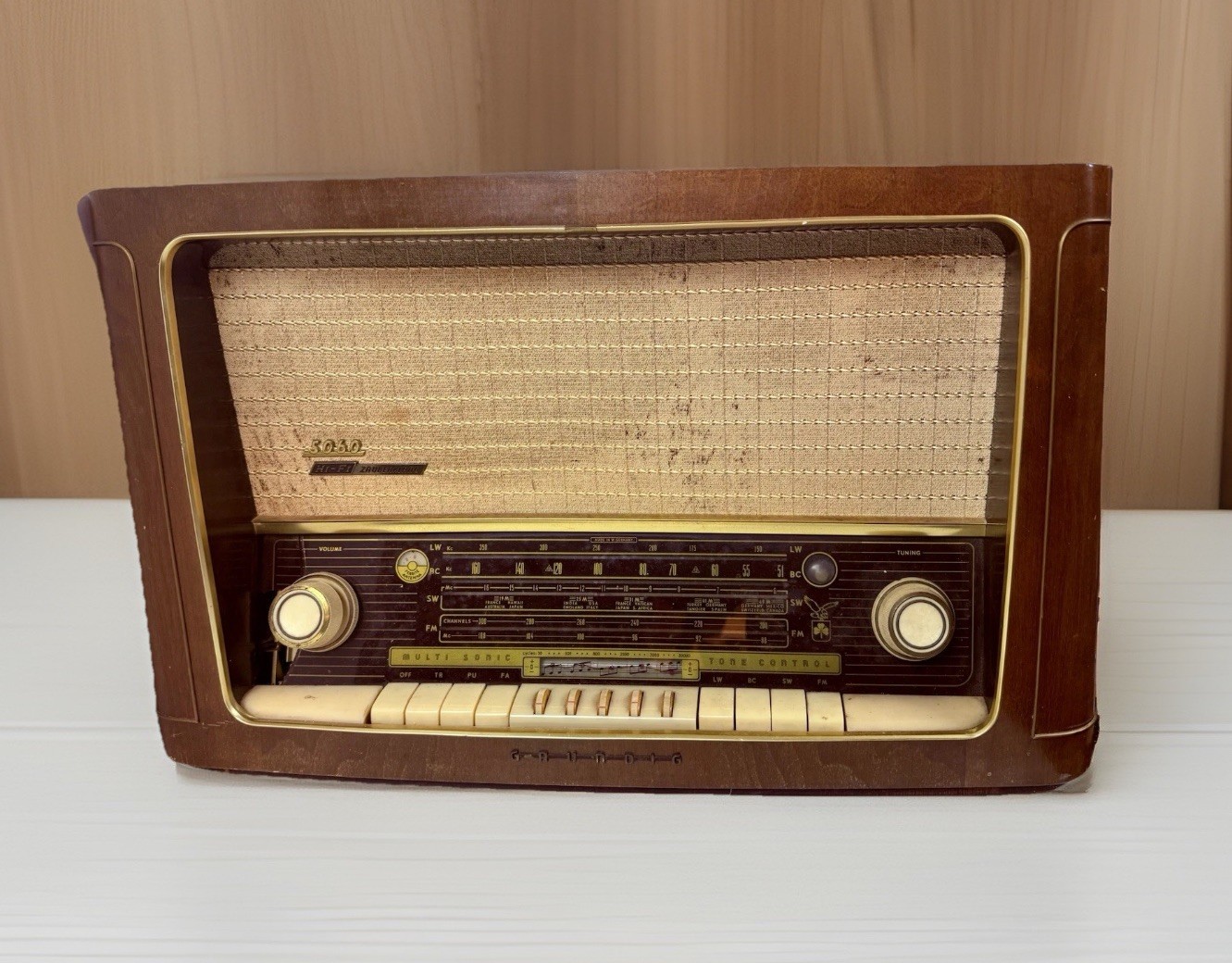

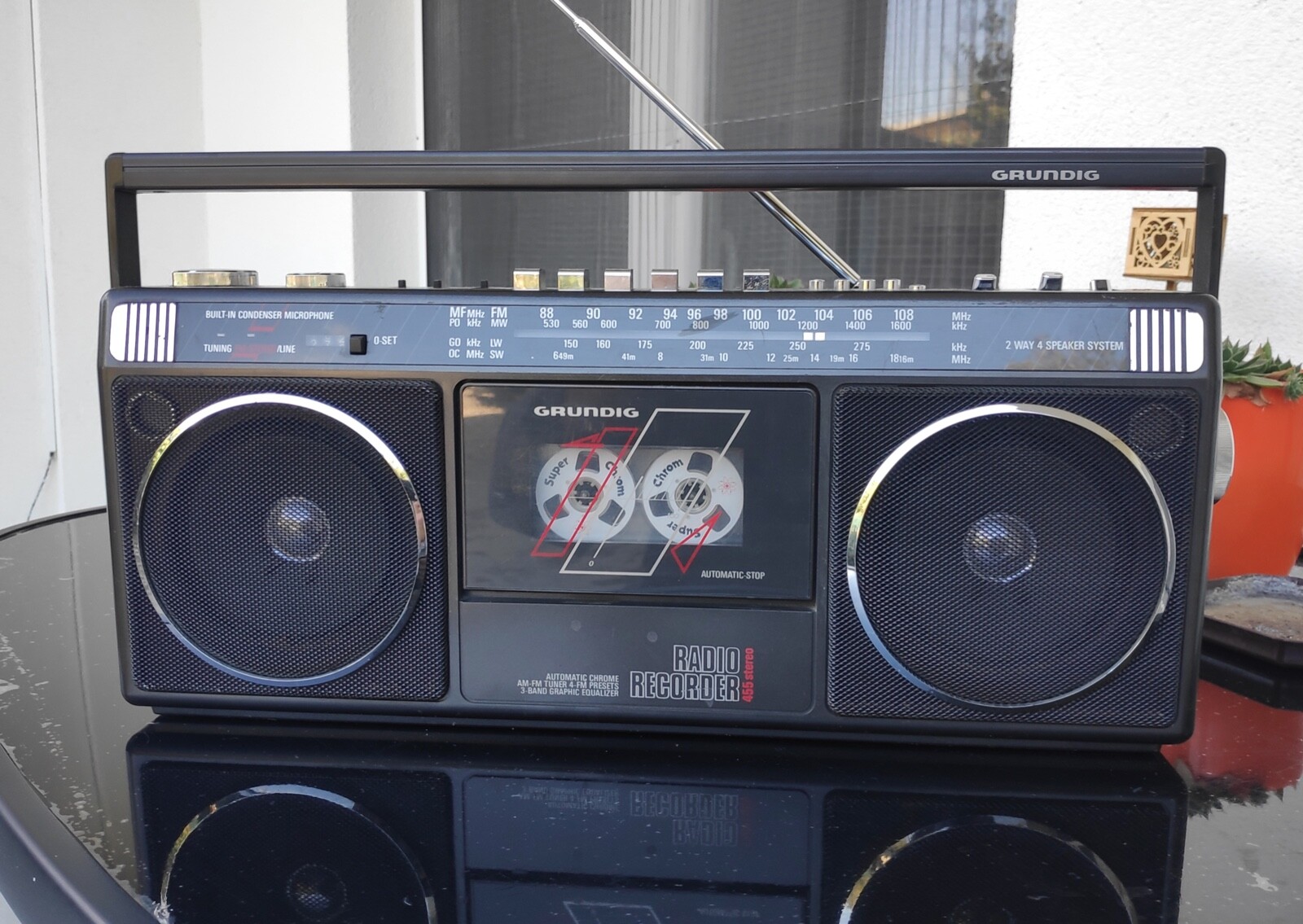
As an eBay Partner, we earn from qualifying purchases. This helps support our independent vintage technology research.
Related Models
- Grundig AUDIORAMA-SERIES (1958)
- Grundig BOX-SERIES (1965)
- Grundig BOY-Series (1956)
- Grundig MAJESTIC-SERIES (1958)
- Grundig OTHER-RADIOS (1955)
- Akai AM-2850 (1975)
- Akai AP-206 (1975)
- Nakamichi BX-1 (1985)
- Acoustic Research research-ar-17 (1978)
- Acoustic Research AR-19 (1994)