Grundig BOY-Series: The Pocket-Sized Powerhouse of Post-War Radio
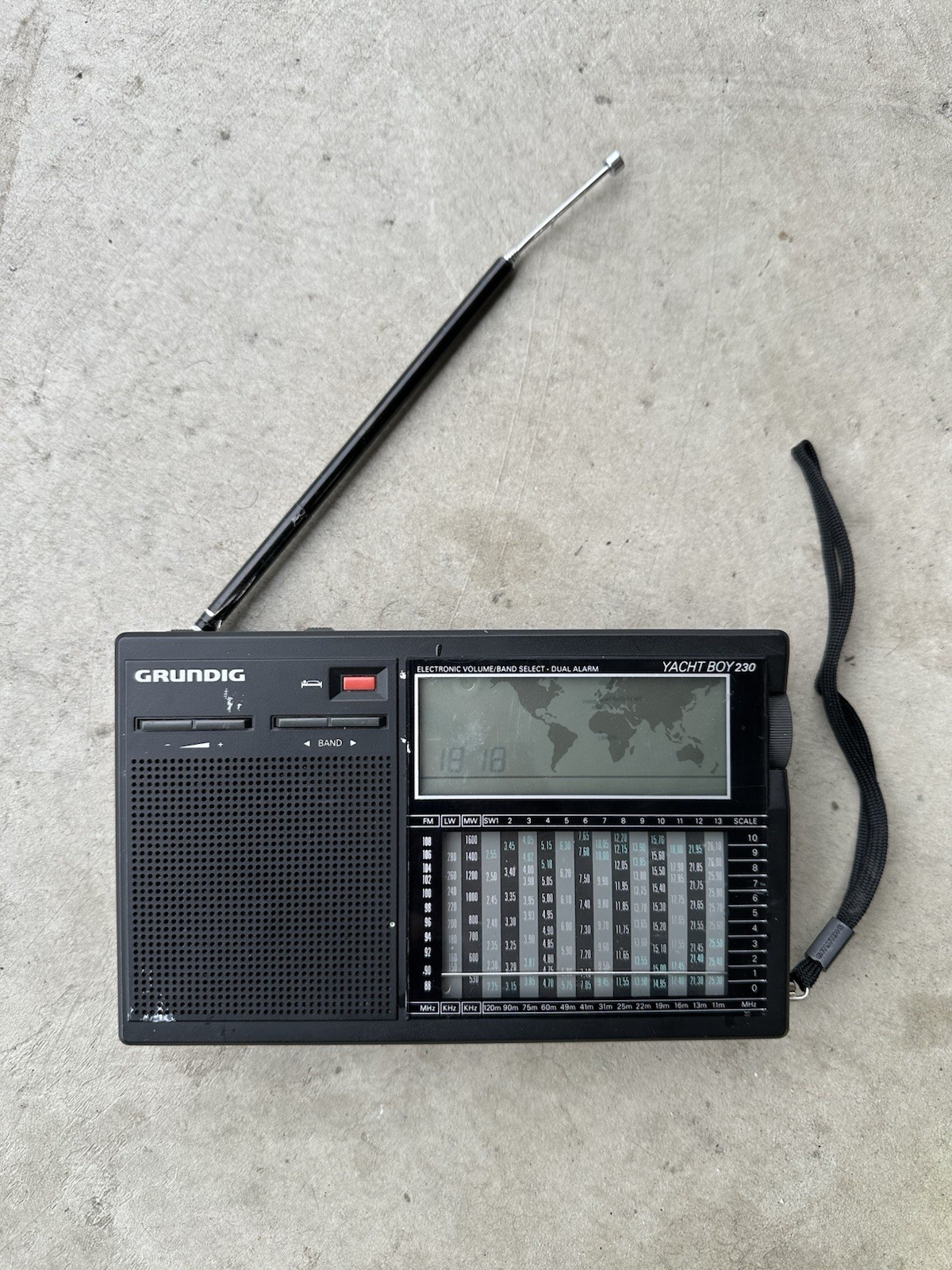
In the vibrant era of mid-century design and the golden age of radio, few portable radios captured the imagination of listeners quite like the Grundig BOY-Series. Produced by the renowned German electronics manufacturer Grundig during the late 1950s and into the 1960s, the BOY-Series represented a bold fusion of portability, performance, and elegant styling. These compact tube-powered radios were not just tools for receiving broadcasts—they were symbols of modernity, freedom, and the democratization of information and entertainment in post-war Europe.
The name "BOY" was no accident. It stood for "Battery Operated, no tYpe designation needed", a clever marketing twist that emphasized the radio’s simplicity, portability, and user-friendly design. Unlike many radios of the era that required bulky AC power or complex setup, the BOY-Series was designed to run on batteries, making it ideal for travel, outdoor use, or simply moving from room to room. At a time when television was beginning to dominate home entertainment, Grundig reminded the world that radio still had soul—and style.
Technical Specifications
Despite their small size, the BOY-Series models were engineering marvels for their time. They packed multiple vacuum tubes, sophisticated shortwave and mediumwave reception, and high-quality speaker systems into a compact wooden or plastic cabinet. While the series included several models (such as the BOY 400, BOY 500, and BOY 600), all shared a commitment to performance and portability.
| Specification | Detail |
| Manufacturer | Grundig (Germany) |
| Production Years | 1956–1965 (approx.) |
| Type | Portable tube radio |
| Power Source | 90V battery (for tubes), 1.5V for filament |
| Tubes (typical) | 4–5 tubes (e.g., ECH42, EF42, EABC80, EL84) |
| Frequency Bands | AM (Mediumwave), Shortwave (SW) |
| Shortwave Coverage | 6–18 MHz (varies by model) |
| Speaker | 3–4 inch dynamic speaker |
| Dimensions (approx.) | 25 x 15 x 10 cm |
| Weight | 3–4 kg (with batteries) |
| Inputs/Outputs | Antenna terminal, no external audio I/O |
| Finish Options | Walnut veneer, brown plastic, leatherette |
Note: The BOY-Series did not deliver amplification in the modern sense (no line-out or headphone amp), so power and impedance are listed as "Not applicable" in the traditional audiophile context.
Sound Characteristics and Performance
Don’t let the size fool you—the BOY-Series delivered a rich, warm, and surprisingly full-bodied sound for a portable radio of its era. The use of vacuum tubes (valves) gave these sets a natural midrange warmth and smooth treble response, characteristics that many modern listeners still seek in vintage audio gear. The small speaker limited bass extension, but the clarity on voice and music broadcasts—especially on AM and shortwave—was exceptional for the time.
Reception was another strong point. Grundig equipped the BOY-Series with sensitive tuners and well-designed ferrite or loop antennas, enabling reliable reception of both local and international stations. The inclusion of shortwave bands allowed users to tune into broadcasts from the BBC, Voice of America, Radio Moscow, and other global services, making the BOY a window to the world during the Cold War era.
Tuning was accomplished via a traditional analog dial with a magic eye or mechanical pointer, depending on the model. The experience was tactile and engaging—turning the large, knurled knob, watching the station names glide beneath the glass, and hearing the faint hiss give way to a clear signal was part of the charm.
Notable Features and Innovations
The BOY-Series stood out for several reasons:
- True Portability: While not pocket-sized by today’s standards, the BOY was among the first high-performance portable radios that didn’t sacrifice sound quality for mobility.
- Battery Operation: Using a 90V B-battery and a 1.5V A-battery, the BOY could operate without access to mains power—crucial for camping, travel, or emergency use.
- German Craftsmanship: From the precision tuning dial to the solid cabinet construction, every detail reflected Grundig’s reputation for quality.
- Shortwave Access: At a time when international news was tightly controlled in many countries, shortwave capability gave users access to uncensored information.
- Stylish Design: With its rounded edges, leather carrying handle, and elegant wood or faux-leather finish, the BOY-Series looked as good as it sounded.
Some later models, like the BOY 600, even featured automatic station search and improved selectivity, showcasing Grundig’s commitment to innovation.
Common Issues and Maintenance
As with any vintage tube equipment, the BOY-Series requires care and occasional restoration. Common issues include:
- Dried-out capacitors: The wax-paper and electrolytic capacitors from the 1950s and 60s often fail, causing hum, distortion, or no sound. A full recap (capacitor replacement) is highly recommended before powering up a long-dormant unit.
- Weak or dead tubes: While many tubes can still function after decades, some may need replacement. NOS (New Old Stock) tubes are available but can be expensive.
- Failing potentiometers: The volume and tuning controls can become scratchy. Cleaning with contact cleaner may help, but replacement with modern equivalents is often necessary.
- Battery safety: Original 90V batteries are obsolete. Modern replacements are available, but care must be taken to ensure correct polarity and voltage to avoid damaging the circuit.
- Speaker degradation: Foam surrounds can rot, and cones may tear. Re-coning or replacing the speaker with a modern equivalent may be needed for optimal sound.
Important: Always power up a vintage tube radio through a dim bulb tester to prevent damage from short circuits or failing components.
Current Market Value and Collectibility
The Grundig BOY-Series has gained a loyal following among vintage radio collectors and tube audio enthusiasts. Well-restored models in good working condition typically sell for $150–$350, depending on model, finish, and functionality. The BOY 600 and BOY 500 are especially sought after for their improved features and aesthetics.
Rarity, originality, and cosmetic condition significantly affect value. Radios with original tubes, unmodified circuitry, and intact cabinets command premium prices. Units still in their original packaging are rare and can fetch over $500 at auction.
These radios are not just collectibles—they’re functional pieces of history. Many owners enjoy using them daily, tuning into AM and shortwave broadcasts just as people did over half a century ago.
Conclusion and Legacy
The Grundig BOY-Series is more than a vintage radio—it’s a testament to a time when technology was both accessible and beautiful. In an age of disposable electronics, the BOY reminds us that devices can be durable, repairable, and emotionally resonant.
Its blend of German engineering, elegant design, and global connectivity made it a pioneer in portable audio. While it didn’t amplify speakers or play cassettes, it connected people to the world through the power of radio waves and the warmth of vacuum tubes.
Today, the BOY-Series holds a cherished place in the hearts of collectors and audiophiles alike. Whether displayed on a shelf or glowing softly on a nightstand, it continues to deliver not just sound—but a sense of history, craftsmanship, and wonder.
If you ever find a Grundig BOY at a flea market or estate sale, don’t overlook it. Beneath the dust and aging components lies a little piece of audio history—one that still has a voice worth hearing.
eBay Listings



As an eBay Partner, we earn from qualifying purchases. This helps support our independent vintage technology research.
Related Models
- Grundig AUDIORAMA-SERIES (1958)
- Grundig BOX-SERIES (1965)
- Grundig MAJESTIC-SERIES (1958)
- Grundig OTHER-RADIOS (1955)
- Grundig SATELLIT-SERIES (1965)
- Akai AM-2850 (1975)
- Akai AP-206 (1975)
- Nakamichi BX-1 (1985)
- Acoustic Research research-ar-17 (1978)
- Acoustic Research AR-19 (1994)