Garrard RC98/4 (1950s)
It’s not flashy, but if you’ve got a stack of 78s gathering dust, this British autochanger was built for them.
Overview
The Garrard RC98/4 isn’t one of the headline acts in the vintage turntable world—no 301-style cult following, no SME pedigree—but it’s the kind of machine that kept records spinning in homes across Britain through the 1950s and beyond. Made by Garrard Engineering and Manufacturing Company Ltd., this automatic record changer was designed for practicality, durability, and above all, versatility across formats. Whether you were spinning 78s, 33s, 45s, or even the odd 16rpm LP, the RC98/4 handled them all, stacking up to eight records at a time and playing them in sequence with the clunk and charm of a well-oiled mechanical brain.
It’s easy to overlook a machine like this in favor of more refined manual turntables, but the RC98/4 had a purpose: to make record playing as effortless as possible for the average listener. That meant automatic start, automatic arm drop, and automatic shut-off—all without the fuss of cueing or timing. And while it likely left the factory with a basic mono crystal cartridge, its real strength lies in what it can do when properly maintained and upgraded. Owners report that with a better cartridge—like a Shure M7 D-M—it can deliver sound that “surprisingly good, even compared to modern Hi-Fi tables of the 70s.”
Don’t expect ultra-low tracking or audiophile-grade silence between the grooves. This is a rubber idler-driven machine with all the mechanical presence that implies—there’s a hum, a whir, and the occasional hesitation in the auto-cycle. But for those who value format flexibility and mechanical ingenuity over absolute sonic purity, the RC98/4 earns its place in the pantheon of solid, no-nonsense British engineering.
Specifications
| Manufacturer | Garrard Engineering and Manufacturing Company Ltd. |
| Product type | automatic record changer |
| Drive | rubber idler wheel |
| Speeds | 16, 33, 45 and 78rpm |
| Record capacity | will play automatically any number of records up to eight |
| Compatible record sizes and speeds at each loading | 10 or 12" at 78rpm, 7, 10 or 12" at 33rpm, 7" at 45rpm |
| Optional accessory | large record spindle type LRS3, available as an optional extra |
| Tonearm thread type | type BA (British Association) threads |
| Dimensions | approx 14 x 14 x 4 inches |
| Weight | approximately 15 lbs |
Key Features
Format Flexibility That Actually Works
The RC98/4 wasn’t trying to win awards for speed accuracy or sonic transparency—it was built to play every kind of record people actually owned in the 1950s. That meant 78s, which were still in wide circulation, and the newer microgroove 33s and 45s. It handled 10" and 12" discs at 78rpm, 7", 10", or 12" at 33rpm, and 7" singles at 45rpm. Even 16rpm records could be played, though they weren’t part of the standard auto-changer cycle. The inclusion of the optional LRS3 large record spindle also meant it could accommodate 7" 45s with the oversized center hole, a common format quirk of the era.
Designed Around the 78 RPM Experience
More than one owner has pointed out that the real magic of the RC98/4 lies in its ability to handle 78s reliably. At a time when many changers struggled with the weight and wear of shellac discs, this Garrard was engineered to cope. The tonearm’s tracking force is estimated to be significantly higher than 2 grams—necessary for stable playback on 78s—and while that might be rough on modern vinyl, it’s just right for the old shellac. One forum user called this capability “the beauty of that turntable,” and it’s hard to argue. If you’ve got a crate of pre-war jazz or vintage vocal recordings, the RC98/4 is one of the few automatic changers that won’t flinch.
Upgradable Sound with Modern Cartridges
It likely shipped with a basic mono crystal cartridge, the kind that doesn’t need a phono stage and plugs straight into a line input. But owners who’ve swapped in a stereo magnetic cartridge—like the Shure M7 D-M—report a dramatic improvement in sound quality. One listing describes the result as “stereo and sounds very good,” and a forum user confirms that with such a cartridge, you can “play records to a better standard probably than a mono crystal cartridge that probably was fitted as new.” Just keep in mind: the tonearm uses BA (British Association) threads, so adapters may be needed for modern cartridges.
Reversible Stylus Compatibility
Some compatible cartridges for the RC98/4 feature a reversible stylus—sharper for 78s, finer for 33s and 45s—making it possible to optimize playback without changing the entire cartridge. This was a clever workaround in an era when stylus wear was a constant concern and replacement tips weren’t as readily available. It’s a small detail, but one that speaks to the practical design thinking behind the machine.
Historical Context
Garrard’s roots go back to 1915, when it began as a division of Garrard and Co., a company originally known for manufacturing motors for gramophone audio products. The brand’s first complete turntable came in 1930, and from there it built a reputation for precision engineering—especially in the high-end manual decks that followed. The RC98/4, however, belongs to a different branch of the family: the automatic changers that dominated living rooms before the rise of the audiophile-grade turntable.
While there’s no specific documentation on why or when the RC98/4 was introduced, it emerged during the 1950s, a time when record changers were the default choice for home audio. It wasn’t a flagship model, but it was a competent, well-rounded machine that reflected Garrard’s commitment to mechanical reliability. The company would later be acquired by England’s SME Limited in 2018, long after the RC98/4 had faded from production, but its legacy lives on in the thousands of units still found in attics and secondhand shops.
Collectibility & Value
The RC98/4 isn’t a high-value collector’s item, but it’s not disposable either. On the market, a working unit recently listed for $49.95, while a mint example in original box—a rare find—was priced at $120.00. These prices reflect condition, completeness, and whether the unit has been serviced.
One seller noted a “slight tear in the plastic on the automatic record releaser mechanism,” but clarified it didn’t affect function. Still, the general consensus is clear: this is a non-restored machine that “will need some care and routine adjustments.”
Owners should also expect to replace the cartridge and stylus—many listings state “it does need a cartiage/needle” (a typo, but the point stands). Given the age, original cartridges may be degraded, and pairing with a vintage-compatible amplifier is advised, especially if using a high-output crystal or ceramic type.
eBay Listings


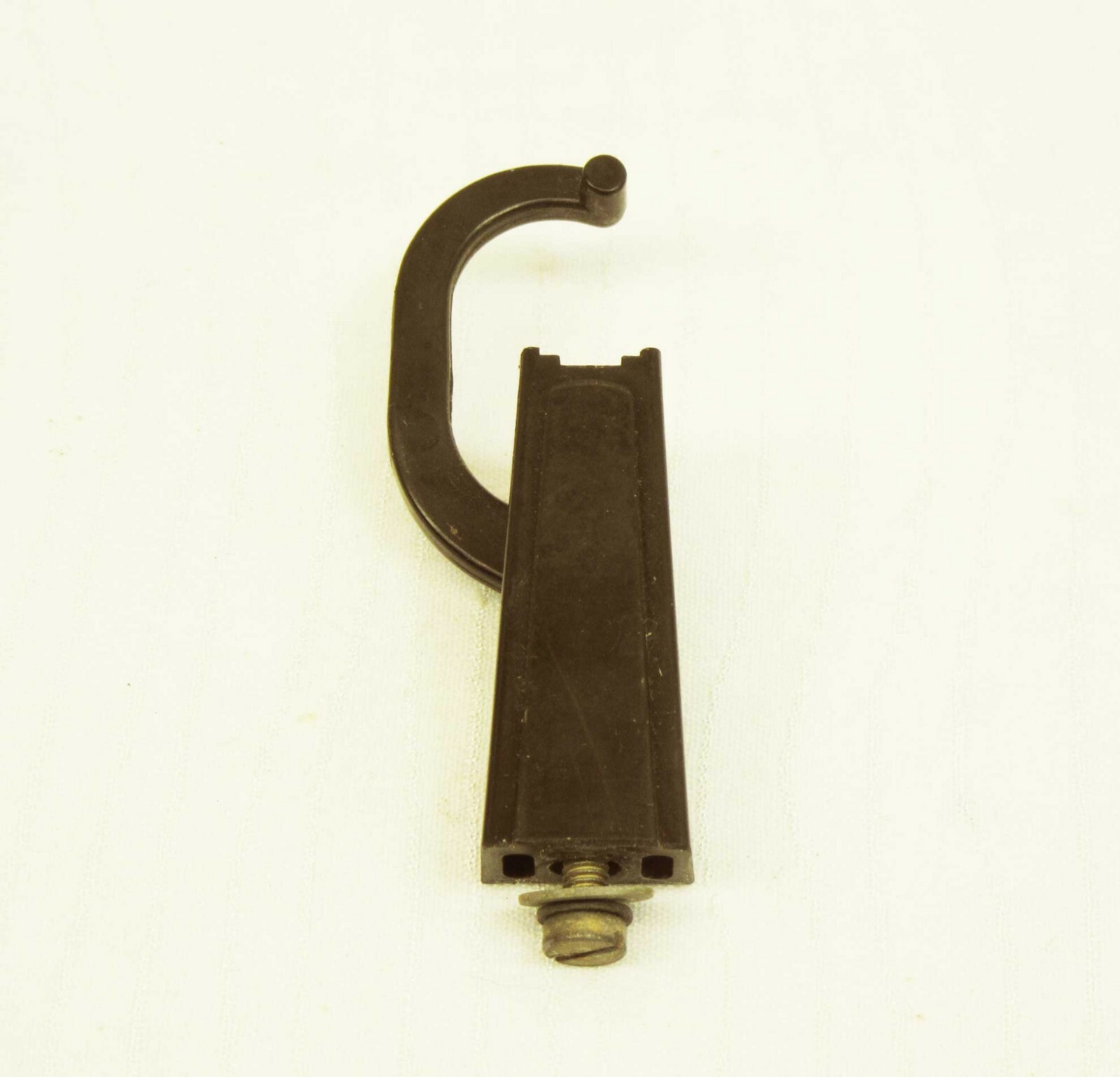
As an eBay Partner, we earn from qualifying purchases. This helps support our independent vintage technology research.
Related Models
- Akai AM-2850 (1975)
- Akai AP-206 (1975)
- Nakamichi BX-1 (1985)
- Acoustic Research research-ar-17 (1978)
- Acoustic Research AR-19 (1994)
- Acoustic Research AR-1W (1954)
- Acoustic Research AR-28S (1992)
- Acoustic Research AR-303a (1994)
- Acoustic Research AR-8BX (1983)
- Acoustic Research AR-915 (1985)