Garrard 5-200 Turntable (1955)
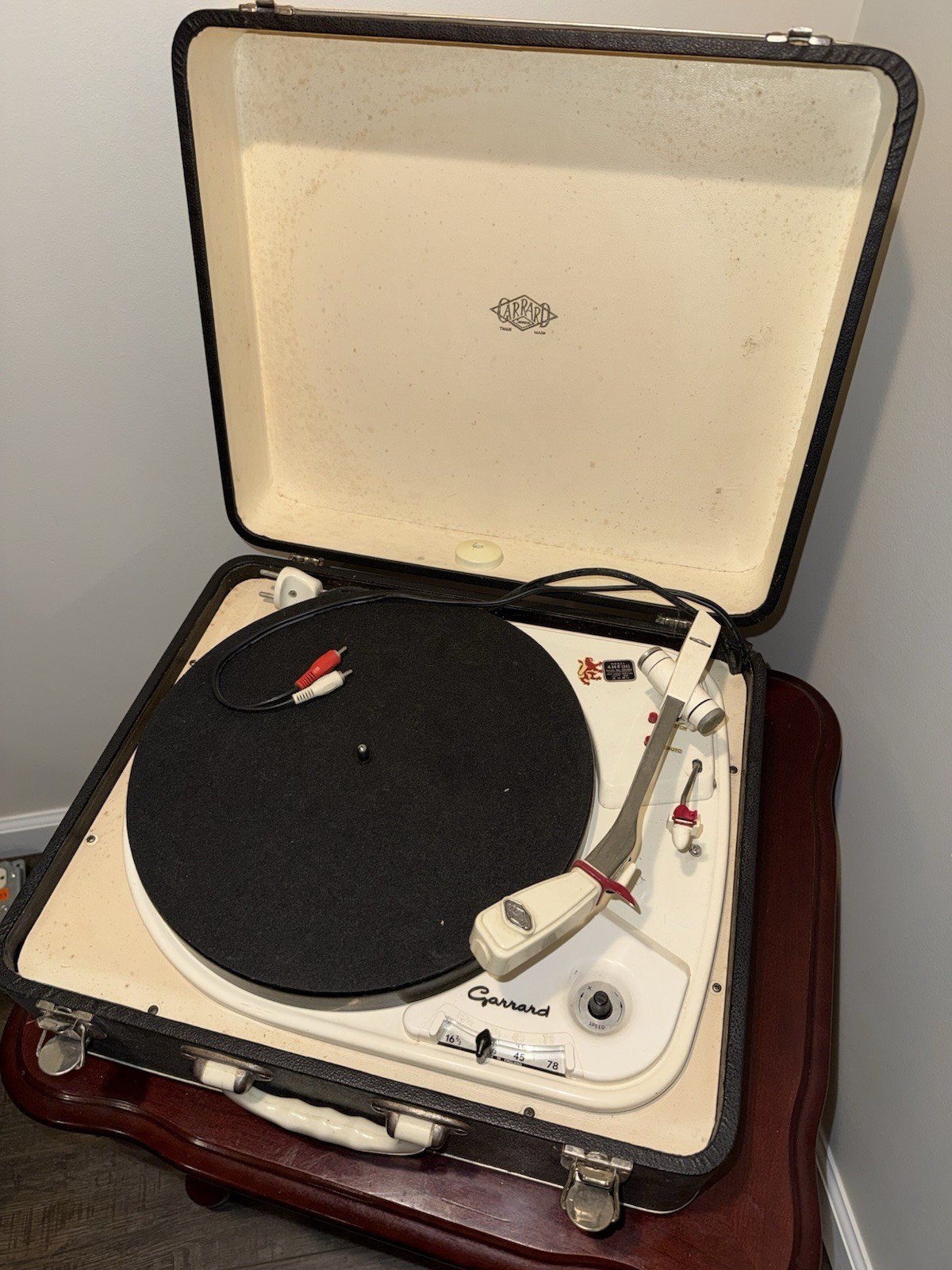
Step into the golden age of vinyl with the Garrard 5-200—a no-frills, precision-built workhorse from Britain’s post-war audio renaissance. Crafted between 1955 and 1957, this manual three-speed turntable wasn’t flashy, but it didn’t need to be. Built like a tank and engineered for fidelity, the 5-200 delivered rock-solid performance in an era when record players were evolving from furniture into serious audio components. With its idler-wheel drive, die-cast platter, and compatibility with both crystal and magnetic cartridges, it struck a rare balance: accessible enough for the living room, refined enough for the audiophile. It may not have turned itself off, but it earned its place in history—and on shelves—by doing one thing exceptionally well: spinning records with authority.
Specifications
| Feature | Specification |
| Model | 5-200 |
| Manufacturer | Garrard Engineering & Manufacturing Co. |
| Production Years | 1955–1957 |
| Turntable Type | Manual, single-play |
| Drive System | Idler-wheel drive |
| Motor | 4-pole induction motor (Garrard Synchro-Lab) |
| Speeds | 33⅓, 45, and 78 RPM |
| Platter | Die-cast aluminum |
| Tonearm | Straight aluminum, pivoted |
| Cartridge Compatibility | Crystal or magnetic (user replaceable) |
| Phono Output | Requires external preamp |
| Power Requirements | Mains-powered motor (no onboard amplification) |
| Dimensions | Approx. 40 x 35 x 12 cm |
| Weight | ~8 kg (17.6 lbs) |
| Finish Options | Typically black or walnut veneer |
Historical Context
The mid-1950s were a turning point for home audio. Hi-fi was no longer a luxury—it was becoming a pursuit. Into this moment stepped the Garrard 5-200, a deliberate evolution in the brand’s respected 5-series lineup. Sharing DNA with the 3-200 and 4-200, the 5-200 carved its niche as a serious yet attainable player for the discerning listener. No gimmicks, no automation—just precision engineering rooted in British industrial rigor.
At its heart was the Synchro-Lab 4-pole induction motor, a leap forward in speed stability that tamed the wow and flutter plaguing earlier designs. Paired with a heavy die-cast aluminum platter, it delivered smooth, consistent rotation—critical for faithful playback. While users still had to cue and retrieve records by hand, the 5-200’s robust build and thoughtful mechanics made it a favorite among radio engineers and early audiophiles who valued control and consistency.
More than just a standalone player, the 5-200 was a foundation. Its design principles fed directly into Garrard’s legendary automatics—the 301 and 401—that would go on to dominate studios and high-end homes alike. This was the quiet predecessor that helped define what a turntable could be.
Sound Signature
Fire up a well-serviced 5-200, and you’re greeted with the rich, organic warmth typical of idler-wheel drive. The midrange blooms—perfect for smoky jazz vocals or the delicate attack of a classical guitar. Bass is present and punchy for its era, though not thunderous. It’s a sound that feels alive, textured, and intimately connected to the groove.
But that character comes with trade-offs. The idler wheel, while effective, can transmit mechanical noise and rumble if worn or poorly maintained. The result? A subtle hum beneath the music or speed wobble that distracts from the performance.
Sound quality lives and dies by four factors:
- Condition of the idler wheel
- Lubrication of motor and platter bearings
- Cartridge type and alignment
- Record weight and mat usage
Pair it with a modern MM cartridge, dial in the tracking force, and the 5-200 transforms. Suddenly, it’s not just nostalgic—it’s musical. Jazz, orchestral, and vocal recordings from the '50s and '60s leap from the speakers with presence and grace.
Common Issues and Maintenance Tips
Time hasn’t been kind to every surviving 5-200. Decades of dust, dried grease, and rubber decay mean most units need a full overhaul. But for the hands-on enthusiast, that’s part of the charm. A proper restoration unlocks performance that rivals modern entry-level decks.
Common Problems
- Hardened or cracked idler wheel: The rubber perishes over time, leading to stuttering, speed drift, or total drive failure.
- Dried lubrication: Old grease gums up the motor and platter bearings, increasing noise and wear.
- Worn main bearing or spindle: Causes wobble or lateral play, undermining stability.
- Motor hum or vibration: Often traced to dried oil in bushings or failing capacitors in external power supplies.
- Tonearm stiffness or imbalance: Pivots seize up; counterweights stick. Smooth motion becomes a memory.
Maintenance Recommendations
1. Replace the idler tire: Fit a modern silicone or urethane version—non-negotiable for reliable speed control.
2. Re-lubricate the motor and platter bearing: Use lightweight spindle oil and high-grade grease to restore silent rotation.
3. Clean the platter and spindle: Remove built-up grime and old oil to minimize rumble.
4. Check and align the tonearm: Ensure it glides freely, with accurate tracking force and anti-skate.
5. Inspect wiring and power supply: Replace brittle insulation and aging capacitors, especially in original transformers.
6. Use a proper cartridge: Ditch the old crystal unit. A quality MM cartridge with a fine-line stylus breathes new life into both records and sound.
Collectibility and Market Value
The Garrard 5-200 holds a quiet respect among collectors—rated 4 out of 10 on the collectibility scale. It’s not a showstopper like the 301, but it’s far from forgotten. Its appeal lies in authenticity, build quality, and its role as a stepping stone in turntable evolution. It speaks to:
- Vintage audio enthusiasts who appreciate mechanical integrity
- Restorers who love bringing classic gear back to life
- Collectors of mid-century British design and engineering
Current Market Value
- Non-working/parts units: $50–$75
- Fully restored with good cartridge: $125–$150
- Original condition with rare finishes or accessories: Up to $200 (rare)
Condition is king. A clean walnut veneer, intact labeling, and full functionality can double a unit’s worth. Restored examples with upgraded cartridges often sell faster than pristine but untested originals.
Conclusion
The Garrard 5-200 doesn’t shout for attention—but it earns respect. A product of post-war British precision, it bridges the gap between simple record changers and the high-fidelity revolution. It demands care, yes, but reward it with a proper restoration and it sings with the soul of analog. For the vintage audio devotee, it’s more than a player. It’s a project, a piece of history, and a deeply satisfying way to rediscover the groove.
eBay Listings


As an eBay Partner, we earn from qualifying purchases. This helps support our independent vintage technology research.
Related Models
- Garrard 2025tc (1968)
- Garrard RC80
- Garrard 301 (1953)
- Garrard 4
- Garrard 401 (1965)
- Luxman PD-272 (1983)
- Onkyo CP-1010 (1976)
- Pioneer PL-15R (1975)
- Pioneer PL-250 (1979)
- Pioneer PL-40 (1977)