Garrard 401 Turntable (1965)
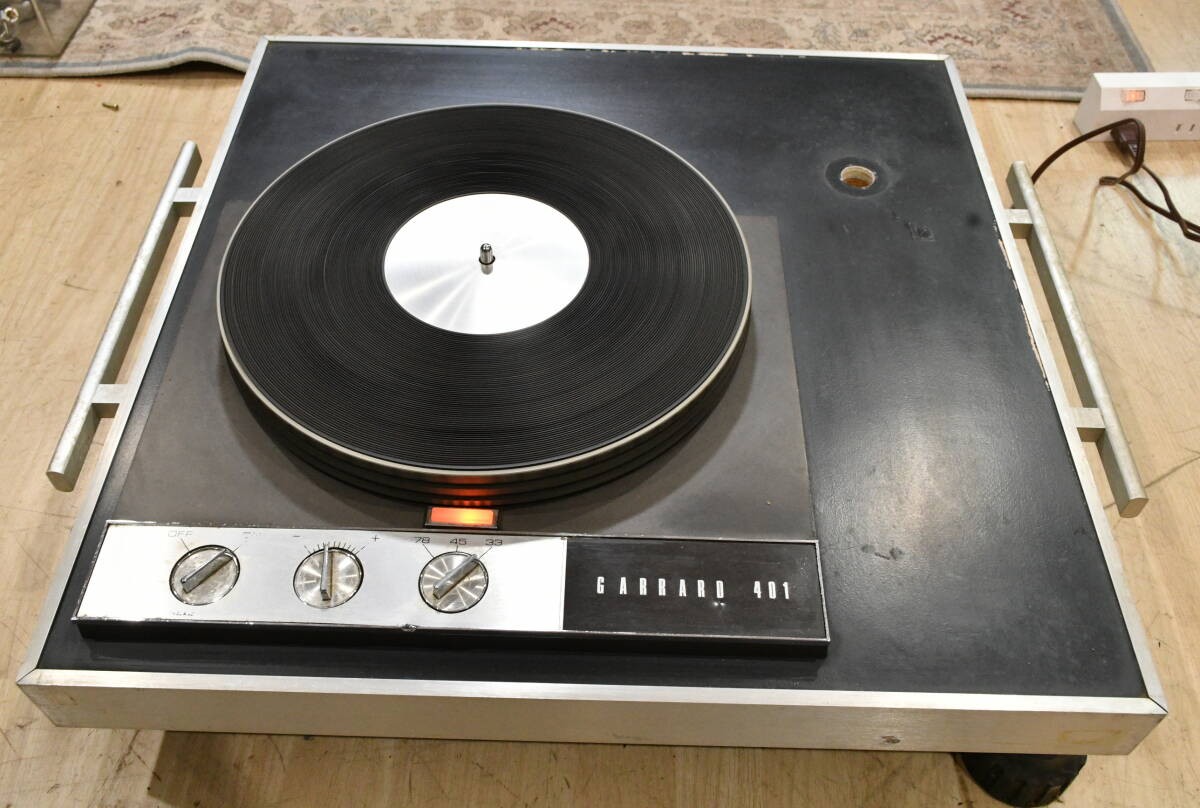
The Garrard 401 is widely regarded as one of the most iconic and technically accomplished turntables of the 20th century. Produced from 1965 to 1976, this high-end idler-wheel drive turntable was engineered for precision, durability, and sonic excellence. Revered by audiophiles and professionals alike, the 401 became a staple in BBC studios and high-fidelity listening rooms across Europe and beyond.
With its robust construction, advanced mechanical design, and exceptional speed stability, the 401 remains a sought-after classic in the world of vintage audio equipment.
Specifications
| Feature | Specification |
| Model | Garrard 401 |
| Production Years | 1965–1976 |
| Turntable Type | Idler-wheel drive, 3-speed |
| Speeds | 33⅓, 45, and 78 RPM |
| Platter | Dynamically balanced aluminum platter with rubber mat |
| Bearing | Oil-immersed precision bearing |
| Motor | 4-pole AC induction motor |
| Drive System | Idler wheel (driven by motor, engages platter rim) |
| Plinth | Heavy cast aluminum with damped suspension |
| Tonearm Options | Typically used with SME 3009 or 3012; also compatible with other 9" SME-type arms |
| Power Requirements | N/A (turntable only; requires external preamp for phono output) |
| Impedance | N/A (output dependent on cartridge and preamp) |
| Wow & Flutter | < 0.05% (exceptionally low for idler drive) |
| Rumble | Very low due to isolated motor and oil-damped bearing |
| Dimensions | 450 × 380 × 140 mm (approx.) |
| Weight | 14.5 kg (32 lbs) |
Historical Significance
The Garrard 401 emerged during the golden age of British hi-fi, a period when engineering excellence and meticulous craftsmanship defined high-end audio. As the successor to the legendary Garrard 301, the 401 refined its predecessor’s design with improved materials, tighter tolerances, and enhanced speed stability.
Unlike belt-drive turntables, the 401 used an idler-wheel mechanism, where a small rubber wheel transfers rotation from the motor directly to the platter’s outer rim. While more complex and maintenance-intensive than belt drives, this system delivers exceptional torque and speed consistency—qualities essential for broadcast and critical listening applications.
The 401 was widely adopted by the BBC and other professional studios due to its reliability and sonic accuracy. Its use in such demanding environments cemented its reputation as one of the finest turntables ever made. The heavy aluminum plinth and internal suspension system effectively isolate the platter and tonearm from external vibrations, contributing to its clean, dynamic sound.
Sound Signature
The Garrard 401 is celebrated for its authoritative bass, precise timing, and rhythmically engaging presentation. Its idler-drive system provides immediate motor response, resulting in excellent transient reproduction and low wow/flutter.
Listeners often describe the 401’s sound as:
- Robust and dynamic
- Rhythmically accurate
- Low in background noise
- Highly detailed with excellent imaging
When paired with a high-quality cartridge and tonearm—such as the SME 3012—the 401 delivers a listening experience that rivals even modern high-end turntables.
Maintenance and Restoration Tips
Due to its age, most Garrard 401 units require some degree of restoration to perform optimally. Common issues include:
- Idler wheel degradation: The rubber idler wheel often hardens or cracks over time. Replacement with a modern urethane or silicone version is recommended.
- Motor noise or vibration: The 4-pole motor may develop bearing noise. Cleaning and lubrication—or full refurbishment—can restore quiet operation.
- Bearing lubrication: The oil-immersed main bearing must be cleaned and refilled with proper spindle oil to prevent wear and rumble.
- Suspension springs: The internal suspension system may sag or corrode. Replacing the springs improves isolation and level stability.
- Speed calibration: Idler compression and motor wear can affect speed accuracy. Adjustment via motor pulley or electronic speed controller may be needed.
Recommended maintenance schedule:
- Clean and inspect idler wheel: Every 2–3 years
- Re-lubricate main bearing: Every 5 years or if rumble increases
- Check suspension: Annually
- Motor service: As needed (listen for hum or vibration)
Many specialists offer full restoration services, and replacement parts are available through vintage audio suppliers.
Market Value and Collectibility
The Garrard 401 is highly collectible, earning a 9/10 on the collectibility scale. Its combination of engineering pedigree, professional heritage, and sonic performance ensures strong demand among audiophiles and vintage equipment enthusiasts.
Current market value (2024):
- Restored, fully functional unit: $1,800–$2,500
- Original, un-restored but complete: $800–$1,200
- Units with original plinth, motor, and SME arm: Premium pricing, often exceeding $3,000
Originality, condition, and completeness significantly affect value. Models that retain their original cast aluminum plinth and factory motor are especially prized.
Conclusion
The Garrard 401 stands as a masterpiece of analog engineering—a turntable built to last, perform, and inspire. Its blend of precision mechanics, professional heritage, and engaging sound continues to captivate listeners over half a century after its introduction.
For collectors and audiophiles seeking a vintage turntable with true historical significance and exceptional performance, the 401 remains a top-tier choice and a worthy centerpiece of any analog system.
eBay Listings



As an eBay Partner, we earn from qualifying purchases. This helps support our independent vintage technology research.
Related Models
- Garrard 2025tc (1968)
- Garrard RC80
- Garrard 301 (1953)
- Garrard 4
- Garrard 401c (1965)
- Luxman PD-272 (1983)
- Onkyo CP-1010 (1976)
- Pioneer PL-15R (1975)
- Pioneer PL-250 (1979)
- Pioneer PL-40 (1977)