Garrard 4 Turntable
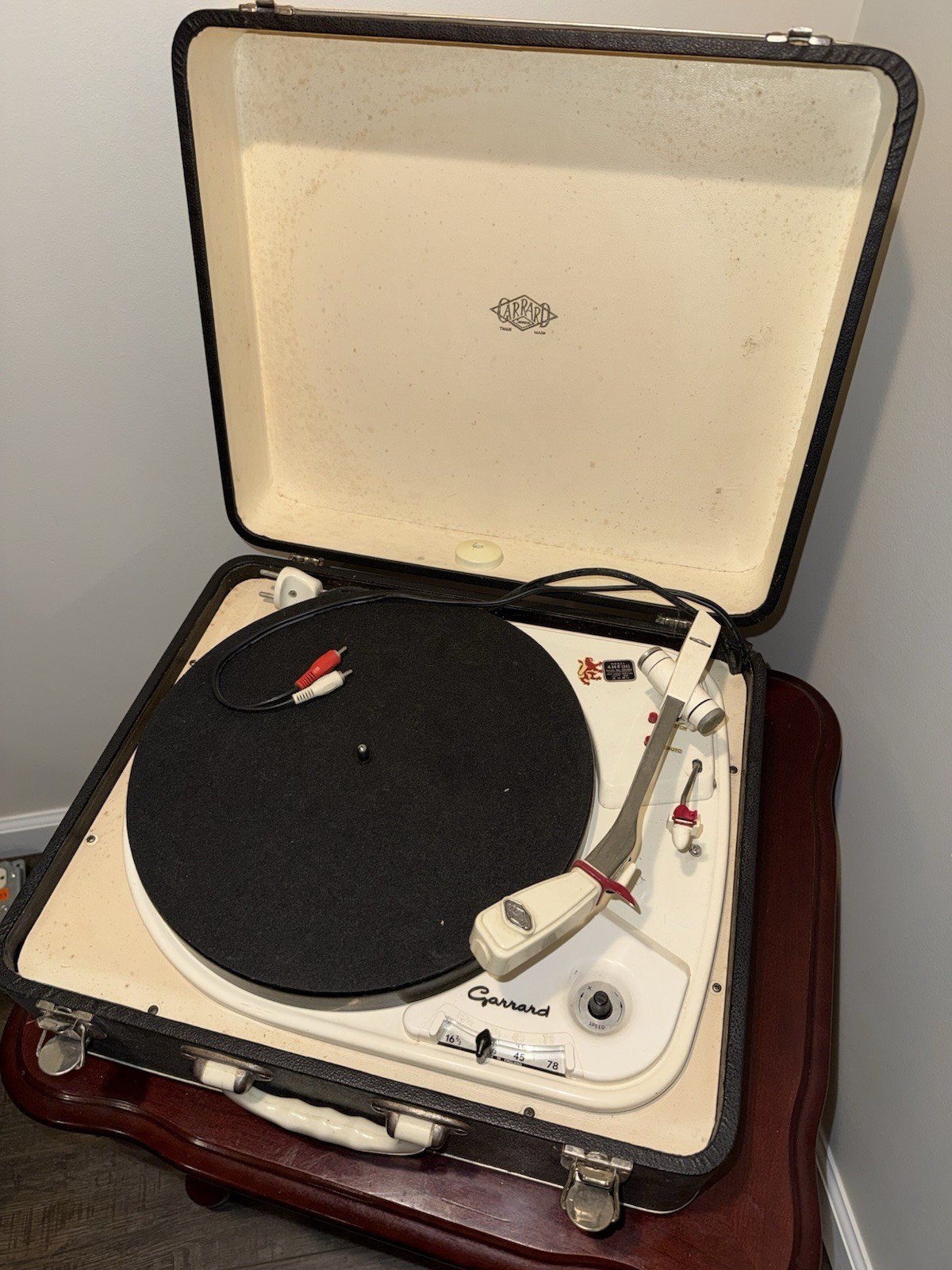
Meet the Garrard 4—a no-frills, three-speed manual turntable that quietly powered countless living rooms from 1954 to 1958. Built with the precision of post-war British engineering, this mid-tier workhorse brought solid performance and rugged reliability to the growing ranks of home audiophiles. Forget flashy automation; the Model 4 relied on an idler-wheel drive and an oil-immersed motor, delivering the kind of warm, steady spin that made Garrard a trusted name in analog playback.
It didn’t need bells and whistles to win hearts. The Model 4’s charm lies in its simplicity: a tactile, hands-on experience, a rich mid-century sound, and a build that could endure decades of use. For many, it was their first real taste of high-fidelity vinyl—no frills, just music.
Specifications
| Feature | Specification |
| Model | Garrard 4 |
| Brand | Garrard |
| Year of Production | 1954–1958 |
| Category | Manual Turntable |
| Speeds | 33⅓, 45, 78 RPM |
| Drive System | Idler wheel drive |
| Motor Type | Oil-immersed synchronous motor |
| Tonearm | Pivoted tonearm with adjustable counterweight and anti-skate |
| Platter | Single platter with rubber mat |
| Spindle | Single-play spindle (45 RPM adapter compatible) |
| Power Requirements | Mains-powered motor; no amplifier or phono stage included |
| Output Impedance | N/A (dependent on cartridge and amplifier) |
| Sensitivity | N/A (varies with cartridge and stylus selection) |
| Dimensions | Approx. 43 x 36 x 12 cm (varies by mounting) |
| Weight | Approx. 8.5 kg (without base or amplifier) |
| Accessories | Often sold with dust cover and 45 RPM adapter |
Historical Context
The mid-1950s saw vinyl surge into the mainstream, and Garrard was right in the thick of it. As families upgraded from shellac to LPs, the Model 4 arrived as a smart, affordable bridge to better sound. It wasn’t a showstopper like the legendary 301 or 401, but it shared their DNA—oil-damped motor, precision idler drive, robust construction—just wrapped in a simpler, more compact form.
Commonly tucked into console radios or paired with standalone amps, the Model 4 became a fixture in British and European homes. Manual operation meant you had to spin the platter by hand and lift the tonearm yourself, but that hands-on ritual came with a payoff: fewer moving parts to fail, and a machine that was easy to maintain. For a generation discovering the joy of records, the Garrard 4 was the turntable that just worked.
Sound Signature
Idler-wheel drive gives the Garrard 4 its voice—warm, full-bodied, and musically engaging. The oil-immersed motor keeps things quiet, damping vibration so the groove does the talking. Bass has weight, midrange sings with clarity, and when properly maintained, speed stability keeps the performance honest.
But the turntable itself is just the stage—the real magic depends on your cartridge and stylus. Swap in a modern magnetic cartridge, align it carefully, and this 1950s veteran can still deliver a compelling listen. Jazz, classical, and vocals especially shine, with a smoothness that feels more like a storyteller than a technician.
Common Issues and Maintenance Tips
Decades of use take their toll, but most issues are predictable—and fixable. Here’s what to watch for:
- Idler Wheel Hardening: The rubber idler wheel often stiffens or cracks over time, causing speed wobble or noise. A replacement—either restored or newly made—is usually essential for smooth operation.
- Motor Lubrication: The oil bath keeps the motor quiet, but old oil dries out. Replenish with a light-grade clock or motor oil as specified in service manuals—too thick, and you’ll strain the motor.
- Rumble and Vibration: Worn spindle bearings, dried grease, or sagging cabinet suspension can introduce low-end noise. Clean and re-grease key points to bring back that silent spin.
- Auto-Stop Function (if equipped): Some models include a rubber belt-driven auto-stop. Those belts degrade—replace them with modern equivalents to restore the feature.
- Tonearm Pivots and Cabling: Check for smooth movement and listen for crackles. Brittle internal wires or dirty contacts can ruin an otherwise clean setup.
Tips for Owners:
- Use a tracking force gauge—never guess. Proper setup protects your records and your stylus.
- Align the cartridge with a protractor. A well-aligned stylus means better sound and less wear.
- Keep it covered. Dust is the enemy—use the dust cover and store it clean.
- When in doubt, seek a professional. A full restoration can breathe new life into a tired Model 4.
Market Value and Collectibility
The Garrard 4 sits at a 4 out of 10 on the collector scale—respected, but not revered. It lacks the cult status of its high-end siblings, yet it holds its own as a functional piece of mid-century audio history. For restorers, period-correct builds, or those dipping into vintage vinyl, it’s a smart and authentic pick.
- Market Value: $50–$150 USD, depending on condition, originality, and restoration quality.
- Original, unmodified units with clean finishes and working motors fetch top dollar.
- Fully restored models—especially with new idler wheels and modern cartridges—often appeal more to listeners than purists.
Conclusion
The Garrard 4 may not headline collector auctions, but it played a vital role in bringing high-fidelity sound into everyday homes. It’s the quiet achiever of the Garrard family—honest, dependable, and full of character. With a little care and the right setup, it’s still more than just a relic. It’s a turntable that can play your records with the warmth and soul of an era when analog was the only option.
eBay Listings


As an eBay Partner, we earn from qualifying purchases. This helps support our independent vintage technology research.
Related Models
- Garrard 2025tc (1968)
- Garrard RC80
- Garrard 301 (1953)
- Garrard 401 (1965)
- Garrard 401c (1965)
- Luxman PD-272 (1983)
- Onkyo CP-1010 (1976)
- Pioneer PL-15R (1975)
- Pioneer PL-250 (1979)
- Pioneer PL-40 (1977)