Fisher R-200 Receiver (1964)
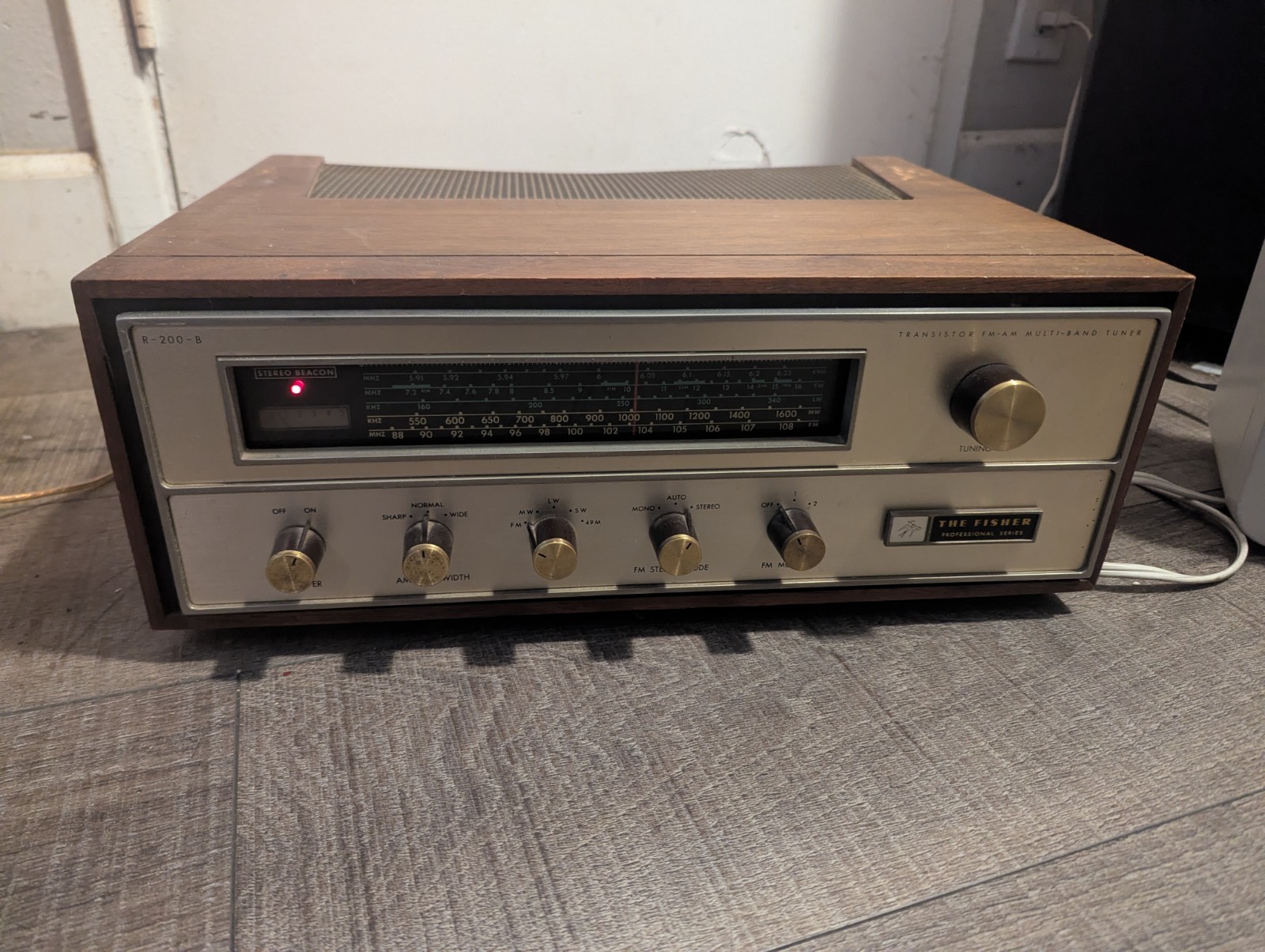
The Fisher R-200 is a classic FM/AM tuner introduced in 1964 as part of Fisher's prestigious line of tube-based audio equipment. Though not a full receiver with amplification, the R-200 was designed to serve as the tuning centerpiece of a high-fidelity stereo system during the pivotal transition to stereo FM broadcasting in the mid-1960s. Renowned for its sensitivity, build quality, and warm sonic character, the R-200 remains a sought-after component among vintage audio enthusiasts and collectors.
Specifications
| Feature | Specification |
| Model | R-200 |
| Brand | Fisher |
| Year of Production | 1964–1967 |
| Category | Tuner (part of receiver family) |
| Circuitry | Tube-based (12 tubes total) |
| Tubes Used | 6AQ8, 6U8, 6BA6 (x2), 6AL5, 6X4, 12AT6, 12K5, 6C4, 6AB4, 6AV6, 5Y3 |
| Tuning Bands | FM, AM |
| FM Sensitivity | 1.8 μV for 20 dB quieting |
| AM Sensitivity | 5 μV for 20 dB signal-to-noise |
| Stereo Decoding | Multiplex stereo (compatible with early FM stereo broadcasts) |
| Tuning Display | Slide-rule analog dial with precision vernier scale |
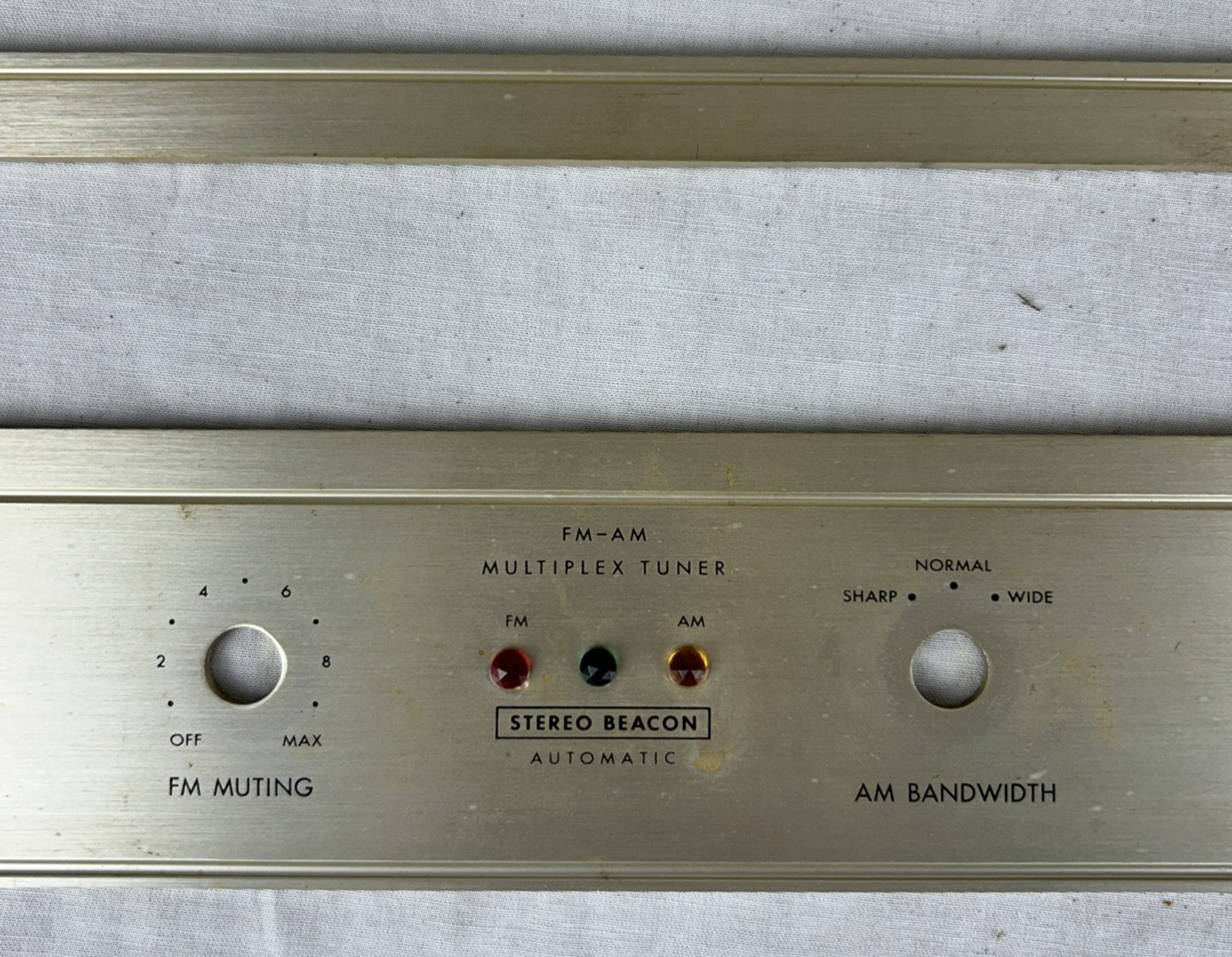
| Front Panel | Gold-anodized aluminum |
| AFC (Auto Frequency Control) | Yes |
| Power Output | N/A (tuner only, no amplification) |
| Speaker Impedance | Not specified |
| Dimensions | 19" W × 7" H × 10.5" D |
| Weight | 24 lbs (10.9 kg) |
Historical Context
The Fisher R-200 was released at a transformative moment in audio history—the dawn of stereo FM broadcasting. As networks began transmitting in stereo during the mid-1960s, consumers sought equipment capable of receiving these new high-fidelity signals. Fisher, already respected for its robust engineering and premium build quality, answered the demand with the R-200.
Unlike many tuners of the era, the R-200 included full multiplex stereo decoding, allowing it to demodulate stereo FM broadcasts without external processors. Its 12-tube design ensured low noise and high sensitivity, making it one of the most capable tuners available at the time. The gold-anodized front panel and precision slide-rule dial not only conveyed luxury but also facilitated accurate station tuning—a hallmark of Fisher’s design philosophy.
The R-200 exemplifies the peak of tube-based tuner technology before the gradual shift to solid-state designs in the 1970s. It was often paired with Fisher amplifiers like the XR-500 or used in custom separates systems, cementing its role in high-end audio setups of the era.
Sound Signature
The R-200 delivers a warm, smooth, and highly detailed FM reception characteristic of well-designed tube tuners. Its low distortion and excellent signal-to-noise ratio contribute to a listening experience that many describe as “musical” and “engaging.” The tube circuitry imparts a subtle richness to the sound, particularly noticeable in midrange clarity and stereo imaging. AM reception is also strong for its time, with good selectivity and reduced interference.
Even by modern standards, the R-200 performs admirably in areas with strong FM signals, and its stereo decoding remains accurate when properly aligned.
Maintenance and Restoration Tips
Due to its age, the Fisher R-200 typically requires some degree of servicing to operate safely and optimally:
- Capacitor Replacement: Replace all electrolytic and paper capacitors, especially in the power supply and audio coupling stages. Old capacitors can leak, degrade, or cause hum.
- Tube Testing: Check all 12 tubes for wear or failure. While many original tubes may still function, weak or noisy tubes should be replaced with tested NOS (New Old Stock) equivalents.
- Cleaning: Use contact cleaner on potentiometers, switches, and the tuning capacitor to eliminate crackling or dropouts. The slide-rule dial mechanism should be inspected for smooth operation.
- Alignment: The tuner’s IF and RF stages may require realignment using proper test equipment to restore optimal sensitivity and stereo separation.
- Power Supply Check: Inspect for signs of overheating, resistor drift, or transformer issues. A variac and current limiter are recommended during initial power-up of long-unused units.
- Ventilation: Ensure adequate airflow around the chassis during operation, as tube equipment generates significant heat.
Collectibility and Market Value
The Fisher R-200 holds a collectibility rating of 7/10. It is prized for its historical significance, premium build, and excellent performance as a vintage tuner. While not as rare as some limited-production models, its role in the early stereo era ensures steady demand among audiophiles and restorers.
- Market Value: $150–$300
- Untested or non-working units: $100–$150
- Fully restored, aligned, and tested: $250–$300
- Original packaging or accessories can increase value slightly.
Units with original tubes, clean dials, and documented service history command higher prices. The gold-anodized front panel is particularly desirable, as it rarely shows wear when well-preserved.
Conclusion
The Fisher R-200 stands as a testament to the craftsmanship and innovation of 1960s American hi-fi engineering. More than just a tuner, it represents a milestone in the evolution of home audio—bridging the gap between mono AM dominance and the stereo FM future. For collectors and vintage audio lovers, the R-200 offers both historical value and exceptional performance when properly maintained.
eBay Listings


As an eBay Partner, we earn from qualifying purchases. This helps support our independent vintage technology research.
Related Models
- Fisher FM-100-C (1960)
- Fisher FM-200 (1971)
- Fisher FMR-1
- Fisher FM-100-B (1963)
- Fisher FM-100 (1961)
- Aiwa CS-250 (1978)
- Denon TU-1500RD (1995)
- Denon TU-280 (1976)
- Denon TU-501 (1977)
- Denon TU-550 (1978)