Fisher FM-90-X Tuner (1966)
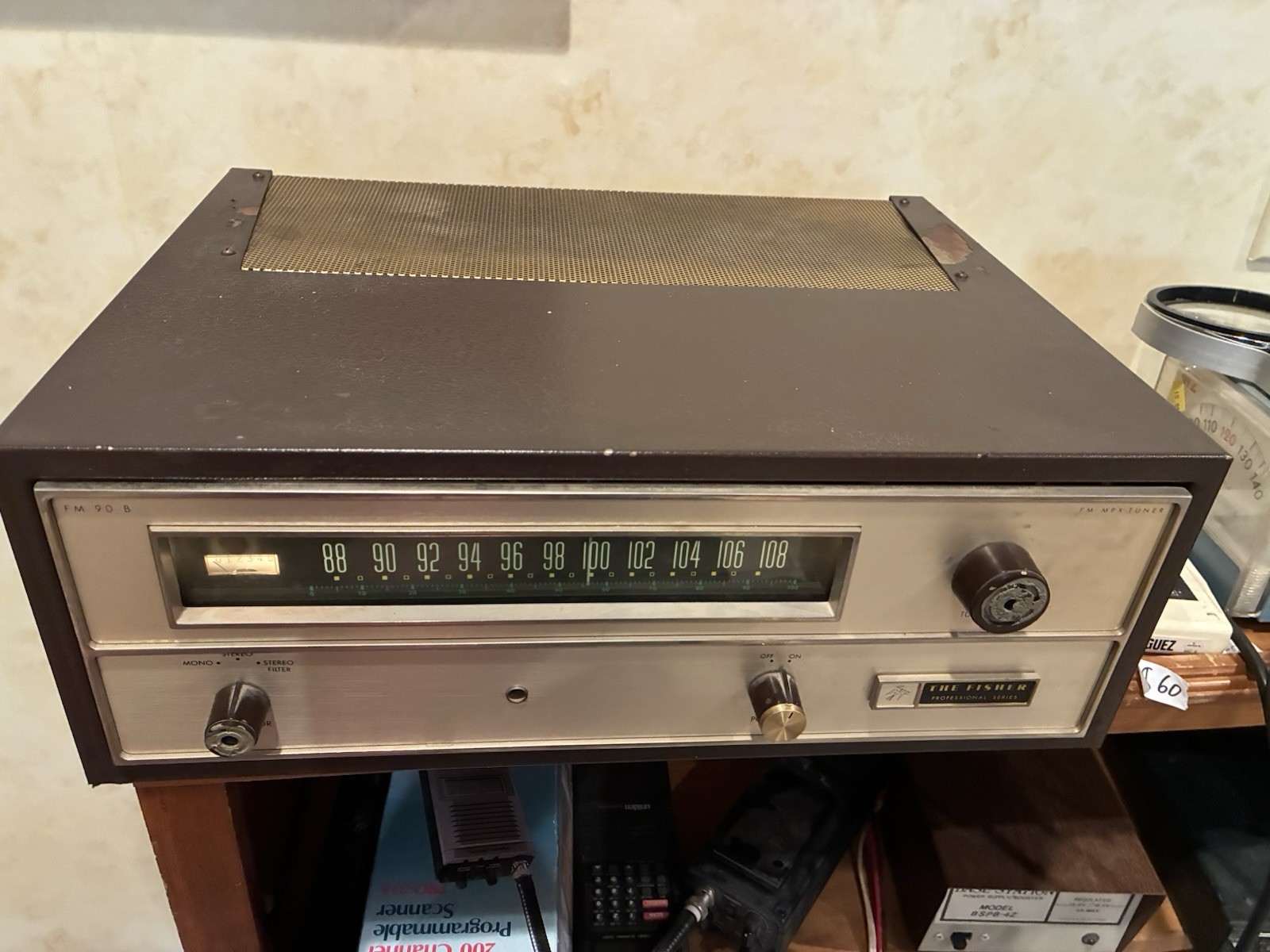
The Fisher FM-90-X is a high-fidelity solid-state tuner introduced in 1966 as part of Fisher's transitional mid-1960s lineup, marking the brand's shift from vacuum tube to transistor-based audio equipment. Though technically a tuner rather than a full receiver—lacking built-in amplification—the FM-90-X was often paired with Fisher amplifiers and preamplifiers to form a complete stereo system. Renowned for its clean reception, precise tuning, and elegant design, the FM-90-X remains a respected component among vintage audio enthusiasts.
Specifications
| Feature | Specification |
| Model | FM-90-X |
| Brand | Fisher |
| Year of Production | 1966–1967 |
| Category | Tuner (FM/AM) |
| Amplification | No (tuner only) |
| Output Impedance | ~47k ohms (typical for line-level tuner output) |
| Sensitivity (FM) | Approx. 1.8 μV for 20 dB quieting |
| Tuning System | Slide-rule analog dial with tuning meter |
| Stereo Decoding | Yes, multiplex stereo |
| AFC (Auto Frequency Control) | Yes |
| Cabinet Options | Available with wood cabinet finish |
| Dimensions | 19" W × 6.5" H × 13" D |
| Weight | 22 lbs (10 kg) |
| Technology | Solid-state (transistorized) |
Key Features
- FM/AM Reception: Capable of receiving both FM and AM broadcasts with high selectivity and low noise.
- Multiplex Stereo Decoding: One of the early tuners to support stereo FM broadcasts, delivering true left/right channel separation.
- Slide-Rule Tuning Dial: Precision tuning via a linear slide-rule scale, allowing for accurate station selection.
- Tuning Meter: Integrated center-zero meter for peak tuning indication and stereo lock confirmation.
- AFC (Automatic Frequency Control): Maintains stable tuning by automatically correcting minor frequency drift.
- Solid-State Design: Utilizes transistors and diodes instead of vacuum tubes, improving reliability and reducing heat output.
Historical Context
The Fisher FM-90-X emerged during a pivotal era in audio engineering—the mid-1960s—when high-fidelity manufacturers were transitioning from tube-based to solid-state electronics. Fisher, already established for its high-quality tube gear, embraced transistor technology without sacrificing the audiophile-grade performance the brand was known for.
The FM-90-X exemplifies this transition: it retains the robust build quality and meticulous circuit design of earlier Fisher models while incorporating modern solid-state components. It was part of a broader push to deliver more reliable, cooler-running, and longer-lasting equipment. As FM stereo broadcasting gained popularity in the U.S., the FM-90-X’s multiplex decoding capability made it a desirable component for early adopters of stereo radio.
Fisher’s reputation for precision tuning and clean signal paths is evident in the FM-90-X, which was often paired with models like the Fisher 500C amplifier or 400B preamp to create a full high-end system.
Sound Signature
The FM-90-X delivers a clean, transparent sound with minimal distortion—typical of Fisher’s well-engineered tuners. FM reception is stable and detailed, with excellent stereo imaging and channel separation. The audio output is warm and musical, characteristic of well-designed analog circuitry, making it a pleasure to listen to both music and voice broadcasts. Its low noise floor and high sensitivity ensure strong reception even with modest antennas.
Maintenance and Restoration Tips
Due to its age, the Fisher FM-90-X may require servicing to perform at its best. Common issues include:
- Aging Capacitors: Electrolytic and coupling capacitors degrade over time. A full recapping is recommended to prevent noise, distortion, or component failure.
- Dirty Controls and Pots: Use contact cleaner on volume, tuning, and balance controls (if used with a preamp) to restore smooth operation.
- Alignment Drift: The tuner’s IF and RF stages may need realignment for optimal sensitivity and selectivity. Best performed by a technician with proper test equipment.
- Failing Transistors or Diodes: While generally reliable, early transistors can fail. Check for DC bias issues or signal loss in the IF and detector stages.
- Tuning Dial Calibration: Ensure the dial tracking matches the actual frequency, especially if the unit has been moved or serviced.
Regular cleaning of connectors and jacks, along with proper ventilation, will help preserve the unit’s longevity. When restored, the FM-90-X performs remarkably well by modern standards, especially for vintage FM listening.
Collectibility and Market Value
The Fisher FM-90-X holds moderate collectibility, rated 6/10, due to its solid engineering and place in Fisher’s transitional period. While not as iconic as the brand’s flagship tube receivers, it appeals to collectors interested in the evolution of solid-state audio.
- Market Value: $50–$150, depending on condition, originality, and whether it includes the wood cabinet.
- Restored Units: Fully serviced and calibrated units may command higher prices, especially when sold as part of a matching Fisher system.
- Originality Matters: Units with original components, unmodified circuitry, and intact cosmetics are preferred by purists.
Conclusion
The Fisher FM-90-X is a well-crafted, historically significant tuner that bridges the gap between the golden age of tube audio and the rise of solid-state fidelity. While it lacks amplification, its superb tuning precision, stereo decoding, and clean sound make it a valuable addition to any vintage audio setup. With proper maintenance, the FM-90-X continues to deliver enjoyable FM radio experiences, preserving the legacy of one of America’s most respected hi-fi brands.
eBay Listings



As an eBay Partner, we earn from qualifying purchases. This helps support our independent vintage technology research.
Related Models
- Fisher FM-100-C (1960)
- Fisher FM-200 (1971)
- Fisher FMR-1
- Fisher FM-100-B (1963)
- Fisher FM-100 (1961)
- Aiwa CS-250 (1978)
- Denon TU-1500RD (1995)
- Denon TU-280 (1976)
- Denon TU-501 (1977)
- Denon TU-550 (1978)