Fisher FM-90-B (1963)
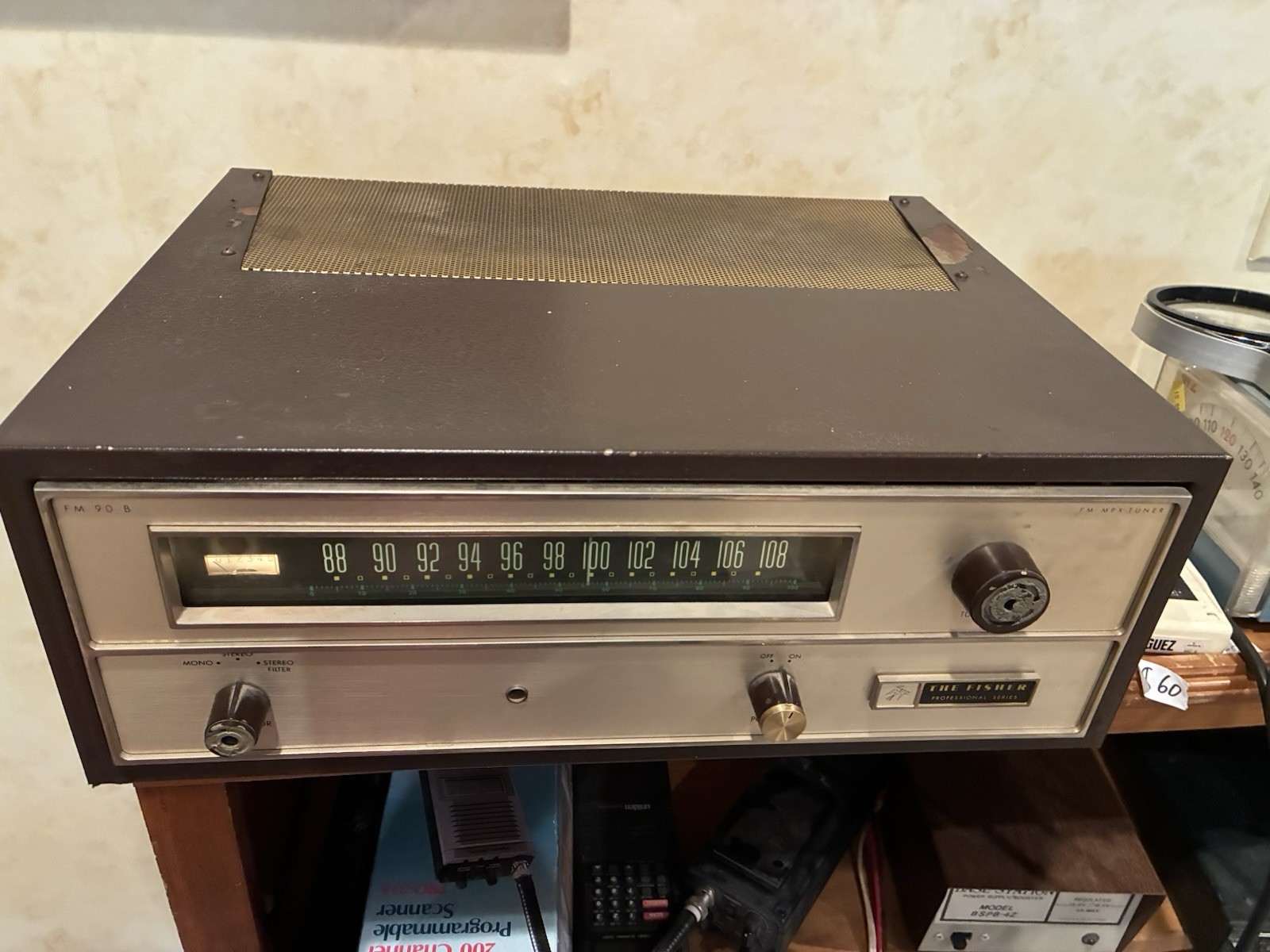
The Fisher FM-90-B is a classic FM-only tuner produced between 1963 and 1965, representing Fisher Radio Corporation's commitment to high-fidelity audio during the golden era of tube-based electronics. Designed for audiophiles and early adopters of FM stereo broadcasting, the FM-90-B stands out for its precision tuning, warm sound signature, and elegant wood cabinet construction. As a tuner-only component, it lacks built-in amplification, making it ideal for integration into separates-based audio systems of the era.
Specifications
| Feature | Specification |
| Model | FM-90-B |
| Brand | Fisher |
| Year of Production | 1963–1965 |
| Category | FM Tuner (Receiver Component) |
| Power Output | N/A (Tuner only, no amplification) |
| Impedance | Unknown |
| Sensitivity | Unknown |
| Tuning Method | Slide-rule analog dial with illuminated scale |
| Tuning Range | 88–108 MHz (FM broadcast band) |
| AFC (Automatic Frequency Control) | Yes |
| Stereo Output | Multiplex stereo (compatible with external stereo decoders) |
| Circuitry Type | Tube-based |
| Tubes Used | 12AX7, 6AU6, 6BA6, 6AL5, 12AT7 |
| Cabinet Material | Solid wood with walnut veneer |
| Dimensions | 19" W × 7" H × 10" D (approx.) |
| Weight | ~22 lbs (10 kg) |
Key Features
- FM-Only Design: Focused exclusively on FM reception, optimized for clarity and fidelity during a time when FM was emerging as the high-quality alternative to AM.
- Slide-Rule Tuning Dial: Precision tuning with a smooth, linear dial that allows for accurate station selection and a satisfying tactile experience.
- AFC (Automatic Frequency Control): Helps maintain stable tuning by automatically correcting minor frequency drift, especially useful with weaker signals.
- Multiplex Stereo Output: One of the early tuners capable of decoding stereo multiplex signals, paving the way for true stereo FM broadcasting when paired with an external decoder.
- Tube-Based Audio Path: Utilizes a carefully designed tube circuit to deliver the warm, smooth, and detailed sound characteristic of high-end tube gear.
- Elegant Wood Cabinet: Housed in a classic mid-century wood enclosure that complements vintage audio racks and living room aesthetics.
Historical Significance
The Fisher FM-90-B was introduced at a pivotal moment in audio history—the early 1960s—when FM broadcasting was transitioning from a niche medium to a mainstream platform for high-fidelity music. Fisher, already renowned for its precision engineering and audiophile-grade components, positioned the FM-90-B as a premium tuner for discerning listeners.
This model arrived just as stereo multiplex broadcasting was being standardized in the U.S., making the FM-90-B one of the first consumer tuners ready for the stereo revolution. While it required an external decoder to extract stereo audio (such as the Fisher PX-100), its inclusion of a multiplex output signaled forward-thinking design.
As part of Fisher’s tube-era lineup, the FM-90-B exemplifies the craftsmanship and attention to detail that defined high-end audio before the solid-state transition. It remains a sought-after piece for vintage audio enthusiasts interested in authentic analog FM reception.
Sound Signature
The FM-90-B delivers a warm, rich, and detailed sound profile typical of well-designed tube tuners. Its RF and IF stages provide excellent selectivity and low distortion, resulting in clear stereo separation and strong signal capture. The tube-based circuitry imparts a smooth high end and natural midrange, making it especially pleasing for music listening. When properly aligned and maintained, it can rival or surpass the performance of many modern budget tuners in terms of listening enjoyment.
Maintenance and Restoration Tips
Due to its age, the Fisher FM-90-B typically requires servicing before reliable operation:
- Capacitor Replacement: All electrolytic and paper capacitors should be replaced, as they are prone to drying out or leaking, which can cause noise, distortion, or circuit damage.
- Resistor Check: Old carbon-composition resistors may have drifted in value; check and replace as needed to ensure proper biasing and performance.
- Tube Testing/Replacement: Test all tubes (12AX7, 6AU6, 6BA6, 6AL5, 12AT7) for wear. While some original tubes may still function, NOS (New Old Stock) or high-quality replacements are recommended for optimal performance.
- Cleaning: Use contact cleaner on the tuning capacitor, volume/potentiometer controls (if present in system), and input/output jacks. The slide-rule dial mechanism should be gently cleaned to ensure smooth operation.
- Alignment: The IF and RF stages may require realignment using a signal generator and proper procedure to restore optimal sensitivity and selectivity.
- Power Supply Check: Verify the power transformer and wiring for safety, especially insulation integrity, to prevent shorts or shock hazards.
Collectibility and Market Value
The Fisher FM-90-B holds a collectibility rating of 7/10 among vintage audio enthusiasts. Its appeal lies in its combination of iconic design, historical relevance, and excellent sound quality when restored. Units in working, fully serviced condition typically sell for $100–$250, with higher prices for mint cosmetic condition or original packaging.
While not as rare as some of Fisher’s all-in-one receivers, the FM-90-B is prized as a dedicated tuner component and a testament to the craftsmanship of early high-fidelity audio engineering.
Conclusion
The Fisher FM-90-B is more than just a tuner—it's a window into the dawn of FM stereo broadcasting and the golden age of tube audio. With its precision tuning, elegant design, and warm sonic character, it remains a rewarding piece for restorers, collectors, and analog enthusiasts. Whether used as a centerpiece in a vintage system or appreciated as a historical artifact, the FM-90-B continues to deliver the magic of FM radio as it was meant to be heard.
eBay Listings


As an eBay Partner, we earn from qualifying purchases. This helps support our independent vintage technology research.
Related Models
- Fisher FM-100-C (1960)
- Fisher FM-200 (1971)
- Fisher FMR-1
- Fisher FM-100-B (1963)
- Fisher FM-100 (1961)
- Aiwa CS-250 (1978)
- Denon TU-1500RD (1995)
- Denon TU-280 (1976)
- Denon TU-501 (1977)
- Denon TU-550 (1978)