Fisher FM-100-B (1963)
The Fisher FM-100-B is a classic FM-only tuner produced from 1963 to 1964, representing Fisher Radio Corporation’s commitment to high-fidelity audio during the golden era of tube-based equipment. Designed for audiophiles and early adopters of FM stereo broadcasting, the FM-100-B delivers warm, detailed reception with excellent selectivity and low noise—hallmarks of well-engineered tube tuners of the period.
Though it lacks built-in amplification, the FM-100-B was intended to be paired with high-quality preamplifiers and power amplifiers of the time, forming the front end of a premium audio system. Its "stereo-ready" design, when used with an external multiplex adapter, allowed users to experience the emerging FM stereo broadcasts that were just beginning to roll out in the early 1960s.
Specifications
| Feature | Specification |
| Model | FM-100-B |
| Brand | Fisher |
| Year of Production | 1963–1964 |
| Category | FM Tuner (Receiver Component) |
| Tubes | 5: 6AQ8, 6BA6, 6AU6, 6BE6, 6AL5 |
| Power Output | N/A (Tuner only, no amplification) |
| Impedance | Unknown |
| Sensitivity | 1.8 μV for 20 dB quieting (FM mono) |
| Tuning Display | Slide-rule dial with calibrated scale |
| Key Features | FM-only reception, AFC switch, stereo-ready with external multiplex adapter, tube-based front end |
| Audio Output | Line-level audio output for connection to external amplifier |
| Construction | Tube-based analog circuitry, metal chassis, analog tuning |
| Dimensions | 19" (W) × 7" (H) × 10" (D) (approx.) |
| Weight | ~20 lbs |
Historical Context
The Fisher FM-100-B arrived at a pivotal moment in broadcast history—the dawn of stereo FM radio. While AM dominated home listening in the 1950s, the early 1960s saw a growing interest in FM's superior sound quality and noise-free transmission. Fisher, already renowned for its high-end tube amplifiers and tuners, positioned the FM-100-B as a precision instrument for serious listeners.
Unlike many consumer-grade tuners of the time, the FM-100-B featured a high-quality RF front end, excellent selectivity, and a smooth tuning experience thanks to its precision slide-rule dial and mechanical counter. The inclusion of an AFC (Automatic Frequency Control) switch allowed users to lock onto stations and reduce drift—a common issue with early FM receivers.
Although it did not natively decode stereo (as the stereo multiplex standard was still new), the FM-100-B was designed to work with external stereo adapters, making it a forward-looking choice for enthusiasts eager to experience the future of radio.
Sound Signature
The FM-100-B delivers the warm, smooth, and detailed sound characteristic of tube-based tuners. Its analog circuitry imparts a pleasing richness to FM broadcasts, with low background noise and strong station capture. The 6BE6 converter and 6BA6 IF amplifier tubes contribute to its excellent sensitivity and selectivity, allowing it to pull in weak stations with clarity.
Even by modern standards, well-maintained examples of the FM-100-B can outperform many later solid-state tuners in terms of musicality and analog warmth, making it a favorite among vintage audio collectors and tube enthusiasts.
Maintenance and Restoration Tips
Like all vintage tube equipment, the Fisher FM-100-B requires careful maintenance to perform reliably and safely. Common issues include:
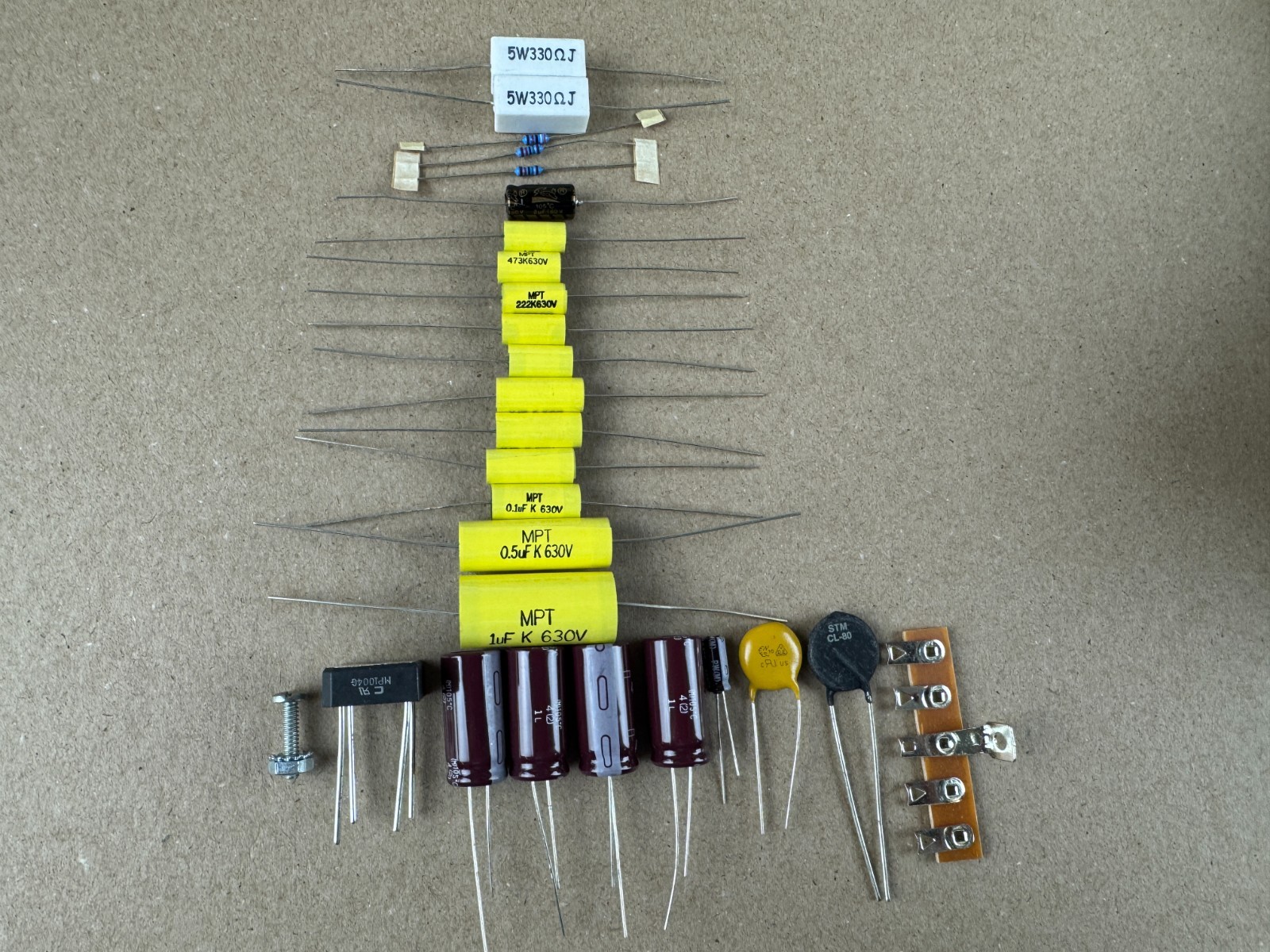
- Aging capacitors: Electrolytic and paper capacitors degrade over time and should be replaced to prevent failure or damage.
- Tube wear: While tubes can last decades, testing or replacing them (especially the 6BE6 and 6BA6) ensures optimal performance.
- Alignment drift: The IF and RF stages may require realignment for peak sensitivity and selectivity.
- Dirty controls and switches: Use contact cleaner on volume/tone controls and switches to eliminate crackling.
- Power supply concerns: Check the power transformer and wiring for insulation breakdown, especially if the unit has been stored for years.
Restoration Tips:
- Always power up vintage tube gear gradually using a variac to avoid shocking old components.
- Replace all capacitors before extended use.
- Clean the slide-rule dial mechanism gently to preserve its smooth operation.
- Use a proper external stereo decoder (e.g., Fisher PX-100 or similar) to unlock stereo FM capability.
Collectibility and Market Value
The Fisher FM-100-B holds a moderate level of collectibility, rated 6/10, due to its solid build quality, historical relevance, and appeal to tube audio enthusiasts. While not as rare as some of Fisher’s later models, it remains a respected piece of early 1960s high-fidelity equipment.
Market Value: $100–$250
- Unrestored units in working condition typically sell at the lower end.
- Fully restored models with replaced capacitors, tested tubes, and clean cosmetics command higher prices.
Collectors value originality, so retaining factory tubes and unmodified circuitry can increase appeal, even if restoration is eventually needed.
Conclusion
The Fisher FM-100-B is more than just a vintage tuner—it’s a window into the early days of high-fidelity FM broadcasting. With its precision engineering, warm tube sound, and forward-thinking design, it remains a rewarding piece for restorers, collectors, and analog audio lovers. Whether used as part of a classic stereo system or preserved as a museum-quality artifact, the FM-100-B exemplifies Fisher’s legacy of quality and innovation in the golden age of audio.
eBay Listings


As an eBay Partner, we earn from qualifying purchases. This helps support our independent vintage technology research.
Related Models
- Fisher FM-100-C (1960)
- Fisher FM-200 (1971)
- Fisher FMR-1
- Fisher FM-100 (1961)
- Fisher FM-1000 (1968)
- Aiwa CS-250 (1978)
- Denon TU-1500RD (1995)
- Denon TU-280 (1976)
- Denon TU-501 (1977)
- Denon TU-550 (1978)