Fisher FM-100 FM Tuner (1961)
The Fisher FM-100 is a classic FM-only tuner introduced in 1961 as part of Fisher's well-respected line of high-fidelity audio equipment. Designed during the transitional period between vacuum tube dominance and the rise of solid-state electronics, the FM-100 exemplifies the craftsmanship and performance standards that made Fisher a trusted name among audiophiles of the era.
Though it lacks built-in amplification, the FM-100 was intended to be paired with separate preamplifiers and power amplifiers, offering exceptional FM reception quality for its time. Its warm sound signature, precise tuning interface, and robust tube-based design continue to attract vintage audio enthusiasts and collectors.
Specifications
| Feature | Specification |
| Model | FM-100 |
| Brand | Fisher |
| Year of Release | 1961 |
| Production Period | 1961–1963 |
| Category | FM Tuner (Receiver Component) |
| Tuning Bands | FM only |
| Power Output | N/A (tuner only, no amplification) |
| Impedance | Unknown |
| Sensitivity | 1.8 μV for 20 dB quieting (FM) |
| Tuning Indicator | Analog tuning meter |
| Tuning Method | Slide-rule dial with precision tuning knob |
| AFC (Automatic Frequency Control) | Yes |
| Stereo Capability | Stereo-ready via external multiplex adapter input |
| Tubes Used | 6AQ8, 6U8, 6BA6, 6AL5, 6AU6 (5 total) |
| Dimensions | 19" W × 7" H × 10.5" D |
| Weight | Approx. 22 lbs |
| Finish | Brushed aluminum front panel with black cabinet |
Historical Context
The Fisher FM-100 was released at a pivotal moment in audio history. FM broadcasting was gaining popularity in the early 1960s, and high-fidelity home audio systems were becoming more accessible to middle-class consumers. Fisher capitalized on this trend by producing a series of high-performance tuners known for their excellent sensitivity, selectivity, and build quality.
As an FM-only tuner, the FM-100 focused on delivering optimal performance within the FM band, avoiding the compromises often found in AM/FM combo units. Its use of five vacuum tubes allowed for low-noise amplification and smooth signal processing, characteristic of the warm, natural sound associated with tube-based designs.
The inclusion of a slide-rule tuning dial and analog tuning meter provided users with precise control and visual feedback—features highly valued by serious listeners. Additionally, the FM-100 was designed to be "stereo-ready," meaning it could accept a multiplex adapter (sold separately) to decode stereo FM broadcasts, a forward-thinking feature as stereo broadcasting began to roll out.
Fisher’s reputation for quality engineering and meticulous alignment procedures ensured that units like the FM-100 set a benchmark in tuner performance before the widespread adoption of solid-state technology in the late 1960s.
Sound Signature
The FM-100 delivers a warm, smooth, and detailed FM reception experience typical of well-maintained tube tuners. When properly aligned and paired with high-quality audio components, it offers excellent clarity, good stereo separation (with adapter), and low background noise. Its tube circuitry imparts a subtle richness to the sound, making it especially pleasing for music listening.
Due to its high sensitivity and effective selectivity, the FM-100 performs well even with modest antennas, capturing weak signals with relative ease for its era.
Maintenance and Restoration Tips
Like all vintage tube equipment, the Fisher FM-100 requires careful maintenance to ensure reliable operation and optimal performance:
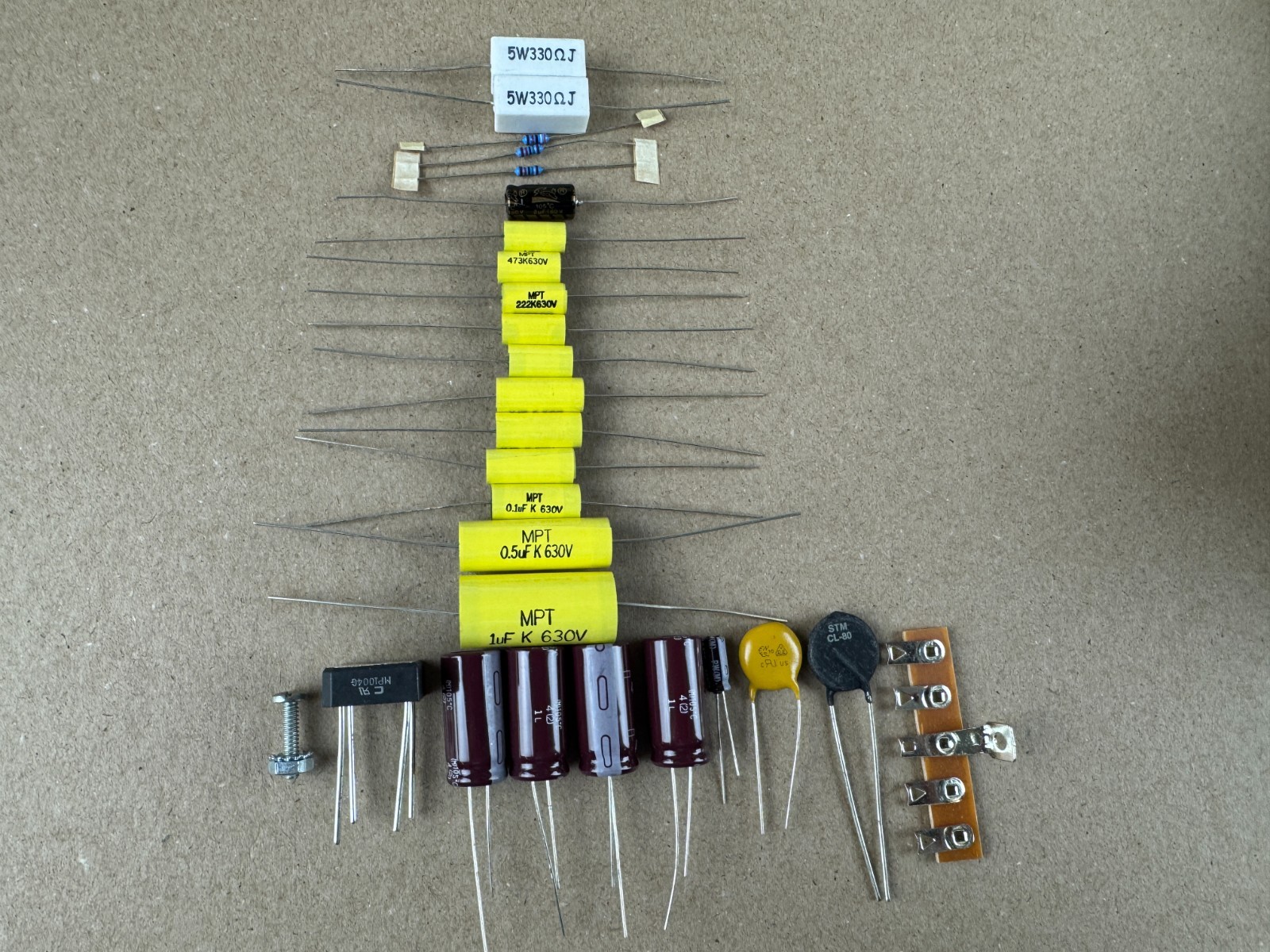
- Capacitor Replacement: Replace all electrolytic and paper capacitors, especially the coupling and power supply caps. Aging capacitors are the most common cause of noise, hum, or failure.
- Tube Testing: Test all tubes (6AQ8, 6U8, 6BA6, 6AL5, 6AU6) for wear. Weak or noisy tubes should be replaced with tested NOS (New Old Stock) or high-quality equivalents.
- Cleaning: Use contact cleaner on the tuning knob shaft, input jacks, and selector switches to eliminate crackling or intermittent signals.
- Alignment: The FM-100 should be professionally aligned using a signal generator and proper service manual procedures. Misalignment can significantly reduce sensitivity and stereo separation.
- Power Transformer Check: Verify the power transformer outputs correct voltages. While generally reliable, older transformers can develop shorts or excessive hum.
- Tuning Meter Calibration: Ensure the tuning meter is functioning and properly calibrated for accurate signal indication.
Restoration is highly recommended before regular use, as original units may have degraded components after decades of storage.
Collectibility and Market Value
The Fisher FM-100 holds moderate collectibility with a rating of 6/10 among vintage audio enthusiasts. While not as rare or iconic as some of Fisher’s later models (like the 500 or 800 series), it remains a respected representative of early 1960s tuner design.
- Market Value: $100–$250 USD
- Unrestored units in working condition typically sell at the lower end.
- Fully restored and aligned units command higher prices, especially when sold with original documentation or accessories.
Its value is enhanced by its compatibility with stereo adapters, originality, and overall condition. Collectors appreciate its classic styling, functional design, and place in Fisher’s engineering lineage.
Conclusion
The Fisher FM-100 is a well-crafted FM tuner that reflects the high standards of early 1960s audio engineering. While it requires attention to maintenance and restoration, it remains a rewarding piece for vintage audio enthusiasts seeking authentic tube-era FM performance. With its precise tuning, warm reception quality, and historical significance, the FM-100 continues to earn respect in the world of classic hi-fi.
eBay Listings



As an eBay Partner, we earn from qualifying purchases. This helps support our independent vintage technology research.
Related Models
- Fisher FM-100-C (1960)
- Fisher FM-200 (1971)
- Fisher FMR-1
- Fisher FM-100-B (1963)
- Fisher FM-1000 (1968)
- Aiwa CS-250 (1978)
- Denon TU-1500RD (1995)
- Denon TU-280 (1976)
- Denon TU-501 (1977)
- Denon TU-550 (1978)