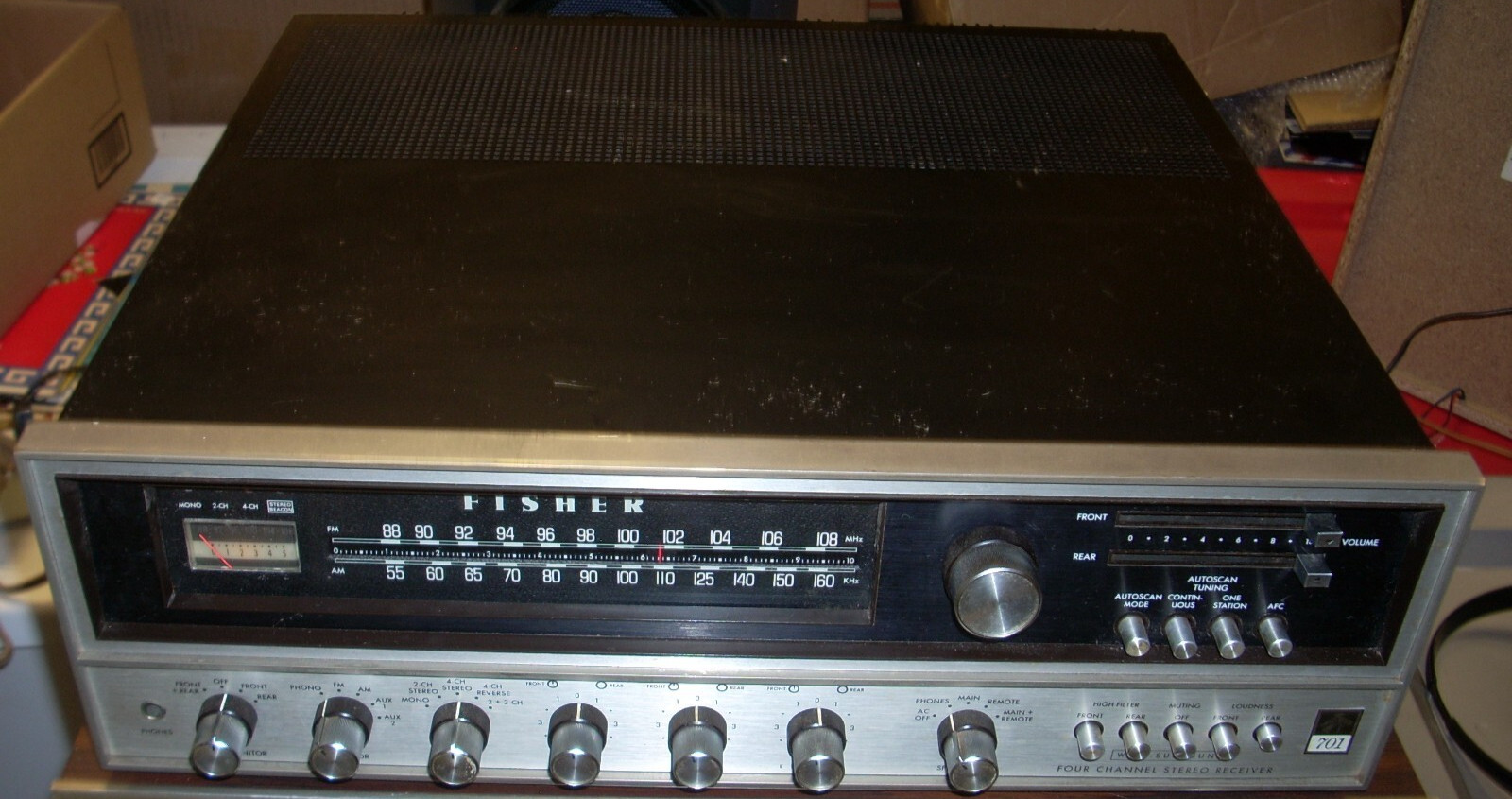
Fisher 701 Stereo Amplifier
The Fisher 701 is a classic stereo amplifier introduced in 1963 as part of Fisher's mid-1960s push into higher-fidelity, higher-power audio equipment. Representing a transitional period in amplifier design, the 701 blends the robust build quality and warm sonic character of tube-era engineering with the emerging reliability and efficiency of solid-state technology. Known for its clean, musical sound and thoughtful feature set, the 701 remains a respected piece among vintage audio enthusiasts.
Specifications
| Feature | Specification |
| Model | Fisher 701 |
| Year of Production | 1963–1964 |
| Power Output | 40 watts total (20 watts per channel, stereo) |
| Impedance | 4, 8, and 16 ohms (switchable speaker outputs) |
| Frequency Response | Not officially documented |
| Total Harmonic Distortion | Not officially documented |
| Input Sensitivity | Unknown |
| Inputs | Phono, Tuner, Auxiliary |
| Outputs | Tape Out, Speaker taps (4/8/16 ohms), Headphones |
| Tone Controls | Separate bass and treble controls |
| Special Features | Push-pull output stage, dual power transformers, stereo headphone jack, high/low filter switches, tape monitor function |
| Dimensions | 19" W × 7" H × 13" D (approx.) |
| Weight | ~35 lbs |
| Construction | Solid-state (transistorized), point-to-point wiring |
Historical Context
The Fisher 701 emerged during a pivotal moment in audio history—the early 1960s, when solid-state technology was beginning to replace vacuum tubes in consumer audio equipment. Fisher, already renowned for its high-quality tuners and amplifiers, positioned the 701 as a premium stereo amplifier that retained the sonic warmth and build integrity of its tube-based predecessors while embracing the advantages of transistorized design.
Unlike many early solid-state amplifiers that were criticized for harsh or clinical sound, the 701 was engineered to deliver a smooth, musical presentation—often compared favorably to tube amplifiers of the era. Its dual transformer design and push-pull output stage contributed to stable performance and low noise, making it a favorite among audiophiles seeking reliability without sacrificing sonic character.
Part of Fisher's broader commitment to high fidelity, the 701 was often paired with other components in the Fisher lineup, such as the TX-500 tuner or the P-700 preamplifier, forming a complete and cohesive audio system.
Sound Signature
The Fisher 701 is celebrated for its warm, smooth, and engaging sound. It avoids the brittleness sometimes associated with early transistor amplifiers, instead offering a balanced tonal presentation with rich midrange, well-controlled bass, and extended but non-fatiguing highs. Its musicality and clarity make it well-suited for jazz, classical, and vocal recordings, and it pairs particularly well with high-efficiency speakers.
Many users note that the 701 delivers a surprisingly "tube-like" character, likely due to its conservative circuit design and high-quality components. The inclusion of a tape monitor function and high/low filter switches also adds flexibility for source matching and room acoustics.
Maintenance and Restoration Tips
While the Fisher 701 is known for its durable construction, units from the 1960s require careful evaluation before use. Over 60 years of aging can lead to degraded components and potential reliability issues.
Common Issues:
- Aging Capacitors: Electrolytic capacitors, especially in the power supply and signal path, are prone to drying out and failure. A full recapping is strongly recommended.
- Transistor Failure: While generally reliable, early germanium or silicon transistors can fail. Testing and replacement with modern equivalents (if needed) improves longevity.
- Noisy Controls: Bass, treble, and input selector pots often develop scratchiness. Cleaning with contact cleaner may help, but replacement with modern pots may be necessary.
- Power Supply Stability: Check for correct voltage rails and ripple. Weak or failing power supplies can damage downstream components.
Recommended Servicing Steps:
1. Perform a full visual inspection for cracked solder joints, corroded connectors, or bulging capacitors.
2. Replace all electrolytic capacitors (recapping).
3. Test transistors and diodes; replace any out-of-spec components.
4. Clean all controls and switches with electronic contact cleaner.
5. Verify proper grounding and speaker tap functionality.
6. Use a variac for initial power-up to avoid catastrophic failure.
Once restored, the 701 can provide years of reliable, high-quality performance.
Market Value and Collectibility
The Fisher 701 typically sells in the $150–$300 range, depending on condition and whether it has been professionally restored. Fully serviced units with clean cosmetics command higher prices, especially when sold as part of a matching Fisher system.
Collectibility Rating: 6/10
While not as rare or iconic as some Fisher tuners (like the FR-8), the 701 holds steady appeal among vintage audio collectors due to its solid performance, classic design, and historical significance in the transition from tubes to transistors.
Conclusion
The Fisher 701 stereo amplifier stands as a well-engineered bridge between two eras of audio technology. With its warm sound, robust build, and thoughtful feature set, it remains a rewarding find for vintage audio enthusiasts. While it requires careful restoration to reach its full potential, a properly maintained 701 delivers a listening experience that rivals more modern amplifiers—proving that great design never truly goes out of style.
eBay Listings


As an eBay Partner, we earn from qualifying purchases. This helps support our independent vintage technology research.
Related Models
- Fisher 400-cx
- Fisher 220-t
- Fisher 250-t
- Fisher 440a
- Fisher 450-t
- Luxman L-530 (1975)
- Luxman R-404 (1975)
- Luxman RV-371 (1975)
- Luxman SQ-38U (1975)
- Luxman T-14 (1972)