ESS AMT-Series: The Pioneering Voice of Air Motion Technology
In the late 1970s, as audiophiles sought ever-greater clarity and transparency from their high-fidelity systems, a small but visionary company named ESS (Electro-Static Sound) emerged with a bold innovation: the Air Motion Transformer (AMT) tweeter. The ESS AMT-Series of loudspeakers, introduced in 1978, represented a radical departure from conventional dome tweeters and helped establish ESS as a cult favorite among discerning listeners and audio engineers alike. While not as widely known as contemporaries like JBL or AR, ESS carved out a unique niche with its focus on ultra-fast transient response, low distortion, and an open, lifelike high-frequency reproduction that stunned those who heard it.
The AMT-Series was not a single model but rather a family of speakers unified by the use of ESS’s proprietary AMT tweeter technology. These speakers were often hybrid designs—combining the AMT tweeter with conventional midrange and bass drivers or, in some high-end variants, integrated with electrostatic or planar magnetic panels. The goal was clear: to deliver a level of detail and speed in the upper frequencies that traditional tweeters simply couldn’t match.
Technical Specifications
| Specification | Detail |
| Manufacturer | ESS (Electro-Static Sound) |
| Product Line | AMT-Series |
| Introduction Year | 1978 |
| Type | Hybrid loudspeaker (dynamic + AMT) or planar hybrid |
| Tweeter Type | Air Motion Transformer (AMT) |
| Frequency Response | 20 Hz – 25 kHz (varies by model) |
| Sensitivity | 86 – 89 dB (1W/1m) |
| Nominal Impedance | 8 ohms (compatible with most amplifiers) |
| Crossover Type | Passive, 2nd or 3rd order (model-dependent) |
| Enclosure Type | Bass reflex or transmission line (varies) |
| Dimensions (approx.) | Varies by model; typically 40–44" tall |
| Weight | 45 – 65 lbs per speaker |
| Recommended Amplification | 50 – 200 watts per channel |
Sound Characteristics and Performance
The defining sonic signature of the ESS AMT-Series lies in its exceptional high-frequency reproduction. The Air Motion Transformer tweeter operates on a fundamentally different principle than dome or cone tweeters. Instead of a diaphragm moving back and forth, the AMT uses a pleated, conductive membrane suspended in a strong magnetic field. When an audio signal is applied, the folds of the membrane "squeeze" and "expand" air, effectively pushing it forward in a piston-like motion—hence "air motion."
This design results in several key advantages:
- Extremely low mass: The diaphragm is incredibly lightweight, allowing for near-instantaneous response to transients.
- High efficiency in the treble range: More sound output per watt compared to conventional tweeters.
- Lower distortion: Especially in the critical 2–10 kHz range where the human ear is most sensitive.
Listeners often describe the AMT tweeter’s sound as crisp, airy, and remarkably detailed, without the harshness or "etched" quality that can plague some metal-dome tweeters. Cymbals shimmer with realism, vocals are rendered with uncanny presence, and the overall soundstage is wide and deeply layered. The midrange, typically handled by a paper or polypropylene cone driver, is smooth and well-integrated, though some early models exhibit a slight discontinuity at the crossover point—a known quirk of first-generation AMT designs.
Bass performance varies significantly across the AMT-Series. Entry-level models relied on modest 8" or 10" woofers in reflex cabinets, offering tight but limited low-end extension. Higher-end versions, such as the AMT-200 or the rare AMT-300E, paired the AMT tweeter with larger drivers or even full-range planar panels, delivering a more balanced, full-range experience suitable for serious listening environments.
Notable Features and Innovations
The ESS AMT-Series was groundbreaking for several reasons:
- First Commercial AMT Tweeter: ESS founder Dr. Oskar Heil developed the Air Motion Transformer in the 1970s, and ESS was the first company to successfully commercialize it in consumer loudspeakers.
- Hybrid Design Philosophy: Rather than building fully planar speakers (which were expensive and difficult to drive), ESS used the AMT only for high frequencies, combining it with proven dynamic drivers for mid and bass—offering high-end performance at a more accessible price.
- Modular Construction: Some models allowed users to upgrade or replace the AMT module, a rare feature at the time.
- Low Resonance Cabinet Design: ESS employed constrained-layer damping and internal bracing to minimize cabinet coloration, ensuring the AMT’s clarity wasn’t masked by boxy resonances.
The AMT tweeter itself became a sought-after component, later licensed or reverse-engineered by other manufacturers, including Elac and ADAM Audio—proof of its lasting influence.
Common Issues and Maintenance
While revered for their sound, vintage ESS AMT-Series speakers require careful attention:
- AMT Diaphragm Degradation: The ultra-thin pleated diaphragm can become brittle over time, especially in dry or high-humidity environments. Tears or sagging result in distortion or complete failure.
- Oxidation of Conductive Traces: The aluminum strips on the diaphragm can oxidize, increasing resistance and reducing output.
- Crossover Component Aging: Electrolytic capacitors in older crossovers may dry out, leading to tonal imbalances or tweeter damage.
- Driver Wear: Woofers and midrange drivers from the late '70s and early '80s often suffer from surround disintegration (foam rot).
Maintenance Tips:
- Store in a climate-controlled environment.
- Inspect the AMT panel under bright light for tears or warping.
- Have crossovers recapped by a qualified technician.
- Consider reconing or replacing aging woofers with modern equivalents.
- Avoid high SPLs with aged units—AMT tweeters are efficient but fragile when degraded.
Fortunately, a small but dedicated community of ESS enthusiasts exists online, and replacement AMT panels or repair services are occasionally available through specialty audio restorers.
Current Market Value and Collectibility
The ESS AMT-Series occupies a unique space in the vintage audio market. While not as mainstream as AR, KLH, or Advent speakers, they are highly collectible among AMT and planar speaker aficionados. Well-maintained examples in original condition can fetch $400 to $1,200 per pair, depending on model, rarity, and condition. The AMT-200 and AMT-300E command the highest prices, especially if they include original packaging or documentation.
Their value is driven more by technical significance and sonic uniqueness than brand cachet. Audiophiles seeking a "different" sound—fast, transparent, and highly detailed—often turn to vintage AMT designs as a refreshing alternative to modern high-efficiency tweeters.
Conclusion and Legacy
The ESS AMT-Series stands as a landmark in loudspeaker innovation. It brought Dr. Heil’s revolutionary Air Motion Transformer to the consumer market, offering a glimpse into a future of ultra-low-distortion, high-speed treble reproduction. While the series never achieved mass-market success, its influence echoes through modern high-end audio—where AMT tweeters are now celebrated in brands like Elac, ADAM, and Monolith.
For the vintage audio enthusiast, owning a pair of ESS AMT-Series speakers is more than a nostalgic indulgence; it’s a connection to a pivotal moment in transducer design. These speakers remind us that true innovation often comes not from incremental improvements, but from daring to move air in an entirely new way. If you can find a well-preserved pair and treat them with care, the ESS AMT-Series will reward you with a listening experience that remains, decades later, startlingly alive.
eBay Listings
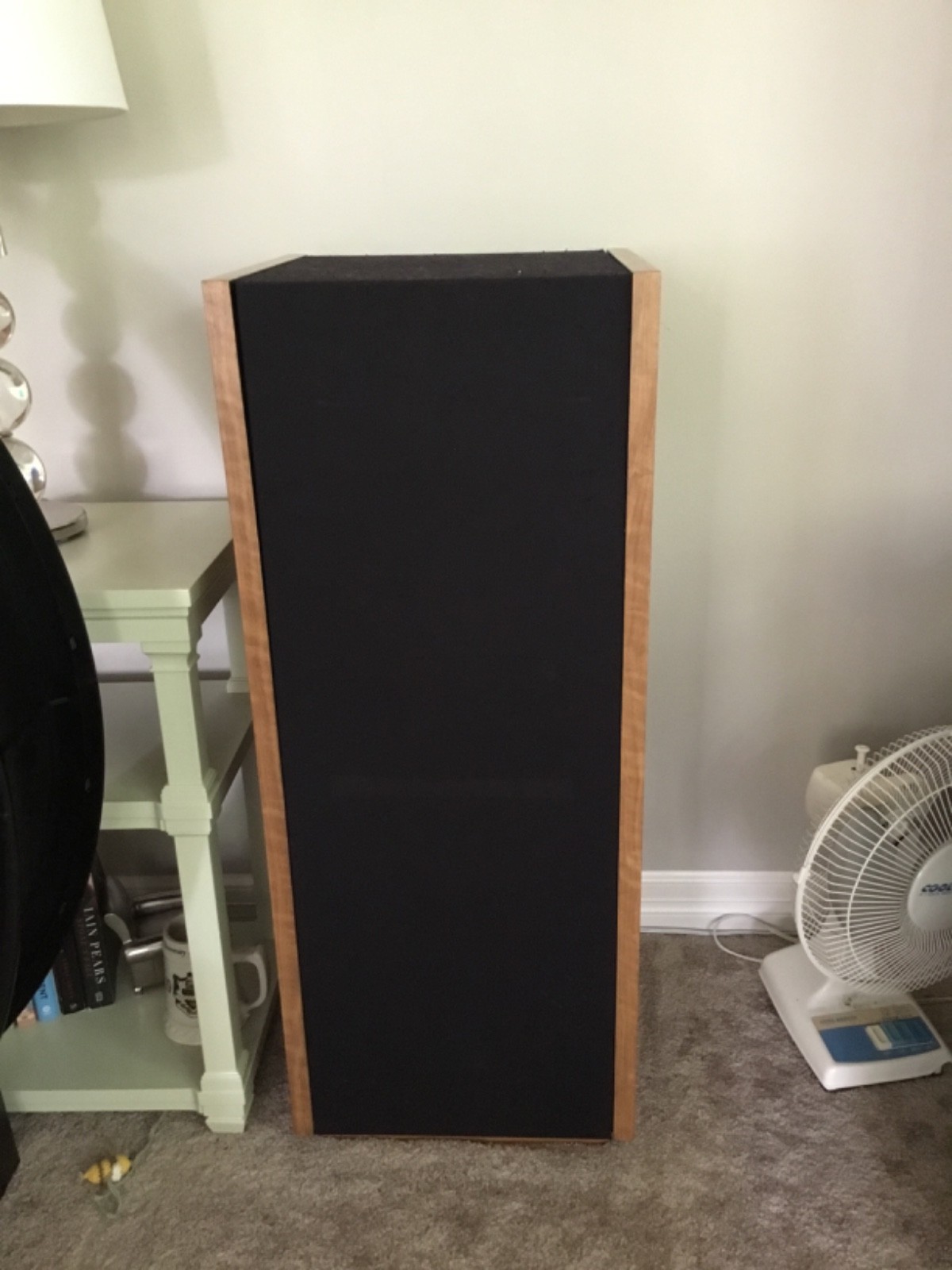
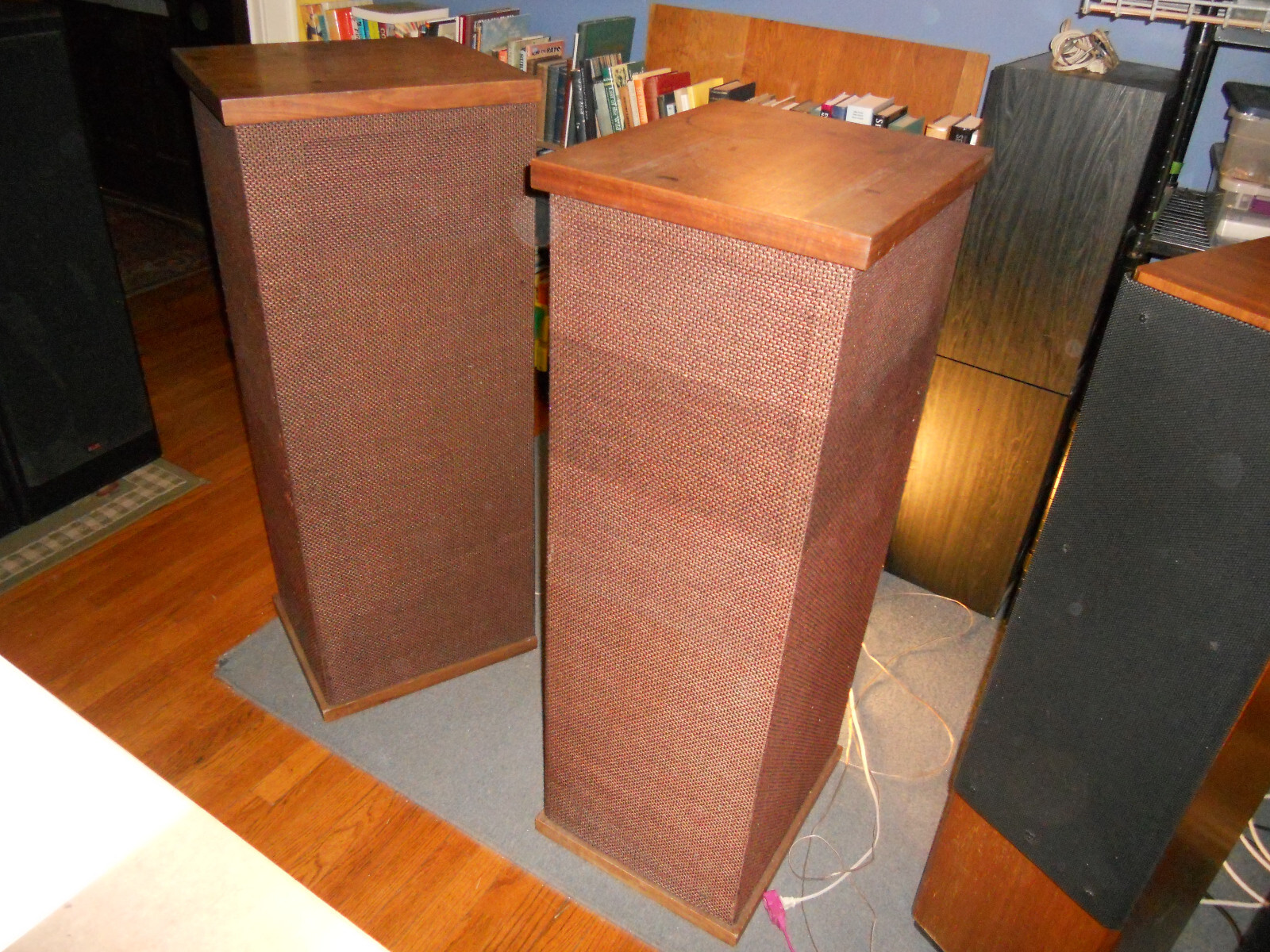
As an eBay Partner, we earn from qualifying purchases. This helps support our independent vintage technology research.
Related Models
- ESS PS-61 (1978)
- ESS AMT-1-TOWER (1978)
- ESS AMT-1 (1978)
- ESS AMT-10 (1978)
- ESS AMT-1A (1978)
- Akai AM-2850 (1975)
- Akai AP-206 (1975)
- Nakamichi BX-1 (1985)
- Acoustic Research research-ar-17 (1978)
- Acoustic Research AR-19 (1994)