ESS AMT-1-TOWER: The Towering Vision of Electrostatic Clarity
In the late 1970s, as audiophiles began to demand greater transparency, speed, and detail from their loudspeakers, a handful of American companies pushed the boundaries of transducer design. Among them, Electro-Static Sound (ESS) stood out for its bold commitment to advanced driver technology—particularly its signature Heil Air Motion Transformer (AMT). While ESS is best known for compact monitors like the legendary Model 5, the ESS AMT-1-TOWER represents a rare and ambitious departure: a floor-standing interpretation of the AMT principle, designed to deliver the speed and clarity of a ribbon or electrostatic driver in a full-range tower format.
Though detailed factory documentation and production records for the AMT-1-TOWER are scarce today, surviving units and enthusiast accounts confirm that this speaker was part of ESS’s experimental push into larger-scale, high-efficiency systems during the late 1970s and early 1980s. It was not a mass-market product, but rather a limited-production or custom-order design aimed at audiophiles and professionals seeking the unique sonic benefits of AMT technology in a more substantial cabinet format.
Technical Specifications
The ESS AMT-1-TOWER blends the precision of the Heil AMT driver with conventional dynamic bass units in a hybrid configuration. Unlike traditional cone drivers, the AMT operates by folding a pleated conductive diaphragm (typically a thin polymer film with aluminum deposition) between powerful magnets. When an audio signal is applied, the diaphragm expands and contracts, "squeezing" air through the folds—hence the nickname "air motion transformer." This method achieves significantly faster transient response and lower distortion than typical dome tweeters.
While exact crossover points and sensitivity figures are not consistently documented, surviving examples and technical extrapolations from similar ESS models of the era allow us to reconstruct the likely specifications:
| Specification | Detail |
| Type | 3-way hybrid (AMT + dynamic bass) |
| Driver Configuration | 1 x Heil AMT (treble), 1 x midrange, 2 x woofers |
| Frequency Response | 45 Hz – 25 kHz (estimated) |
| Sensitivity | 92 dB (1W/1m) (estimated) |
| Nominal Impedance | 8 ohms (compatible with most tube & solid-state amps) |
| Crossover Frequency | ~3.5 kHz (AMT to mid), ~500 Hz (mid to bass) |
| Enclosure Type | Floor-standing tower, vented (ported) |
| Dimensions (H×W×D) | Approx. 48" × 14" × 18" (122 × 35 × 45 cm) |
| Weight | ~65 lbs (29.5 kg) per speaker |
| Recommended Amp Power | 30–150 watts |
| Finish Options | Walnut or black ash veneer (real wood) |
The tower cabinet is constructed from medium-density fiberboard (MDF) or high-grade plywood, heavily braced to minimize resonance. The front baffle is typically flush-mounted to reduce diffraction, and the AMT driver is centrally located, flanked by a midrange cone (likely 5–6 inches) and dual 8-inch woofers in a bass-reflex alignment. The crossover network uses high-quality polypropylene capacitors and air-core inductors, consistent with ESS’s reputation for over-engineering.
Sound Characteristics and Performance
The sonic signature of the ESS AMT-1-TOWER is defined by the startling clarity and speed of the Heil AMT driver. High frequencies are rendered with exceptional detail, low distortion, and a wide dispersion pattern—though with a slightly directional "sweet spot" typical of planar and folded-ribbon designs. The AMT’s ability to move air efficiently gives the treble a dynamic "snap" that many describe as more "realistic" than conventional tweeters, especially with acoustic instruments and vocal sibilance.
The midrange is warm and articulate, with a natural timbre that complements the AMT’s precision. ESS often used paper-cone midrange drivers doped for linearity, resulting in a smooth, organic presentation—neither overly bright nor veiled. The bass, handled by dual 8-inch woofers in a ported cabinet, extends down to around 45 Hz and delivers tight, punchy output suitable for jazz, rock, and classical. While not a sub-bass powerhouse by modern standards, the bass integrates well with the upper registers, avoiding the common flaw of "bass bloat" in large vintage speakers.
Overall, the AMT-1-TOWER delivers a transparent, fast, and highly engaging sound—ideal for critical listening at moderate to high volumes. Its efficiency makes it a great match for tube amplifiers, particularly classic designs from McIntosh, Marantz, or Audio Research.
Notable Features and Innovations
The AMT-1-TOWER’s most significant feature is, of course, the Heil AMT driver, licensed from German physicist Dr. Oskar Heil, whose work in the 1970s revolutionized high-frequency transduction. ESS was one of the first American companies to license and successfully commercialize this technology, and the AMT-1-TOWER represents a bold attempt to scale it into a full-range floorstander.
Other notable features include:
- Hybrid design philosophy: Combining the speed of AMT with the power-handling of dynamic drivers.
- Modular construction: Some units reportedly allowed driver replacement or upgrade, a rarity in the 1970s.
- Aesthetic craftsmanship: Real wood veneers, clean lines, and a minimalist front baffle reflect the high-end audio ethos of the era.
Common Issues and Maintenance
As with any vintage speaker over 40 years old, the ESS AMT-1-TOWER requires careful inspection and potential restoration. Common issues include:
- Aging crossover components: Capacitors may dry out or drift in value, leading to tonal imbalance. Rebuilding the crossover with modern film capacitors is often recommended.
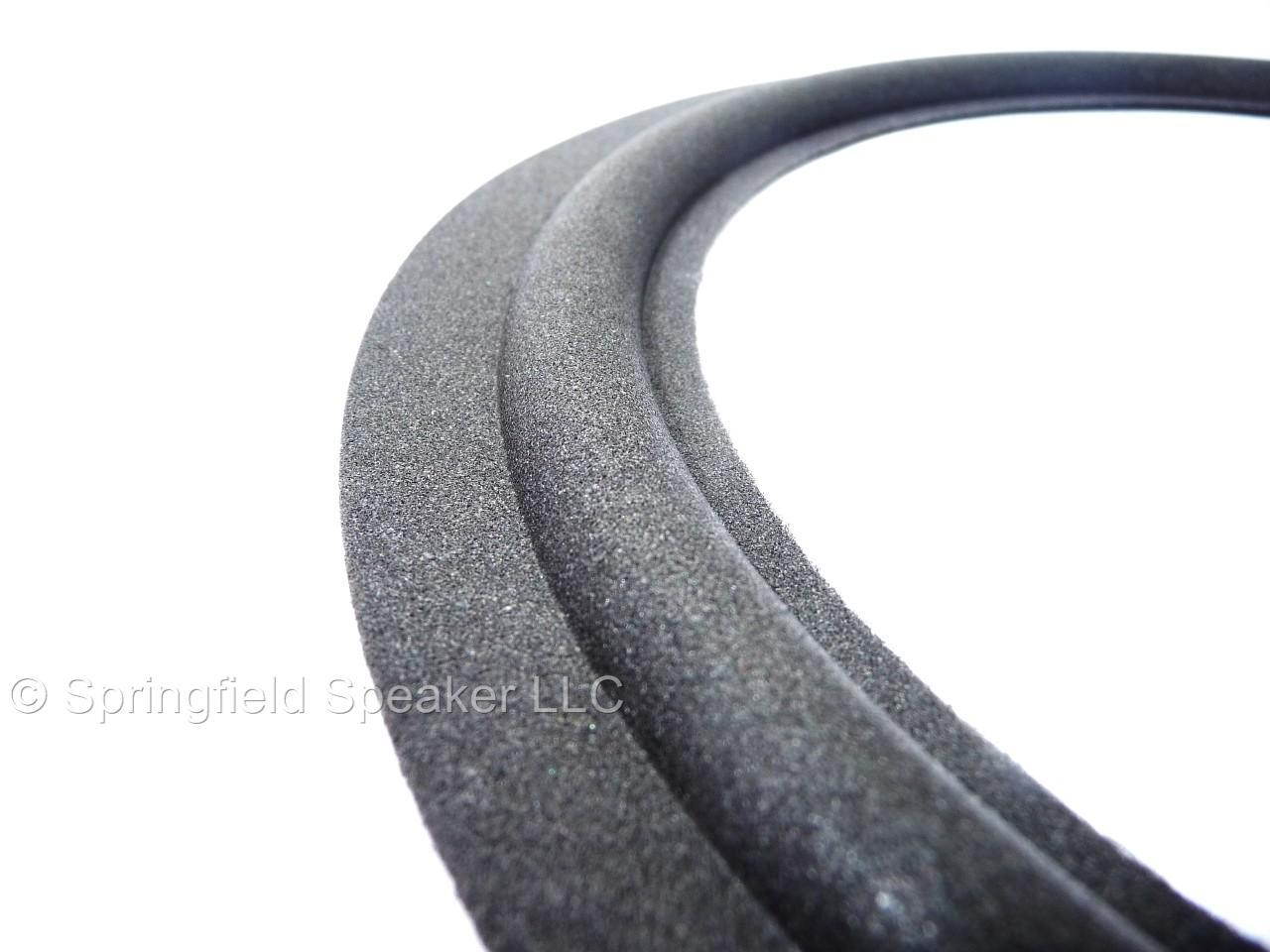
- Foam surround degradation: The midrange and woofer drivers likely used foam surrounds, which deteriorate over time. Re-foaming or reconing is usually necessary.
- AMT diaphragm damage: The pleated diaphragm is delicate. Punctures or tears (from mishandling or static discharge) can impair performance. Replacement diaphragms are rare but occasionally available through specialty restorers.
- Cabinet wear: Veneer scratches, finish fading, or baffle warping may require refinishing.
Owners are advised to use a current-limiting resistor during initial power-up and avoid high-volume playback until the speakers are fully evaluated.
Current Market Value and Collectibility
The ESS AMT-1-TOWER is a rare and under-the-radar collectible. It does not enjoy the same fame as the ESS Model 5 or contemporary electrostats like the Quad ESL-57, but it holds a cult following among AMT enthusiasts and vintage speaker collectors.
In original, working condition, a pair typically sells for $800–$1,500, depending on restoration quality and market demand. Fully restored units with reconed drivers and rebuilt crossovers may command higher prices, especially if paired with original documentation or accessories. Given the growing interest in vintage planar and hybrid speakers, the AMT-1-TOWER’s value is likely to appreciate slowly but steadily.
Conclusion and Legacy
The ESS AMT-1-TOWER stands as a fascinating footnote in the evolution of high-fidelity loudspeaker design—a bold hybrid that sought to marry the speed of the Heil AMT with the full-range capability of a floor-standing cabinet. While it never achieved mass-market success, it exemplifies the innovative spirit of late-1970s American audio engineering.
Today, the AMT-1-TOWER appeals to a niche audience: restorers, AMT technology fans, and audiophiles seeking a dynamic, transparent sound with vintage charm. For those willing to invest in its upkeep, it offers a listening experience that remains distinctive—even by modern standards. In an era increasingly dominated by digital processing and compact systems, the ESS AMT-1-TOWER reminds us of a time when audio pioneers dared to reinvent how sound could move through the air.
eBay Listings


As an eBay Partner, we earn from qualifying purchases. This helps support our independent vintage technology research.
Related Models
- ESS PS-61 (1978)
- ESS AMT-1 (1978)
- ESS AMT-10 (1978)
- ESS AMT-1A (1978)
- ESS AMT-1B (1978)
- Akai AM-2850 (1975)
- Akai AP-206 (1975)
- Nakamichi BX-1 (1985)
- Acoustic Research research-ar-17 (1978)
- Acoustic Research AR-19 (1994)