Electro-Voice 12TRXB
A three-way 12-inch coaxial that Electro-Voice pitched as the "best buy" for over a decade, and priced accordingly.
Overview
Seventy-three dollars and fifty cents. That's what Electro-Voice's own catalog copy listed the 12TRXB at in 1964 and again in 1966. It's a three-way 12-inch integrated speaker, and it sat well above the company's $41.25 SP12B coaxial in the same line. High Fidelity (April 1966, p.135) carried the same figure. The company's advertising called the 12TRXB and SP12B "best buys" that had been "chosen for over a decade by listeners and laboratories alike." That decade claim is the manufacturer's own, so treat it as marketing and not a certified production timeline. It does show the 12TRXB sold year after year, with the same ad copy recycled across Audio (October 1962, p.42) and HiFI-Stereo (November 1966, p.40).
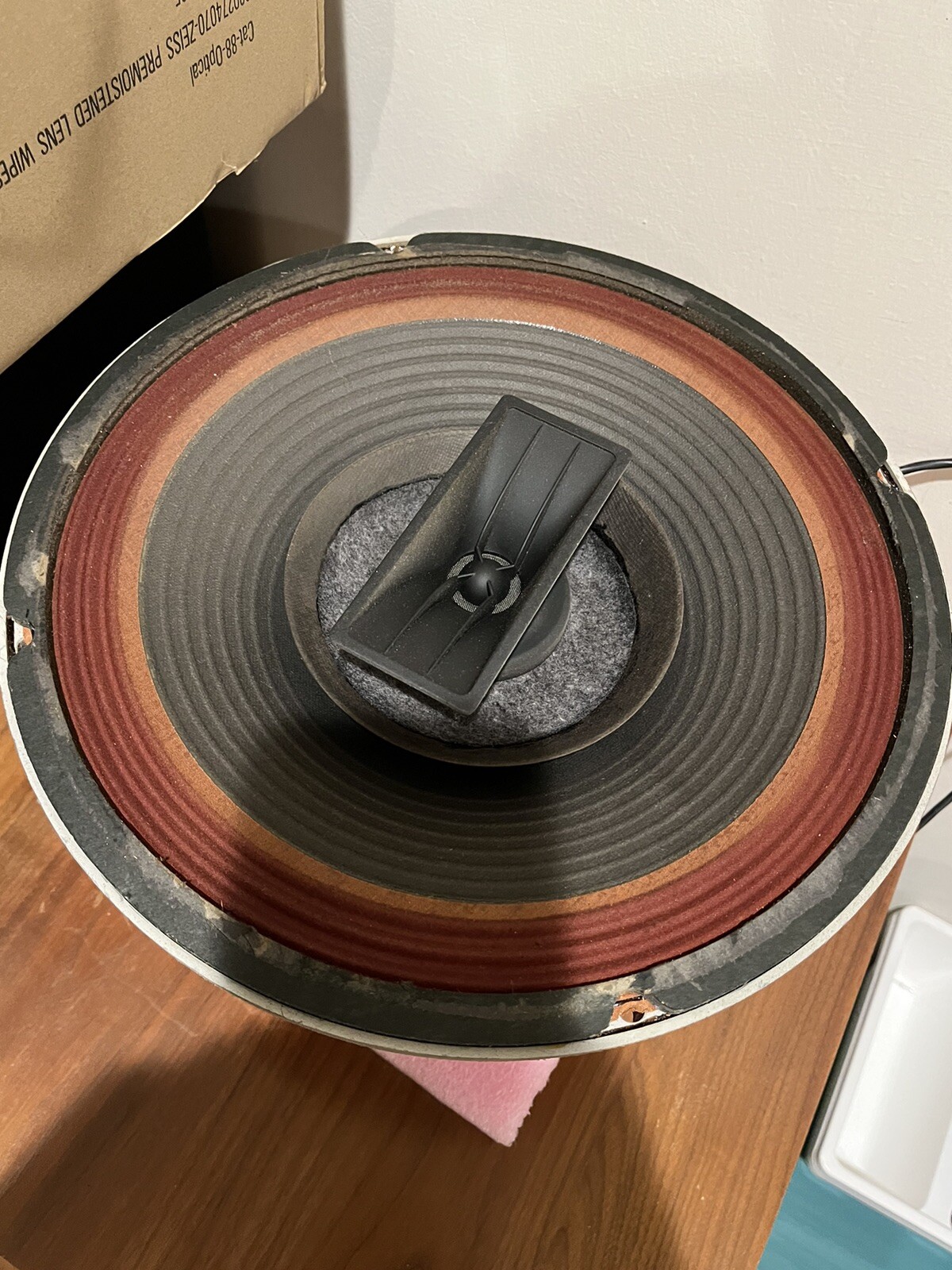
So what is the 12TRXB? It's a 12-inch, three-way integrated loudspeaker. It's a coaxial-type driver that bundles woofer, midrange, and tweeter into a single chassis meant to drop into a custom cabinet. Electro-Voice's literature describes the SP12B and 12TRXB as "custom loudspeakers" with "the honest beauty of precision," and the ad copy says "every detail of design has been refined, every manufacturing tolerance tightened." How much of that is engineering and how much is Madison Avenue is hard to separate from the surviving print. The design intent is clear enough: a single driver the buyer could build around.
One detail from the period literature matters to anyone using one: the 12TRXB carries its own tweeter level control, mounted on the driver itself. A 1960s Electronic Experimenter's Handbook project, a bass-reflex build called the "Club Sandwich" designed around this speaker, tells the builder to mount that tweeter control on the rear panel. It also has the builder cut a circular relief in the inner cabinet layer to clear the control body. So the tonal balance is adjustable at the driver, not fixed at the factory. That's handy on a coaxial, where the tweeter sits right at the throat of the woofer and room placement can throw the top end off.
The same handbook offers a rare independent note on how the 12TRXB behaves in a cabinet. Its author reports that "coloration proved no problem when the 12TRXB was installed in the bare cabinet," and credits the tri-layer Celotex/Sheetrock/plywood construction. He adds that the driver's bass resonance "is very low and presents no problem in itself," which is why port tuning in a bass-reflex box isn't as fussy with this speaker as with lesser units. Electro-Voice's own recommendation, per the same article, was a stretched 2-inch layer of "Kimsul" paper on three interior sides. It came with an explicit warning against rock or glass wool that could work its way into the driver's gap.
The 12TRXB also had a cheaper cousin, according to Electro-Voice's own comparison advertising. The company positioned its Wolverine LT12 as a near-equal to the 12TRXB and the 12TRX at $39.00, "so close in features, performance, and sound quality that you may wonder why anyone pays more." The ad concedes the more expensive E-V units have "larger magnets and even tighter tolerances for smoother, wider range and higher efficiency." So the 12TRXB's premium bought headroom and refinement, not a different architecture. Buyers who wanted the E-V three-way recipe on a budget were steered to the Wolverine. Buyers who wanted the real thing paid the $73.50.
Anyone chasing a 12TRXB today should expect a driver, not a system. These were sold as custom components, and the cabinets were the buyer's problem (or the builder's, as the Club Sandwich article makes plain). The tweeter control is part of the driver and needs to survive intact. A missing or frozen level pot is a real strike against a used example. By its own account, and by the magazine placement it bought, Electro-Voice was one of the names serious hobbyists considered when building a system in the early-to-mid 1960s.
eBay Listings



As an eBay Partner, we earn from qualifying purchases. This helps support our independent vintage technology research.