Eico HFT-94 High-Fidelity Test Oscillator: The Vintage Technician’s Sonic Tuning Fork
In the golden era of hi-fi, when vacuum tubes glowed behind walnut cabinets and audiophiles debated crossover networks over coffee, precision audio measurement was not a luxury—it was a necessity. For service technicians, audio engineers, and serious hobbyists of the 1960s, the Eico HFT-94 High-Fidelity Test Oscillator was more than a tool; it was a trusted companion in the quest for sonic purity. Though not a component for playback, the HFT-94 played a vital role in shaping the sound of countless vintage audio systems by enabling accurate alignment, calibration, and troubleshooting.
Manufactured by Eico (Electronic Instrument Company)—a well-known name in DIY electronics and test equipment—the HFT-94 was introduced in 1960 as a precision audio oscillator designed specifically for high-fidelity applications. Unlike consumer gear, the HFT-94 belongs to the "other" category: professional-grade test equipment built for accuracy, stability, and reliability in service environments. While it never graced a living room shelf, its influence on the performance of vintage receivers, amplifiers, and tape decks was profound.
Technical Specifications
The Eico HFT-94 was engineered to deliver a clean, stable sine wave across the entire audible spectrum and beyond, making it ideal for aligning preamplifiers, testing frequency response, and diagnosing distortion in audio circuits. It was commonly used alongside vacuum tube voltmeters (VTVMs) and oscilloscopes in service shops across America.
| Specification | Detail |
| Frequency Range | 10 Hz – 100 kHz (in 5 overlapping bands) |
| Output Voltage | Continuously variable, 0–10 V RMS (unloaded) |
| Output Impedance | 600 Ω, 10 kΩ, and High-Z (switchable) |
| Distortion | Less than 0.1% THD (typical) |
| Frequency Stability | ±0.5% over 1 hour (warm-up) |
| Power Requirement | 117 VAC, 60 Hz, 40 watts |
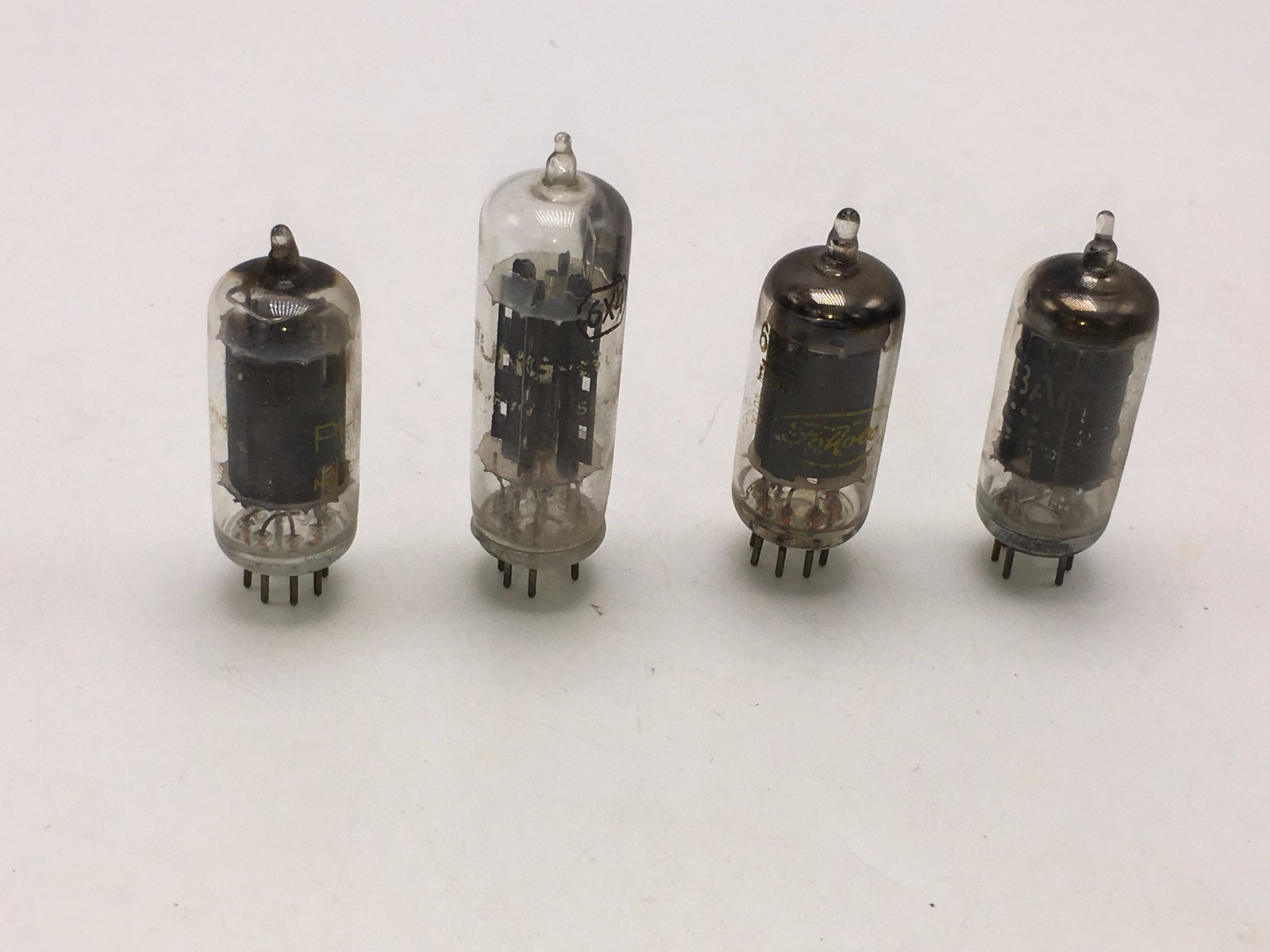
| Tube Complement | 6SN7GT, 6SL7GT, 6X4, 6V6GT |
| Dimensions | 11" W × 7" H × 10" D |
| Weight | Approx. 18 lbs |
| Manufacturer | Eico (Electronic Instrument Company) |
| Year of Introduction | 1960 |
The oscillator used a bridged-T network design for low distortion and excellent frequency stability. Its five-band rotary selector allowed precise tuning from subsonic 10 Hz up to ultrasonic 100 kHz—far beyond the range of human hearing, which made it useful for testing tape recorder response and filter roll-offs. A large, calibrated dial with a vernier control enabled fine frequency adjustments, while a built-in attenuator provided precise output level control from +10 dB down to -80 dB.
Sound Characteristics and Performance
While the HFT-94 doesn’t “produce sound” in the traditional sense, its signal purity was critical to accurate audio testing. The oscillator was renowned for its exceptionally low harmonic distortion, often cited at less than 0.1%—remarkable for a tube-based design of its era. This clean output ensured that when technicians used it to measure frequency response or distortion in amplifiers, the results reflected the device under test, not the test gear.
Its wide frequency range allowed for comprehensive system analysis. For example, aligning the bass and treble response of a tube preamp or checking the high-frequency roll-off of a magnetic phono cartridge required a stable, accurate source. The HFT-94 delivered just that. Its ability to generate signals at 20 Hz and 20 kHz with minimal amplitude variation made it ideal for plotting response curves on chart paper or oscilloscopes.
Notable Features and Innovations
The HFT-94 stood out among its contemporaries for several reasons:
- Switchable Output Impedance: The ability to select 600 Ω, 10 kΩ, or high-impedance output made it compatible with a wide range of equipment, from professional audio gear (which often used 600 Ω matching) to high-Z tube inputs.
- Push-Pull Output Stage: Using a 6V6GT tube, the output stage provided robust signal levels without loading down the oscillator circuit, maintaining stability even under varying load conditions.
- Vernier Dial with Magnifying Lens: A precision tuning knob with a magnifying lens over the frequency dial allowed for accurate frequency setting—essential when aligning narrow-band filters or phono equalization networks.
- Modular Construction: Like many Eico kits, the HFT-94 was designed for easy assembly and service. Its open chassis layout made tube replacement and circuit adjustments straightforward.
- Kit or Assembled: Eico famously sold most of its test equipment as kits to save cost, and the HFT-94 was no exception. Technicians could build it themselves, gaining hands-on familiarity with its circuitry—a hallmark of Eico’s educational philosophy.
Common Issues and Maintenance
As with any vintage tube test equipment, the Eico HFT-94 requires careful attention before being powered up after decades of storage.
- Capacitor Aging: The most common issue is degraded electrolytic capacitors in the power supply. These should be replaced before first use to prevent tube damage or internal shorts.
- Tube Wear: The 6SN7, 6SL7, and 6V6 tubes may need replacement if the unit fails to oscillate or shows distorted output. NOS (New Old Stock) tubes are often recommended for authenticity and performance.
- Dial Calibration Drift: Over time, mechanical wear or dried lubricants can affect the accuracy of the frequency dial. Cleaning and relubricating the tuning mechanism may be necessary.
- Resistor Drift: Carbon composition resistors can drift out of tolerance, affecting gain and output level accuracy. A full calibration by a qualified technician is advised for critical work.
- Output Jacks and Switches: Corrosion on switches and jacks is common. Deoxit or contact cleaner can restore reliable connections.
Always power up the HFT-94 through a variac or isolation transformer to avoid surge damage, especially if the unit has been dormant for years.
Current Market Value and Collectibility
The Eico HFT-94 is not a mainstream collectible like a Marantz receiver or McIntosh amplifier, but it holds a special place among vintage test equipment enthusiasts, restoration technicians, and DIY audio builders. Units in working condition typically sell for $150–$300, depending on completeness, originality, and whether they were factory-assembled or kit-built.
Fully restored models with replaced capacitors, calibrated dials, and tested tubes command higher prices, especially when paired with other Eico gear like the HFT-120 Distortion Analyzer. Original manuals and calibration charts add significant value, as they are essential for proper operation.
While not rare, the HFT-94 is increasingly sought after by those restoring vintage audio gear who prefer using period-correct tools. Its clean, minimalist design and robust construction also appeal to collectors of mid-century test equipment.
Conclusion and Legacy
The Eico HFT-94 may not have the glamour of a tube amplifier or the nostalgia of a reel-to-reel deck, but its role in the history of high-fidelity audio is undeniable. It empowered technicians to ensure that every amplifier, preamp, and tape recorder met the exacting standards of the hi-fi movement. In an age before digital signal generators and automated test systems, the HFT-94 was a symbol of precision, craftsmanship, and the DIY spirit.
Today, it stands as a testament to an era when audio excellence was measured not just by ear, but by instrument. For the vintage audio restorer, owning an HFT-94 is like possessing a piece of the engineer’s bench from the 1960s—a direct link to the meticulous care that went into every high-fidelity system of the past. Whether used in active service or proudly displayed as a relic of analog mastery, the Eico HFT-94 remains a quiet hero of the vintage audio world.
eBay Listings


As an eBay Partner, we earn from qualifying purchases. This helps support our independent vintage technology research.
Related Models
- Eico 3570 (1972)
- Eico 3200 (1970)
- Eico HF-65A (1958)
- Eico 2716 (1970)
- Eico 3070 (1969)
- Akai AM-2850 (1975)
- Akai AP-206 (1975)
- Nakamichi BX-1 (1985)
- Acoustic Research research-ar-17 (1978)
- Acoustic Research AR-19 (1994)