Eico HF-92: The Audiophile’s Kit-Built Classic from the Hi-Fi Golden Age
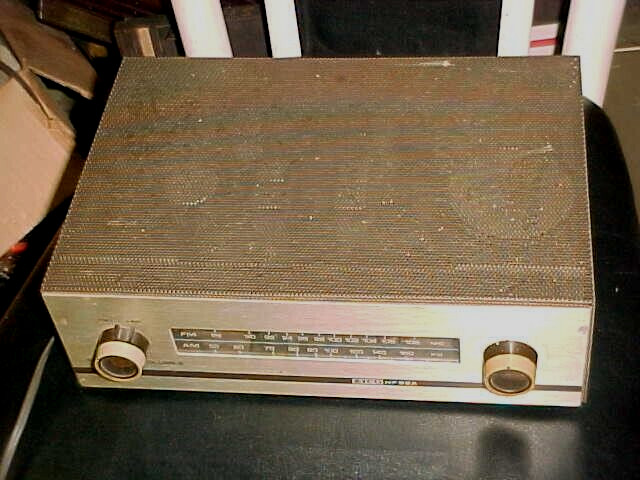
In the mid-1950s, as high-fidelity audio emerged from the realm of radio enthusiasts into the homes of discerning music lovers, Eico stood at the forefront of accessible, high-performance electronics. Among its most celebrated offerings was the Eico HF-92, a push-pull vacuum tube stereo amplifier introduced in 1955 that bridged the gap between amateur craftsmanship and professional-grade sound. Unlike mass-produced units of the era, the HF-92 was designed and sold as a kit, allowing hobbyists to build their own amplifier with pride—while achieving sonic results that rivaled far more expensive commercial models.
The HF-92 wasn’t just another amplifier; it was a statement of engineering integrity and a testament to the DIY spirit that defined early hi-fi culture. For audiophiles and tinkerers alike, building the HF-92 was as much a part of the experience as listening to it. With its robust design, high power output for the time, and meticulous attention to detail, the HF-92 became a benchmark in the world of tube amplification and remains a sought-after piece among vintage audio collectors today.
Technical Specifications
The Eico HF-92 was engineered to deliver clean, dynamic power with minimal distortion—no small feat in an era when many amplifiers struggled with stability and frequency response. Designed as a dual-mono stereo amplifier (two separate monaural units in one chassis), it used a push-pull output stage with beam power tetrodes to achieve impressive performance for its time.
| Specification | Detail |
| Model | Eico HF-92 |
| Year Introduced | 1955 |
| Type | Vacuum tube stereo amplifier (kit) |
| Configuration | Push-pull, Class AB |
| Output Power | 35 watts per channel (8Ω) |
| Output Impedance | 8 ohms (tap selectable) |
| Frequency Response | 15 Hz – 50 kHz (±1 dB) |
| Total Harmonic Distortion | Less than 0.5% (at rated power) |
| Input Sensitivity | 1.4 volts for full output |
| Input Impedance | 1 MΩ (high impedance) |
| Tubes Used | 2x 7193 (driver), 4x 7581 (output), 2x 6AX7 (phase splitter), 1x 5Y3GT (rectifier) |
| Dimensions | 19" W × 9" H × 10.5" D |
| Weight | Approx. 45 lbs |
| Power Requirements | 117V AC, 60 Hz, 500 watts |
| Construction | Kit-form, point-to-point wiring |
Notably, the HF-92 employed ultra-linear feedback topology, a design innovation that improved linearity and reduced distortion by feeding a portion of the output signal back into the screen grids of the output tubes. This contributed significantly to its wide bandwidth and low distortion—hallmarks of true high-fidelity reproduction.
Sound Characteristics and Performance
The sonic signature of the Eico HF-92 is often described as warm, detailed, and dynamically expressive—a hallmark of well-designed tube amplifiers. With 35 watts per channel, it delivered ample power for the efficient speakers of the 1950s and 1960s, such as Altec Lansing, JBL, and Klipsch models. Unlike many amplifiers of the era that rolled off the high and low ends, the HF-92 maintained a remarkably flat frequency response from 15 Hz to 50 kHz, ensuring faithful reproduction of both deep bass and delicate harmonics.
Its ultra-linear design gave it superior control over speaker cones compared to triode or standard pentode configurations, resulting in tighter bass and more precise imaging. Audiophiles who have restored and listened to working HF-92 units often praise its spacious soundstage, natural midrange, and smooth treble—qualities that still hold up today when paired with vintage or modern high-efficiency speakers.
Notable Features and Innovations
The Eico HF-92 stood out not only for its performance but also for its thoughtful engineering and user-focused design:
- Kit-Based Construction: Eico’s philosophy centered on empowering the user. The HF-92 came with a comprehensive instruction manual, detailed wiring diagrams, and pre-drilled chassis, making assembly accessible even to intermediate hobbyists. This approach helped democratize high-end audio during a time when factory-built amplifiers were prohibitively expensive.
- Dual-Mono Design: Each channel operated independently with its own power supply filtering and driver stages, minimizing crosstalk and channel interaction—a rarity in stereo amplifiers of the period.
- Ultra-Linear Feedback: As mentioned, this advanced topology improved fidelity and reduced distortion, placing the HF-92 ahead of many contemporaries.
- Test Points and Calibration: The HF-92 included built-in test points and bias adjustment features, allowing users to fine-tune performance and troubleshoot issues—essential for a kit-built device.
- High-Quality Components: Eico used robust transformers, military-grade resistors, and durable capacitors, contributing to the amplifier’s longevity and reliability.
Common Issues and Maintenance
As with any vintage tube equipment, the Eico HF-92 requires careful maintenance to perform safely and optimally. Common issues include:
- Capacitor Degradation: The electrolytic and paper capacitors from the 1950s are prone to drying out or leaking. A full capacitor replacement (recapping) is strongly recommended before powering up a non-restored unit.
- Tube Wear: The 7581 output tubes (similar to 6L6GC) and 5Y3GT rectifier should be tested or replaced. Modern equivalents are available, but NOS (New Old Stock) tubes are prized for authenticity.
- Resistor Drift: Carbon composition resistors can drift in value over time, affecting bias and gain. Checking and replacing out-of-spec resistors improves performance.
- Transformer Health: The power and output transformers are generally robust, but should be inspected for signs of overheating or insulation breakdown.
- Bias Adjustment: The HF-92 requires periodic bias checks to ensure balanced operation across the output tubes.
Given its kit origins, wiring may vary slightly between units depending on builder skill. A thorough inspection of solder joints and connections is advisable.
Current Market Value and Collectibility
The Eico HF-92 is a highly collectible piece among vintage audio enthusiasts, particularly those who appreciate the craftsmanship of mid-century tube gear. Complete, unrestored kits in good condition typically sell for $300–$500, while fully restored and tested units can fetch $800–$1,200, especially if accompanied by original manuals and packaging.
Its value is driven not only by nostalgia but by its proven sonic performance and historical significance as a gateway to high-fidelity audio for a generation of hobbyists. The HF-92 is often featured in collections focused on DIY electronics, mid-century modern design, and the evolution of home audio.
Conclusion and Legacy
The Eico HF-92 represents a golden intersection of engineering excellence, accessibility, and the joy of creation. More than just an amplifier, it was an invitation to engage deeply with the technology behind music reproduction. In an age when audio equipment is increasingly black-box and disposable, the HF-92 stands as a monument to transparency, craftsmanship, and the enduring appeal of vacuum tube sound.
For restorers, builders, and audiophiles, the HF-92 offers a rewarding project and a listening experience that remains emotionally resonant. Its legacy lives on not only in surviving units but in the culture of DIY audio that it helped inspire—proving that sometimes, the best sound comes not just from the speakers, but from the hands that built the amplifier driving them.
eBay Listings


As an eBay Partner, we earn from qualifying purchases. This helps support our independent vintage technology research.
Related Models
- Eico HF-61 (1956)
- Eico 2536 (1970)
- Eico 3150 (1967)
- Eico HF-12A (1957)
- Eico HF-14 (1952)
- Luxman L-530 (1975)
- Luxman R-404 (1975)
- Luxman RV-371 (1975)
- Luxman SQ-38U (1975)
- Luxman T-14 (1972)