Eico HF-90 High-Fidelity Audio Monitor: A Vintage Listener’s Companion
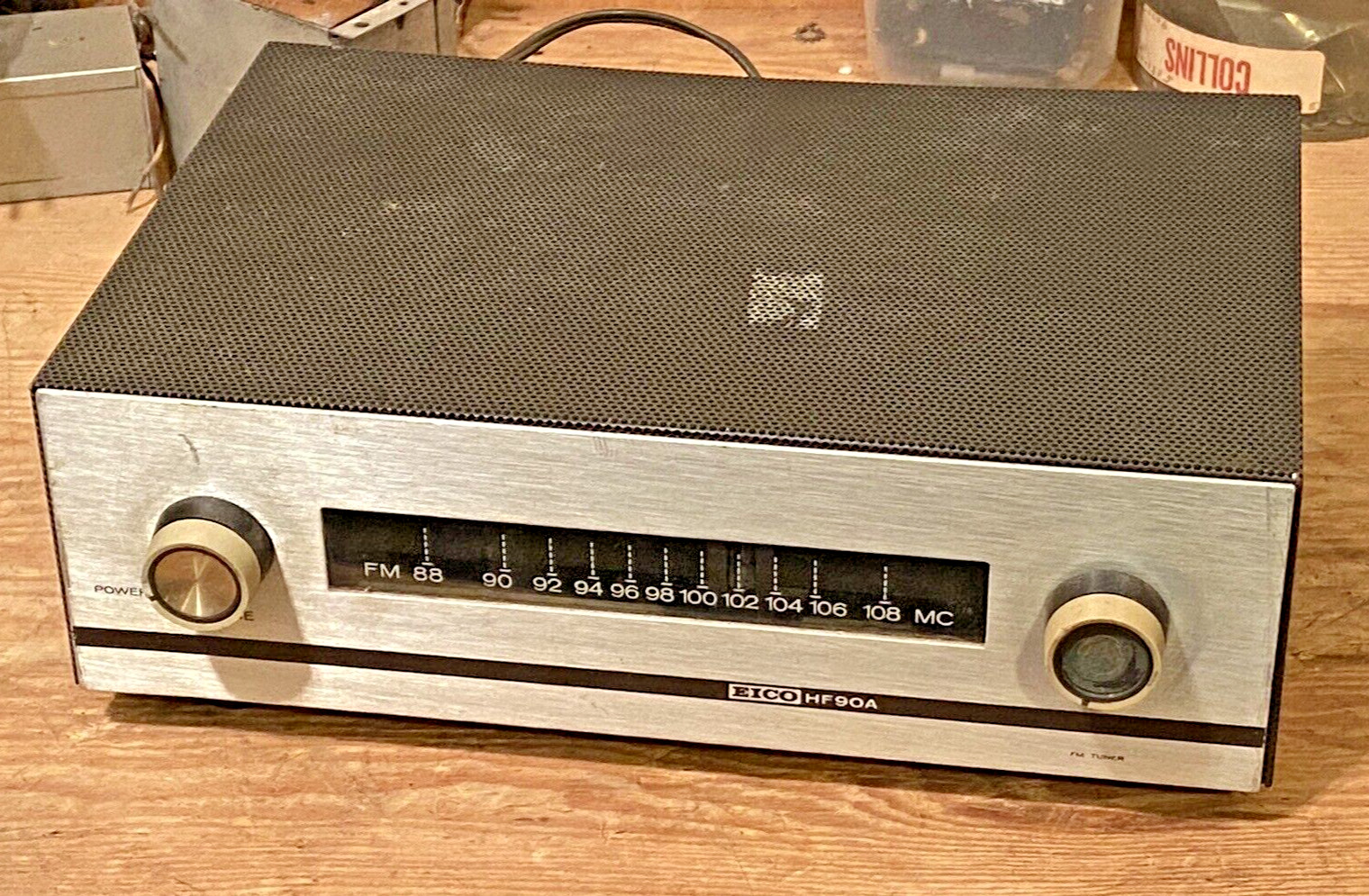
In the golden era of high-fidelity audio—when vacuum tubes still powered amplifiers and audiophiles debated the merits of ribbon tweeters versus dome designs—Eico emerged as a trusted name in affordable, do-it-yourself electronics. Best known for their test equipment and tube amplifiers, Eico also ventured into the speaker market with models like the HF-90, a passive loudspeaker system introduced in the late 1950s. Though not as widely documented as some of its contemporaries, the Eico HF-90 holds a quiet but respected place among vintage audio enthusiasts for its solid engineering, warm tonal balance, and classic mid-century design.
Historical Context: Eico and the Hi-Fi Boom
Founded in 1947, Eico (Electronic Instrument Company) built its reputation on selling high-quality electronic kits that allowed hobbyists to assemble their own radios, amplifiers, and test gear. During the 1950s and 1960s, the rise of stereo recording and the growing popularity of home audio systems created a booming market for affordable yet capable hi-fi components. Eico responded with a range of audio products, including the HF-35, HF-50, and HF-90 speaker systems—each designed to pair seamlessly with their tube amplifiers like the HF-20 and HF-81.
The HF-90, introduced around 1957, was positioned as a premium bookshelf or stand-mounted speaker aimed at serious listeners. Unlike mass-market console radios, the HF-90 was part of the emerging component-based hi-fi movement, emphasizing separability, fidelity, and upgradeability. Sold either as a kit or pre-assembled, it reflected Eico’s DIY ethos while offering a turnkey solution for those less inclined to solder.
Technical Specifications
While original documentation for the HF-90 is scarce today, surviving units and user reports suggest the following specifications based on typical Eico design practices of the era:
| Specification | Detail |
| Model | HF-90 |
| Manufacturer | Eico (Electronic Instrument Company) |
| Year Introduced | 1957 |
| Type | 2-way passive loudspeaker |
| Drivers | 10" woofer, 3" midrange, and dome or horn tweeter (exact configuration varies) |
| Crossover | Passive, 2nd order (estimated 2.5kHz crossover point) |
| Frequency Response | 45 Hz – 18 kHz (approximate) |
| Sensitivity | ~86 dB (1W/1m) |
| Nominal Impedance | 8 ohms |
| Recommended Amp Power | 10–30 watts |
| Enclosure Type | Acoustic suspension (sealed box) |
| Dimensions (H×W×D) | Approx. 22" × 12" × 10" |
| Weight | ~30 lbs per speaker |
| Finish Options | Walnut veneer with black or gray cloth grille |
The HF-90 typically featured a dual-driver configuration with a single 10-inch woofer handling bass and lower midrange, supported by a smaller midrange/tweeter combination. Some variants may have used a coaxial driver setup, though most point to a separate tweeter mounted above the woofer. The sealed cabinet design contributed to tight, controlled bass—characteristic of the acoustic suspension trend popularized by companies like Acoustic Research.
Sound Characteristics and Performance
The Eico HF-90 delivers a sound signature that modern listeners might describe as warm, natural, and uncolored—a hallmark of well-designed passive speakers from the late 1950s. Its sealed enclosure provides a slightly rolled-off bass response compared to ported designs, but with excellent transient accuracy and minimal overhang. This makes the HF-90 particularly well-suited to acoustic jazz, vocal recordings, and classical chamber music.
Midrange clarity is a standout feature. The paper-cone drivers of the era, when well-matched and properly aged, produce a smooth, organic tonality that many vintage enthusiasts find more “musical” than modern analytical speakers. The tweeter, while not as extended as today’s silk domes, offers a gentle roll-off above 15 kHz, avoiding the harshness sometimes associated with early metal dome designs.
Paired with a matching Eico tube amplifier—such as the HF-20 or HF-81—the HF-90 forms a cohesive, harmonious system. The synergy between tube electronics and high-efficiency passive speakers creates a listening experience that emphasizes timbral accuracy and spatial coherence over sheer volume or deep bass extension.
Notable Features and Design
The HF-90’s design reflects the transitional period between furniture-style consoles and modern component audio. Its tall, narrow cabinet is crafted from medium-density fiberboard or plywood with a real walnut veneer, finished with a warm, satin lacquer. The front baffle is slightly recessed, and the speaker is protected by a removable cloth grille held in place by clips or magnets.
One of the HF-90’s more interesting features—common to Eico speakers of the time—is its modular crossover network. Built with point-to-point wiring and high-quality paper-in-oil capacitors, the crossover is accessible from the rear or bottom panel, making restoration and component replacement feasible for skilled hobbyists. This repairability is a major plus for vintage audio restorers.
Additionally, the HF-90 was marketed as part of a system. Eico published matching amplifier designs and even suggested speaker placement and room acoustics tips in their manuals—evidence of their commitment to holistic audio performance.
Common Issues and Maintenance
Like any 60+ year-old audio equipment, surviving HF-90 units often require restoration. The most common issues include:
- Aged speaker surrounds: The foam or cloth edge dampers on the woofer often degrade, leading to buzzing or loss of bass. Replacement reconing kits are occasionally available from specialty vendors.
- Capacitor failure in crossovers: Electrolytic and paper capacitors can dry out or short. Replacing them with modern film capacitors can significantly improve clarity and reliability.
- Grille cloth deterioration: The original gray or black cloth may be brittle or stained. Reproduction grilles can be custom-made using period-correct materials.
- Cabinet wear: Scratches, water rings, or veneer lifting are common. Gentle refinishing with Danish oil can restore luster without devaluing the unit.
Because Eico published detailed schematics and parts lists (a rarity at the time), restoring an HF-90 is more feasible than with many contemporary brands. DIY forums and vintage audio communities often share restoration guides and sourcing tips.
Current Market Value and Collectibility
The Eico HF-90 is not a high-profile collector’s item like a McIntosh MC275 or AR-3a, but it holds steady appeal among kit audio historians, tube enthusiasts, and mid-century hi-fi collectors. Units in excellent original condition—especially those still in the box with manuals—can fetch $200–$400 per pair, depending on restoration status and market demand.
Fully restored HF-90s with reconed drivers and upgraded crossovers may command slightly higher prices, particularly when sold as part of a matched Eico system. However, the real value lies in their usability: unlike purely decorative vintage gear, the HF-90 can still deliver a deeply satisfying listening experience when properly maintained.
Conclusion: A Forgotten Gem of the Hi-Fi Era
The Eico HF-90 may not have the fame of AR, Advent, or KLH speakers, but it represents an important chapter in American audio history. As part of Eico’s mission to bring high-fidelity sound within reach of the average hobbyist, the HF-90 embodies the democratization of quality audio—a philosophy that still resonates with today’s DIY and vintage audio communities.
For the listener who appreciates warm, natural sound and mid-century craftsmanship, the HF-90 offers a window into the roots of modern hi-fi. It’s not about specs or wattage; it’s about connection—to music, to history, and to the joy of building and maintaining one’s own audio system.
If you stumble upon a pair of HF-90s in a basement, thrift store, or online auction, don’t overlook them. With a little care, they might just become your favorite speakers for late-night jazz and vinyl Sundays.
eBay Listings



As an eBay Partner, we earn from qualifying purchases. This helps support our independent vintage technology research.
Related Models
- Eico 3570 (1972)
- Eico 3200 (1970)
- Eico HF-65A (1958)
- Eico 2716 (1970)
- Eico 3070 (1969)
- Akai AM-2850 (1975)
- Akai AP-206 (1975)
- Nakamichi BX-1 (1985)
- Acoustic Research research-ar-17 (1978)
- Acoustic Research AR-19 (1994)