Dynaco Stereo 80
The Dynaco Stereo 80 (often abbreviated as ST-80) is a classic solid-state stereo power amplifier introduced in 1967. Representing a pivotal moment in audio history, it marked Dynaco’s transition from tube-based amplifiers to transistorized designs. Known for its clean sound, robust build, and dual mono architecture, the Stereo 80 remains a respected piece of vintage audio equipment among collectors and audiophiles.
Specifications
| Feature | Specification |
| Brand | Dynaco |
| Model | Stereo 80 (ST-80) |
| Year of Release | 1967 |
| Production Period | 1967–1970 |
| Power Output | 40 watts per channel (2 channels, stereo) |
| Impedance | 8 ohms (nominal) |
| Circuit Topology | Solid-state, push-pull, ultra-linear output |
| Construction | Dual mono design with separate power supplies |
| Transformers | High-quality output and power transformers |
| Frequency Response | Not officially documented |
| Total Harmonic Distortion | Low distortion (exact figure not specified) |
| Inputs | RCA (line-level) |
| Dimensions | 19" (W) × 7" (H) × 12" (D) approx. |
| Weight | ~35 lbs (15.9 kg) |
Key Features
- Ultra-Linear Output Stage: A design borrowed from high-end tube amplifiers, adapted here for solid-state performance to reduce distortion and improve linearity.
- Solid-State Design: Utilized germanium and early silicon transistors, representing cutting-edge technology for its time.
- Dual Mono Construction: Each channel features independent power regulation and circuitry, minimizing crosstalk and improving channel separation.
- High-Quality Transformers: Custom-wound transformers contributed to excellent power delivery and long-term reliability.
- Simple and Robust Circuitry: Minimalist design philosophy focused on reliability and serviceability.
Historical Significance
The Dynaco Stereo 80 was one of the first solid-state amplifiers offered by Dynaco, a company best known for its legendary tube amplifiers like the ST-70. Released during a transitional period in audio technology, the ST-80 bridged the gap between the warm, rich sound of vacuum tubes and the emerging precision of transistor amplification.
At a time when many audiophiles were skeptical of solid-state gear, the Stereo 80 earned respect for its clean, accurate sound and exceptional build quality. It appealed to both DIY enthusiasts and audiophiles seeking a reliable, high-performance amplifier without the maintenance demands of tubes.
Though overshadowed in popularity by its tube predecessors, the ST-80 holds a unique place in audio history as a well-engineered early transistor amplifier from a trusted name in high-fidelity audio.
Sound Signature
The Stereo 80 delivers a clean, neutral, and detailed sound profile. Compared to Dynaco’s tube amplifiers, it lacks the characteristic warmth and harmonic richness, but compensates with superior accuracy, tight bass control, and low distortion.
- Bass: Firm and well-controlled, with good extension and punch.
- Midrange: Clear and transparent, ideal for vocal and instrumental clarity.
- Treble: Smooth and extended without harshness.
- Soundstage: Wide and well-defined, with precise imaging.
It excels with a variety of speakers, particularly those with 8-ohm nominal impedance, and pairs well with tube preamplifiers for a balanced sonic character.
Maintenance and Restoration Tips
Due to its age, most surviving Stereo 80 units require some level of servicing to perform safely and optimally. Common issues include:
- Aging Electrolytic Capacitors: The power supply and signal path capacitors should be replaced as a preventive measure. Old capacitors can dry out, leak, or fail, risking damage to transistors.
- Transistor and Resistor Failures: Early transistors may degrade over time. Testing and replacing any out-of-spec components is recommended.
- Oxidized Controls and Connectors: Pots, switches, and input jacks can develop crackling or noise. Cleaning with contact cleaner or replacement is advised.
- Bias Adjustment: After restoration, bias should be checked and adjusted to ensure proper operation of the output stage.
Because of its straightforward design, the ST-80 is considered relatively easy to restore, even for intermediate-level technicians. Schematics and service manuals are widely available in the vintage audio community.
Market Value and Collectibility
- Market Value: $150–$300, depending on condition and whether it has been restored.
- Collectibility Rating: 6/10
While not as sought-after as the ST-70, the Stereo 80 appeals to collectors interested in audio evolution and solid-state vintage gear. Its historical significance and solid performance ensure steady interest.
Conclusion
The Dynaco Stereo 80 stands as a testament to thoughtful engineering during a transformative era in audio. Though it may not have the cult following of its tube counterparts, it offers a compelling blend of accuracy, reliability, and vintage charm. For those exploring the roots of solid-state amplification or seeking a well-built classic amplifier, the ST-80 remains a worthy addition to any vintage audio setup.
eBay Listings

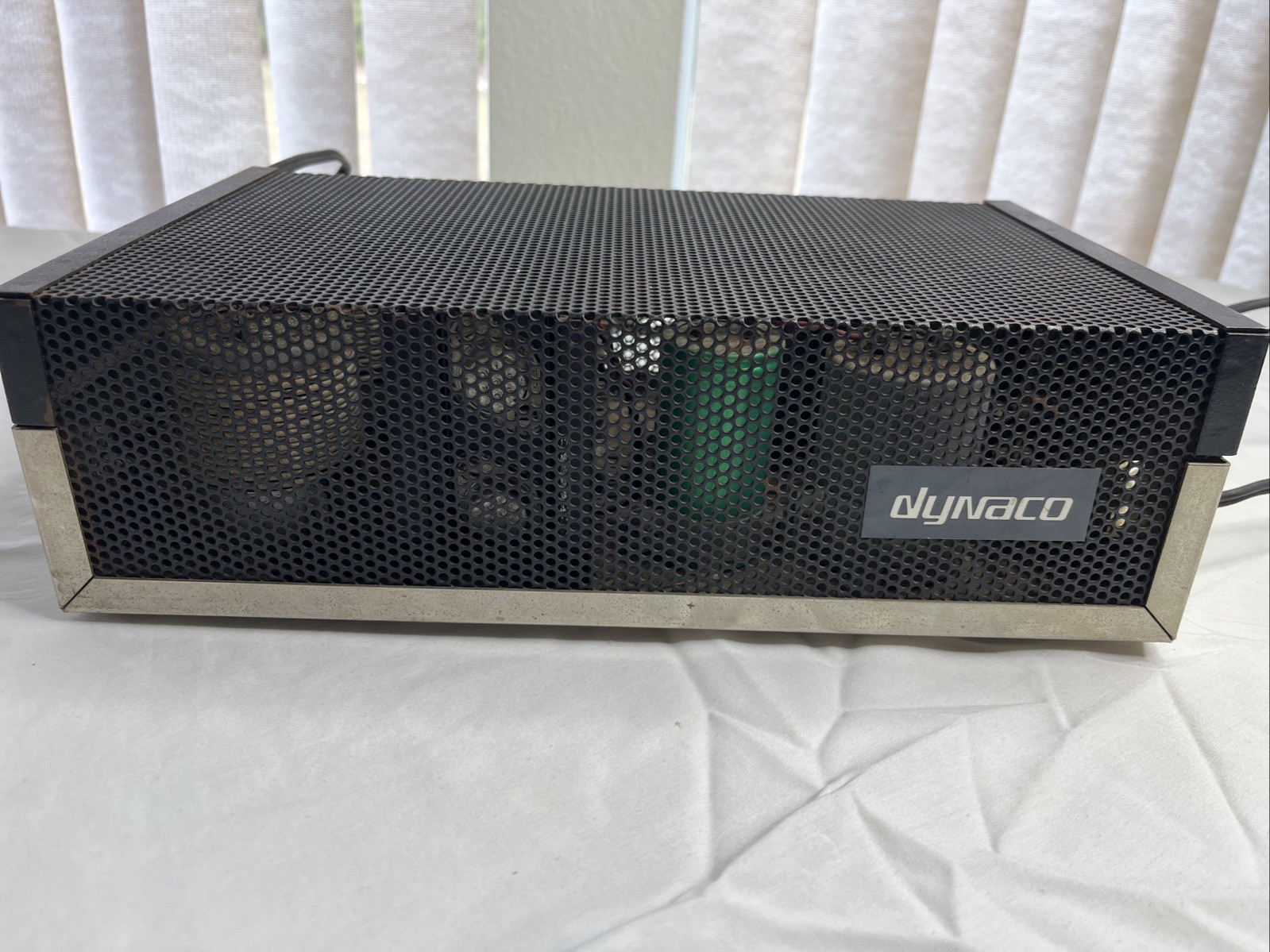


As an eBay Partner, we earn from qualifying purchases. This helps support our independent vintage technology research.
Related Models
- Dynaco STEREO-80 (1959)
- Dynaco AF-6 (AM/FM Tuner) (1965)
- Dynaco MK-II (1965)
- Dynaco MK-VI (1975)
- Dynaco PAS-2 (1960)
- Luxman L-530 (1975)
- Luxman R-404 (1975)
- Luxman RV-371 (1975)
- Luxman SQ-38U (1975)
- Luxman T-14 (1972)