Dynaco QD-1 (Quadaptor)
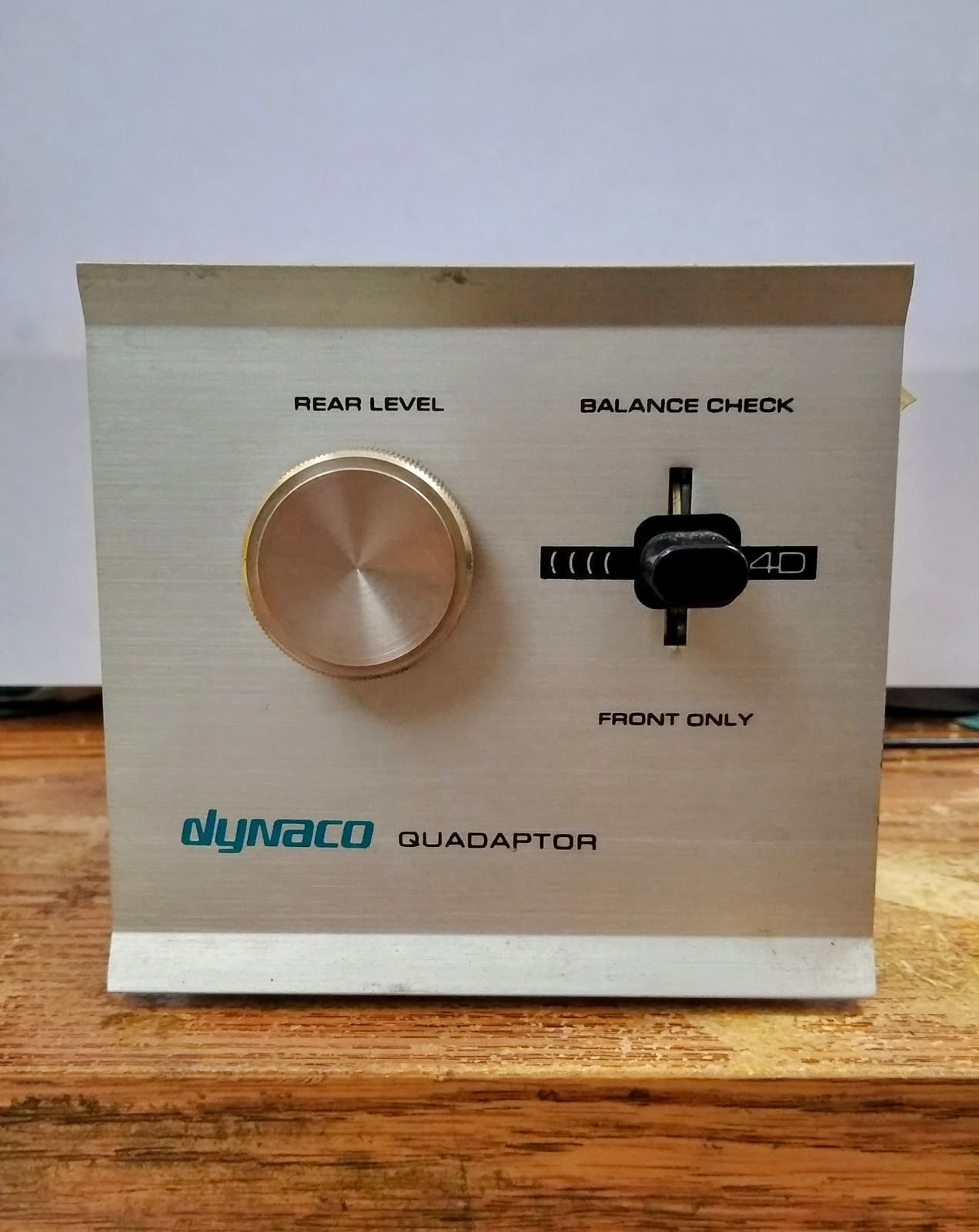
The Dynaco QD-1, commonly known as the Quadaptor, is a passive quadraphonic decoder introduced in 1970 during the early surge of consumer interest in surround sound. Designed to extract four-channel audio from standard stereo recordings encoded with matrixed rear-channel information, the QD-1 brought affordable quadraphonic sound to audiophiles and hobbyists alike. Leveraging Dynaco’s expertise in high-fidelity audio, the QD-1 became a gateway device for experiencing spatial audio in the home without requiring specialized amplification or power supplies.
Despite its simplicity, the QD-1 played a notable role in popularizing matrix-based quadraphonic systems in the early 1970s and remains a collectible piece for vintage audio enthusiasts interested in the evolution of surround sound.
Specifications
| Feature | Specification |
| Model | QD-1 (Quadaptor) |
| Brand | Dynaco |
| Year of Production | 1970–1972 |
| Type | Passive quadraphonic decoder |
| Power Requirements | None (passive operation) |
| Input Impedance | 8 ohms |
| Output Impedance | 8 ohms per channel |
| Sensitivity | N/A (passive device) |
| Connections | RCA inputs and outputs (4-channel) |
| Decoding System | Based on Dynaco's QS matrix technology |
| Dimensions | Compact desktop enclosure (approx. 7" x 5" x 2") |
| Weight | ~1 lb |
Key Features
- Passive Quadraphonic Decoding: Converts standard stereo signals into four-channel audio using matrix decoding.
- QS Matrix Compatibility: Derived from Dynaco’s licensed version of the Sansui QS system, allowing playback of matrix-encoded records (e.g., CD-4, SQ, and QS-encoded LPs).
- No Power Required: Fully passive design with no internal amplification or power supply.
- Simple Integration: Connects easily between a preamp and power amplifier using standard RCA cables.
- Channel Blending Control: Features potentiometers to adjust front-to-rear channel balance and enhance spatial effects.
Historical Significance
The early 1970s marked a brief but enthusiastic era of quadraphonic sound experimentation in consumer audio. The Dynaco QD-1 emerged as one of the first affordable and accessible quadraphonic decoders, allowing users to experience surround sound without investing in complex, expensive systems.
Unlike discrete 4-channel formats that required special records and playback equipment, the QD-1 worked with existing stereo sources that contained matrix-encoded rear-channel information. This made it a practical choice for listeners who wanted to experiment with spatial audio using their current turntables and amplifiers.
Dynaco, already renowned for its high-value tube amplifiers like the ST-70, leveraged its reputation for quality and affordability with the QD-1. While not as advanced as active decoders or discrete systems, the QD-1 helped democratize quadraphonic sound and introduced many listeners to the concept of immersive audio.
Sound Signature
The QD-1 delivers a subtle but noticeable expansion of the stereo soundstage by extracting ambient and spatial cues encoded in the stereo signal. Rear-channel effects are often diffuse and ambient rather than sharply directional, creating a sense of envelopment rather than discrete separation.
Performance varies significantly based on the source material:
- Matrix-encoded records (e.g., certain releases from RCA, Columbia, and Warner Bros.) yield the best results.
- Standard stereo recordings may exhibit slight phase artifacts or a widened stereo image, but without true rear-channel content.
The overall effect is one of enhanced spaciousness, making the QD-1 ideal for classical, jazz, and live recordings where ambient detail is prized.
Maintenance and Tips
Due to its passive design and minimal components, the QD-1 is generally reliable. However, age-related issues can affect performance:
Common Issues
- Oxidized RCA Jacks: Can cause intermittent connections. Clean with contact cleaner and inspect for loose solder joints.
- Aging Potentiometers: The channel balance and blend controls may develop crackling or uneven response. Cleaning with electronic contact cleaner often restores functionality.
- Internal Wiring: Check for brittle or disconnected wires, especially if the unit has been moved frequently.
Maintenance Tips
1. Regular Cleaning: Use DeoxIT or similar contact cleaner on all RCA jacks and potentiometers.
2. Firmware/Mods: None applicable—fully passive with no firmware or upgrade paths.
3. Integration Tips:
- Place the QD-1 between your preamplifier and power amplifier.
- Use high-quality shielded RCA cables to minimize noise.
- Pair with a four-channel amplifier setup or two stereo amps for full 4-speaker playback.
4. Source Matching: Seek out original quadraphonic LPs or reissues with matrix encoding for optimal performance.
Collectibility and Market Value
The Dynaco QD-1 holds moderate collectible appeal, rated around 6/10 due to its historical role in early surround sound and its association with a respected audio brand. While not as rare or sought-after as high-end tube gear, it remains a niche favorite among quadraphonic and vintage audio collectors.
- Market Value: $50–$150 USD, depending on condition and originality.
- Factors Affecting Value:
- Fully functional controls and jacks
- Original finish and labeling
- Inclusion of original packaging or documentation (rare)
Units that have been properly maintained and tested command higher prices, especially when sold with provenance or as part of a vintage quadraphonic setup.
Conclusion
The Dynaco QD-1 Quadaptor stands as a pioneering device in the history of home audio, offering an accessible entry point into quadraphonic sound during a transformative period in audio technology. Its passive design, compatibility with existing systems, and connection to the QS matrix system make it a fascinating artifact of 1970s audio innovation.
While modern surround formats have far surpassed its capabilities, the QD-1 remains a charming and functional piece for vintage enthusiasts, offering a nostalgic journey into the early days of immersive sound.
eBay Listings


As an eBay Partner, we earn from qualifying purchases. This helps support our independent vintage technology research.
Related Models
- Luxman PD-272 (1983)
- Garrard 2025tc (1968)
- Onkyo CP-1010 (1976)
- Pioneer PL-15R (1975)
- Pioneer PL-250 (1979)
- Pioneer PL-40 (1977)
- Pioneer PL-514 (1978)
- Pioneer PL-516 (1978)
- Pioneer PL-61 (1973)
- Pioneer PL-6A (1977)