Dynaco PAT-4 Preamplifier (1967)
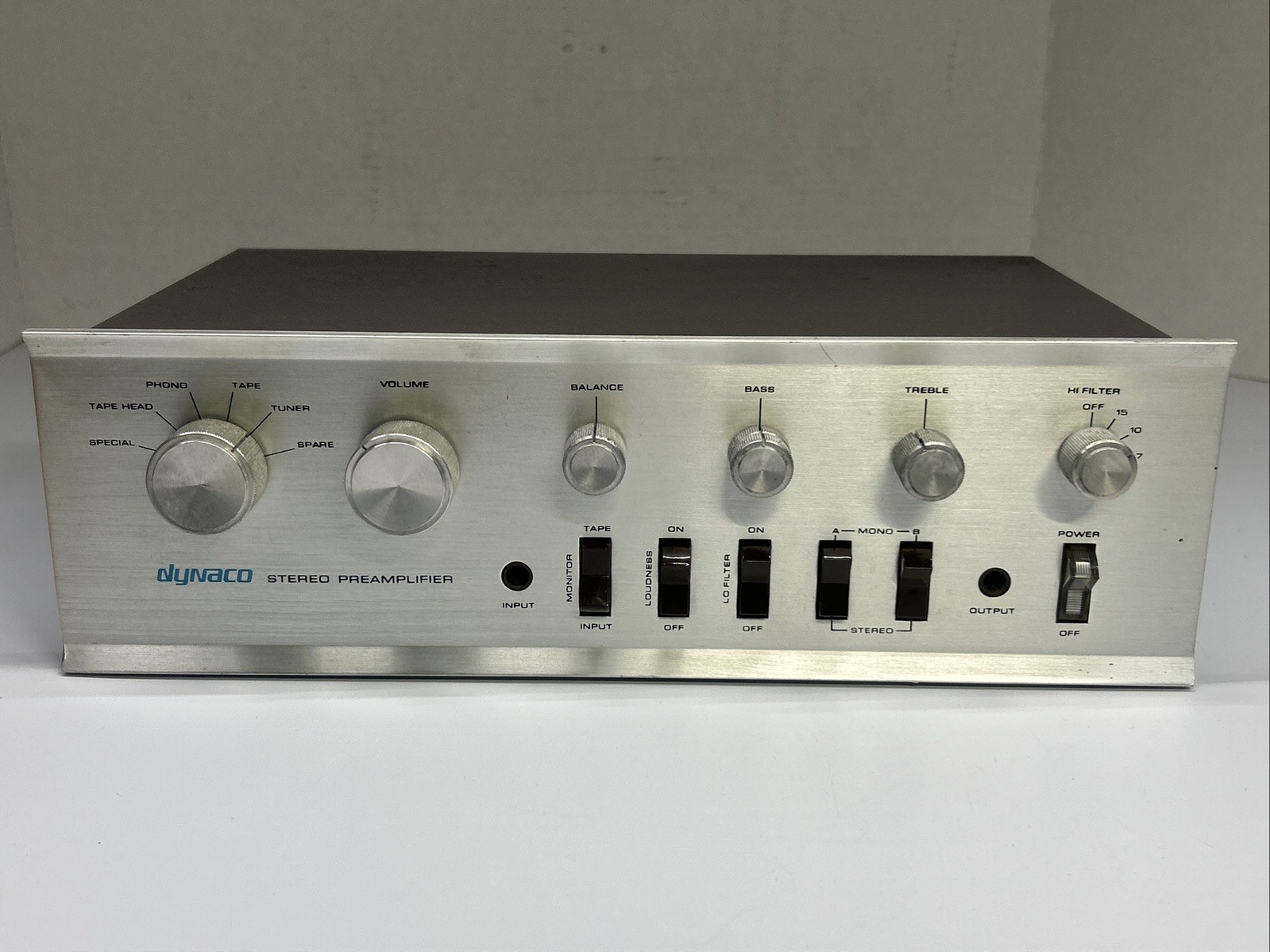
Despite being categorized under turntables, the Dynaco PAT-4 is actually a solid-state preamplifier designed to work in conjunction with turntables and other audio sources. Introduced in 1967, the PAT-4 was a key component in many high-fidelity audio systems of its era, particularly when paired with Dynaco’s legendary ST-70 and ST-120 power amplifiers. Known for its clean sound and modular construction, the PAT-4 helped bring high-quality audio within reach of the average consumer.
Specifications
| Feature | Specification |
| Model | PAT-4 |
| Brand | Dynaco |
| Year Introduced | 1967 |
| Production Period | 1967–1978 |
| Type | Solid-state preamplifier |
| Input Impedance | 47k ohms (phono), high-level inputs |
| Output Impedance | Low impedance (optimized for Dynaco power amps) |
| Phono Input | MM (Moving Magnet) only |
| Tone Controls | Bass and treble (±12 dB at 100 Hz / 10 kHz) |
| Features | Modular design, tape monitor loop, front-panel input selection |
| Power Requirements | Not applicable (line-level preamp, no internal power amplification) |
| Dimensions | 17" W × 5.5" H × 10.5" D |
| Weight | 8.5 lbs |
| Finish | Brushed aluminum front panel with black or walnut side panels |
Key Features
- Modular Design: The PAT-4 used plug-in circuit boards for easy servicing and upgrades—a novel concept at the time.
- Phono Stage: Designed specifically for MM cartridges with a high-quality RIAA equalization network.
- Tone Controls: Independent bass and treble controls with a neutral flat position.
- Tape Monitor: Allowed users to switch between live source and tape playback seamlessly.
- High-Level Inputs: Four inputs for turntable, tuner, tape, and auxiliary devices.
- Low Output Impedance: Engineered to drive long cable runs and match perfectly with Dynaco’s power amplifiers.
Historical Significance
The Dynaco PAT-4 was one of the first widely adopted solid-state preamplifiers in the consumer hi-fi market. Released during a transitional period from tube to transistor technology, it offered exceptional performance at a fraction of the cost of competing brands. Its affordability and high fidelity made it a cornerstone of the "Dynaco Sound" system, typically paired with the ST-70 tube amplifier.
Dynaco’s kit-based business model allowed audiophiles to assemble their own gear, further reducing costs and fostering a DIY culture. The PAT-4 exemplified this philosophy—delivering transparent, detailed sound with low distortion, especially through its well-regarded phono stage. It played a crucial role in democratizing high-fidelity audio during the late 1960s and 1970s.
Sound Signature
The PAT-4 is known for its clean, neutral, and transparent sound. It avoids coloration, allowing source material to shine through with clarity and precision. The phono stage, in particular, was praised for its ability to extract detail from vinyl records with minimal noise and excellent channel separation. While not as warm as tube preamps, it was considered musical and dynamic—especially for a solid-state design of its time.
Common Issues and Maintenance Tips
Like all vintage electronics, the PAT-4 requires attention to maintain optimal performance. Here are common issues and recommended maintenance steps:
Common Issues:
- Aging Capacitors: Electrolytic capacitors degrade over time, leading to hum, distortion, or channel imbalance. Replacing them (recapping) is often necessary.
- Failing Transistors: Early germanium and silicon transistors can drift or fail. Testing and replacement with modern equivalents may be needed.
- Scratchy Pots and Switches: The volume control and input selector switches are prone to noise. Cleaning with contact cleaner can help, but replacement may be required.
- DC Offset: Some units develop DC voltage at the output, which can damage speakers if connected directly. Always check for DC offset before use.
- Hum and Ground Loops: Poor grounding or shielded cable issues can introduce hum, especially in modified units.
Maintenance Tips:
1. Recap the Unit: Replace all electrolytic and coupling capacitors to restore performance and reliability.
2. Clean Controls: Use high-quality contact cleaner on potentiometers and switches.
3. Check Transistors: Test all transistors for proper function and replace any out-of-spec units.
4. Verify Output Polarity: Ensure no DC voltage is present at the output jacks.
5. Use with Appropriate Amps: While designed for Dynaco power amps, it works well with most line-level inputs—use caution with sensitive equipment.
Market Value and Collectibility
The PAT-4 remains a sought-after vintage preamplifier among audiophiles and restorers. Its collectibility is rated 7/10, reflecting its historical importance and enduring performance.
- Unmodified, Working Unit: $150–$250
- Fully Restored or Upgraded: $250–$300
- Original Kit Form with Documentation: Premium value for collectors
Units that have been professionally recapped and tested command higher prices. Original packaging and manuals also increase desirability.
Conclusion
The Dynaco PAT-4 is a landmark preamplifier that brought solid-state fidelity to the masses. Its modular design, excellent phono stage, and synergy with Dynaco’s amplifier lineup made it a staple of 1970s hi-fi systems. While it requires careful maintenance today, a well-restored PAT-4 can still deliver engaging, transparent sound that rivals modern budget preamps. For vintage audio enthusiasts, it remains a rewarding and historically significant component.
eBay Listings



As an eBay Partner, we earn from qualifying purchases. This helps support our independent vintage technology research.
Service Manuals & Schematics
- Owner's Manual — archive.org
Related Models
- Dynaco STEREO-80 (1959)
- Dynaco AF-6 (AM/FM Tuner) (1965)
- Dynaco MK-II (1965)
- Dynaco MK-VI (1975)
- Dynaco PAS-2 (1960)
- Luxman L-530 (1975)
- Luxman R-404 (1975)
- Luxman RV-371 (1975)
- Luxman SQ-38U (1975)
- Luxman T-14 (1972)