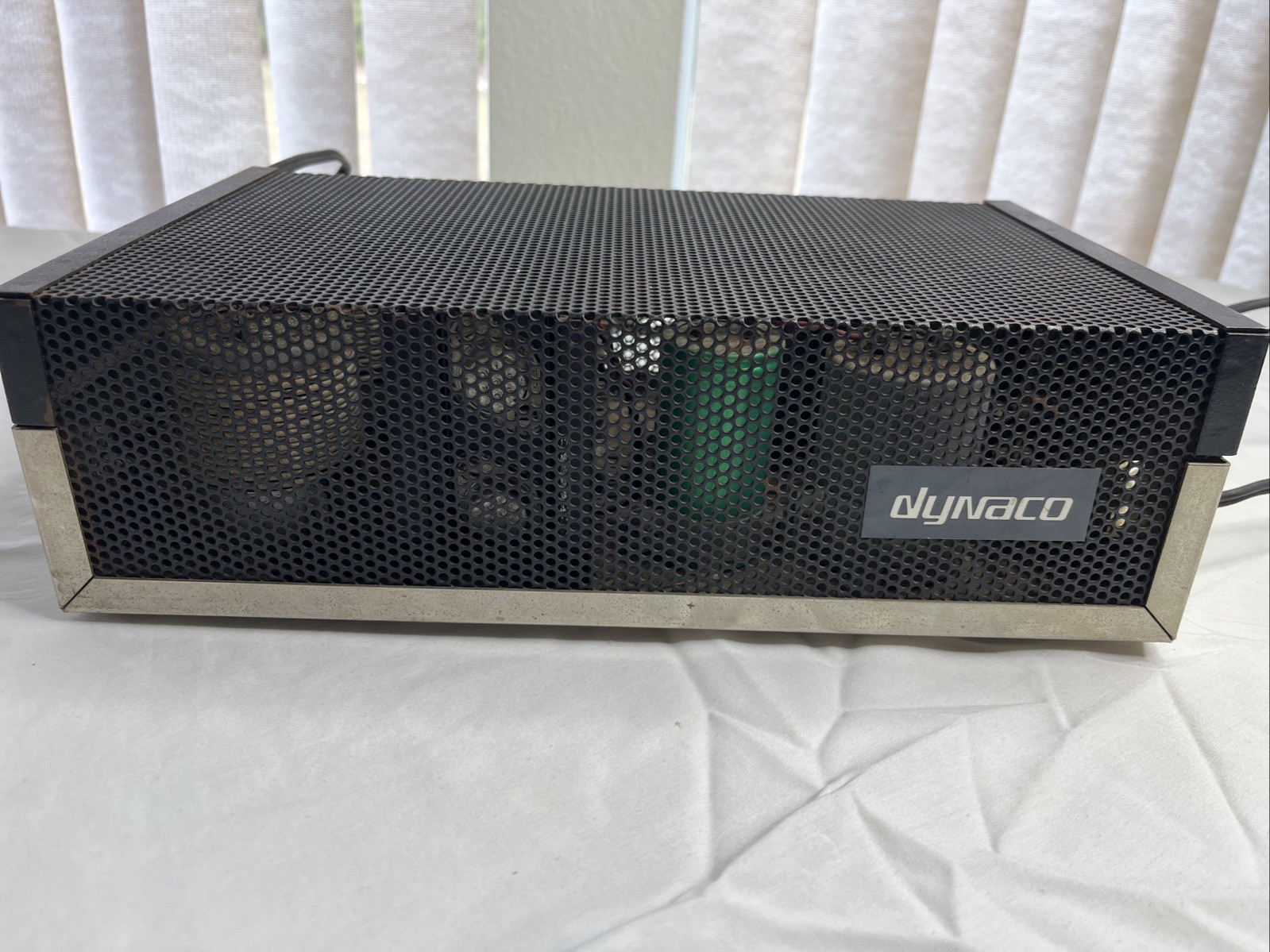
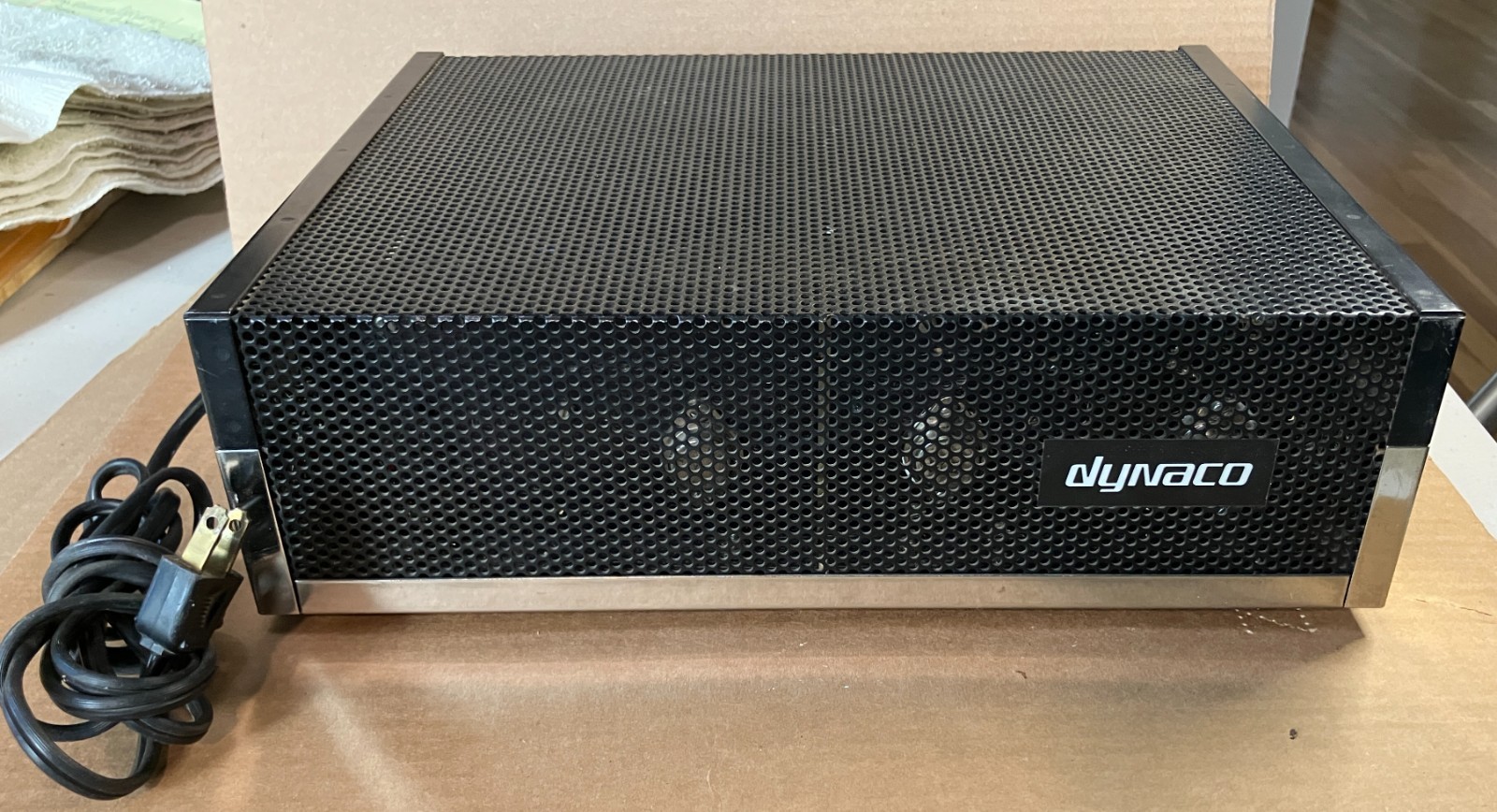
Dynaco STEREO-80 (1959)
The Dynaco STEREO-80 stands as one of the most iconic and influential vacuum tube stereo amplifiers in the history of high-fidelity audio. Introduced in 1959 by David Hafler and Herb Keroes through their company Dynaco (short for Dynamic Controls), the STEREO-80 was not merely another amplifier—it was a democratizing force in the world of audiophilia. At a time when high-quality stereo equipment was prohibitively expensive, the STEREO-80 offered exceptional performance at a fraction of the cost, making true high-fidelity sound accessible to the average consumer.
Design and Engineering Philosophy
The STEREO-80 was designed as a push-pull, Class AB tube amplifier, delivering 40 watts per channel into 8 ohms. This power output was substantial for its era, especially considering that many competing amplifiers offered half that power at double the price. The amplifier used a pair of 6550 or KT88 output tubes per channel, known for their robust performance, low distortion, and excellent linearity. The driver stage employed 7199 tubes (a specialized pentode-triode), while the input and phase splitter stages used 12AX7 and 12AT7 tubes, respectively.
One of the STEREO-80’s most revolutionary aspects was its modular construction. Dynaco marketed the amplifier both as a fully assembled unit and as a kit. The kit version was immensely popular, appealing to hobbyists and electronics enthusiasts who wanted to build their own high-performance gear. The detailed, user-friendly instructions and the logical layout of the chassis made assembly achievable even for those with modest soldering skills. This do-it-yourself model significantly reduced manufacturing and labor costs, allowing Dynaco to offer the amplifier at a remarkably low price—around $100 for the kit and $150 fully assembled, a bargain in the late 1950s.
Circuit Topology and Sound Quality
The STEREO-80 employed a cathode-coupled phase inverter (also known as a split-load phase inverter), which provided excellent balance between the push-pull output tubes. This contributed to low levels of distortion—typically less than 1% at full power. Frequency response was rated from 20 Hz to 20 kHz, ±1 dB, with a signal-to-noise ratio exceeding 70 dB. These specifications were impressive for the time and placed the STEREO-80 on par with amplifiers costing several times more.
Sonically, the STEREO-80 is often described as warm, smooth, and highly musical. Its tube-based design imparts a pleasing harmonic richness to the midrange, particularly noticeable with vocals and acoustic instruments. Bass response is tight and well-controlled for a tube amp of its era, thanks in part to the high-current capability of the KT88 output tubes. High frequencies are extended without being harsh, contributing to a natural and engaging listening experience.
Many audiophiles still prize the STEREO-80 today for its ability to deliver an "analog" sound that modern solid-state amplifiers often struggle to replicate. Its forgiving nature with recordings also makes it a favorite for those with extensive vinyl collections, where minor surface noise or tape hiss is rendered less fatiguing.
Build Quality and Reliability
Despite its low cost, the STEREO-80 was built with high-quality components for its time. The power transformer and output transformers were manufactured by Dynaco themselves, using proven designs that ensured durability and performance. The chassis was made of heavy-gauge steel, and the layout was clean and serviceable. Tube sockets were securely mounted, and the terminal strips were well-spaced, reducing the risk of shorts.
Reliability was another hallmark of the STEREO-80. When properly maintained—particularly with periodic tube replacement and occasional bias adjustments—the amplifier could operate for decades. Many units from the 1960s are still in daily use today, a testament to the robustness of the original design.
Market Impact and Legacy
The STEREO-80 was a commercial triumph. Dynaco sold over 350,000 units during its production run, making it one of the best-selling tube amplifiers of all time. Its success helped fuel the "hi-fi boom" of the 1960s, encouraging more people to invest in quality stereo systems. The amplifier was often paired with other Dynaco components, such as the PAT-4 preamplifier and the iconic ST-70 (a later, more refined version of the STEREO-80), forming a complete and affordable high-fidelity system.
The STEREO-80 also had a profound influence on the audio industry. It demonstrated that high performance did not have to come with a high price tag. Its kit-based business model inspired other companies to offer DIY audio electronics, fostering a culture of hands-on engagement with audio technology. Even today, the DIY spirit lives on in online communities dedicated to restoring, modifying, and building amplifiers based on the STEREO-80 design.
Modifications and Modern Use
Because of its popularity and simple design, the STEREO-80 has become a favorite platform for modifications. Common upgrades include replacing the stock capacitors with modern high-quality types, installing improved output transformers, and using premium tube brands. Some enthusiasts retrofit the amplifier with solid-state rectifiers for faster transient response, though purists prefer the original tube rectifier (5AR4/GZ34) for its softer startup and tonal characteristics.
In modern setups, the STEREO-80 pairs well with efficient speakers—typically those with sensitivity ratings of 90 dB or higher. While it may struggle to drive modern low-impedance or current-hungry speakers, it excels with vintage or well-designed high-efficiency models. When matched appropriately, it delivers a lush, immersive soundstage with excellent imaging and depth.
Conclusion
The Dynaco STEREO-80 is more than just a vintage amplifier; it is a landmark in audio history. It brought high-fidelity sound into the homes of ordinary people, challenged the notion that great audio had to be expensive, and inspired a generation of audio enthusiasts. Its combination of performance, affordability, and build simplicity made it a phenomenon in its time—and its legacy endures.
Even over six decades after its introduction, the STEREO-80 remains a sought-after piece of gear. Whether found in original condition, lovingly restored, or upgraded with modern components, it continues to deliver a listening experience that is both emotionally engaging and technically impressive. For anyone interested in the roots of hi-fi audio or the enduring appeal of tube amplification, the Dynaco STEREO-80 is not just a relic—it’s a revelation.
eBay Listings


As an eBay Partner, we earn from qualifying purchases. This helps support our independent vintage technology research.
Related Models
- Dynaco AF-6 (AM/FM Tuner) (1965)
- Dynaco MK-II (1965)
- Dynaco MK-VI (1975)
- Dynaco PAS-2 (1960)
- Dynaco PAT-4 (1967)
- Luxman L-530 (1975)
- Luxman R-404 (1975)
- Luxman RV-371 (1975)
- Luxman SQ-38U (1975)
- Luxman T-14 (1972)