Denon POA-5000: The Quiet Master of High-End Preamplification
In the late 1970s, Japanese audio manufacturers were in the midst of a golden era—pushing the boundaries of fidelity, craftsmanship, and engineering precision. Denon, already renowned for its professional recording equipment and high-resolution mastering, brought that same studio-grade philosophy to the consumer market. Among its most respected offerings from this period was the Denon POA-5000, a preamplifier that, while not as widely celebrated as some of its contemporaries, stands today as a quiet titan among vintage audio connoisseurs.
Released in 1978, the POA-5000 was positioned at the top of Denon’s preamplifier lineup, designed to serve as the command center for the most discerning audiophile systems. Unlike the flashier receivers or all-in-one units flooding the market at the time, the POA-5000 was a no-compromise, pure analog preamp built for sonic transparency, signal integrity, and long-term reliability. It was part of Denon’s broader “5000 series,” a family of high-end components that included power amplifiers like the PMA-5000 and turntables like the DP-5000, all engineered to work in harmony.
Though Denon is perhaps better known today for its CD players and AV receivers, the POA-5000 represents a time when the company was deeply committed to the high-fidelity purist market—crafting gear that prioritized sound above all else.
Technical Specifications
The POA-5000 was built with a fully discrete, dual-monaural signal path—a rare and expensive approach at the time—ensuring minimal crosstalk and maximum channel separation. Its circuitry avoided integrated circuits in favor of discrete transistors and precision passive components, a hallmark of Denon’s engineering ethos during this period.
| Specification | Detail |
| Model | Denon POA-5000 |
| Year of Release | 1978 |
| Type | Preamplifier |
| Inputs | 4 line-level (RCA), 1 MM phono, 1 tape loop |
| Outputs | Main out, tape out, sub-out (unbalanced) |
| Frequency Response | 10Hz – 100kHz (+/-0.5dB) |
| Total Harmonic Distortion | < 0.01% (1kHz, rated output) |
| Signal-to-Noise Ratio | > 90dB (A-weighted) |
| Gain (Phono) | 40dB (MM) |
| Input Impedance (Line) | 47kΩ |
| Output Impedance | < 1kΩ |
| Power Supply | Internal linear transformer, regulated |
| Dimensions | 430mm (W) × 145mm (H) × 360mm (D) |
| Weight | 12.5 kg (27.5 lbs) |
| Finish | Black or silver metallic faceplate |
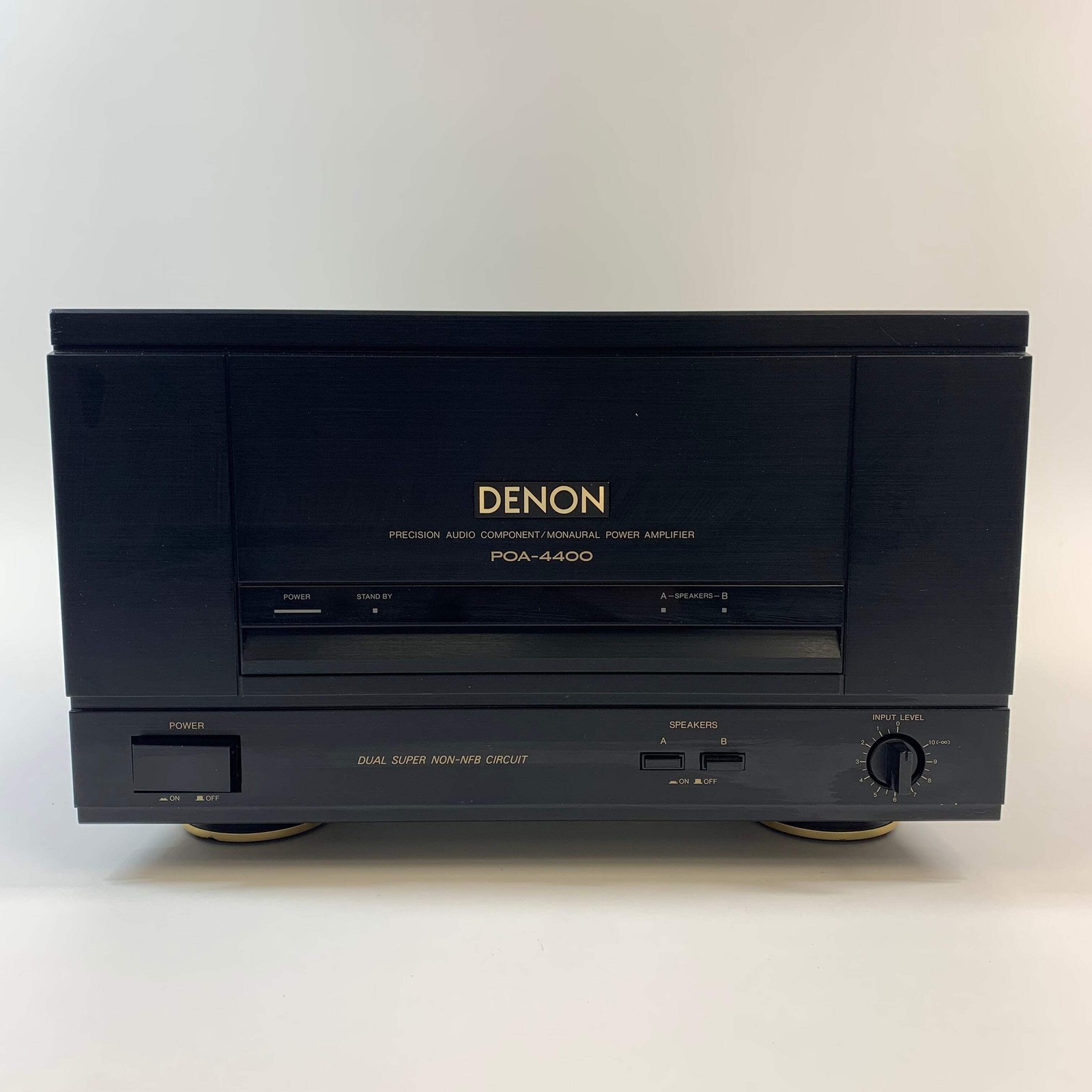
The front panel features a clean, minimalist layout with large, tactile rotary knobs for volume and input selection, flanked by smaller dials for balance, treble, and bass (with a defeat switch for pure tone control bypass). The rear panel is robust, with high-quality RCA jacks mounted on a reinforced metal plate, ensuring mechanical stability and shielding from interference.
Sound Characteristics and Performance
The Denon POA-5000 delivers a sound signature that is best described as neutral, detailed, and effortlessly dynamic. It doesn’t impose a sonic character—instead, it acts as a transparent window into the music. This neutrality made it a favorite among audiophiles who valued accuracy over coloration.
The phono stage, designed for moving magnet (MM) cartridges, is particularly impressive for its era. With wide bandwidth and ultra-low noise, it extracts fine detail from vinyl without adding harshness or artificial warmth. Paired with a high-quality cartridge and turntable, the POA-5000 reveals microdynamics and spatial cues that many modern preamps still struggle to match.
In line-stage mode, the POA-5000 offers a wide, three-dimensional soundstage with precise imaging. Its low output impedance ensures excellent control over downstream power amplifiers, while the high input impedance allows it to work seamlessly with a wide range of sources—from vintage tuners to reel-to-reel decks.
One of the most praised aspects of the POA-5000 is its black background—the silence between notes is profound, allowing subtle nuances in recordings to emerge with clarity. This is a direct result of its heavily shielded chassis, toroidal power transformer, and meticulous grounding scheme.
Notable Features and Innovations
While the POA-5000 may appear conservative in design, it incorporates several advanced features for its time:
- Dual-Monaural Architecture: The left and right channels are completely independent from input to output, minimizing interference and crosstalk.
- Discrete Regulation: Each critical circuit stage is powered by its own regulated supply, reducing noise and improving stability.
- Tone Defeat Circuit: A dedicated switch bypasses the tone controls entirely, routing the signal through the shortest possible path for purist listening.
- Tape Loop with Monitor Function: Allows for recording source monitoring and easy integration with cassette decks or reel-to-reel machines.
- Heavy-Duty Chassis: Constructed from thick steel with internal damping, the chassis resists vibration and electromagnetic interference.
Denon also paid close attention to ergonomics—the volume knob has a smooth, precise feel with graduated detents, and the input selector clicks positively into place. The blue VU meters (optional on some variants) add a touch of elegance while providing visual feedback on signal levels.
Common Issues and Maintenance
Like all vintage electronics, the Denon POA-5000 benefits from careful maintenance. While built to last, several issues may arise after decades of use:
- Capacitor Aging: The electrolytic capacitors in the power supply and signal path may degrade over time, leading to hum, reduced bass response, or channel imbalance. A full recapping by a qualified technician is recommended for units that haven’t been serviced in 20+ years.
- Potentiometer Noise: The volume and tone controls can develop crackling or channel dropouts due to oxidation. Cleaning with contact cleaner can help, but replacement with modern high-quality pots may be necessary.
- Dust and Oxidation: Internal connectors and switches should be inspected and cleaned, especially if the unit has been in storage.
- Phono Stage Sensitivity: The MM input is sensitive to poor grounding or cable shielding. Ensuring a clean signal chain is essential for optimal performance.
Despite these potential issues, the POA-5000 is generally robust. Its over-engineered construction and high-quality components mean that, with proper care, it can perform reliably for decades.
Current Market Value and Collectibility
The Denon POA-5000 is not as widely collected as some of its contemporaries from brands like Marantz or Sansui, but it holds a dedicated following among Denon enthusiasts and analog purists. In excellent working condition, it typically sells for $400–$700 USD, depending on finish, included accessories, and whether it has been recently serviced.
Fully restored units with recapped power supplies and cleaned controls command premium prices, especially when paired with matching Denon components like the PMA-5000 amplifier. Its value is likely to appreciate slowly as interest in high-end vintage preamps grows.
Conclusion and Legacy
The Denon POA-5000 may not have the flashy design or mass-market appeal of some 1970s audio gear, but it represents something rarer: a no-compromise preamplifier built for the true audiophile. In an era when many manufacturers were cutting corners to meet demand, Denon stayed true to its engineering roots, delivering a product that prioritized performance over profit.
Today, the POA-5000 stands as a testament to Japanese high-fidelity craftsmanship at its peak. It’s not just a relic—it’s a living piece of audio history that, when properly maintained, can still outperform many modern preamps in transparency, detail, and musicality.
For those building a vintage system with authenticity and performance in mind, the Denon POA-5000 deserves a place at the heart of it. It’s not loud, flashy, or trendy—but then again, neither is great sound.
eBay Listings


As an eBay Partner, we earn from qualifying purchases. This helps support our independent vintage technology research.
Service Manuals & Schematics
- Manual (1992) — archive.org
Related Models
- Denon DRA-800 (1985)
- Denon PMA-350Z (1980)
- Denon POA-1500 (1979)
- Denon PRA-1500 (1979)
- Denon DRA-350 (1985)
- Luxman L-530 (1975)
- Luxman R-404 (1975)
- Luxman RV-371 (1975)
- Luxman SQ-38U (1975)
- Luxman T-14 (1972)