Denon POA-4400A: The Forgotten Powerhouse of High-End Modular Audio
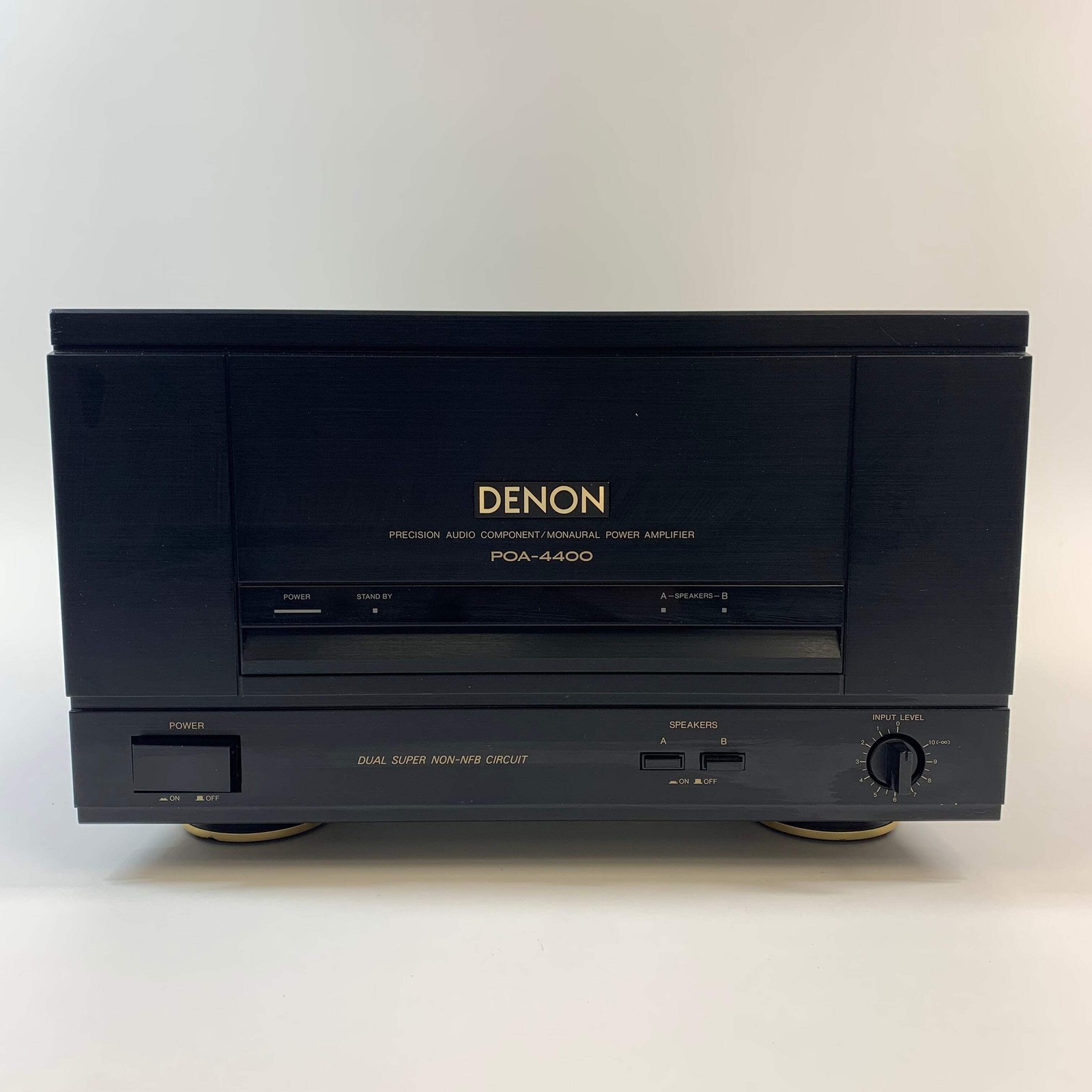
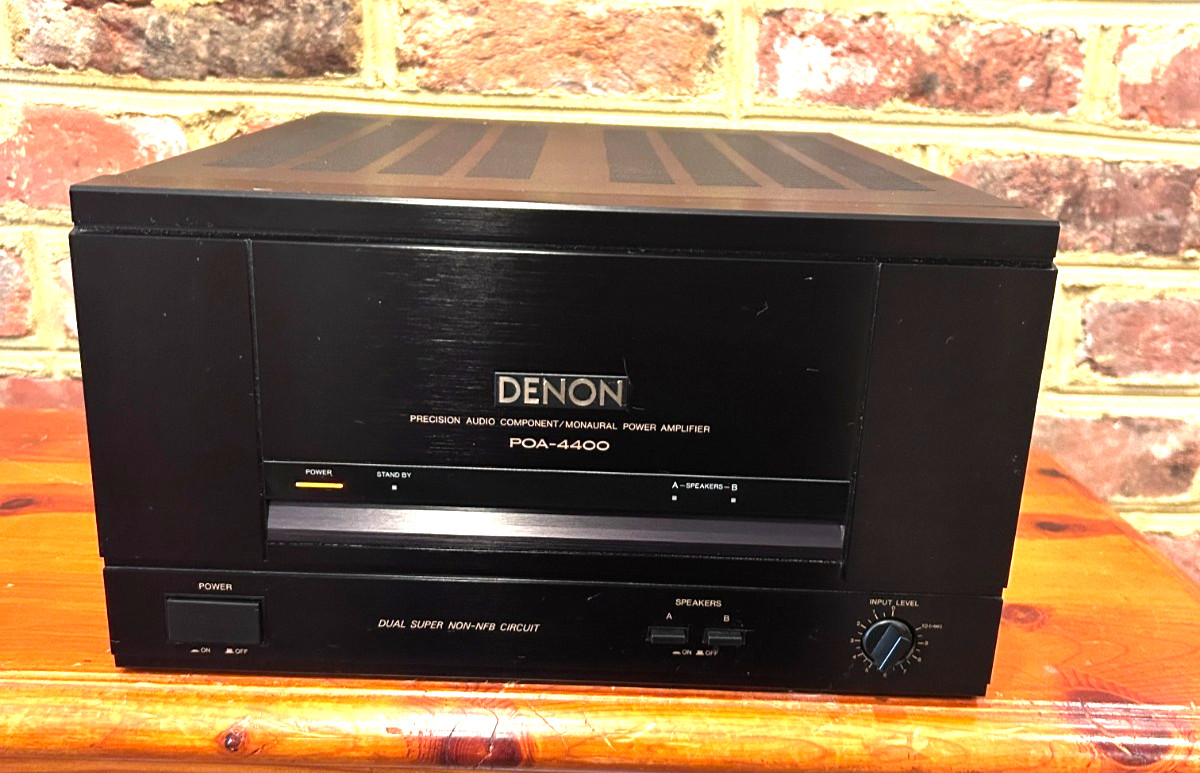
In the late 1970s, Denon—already renowned for its precision turntables, high-sensitivity cartridges, and no-nonsense receiver designs—ventured into a niche but ambitious segment of the audio market: modular, high-current power amplification. The Denon POA-4400A, released in 1978, stands as a rare and intriguing artifact from this era—a dual-mono power amplifier module designed not for the average consumer shelf, but for integration into custom audio systems, professional monitoring setups, or as the muscle behind Denon’s more ambitious preamplifiers.
Though not widely known outside collector and restoration circles, the POA-4400A represents a fascinating chapter in Denon’s engineering philosophy: a commitment to modularity, serviceability, and uncompromising power delivery. Unlike the sleek, all-in-one receivers and integrated amps of the time, the POA-4400A was built for audiophiles and engineers who wanted to mix and match components for ultimate system synergy.
Technical Specifications
The POA-4400A was engineered as a standalone power amplifier module, meaning it lacks volume controls, input selectors, or tone circuits. It was intended to be paired with a preamplifier—such as Denon’s own PRA-4400 or third-party units—via line-level interconnects. Its modular design allowed it to be mounted in custom racks or enclosures, making it a favorite among early DIY high-end audio enthusiasts and studio technicians.
| Specification | Detail |
| Model | POA-4400A |
| Manufacturer | Denon (Japan) |
| Year Introduced | 1978 |
| Type | Dual-Mono Power Amplifier Module |
| Configuration | 2-Channel (Stereo) |
| Power Output | Approximately 120W per channel (8Ω) |
| Frequency Response | 20Hz – 20kHz (+/-0.5dB) |
| Total Harmonic Distortion | <0.05% (at rated power) |
| Damping Factor | >100 (8Ω, 1kHz) |
| Input Sensitivity | 1V (for full output) |
| Input Impedance | 47kΩ |
| Output Impedance | 8Ω (compatible with 4–16Ω loads) |
| Power Supply | Dual toroidal transformers (one per channel) |
| Protection | Thermal, over-current, short-circuit |
| Dimensions (W×H×D) | 480 × 145 × 440 mm |
| Weight | Approx. 28 kg (62 lbs) |
| Finish | Black anodized aluminum, brushed steel |
The use of dual toroidal transformers—one dedicated to each channel—was a hallmark of high-end design at the time, minimizing crosstalk and maximizing current delivery during dynamic transients. This dual-mono architecture, combined with a massive heatsink array and discrete transistor output stages (no ICs), ensured rock-solid stability even with difficult speaker loads.
Sound Characteristics and Performance
The Denon POA-4400A delivers a sound signature that is both authoritative and refined—a hallmark of late-1970s Japanese high-fidelity engineering. Its sonic profile leans toward neutrality with a slight warmth in the midrange, likely due to carefully selected output transistors and a well-regulated power supply.
Listeners often describe the POA-4400A as having excellent dynamic headroom, making it particularly adept at handling orchestral crescendos, jazz improvisations, and rock with punch and precision. Bass response is tight and controlled, thanks to the high damping factor, while the treble remains detailed without being harsh—a balance that pairs well with vintage ribbon or electrostatic speakers.
Because it lacks tone controls and operates purely as a power amp, the POA-4400A preserves the character of the preamplifier it’s paired with. When mated with Denon’s PRA-4400 preamp, the result is a seamless, full-range system with exceptional coherence and low noise.
Notable Features and Innovations
The POA-4400A was not just powerful—it was intelligently designed for longevity and integration:
- Modular Construction: The amplifier was built on a slide-in chassis with standardized mounting, allowing for easy installation in 19-inch racks or custom cabinets. This made it popular in broadcast studios and high-end home installations.
- Dual-Mono Architecture: Independent power supplies, signal paths, and grounding for each channel minimized interference and improved stereo imaging.
- High-Current Design: Capable of driving low-impedance speakers (down to 4Ω) with ease, the POA-4400A was ahead of its time in terms of current delivery—essential for modern dynamic drivers.
- Comprehensive Protection Circuitry: Unusual for its era, the POA-4400A included thermal shutdown, DC offset protection, and overload sensing—features that contributed to its reliability.
- Balanced and Unbalanced Inputs: Though primarily using RCA inputs, some variants included XLR compatibility via adapters, appealing to semi-professional users.
Common Issues and Maintenance
As with any 45-year-old electronic equipment, the Denon POA-4400A requires careful attention before being powered up today. Common issues include:
- Dried-out Electrolytic Capacitors: The power supply and signal-path capacitors degrade over time. A full recapping is strongly recommended before use.
- Thermal Paste Degradation: The large output transistors are mounted on heatsinks with thermal compound that dries out, leading to overheating. Reapplication is essential.
- Relay Contact Oxidation: The speaker protection relays may fail to engage or produce crackling. Cleaning or replacement is often needed.
- Dust and Corrosion: Given its industrial use, many units were stored in less-than-ideal conditions. Internal cleaning and inspection are crucial.
Due to its modular design, servicing the POA-4400A is relatively straightforward for experienced technicians. Replacement parts—especially transistors—are still available through vintage audio suppliers, and Denon’s service manuals (though rare) occasionally surface online.
Current Market Value and Collectibility
The Denon POA-4400A is a rare find today. It was never mass-produced like Denon’s receivers, and its niche application means fewer units survived. As of 2024, working examples in good condition typically sell for $600–$1,000 USD, depending on provenance, cosmetics, and whether they’ve been refurbished.
Collectors value the POA-4400A not just for its performance, but as a piece of Denon’s engineering heritage—a time when the company pushed boundaries in both consumer and professional audio. It’s especially sought after by:
- Vintage Denon system completists
- Modular audio restorers
- Audiophiles building “period-correct” 1970s high-end systems
- DIY enthusiasts looking for a robust power amp core
Units still in original packaging or with matching preamps (like the PRA-4400) command premium prices at auction.
Conclusion and Legacy
The Denon POA-4400A may not be a household name, but for those in the know, it represents a bold experiment in modular, high-performance audio. It embodies the late-1970s ethos of separating components to achieve purity of sound, long before the modern high-end obsession with “modular separates.”
While overshadowed by Denon’s more famous receivers like the PMA-S1 or the DRA series, the POA-4400A holds a quiet distinction: it was built not for fashion, but for function. Its robust construction, dual-mono design, and clean, powerful sound make it a compelling choice for restorers and vintage audio enthusiasts.
If you stumble upon a POA-4400A in decent condition, consider it not just an amplifier—but a piece of audio history from one of Japan’s most respected engineering firms. With proper care, it can still deliver thrilling, dynamic sound that rivals modern equivalents. For the true vintage audio connoisseur, the Denon POA-4400A is a hidden gem worth rediscovering.
eBay Listings


As an eBay Partner, we earn from qualifying purchases. This helps support our independent vintage technology research.
Related Models
- Denon DRA-800 (1985)
- Denon PMA-350Z (1980)
- Denon POA-1500 (1979)
- Denon PRA-1500 (1979)
- Denon DRA-350 (1985)
- Luxman L-530 (1975)
- Luxman R-404 (1975)
- Luxman RV-371 (1975)
- Luxman SQ-38U (1975)
- Luxman T-14 (1972)