Denon POA-3000: The Precision-Built Preamplifier from Denon’s Golden Era
In the late 1970s, Japanese audio manufacturers were at the forefront of high-fidelity innovation, and Denon stood proudly among them. Known for their meticulous engineering and no-compromise approach, Denon released a series of high-end components that would become benchmarks in the audiophile world. Among these was the Denon POA-3000, a preamplifier that exemplified the brand’s commitment to sonic purity, build quality, and technical excellence.
Though not as widely documented as some of its contemporaries, the POA-3000 occupies a special place in Denon’s lineage—a refined, understated preamp designed for discerning listeners who valued transparency, detail, and long-term reliability. Released in 1979, it arrived during a golden age of analog audio, when tube warmth was giving way to solid-state precision, and Denon was leading the charge with components that balanced both musicality and engineering rigor.
Technical Specifications
The POA-3000 was engineered as a dual-mono, discrete transistor preamplifier, emphasizing low noise, wide bandwidth, and exceptional channel separation. It was designed to pair seamlessly with Denon’s high-power amplifiers of the era, such as the PMA series, but also performed admirably in mixed-brand systems.
| Specification | Detail |
| Model | Denon POA-3000 |
| Year of Release | 1979 |
| Type | Solid-state Preamplifier |
| Gain | Approximately 12 dB (line stage) |
| Frequency Response | 10 Hz – 100 kHz (-1 dB) |
| Total Harmonic Distortion | < 0.01% (1 kHz, rated output) |
| Signal-to-Noise Ratio | > 90 dB (A-weighted) |
| Input Impedance | 47 kΩ |
| Output Impedance | 600 Ω |
| Inputs | 4 line-level (RCA), 1 MM phono |
| Outputs | 1 main out (RCA), 1 tape out (RCA) |
| Power Supply | Internal linear power supply |
| Dimensions (W×H×D) | 430 × 146 × 342 mm |
| Weight | 12.5 kg (approx.) |
| Finish | Black or silver faceplate |
The POA-3000 featured a fully discrete circuit design—no ICs—utilizing high-quality transistors and precision resistors throughout. This design philosophy minimized signal path contamination and contributed to its clean, open sound. The inclusion of a dedicated MM phono stage with RIAA equalization made it a complete front-end solution for vinyl enthusiasts, though many users preferred to pair it with a separate phono preamp for even greater refinement.
Sound Characteristics and Performance
The sonic signature of the Denon POA-3000 is best described as neutral, detailed, and dynamically expressive. Unlike some preamps of the era that leaned toward warmth or romantic tonality, the POA-3000 aimed for accuracy—revealing the true character of recordings without coloration.
Its wide frequency response and ultra-low distortion allowed it to handle complex musical passages with ease. High frequencies were extended and airy, mids were transparent, and bass was tight and well-controlled. The preamp’s high channel separation (over 80 dB) ensured a wide, stable soundstage with precise imaging—ideal for classical and jazz recordings where spatial cues are critical.
One of the standout qualities of the POA-3000 is its dynamic headroom. It never sounded strained, even when driving long interconnects or less-than-ideal amplifier inputs. This made it a favorite among system builders who valued consistency and reliability.
Notable Features and Innovations
While the POA-3000 may appear conservative in design compared to flashier contemporaries, its engineering reveals several thoughtful innovations:
- Dual-Mono Construction: The left and right channels were physically and electrically isolated as much as possible, minimizing crosstalk and preserving stereo integrity.
- Discrete Buffer Amplifiers: Instead of using volume potentiometers to directly attenuate the signal (a common source of channel imbalance), the POA-3000 employed a stepped attenuator system with discrete buffer amps, ensuring consistent impedance and channel matching at all volume levels.
- High-Quality Relays: Input selection was handled by sealed relays rather than mechanical switches, reducing wear and preventing crackling or channel dropouts over time.
- Heavy-Duty Chassis: The thick steel and aluminum construction provided excellent shielding from RFI and mechanical vibration, contributing to its low noise floor.
- Adjustable Gain Settings: Some versions included a rear-panel switch to adjust gain for line or tape-monitoring applications, adding versatility.
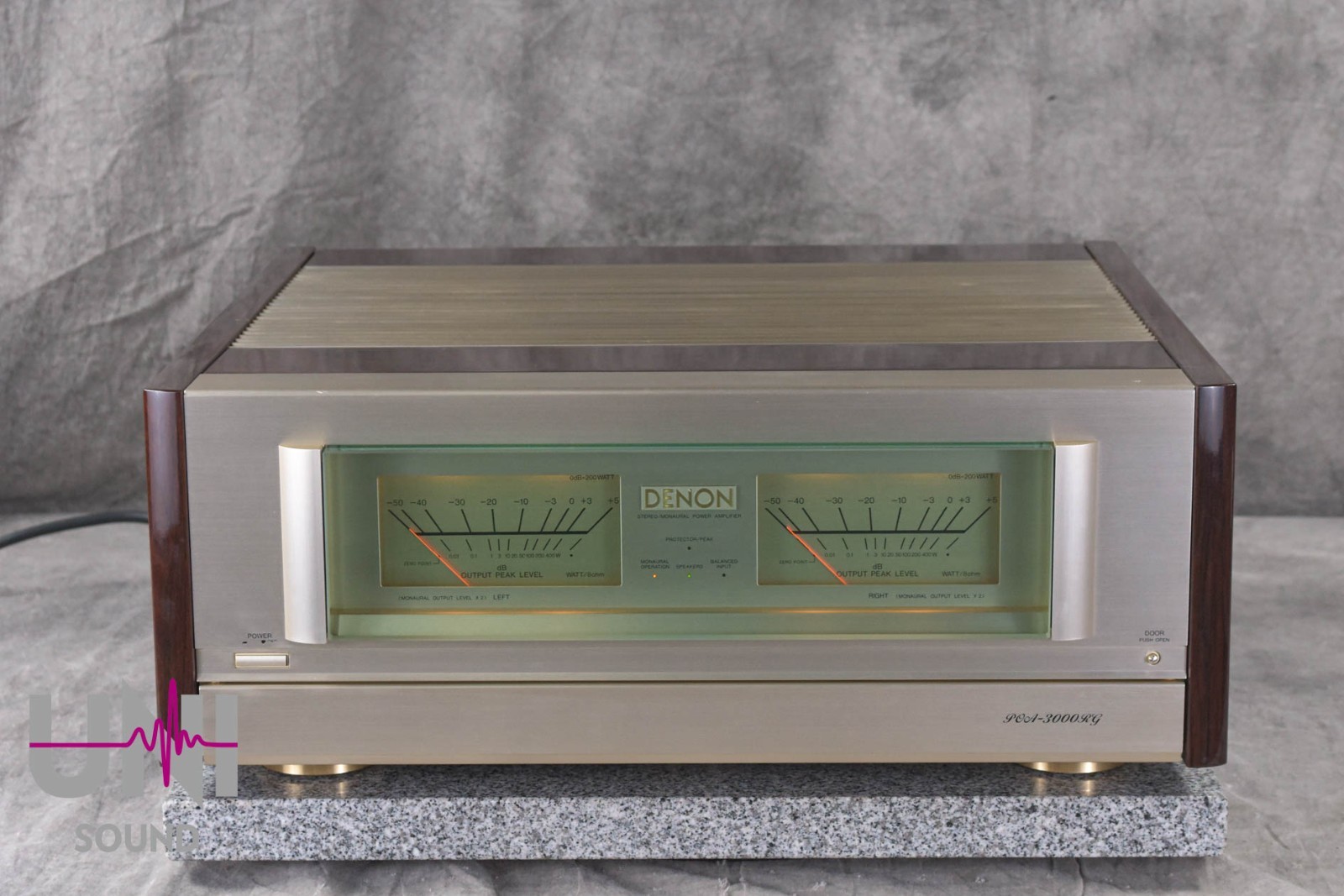
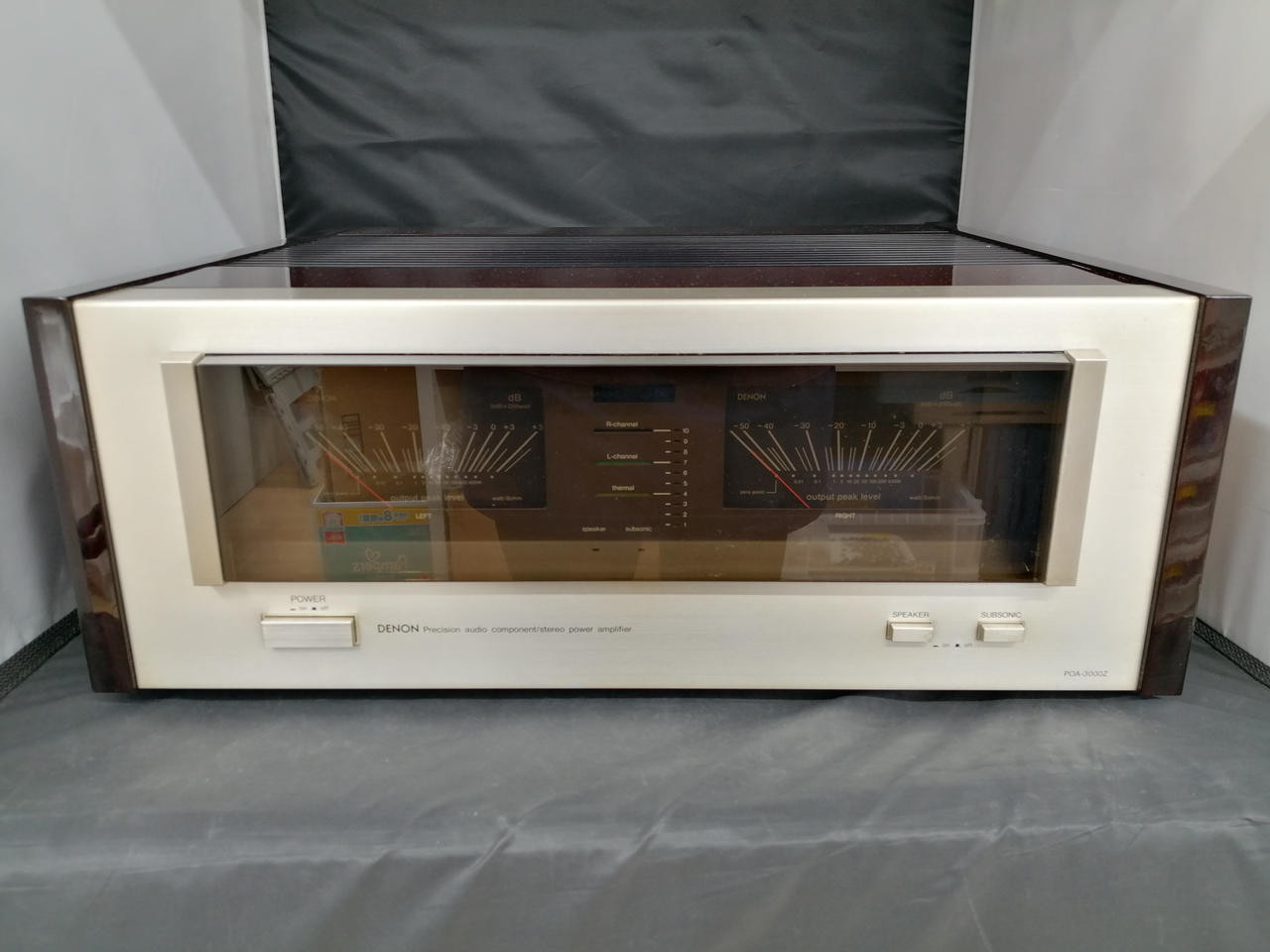
These features reflected Denon’s philosophy: prioritize performance and longevity over cosmetic flair. The front panel was minimalist—brushed aluminum with clear labeling, a large central volume knob, and small, precise buttons for input and function selection.
Common Issues and Maintenance
Like any vintage component, the Denon POA-3000 benefits from careful maintenance. While generally reliable, several issues may arise after decades of use:
- Capacitor Aging: The electrolytic capacitors in the power supply and signal path may degrade over time, leading to increased noise, hum, or channel imbalance. A full recapping by a qualified technician is recommended for units that haven’t been serviced in 20+ years.
- Relay Contact Oxidation: Though sealed, the input relays can develop resistance over time, causing intermittent connections. Cleaning or replacement may be necessary.
- Volume Control (Stepped Attenuator): While not a traditional pot, the stepped switch can accumulate dust or oxidation. Contact cleaner designed for electronics can help, but disassembly should be done carefully.
- Tape Monitor Relay Wear: The tape loop switching relays are mechanical and may fail after heavy use. Replacement with modern equivalents is possible.
Given its build quality, most POA-3000 units that have been stored properly and occasionally powered up remain functional. However, a full service is advisable before integrating it into a high-end system.
Current Market Value and Collectibility
The Denon POA-3000 is not as widely collected as some of its peers—such as the Marantz 2270 or Sansui G-7000—but it holds a quiet reputation among Denon aficionados and vintage audio purists. Units in excellent cosmetic and working condition typically sell for $300–$500 USD, depending on region and included accessories.
Its value is driven more by performance than nostalgia. Unlike rare or flashy models, the POA-3000 appeals to users who want a no-nonsense, high-quality preamp for daily listening. Fully serviced examples with original packaging or documentation can command higher prices, especially in Japan and Europe, where Denon’s legacy is particularly respected.
Conclusion and Legacy
The Denon POA-3000 may not be the most famous preamplifier of the late 1970s, but it stands as a testament to Denon’s engineering excellence during a pivotal era in audio history. It represents a philosophy of restraint, precision, and long-term reliability—qualities that are increasingly rare in modern electronics.
For the vintage audio enthusiast, the POA-3000 offers a window into a time when high-fidelity gear was built to last, designed with care, and judged by its ability to disappear from the signal chain—letting the music speak for itself.
If you’re building a classic Japanese system or simply seeking a transparent, well-constructed preamp, the Denon POA-3000 deserves serious consideration. It’s not flashy, but it’s honest—and in the world of vintage audio, that’s a rare and valuable trait.
eBay Listings


As an eBay Partner, we earn from qualifying purchases. This helps support our independent vintage technology research.
Related Models
- Denon DRA-800 (1985)
- Denon PMA-350Z (1980)
- Denon POA-1500 (1979)
- Denon PRA-1500 (1979)
- Denon DRA-350 (1985)
- Luxman L-530 (1975)
- Luxman R-404 (1975)
- Luxman RV-371 (1975)
- Luxman SQ-38U (1975)
- Luxman T-14 (1972)