Denon PMA-950: The Unsung Hero of 1970s High-Fidelity Amplification
In the late 1970s, Japanese audio manufacturers were locked in a golden race to deliver high-fidelity performance, engineering excellence, and value to the burgeoning audiophile market. Denon, already renowned for its precision turntables and professional recording equipment, entered this arena with a series of integrated amplifiers that combined meticulous design with musical transparency. Among these, the Denon PMA-950 stands out as a quiet powerhouse—a refined, no-nonsense amplifier that delivered performance far beyond its price point and has earned a loyal following among vintage audio enthusiasts.
Though not as widely celebrated as some of its contemporaries from Marantz or Yamaha, the PMA-950 embodies the engineering philosophy that defined Denon’s golden era: understated elegance, solid-state reliability, and a sound signature that prioritizes clarity, dynamics, and tonal accuracy.
Technical Specifications
The PMA-950 was introduced in 1977 as part of Denon’s mid-to-high-tier amplifier lineup. It was designed for serious listeners who demanded more than just power—they wanted control, detail, and the ability to drive a wide range of speakers with authority.
| Specification | Detail |
| Model | Denon PMA-950 |
| Year Introduced | 1977 |
| Category | Integrated Amplifier |
| Configuration | Solid-State (Transistor) |
| Power Output | 70W per channel (8Ω) |
| Frequency Response | 20Hz – 20kHz (+0, -0.5dB) |
| Total Harmonic Distortion | <0.05% (at 1kHz, 8Ω) |
| Input Sensitivity | 2.5mV (MM), 150mV (Line) |
| Input Impedance | 47kΩ (Line), 47kΩ (MM) |
| Signal-to-Noise Ratio | >80dB (MM), >90dB (Line) |
| Damping Factor | >40 (8Ω, 1kHz) |
| Speaker Impedance | 4–16Ω |
| Dimensions (W×H×D) | 430 × 148 × 360 mm |
| Weight | 13.5 kg (approx.) |
| Inputs | 2 Line, 1 Phono (MM) |
| Outputs | Tape Out, Preamp Out |
| Power Supply | Dual-mono toroidal-inspired design (for era) |
The PMA-950 features a discrete transistor output stage—no integrated circuits in the signal path—which contributes to its clean, dynamic sound. Its phono stage is tailored for moving magnet (MM) cartridges, offering respectable gain and RIAA equalization accuracy for the time. While it lacks the luxuries of modern amplifiers (like remote volume control or digital inputs), its minimalist back panel reflects a focus on pure analog performance.
Sound Characteristics and Performance
The Denon PMA-950 delivers a sound that is best described as balanced, articulate, and dynamically expressive. Unlike some of the warmer-sounding Japanese amps of the era, the PMA-950 leans toward neutrality, making it an excellent choice for critical listening and genre versatility.
- Bass: Tight, well-controlled, and punchy. The damping factor ensures that even demanding speakers are kept in check, with minimal boom or overhang.
- Midrange: Clear and transparent, with excellent vocal presence. Instruments like acoustic guitars and pianos are rendered with natural timbre and spatial detail.
- Treble: Smooth and extended without being harsh. Cymbals shimmer without sibilance, and high-frequency detail is revealed without fatigue.
- Soundstage: Wider and deeper than many contemporaries, with strong imaging and instrument separation.
Paired with efficient speakers like the KEF LS3/5A, AR-3a, or Tannoy Embassy, the PMA-950 reveals its full potential—offering a listening experience that feels both intimate and expansive. It excels with jazz, classical, and acoustic recordings, where nuance and dynamics are paramount.
Notable Features and Innovations
While the PMA-950 may appear conservative in design, it incorporates several thoughtful engineering choices:
- High-Quality Internal Layout: Denon used short signal paths and high-grade components, including metal-film resistors and polypropylene capacitors in critical stages.
- Dual Power Supply Design: Though not a fully dual-mono setup by today’s standards, the power regulation is well-separated for preamp and power stages, reducing crosstalk and noise.
- Precision Volume Control: A high-quality Alps potentiometer ensures smooth, channel-balanced volume adjustment.
- Robust Chassis: The heavy steel chassis and thick aluminum front panel reduce resonance and provide excellent shielding from external interference.
- Tape Loop and Preamp Out: Allows integration into more complex systems or use as a power amplifier when paired with a separate preamp.
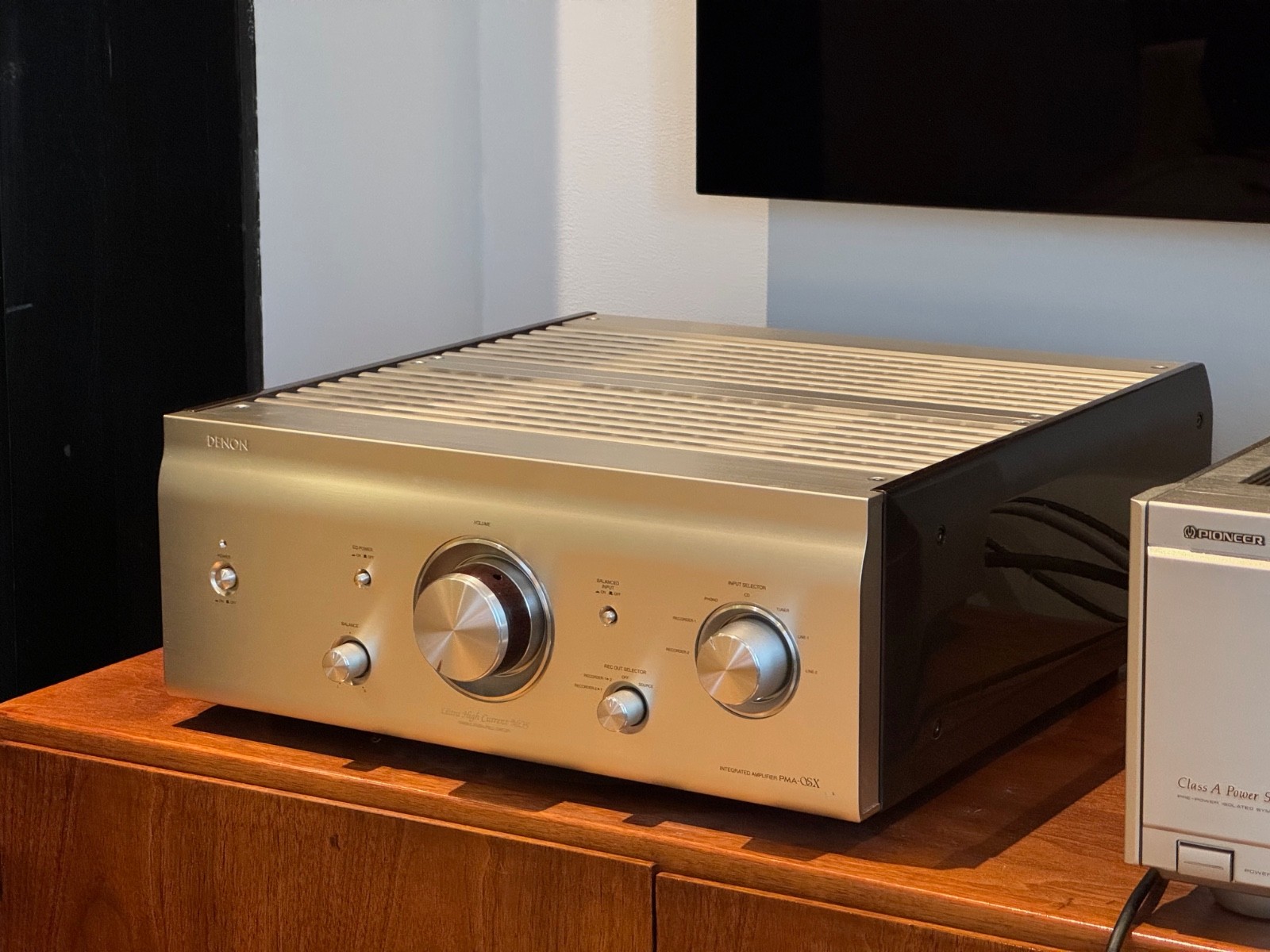
The front panel is minimalist: a large central volume knob, source selector, mute button, and illuminated VU meters (a signature Denon touch). These meters aren’t just decorative—they provide real-time feedback on output levels and channel balance, adding both function and vintage charm.
Common Issues and Maintenance
Like all vintage electronics from the 1970s, the Denon PMA-950 benefits from careful inspection and maintenance. While generally reliable, aging components can affect performance:
- Capacitor Aging: Electrolytic capacitors in the power supply and signal path may dry out over time, leading to hum, reduced bass, or channel imbalance. A full recapping by a qualified technician is recommended for units that haven’t been serviced in decades.
- Thermal Stress: The output transistors and bias circuits should be checked, especially if the amp has been used heavily. Improper bias can lead to distortion or even thermal runaway.
- Dust and Oxidation: Pots and switches can develop crackling or dropouts. Cleaning with contact cleaner (applied carefully) or replacement can restore smooth operation.
- VU Meter Calibration: The analog meters may drift or dim over time. LED backlighting replacements are available for restoration projects.
With proper care, the PMA-950 can perform reliably for decades. Its build quality and serviceable design make it a favorite among DIY audio restorers.
Current Market Value and Collectibility
The Denon PMA-950 is not a "hyped" model like the Marantz 2270 or Sansui AU-α907, but it has quietly gained respect among discerning collectors and audiophiles. Units in good working condition typically sell for $250–$400, depending on cosmetics, functionality, and whether they’ve been refurbished.
Fully restored examples with new capacitors, cleaned controls, and calibrated meters can command higher prices, especially when paired with matching Denon components like the DA-8100 tuner or DP-3000 turntable.
Its collectibility is driven by:
- Denon’s reputation for high-end engineering
- Strong performance-to-price ratio for its era
- Growing interest in understated, high-quality vintage gear
While not a rare "unicorn," the PMA-950 is increasingly recognized as a sleeper hit—an amplifier that delivers near-preamp/power amp performance in an integrated package.
Conclusion and Legacy
The Denon PMA-950 may not have the flashy aesthetics or legendary status of some 1970s icons, but it represents the quiet excellence that defined Denon’s approach to audio: precision, reliability, and musical truth. It’s an amplifier built for listeners, not showrooms.
Today, it stands as a testament to an era when Japanese manufacturers competed not on features, but on the purity of sound. For the vintage audio enthusiast seeking a capable, honest amplifier with excellent build and a neutral yet engaging sound, the PMA-950 remains a compelling choice.
Whether you're building a period-correct system or simply want a no-nonsense integrated with real performance, the Denon PMA-950 deserves a listen. It’s not just a relic—it’s a reminder that great sound never goes out of style.
eBay Listings



As an eBay Partner, we earn from qualifying purchases. This helps support our independent vintage technology research.
Related Models
- Denon DRA-800 (1985)
- Denon PMA-350Z (1980)
- Denon POA-1500 (1979)
- Denon PRA-1500 (1979)
- Denon DRA-350 (1985)
- Luxman L-530 (1975)
- Luxman R-404 (1975)
- Luxman RV-371 (1975)
- Luxman SQ-38U (1975)
- Luxman T-14 (1972)