Denon PMA-600: The Quiet Performer of the Late '80s
In the late 1980s, Denon was quietly establishing itself as a serious contender in the high-fidelity audio world—not just through its legendary turntables and CD players, but also with a line of integrated amplifiers that combined thoughtful engineering with a musical, engaging sound. Among these, the Denon PMA-600 stands out as a well-balanced, understated performer that, while perhaps overshadowed by flashier contemporaries, has earned a loyal following among vintage audio enthusiasts.
Released in 1988, the PMA-600 arrived during a golden era for Japanese audio manufacturing. At a time when brands like Marantz, Yamaha, and Sansui were pushing the boundaries of analog and early digital integration, Denon took a more measured approach—focusing on build quality, sonic coherence, and long-term reliability. The PMA-600 exemplifies this philosophy: a no-nonsense, high-performance integrated amplifier that delivers more than its modest cosmetics might suggest.
Though not as widely documented as some of Denon’s more famous models (like the PMA-S1 or PMA-700V), the PMA-600 has steadily gained recognition in collector circles for its smooth, natural sound and robust construction. It’s a classic example of “if it ain’t broke, don’t fix it” engineering—built to last, sonically rewarding, and refreshingly free of gimmicks.
Technical Specifications
| Specification | Detail |
| Model | Denon PMA-600 |
| Year of Release | 1988 |
| Type | Integrated Amplifier |
| Power Output | 60W per channel (8Ω) |
| Frequency Response | 20Hz – 20kHz (+0, -1dB) |
| Total Harmonic Distortion | <0.03% (1kHz, 8Ω) |
| Input Sensitivity | 2.5mV (MM), 150mV (Line) |
| Input Impedance | 47kΩ (Line), 47kΩ (MM) |
| Signal-to-Noise Ratio | 90dB (MM), 100dB (Line) |
| Damping Factor | 40 (8Ω, 1kHz) |
| Speaker Impedance | 8Ω minimum |
| Dimensions (W×H×D) | 420 × 148 × 328 mm |
| Weight | 10.5 kg |
| Inputs | 4 Line, 1 MM Phono |
| Outputs | Preamp Out, Tape Monitor |
| Power Supply | Toroidal Transformer (estimated) |
The PMA-600 features a dual-mono preamp design with discrete circuitry—no op-amps—which contributes to its clean, dynamic presentation. While Denon didn’t publish all internal details, teardowns and user reports suggest the use of high-quality JFETs in the phono stage and a robust power supply, likely centered around a toroidal transformer. This was not standard in mid-tier receivers at the time, making the PMA-600 a step above many competitors in terms of component quality.
Sound Characteristics and Performance
The Denon PMA-600 delivers a sound that can best be described as musical, warm, and effortlessly composed. It doesn’t shout for attention, but once you listen closely, its strengths become clear.
Bass response is tight and well-controlled, with a natural weight that avoids bloat—perfect for driving classic 80s speakers like the Yamaha NS-1000M or KEF Coda 1. The midrange is where the PMA-600 truly shines: vocals are rendered with clarity and presence, never veering into harshness. This makes it an excellent match for jazz, acoustic, and vocal recordings.
Treble is smooth and extended, without the grain or sibilance that sometimes plagues amplifiers of this era. While not as airy or detailed as some high-end contemporaries, the PMA-600 avoids fatigue during long listening sessions—a hallmark of a well-designed amp.
Its 60Wpc output may seem modest by today’s standards, but in practice, it’s more than sufficient for most bookshelf and medium-sized floorstanding speakers in typical room sizes. Paired with efficient speakers (88dB+), the PMA-600 can deliver dynamic, engaging sound with excellent spatial imaging and soundstage depth.
Notable Features and Innovations
While the PMA-600 doesn’t boast flashy features, it includes several thoughtful design choices that reflect Denon’s engineering ethos:
- Discrete Phono Stage: A high-quality MM phono input with low noise and good gain makes it turntable-ready without needing an external preamp.
- Tape Monitor Function: Allows easy switching between source and tape loop, useful for cassette enthusiasts or analog recording.
- Preamp Output: Enables future expansion with a separate power amplifier—uncommon in many integrated amps of this class.
- Solid Build Quality: Heavy chassis, quality potentiometers, and reliable relay-based input switching suggest long-term durability.
- Dual-Mono Preamp Design: Helps isolate left and right channels for improved stereo imaging and reduced crosstalk.
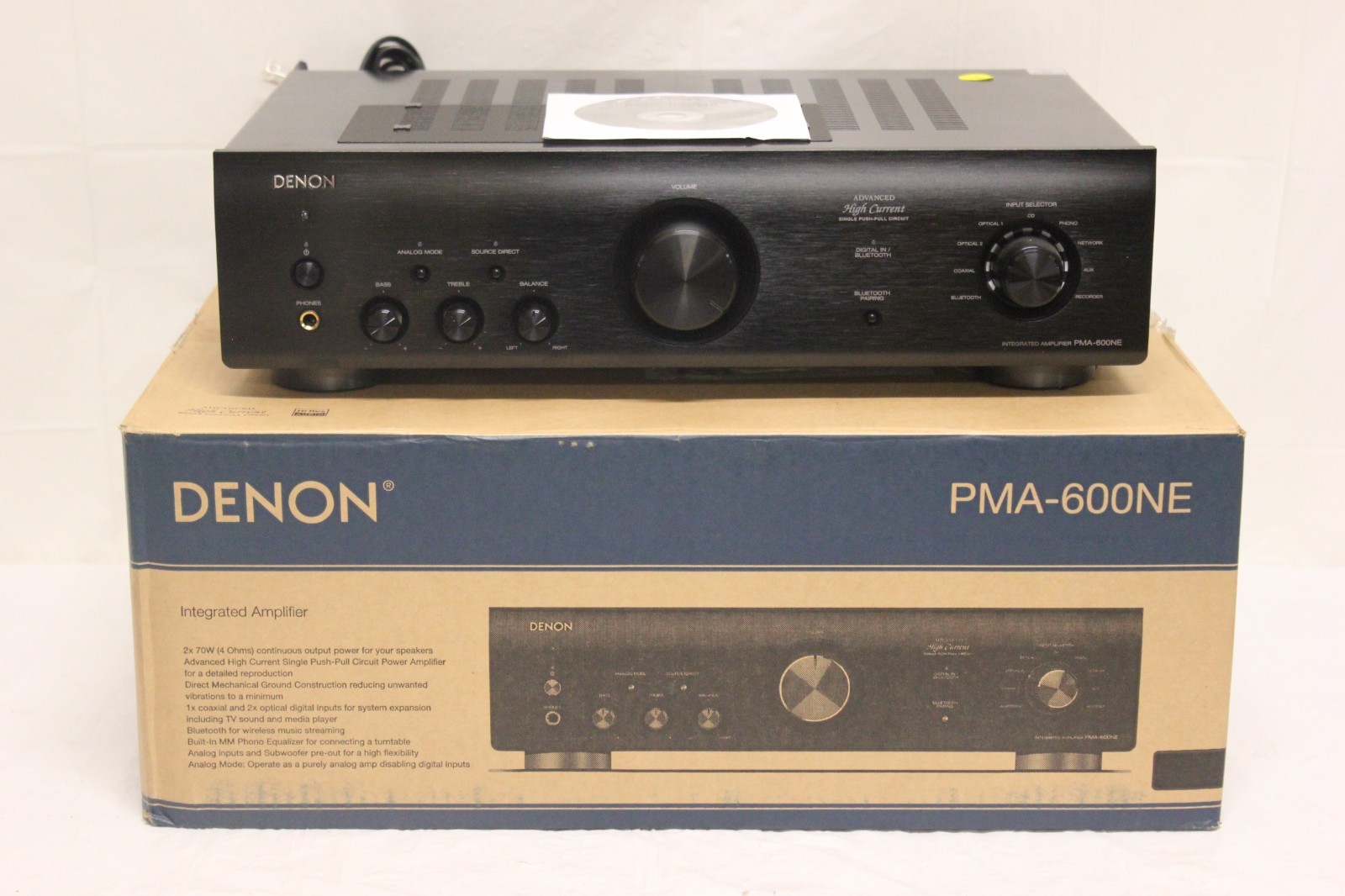
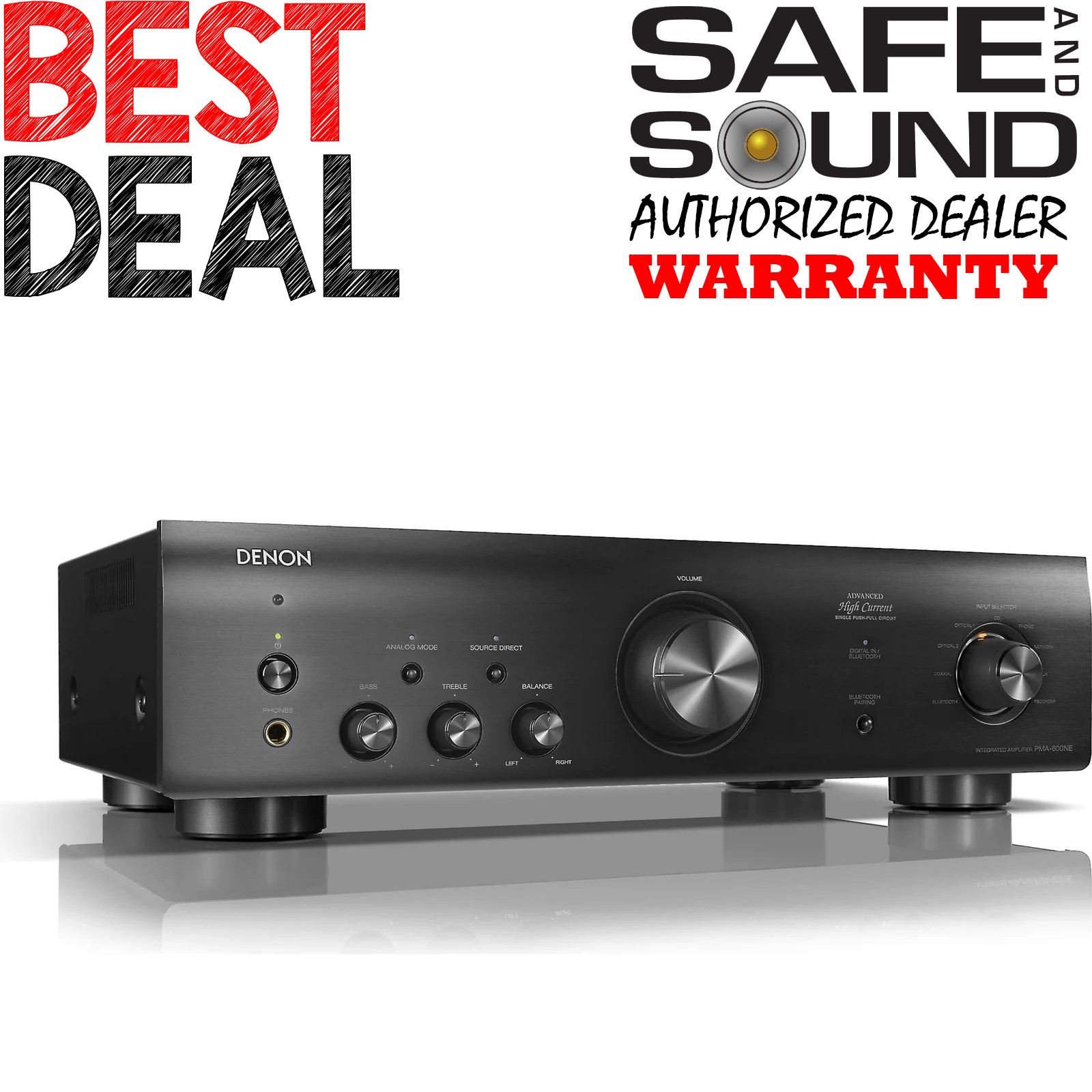
The front panel is minimalist: a large volume knob, source selector, tape monitor switch, and basic LED indicators. There’s no remote control—a limitation by modern standards, but audiophiles often appreciate the direct, tactile interface.
Common Issues and Maintenance
Like any 35-year-old electronics, the Denon PMA-600 may require some attention to perform at its best:
- Capacitor Aging: Electrolytic capacitors in the power supply and signal path may have dried out. A full recapping by a qualified technician can restore original performance and prevent future failures.
- Relay Clicking or Failure: The input selector uses relays, which can degrade over time. Sticking or intermittent switching is a known issue—cleaning or replacing relays usually resolves it.
- Dust and Oxidation: Pots and switches can become noisy with age. Contact cleaner (used carefully) can restore smooth operation.
- Thermal Stress: While generally reliable, prolonged use in poorly ventilated spaces may lead to heat buildup. Ensure adequate airflow around the unit.
With proper care, the PMA-600 is remarkably durable. Many units still function perfectly today, a testament to Denon’s conservative engineering.
Current Market Value and Collectibility
The Denon PMA-600 is not a high-profile collector’s item like the PMA-700V or Marantz PM-6600, but it’s gaining quiet appreciation. In good working condition, it typically sells for $150–$250 USD, depending on region and cosmetic state. Fully serviced units with recapped power supplies may command slightly higher prices.
Its value lies not in rarity, but in performance per dollar. For budget-conscious audiophiles building a vintage system, the PMA-600 offers a compelling blend of musicality, build quality, and compatibility with classic speakers and turntables.
It’s also an excellent candidate for restoration—simple enough for DIY repairs, yet sophisticated enough to deliver high-end sound when properly maintained.
Conclusion and Legacy
The Denon PMA-600 may not have made headlines in its day, but it represents the quiet excellence that defined Denon’s analog-era engineering. It’s not flashy, nor does it try to be. Instead, it focuses on what matters: faithful, enjoyable music reproduction.
In an age where audio gear often prioritizes specs over soul, the PMA-600 reminds us that great sound doesn’t require complexity. With its warm midrange, solid build, and timeless design, it remains a worthy centerpiece for any vintage setup.
For those exploring the rich world of late-80s Japanese amplifiers, the Denon PMA-600 is a hidden gem—one that rewards patience, care, and a love for analog music. Whether you’re a seasoned collector or a newcomer to vintage audio, this unassuming amplifier deserves a listen.
eBay Listings


As an eBay Partner, we earn from qualifying purchases. This helps support our independent vintage technology research.
Service Manuals & Schematics
Related Models
- Denon DRA-800 (1985)
- Denon PMA-350Z (1980)
- Denon POA-1500 (1979)
- Denon PRA-1500 (1979)
- Denon DRA-350 (1985)
- Luxman L-530 (1975)
- Luxman R-404 (1975)
- Luxman RV-371 (1975)
- Luxman SQ-38U (1975)
- Luxman T-14 (1972)