Denon PMA-500Z: A High-Current Powerhouse from the Golden Era of Hi-Fi
In the late 1990s, Denon solidified its reputation as a master of high-fidelity audio engineering with a series of amplifiers that balanced precision, power, and musicality. Among these, the Denon PMA-500Z stands out as a compelling integrated amplifier that, while perhaps less celebrated than its siblings like the PMA-700Z or PMA-900Z, delivers performance that punches well above its weight. Released in 1997, the PMA-500Z was positioned as a high-current, no-nonsense amplifier aimed at serious audiophiles who valued control, clarity, and reliability.
Though Denon is often associated with its legendary turntables and CD players, its amplification line from this era deserves equal attention. The PMA-500Z was built during a transitional period in audio — one where digital sources were emerging, but analog purity still reigned supreme. Denon responded by crafting an amplifier that could drive a wide range of speakers with authority while maintaining tonal neutrality and low distortion.
Technical Specifications
The PMA-500Z was engineered with a robust power supply and a high-current output stage, making it particularly adept at handling difficult speaker loads and dynamic musical passages. Its design reflects Denon’s commitment to audiophile-grade components and conservative, reliable engineering.
| Specification | Detail |
| Model | Denon PMA-500Z |
| Year Introduced | 1997 |
| Type | Integrated Amplifier |
| Power Output | 60W per channel (8Ω, RMS) |
| Frequency Response | 20Hz – 20kHz (+0/-1dB) |
| Total Harmonic Distortion | <0.01% (at full power) |
| Input Sensitivity | 250mV (for rated output) |
| Input Impedance | 47kΩ (line inputs) |
| Signal-to-Noise Ratio | 100dB (IHF-A weighted) |
| Speaker Impedance | 8Ω (minimum 6Ω stable) |
| Damping Factor | 80 (at 1kHz, 8Ω) |
| Inputs | 4 Line (RCA), 1 Tape In |
| Outputs | 1 Tape Out, Preamp Out (variable/fixed) |
| Tone Controls | Bass, Treble (±8dB at 100Hz/10kHz) |
| Power Supply | Dual toroidal transformers (high-current design) |
| Dimensions (W×H×D) | 435 × 146 × 379 mm |
| Weight | 15.5 kg |
The PMA-500Z features a dual-mono power supply architecture with separate rectifiers and filtering for left and right channels, reducing crosstalk and improving channel separation. The use of high-quality capacitors and low-feedback circuitry contributes to its clean, transparent sound signature.
Sound Characteristics and Performance
The sonic signature of the Denon PMA-500Z is best described as controlled, dynamic, and neutral. Unlike some amplifiers of the era that leaned into warmth or romanticism, the PMA-500Z aims for accuracy — delivering a flat frequency response with tight bass, clear mids, and extended, non-fatiguing highs.
Its high damping factor of 80 ensures excellent control over speaker cones, particularly with bass drivers, making it a great match for speakers that tend to sound loose or boomy with lesser amplifiers. Whether driving vintage KEFs, Tannoys, or modern floorstanders, the PMA-500Z maintains composure even at higher volumes.
Midrange clarity is a standout feature. Vocals are rendered with natural timbre and excellent presence, while acoustic instruments like guitars and pianos are reproduced with lifelike texture. The amplifier’s low distortion and wide bandwidth ensure that subtle nuances in recordings are preserved, making it ideal for jazz, classical, and acoustic genres.
Despite its clean presentation, the PMA-500Z doesn’t sound sterile. There’s a slight richness in the lower mids that adds body without bloating the sound, likely due to Denon’s careful component selection and circuit layout. This balance makes it equally enjoyable with rock, orchestral, and electronic music.
Notable Features and Innovations
While not as feature-laden as modern amplifiers, the PMA-500Z includes several thoughtful design elements that reflect Denon’s engineering philosophy:
- High-Current Output Stage: Engineered to deliver consistent power into varying speaker impedances, ensuring stable performance even with demanding loads.
- Dual Toroidal Transformers: Provide clean, isolated power to the preamp and power amp sections, minimizing noise and improving dynamics.
- Discrete Circuitry: Avoids integrated circuits in critical signal paths, using discrete transistors for greater control over sound quality.
- Tone Controls with Bypass Switch: Allows for tonal shaping while offering a pure, straight-wire path when desired — a feature appreciated by purists.
- Preamp Output: Enables future expansion with a separate power amplifier, making the PMA-500Z a potential centerpiece in a modular system.
- Solid Build Quality: Housed in a rigid steel chassis with a brushed aluminum front panel, the amplifier exudes durability and high-end craftsmanship.
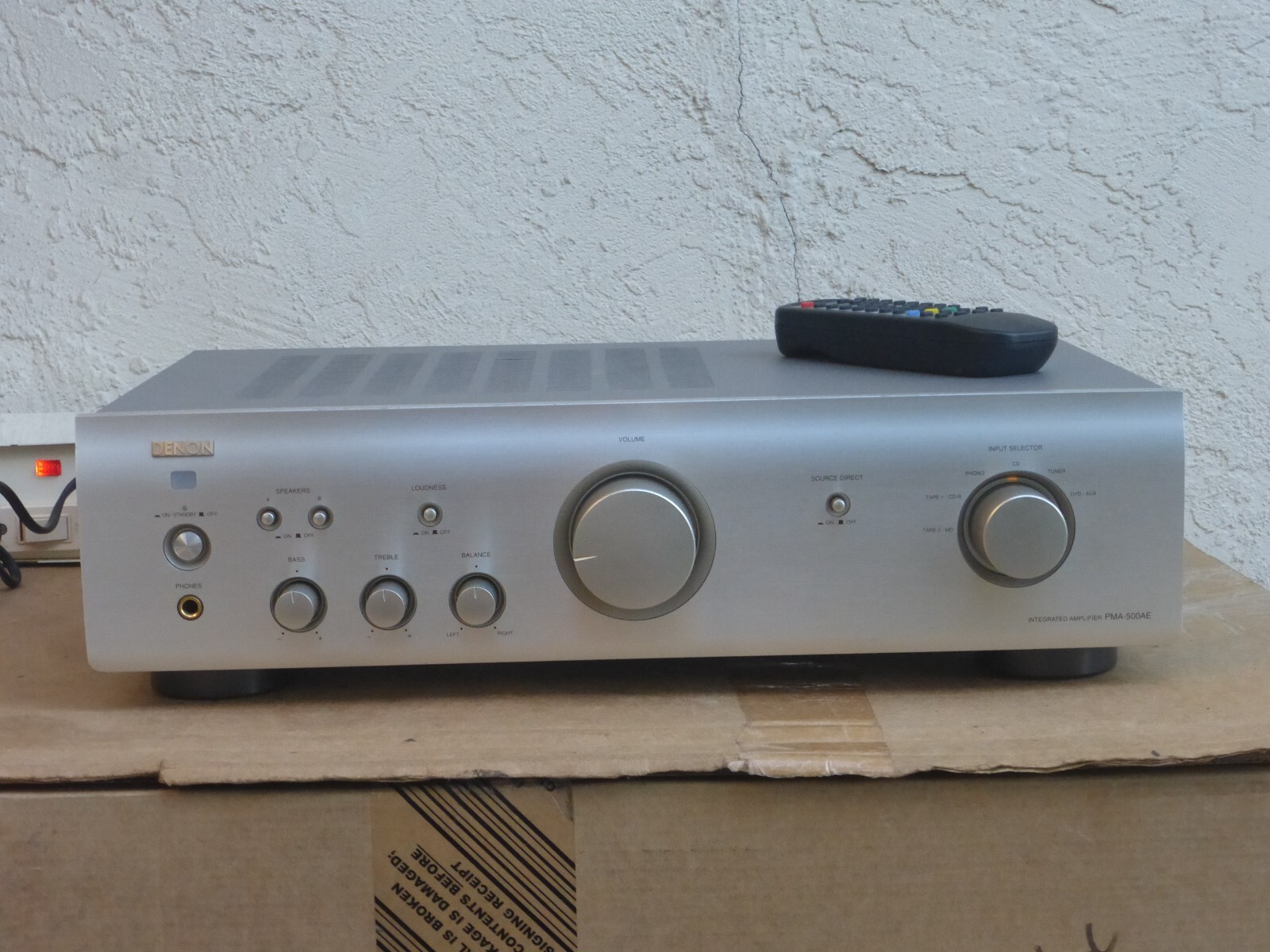
The front panel is minimalist yet functional, with large, tactile volume and input selectors, and clearly labeled buttons for tone control and muting. The large analog VU meters (optional on some variants, standard on others) add a touch of vintage flair while providing real-time feedback on output levels.
Common Issues and Maintenance
The PMA-500Z is generally a reliable amplifier, but like all electronics from the 1990s, it benefits from periodic maintenance after decades of use.
- Capacitor Aging: The electrolytic capacitors in the power supply and signal path may degrade over time, leading to hum, reduced bass response, or channel imbalance. A recapping by a qualified technician can restore original performance.
- Relay Clicking or Channel Dropout: Some users report intermittent issues with internal relays, often due to oxidation. Cleaning or replacement resolves this.
- Tone Control Pots: After years of use, the tone control potentiometers may develop scratchiness. Contact cleaner or replacement is recommended.
- Thermal Management: The amplifier runs warm but not excessively so. Ensure proper ventilation and clean dust from heat sinks and vents to prevent thermal stress.
Given its robust construction, most PMA-500Z units still in circulation can be restored to excellent working condition with basic servicing.
Current Market Value and Collectibility
The Denon PMA-500Z is not yet a "blue chip" vintage amplifier like the Marantz 2270 or Sansui AU-999, but it’s gaining recognition among Denon enthusiasts and those seeking high-performance, under-the-radar gear.
In today’s market (2024), a fully functional PMA-500Z typically sells for $250–$400, depending on condition, originality, and whether it includes the original packaging and documentation. Units with working VU meters or rare finishes may command slightly higher prices.
Its collectibility is steadily rising, particularly among fans of Japanese high-end audio from the 1990s. While not as rare as some contemporaries, its solid build, musical performance, and Denon pedigree make it a smart acquisition for both users and collectors.
Conclusion and Legacy
The Denon PMA-500Z may not have the fame of its bigger siblings, but it represents the quiet excellence that defined Denon’s amplifier division in the late 1990s. It’s a no-compromise design focused on accuracy, power, and reliability — qualities that remain relevant in today’s high-fidelity landscape.
For the vintage audio enthusiast, the PMA-500Z offers a compelling blend of performance and value. It drives speakers with authority, reveals detail without harshness, and ages gracefully with proper care. In an era where many amplifiers lean toward coloration or convenience, the PMA-500Z stands as a testament to Denon’s commitment to pure, uncolored sound.
If you’re building a classic system or seeking a trustworthy integrated amplifier from Japan’s golden age of Hi-Fi, the Denon PMA-500Z deserves a serious listen. It may just be the hidden gem your setup has been missing.
eBay Listings


As an eBay Partner, we earn from qualifying purchases. This helps support our independent vintage technology research.
Related Models
- Denon DRA-800 (1985)
- Denon PMA-350Z (1980)
- Denon POA-1500 (1979)
- Denon PRA-1500 (1979)
- Denon DRA-350 (1985)
- Luxman L-530 (1975)
- Luxman R-404 (1975)
- Luxman RV-371 (1975)
- Luxman SQ-38U (1975)
- Luxman T-14 (1972)