Denon PMA-500: A Compact Classic from the Golden Age of Hi-Fi
In the late 1980s, Denon solidified its reputation as a builder of high-quality, no-nonsense audio equipment with a series of compact yet powerful integrated amplifiers. Among these was the Denon PMA-500, a modestly powered but thoughtfully engineered amplifier that brought Denon’s renowned build quality and sonic clarity to a broader audience. While not as celebrated as its higher-end siblings like the PMA-S1.0 or PMA-770, the PMA-500 carved out a niche as a reliable, sonically honest performer—ideal for small to medium-sized listening rooms and entry-level to mid-tier vintage systems.
Released in 1987, the PMA-500 arrived during a period of transition in the audio world. Digital audio was emerging with the rise of the CD, but analog sources like turntables and cassette decks were still central to most home systems. Denon, already respected for its precision in both analog and digital domains, applied that philosophy to the PMA-500: a clean, balanced amplifier designed to faithfully reproduce music without coloration or hype.
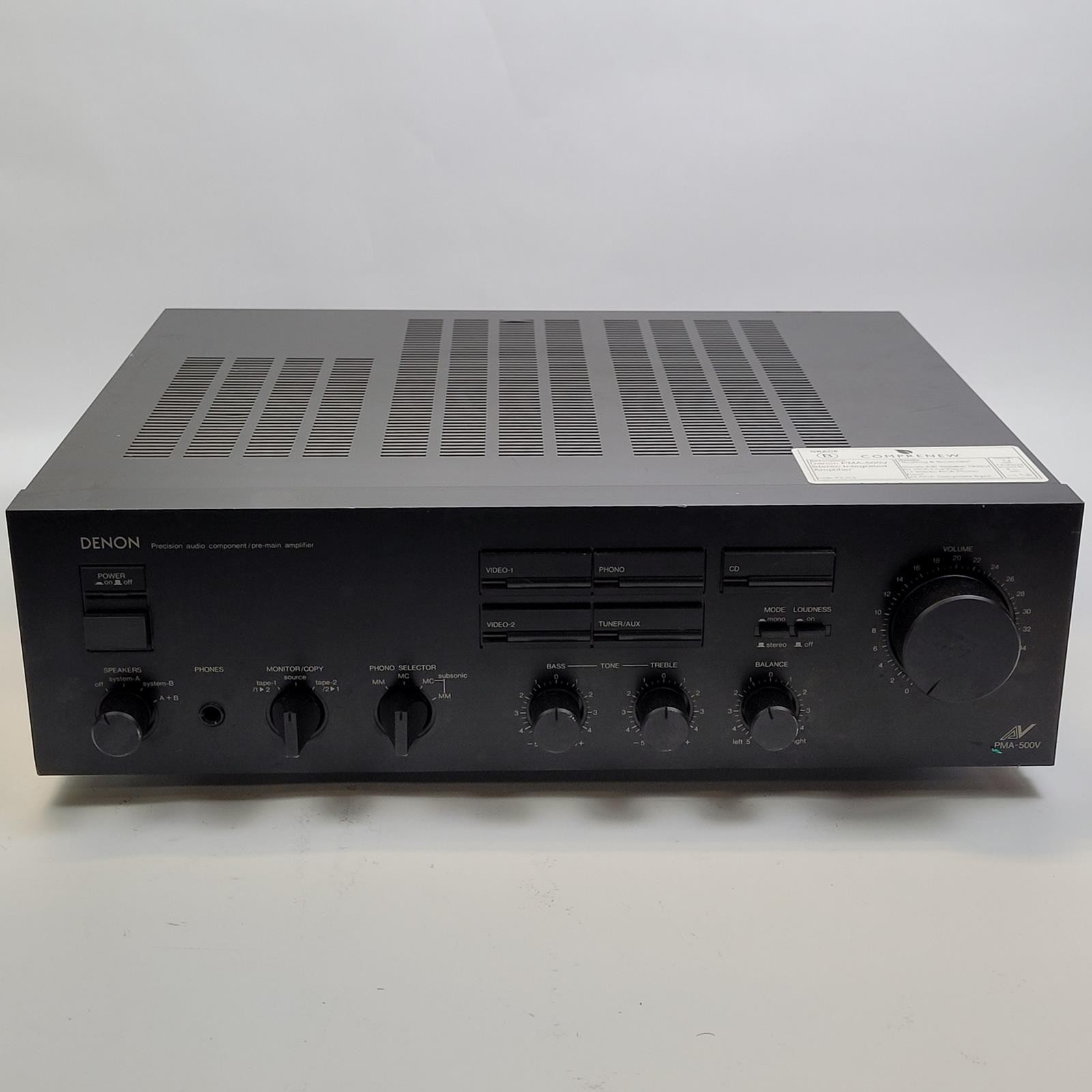
Though compact in stature—measuring just over 17 inches wide—the PMA-500 packed a full complement of features for its time, including multiple line inputs, a dedicated moving magnet phono stage, and a solid-state design that emphasized reliability and longevity. Its understated front panel, with a central VU meter flanked by simple controls, reflected Denon’s minimalist engineering ethos: functionality over flash.
Technical Specifications
| Specification | Detail |
| Model | Denon PMA-500 |
| Year Introduced | 1987 |
| Type | Solid-state integrated amplifier |
| Power Output | 50W per channel (8Ω, RMS) |
| Total Harmonic Distortion | 0.03% (1kHz, rated power) |
| Frequency Response | 20Hz – 20kHz (+0/-1dB) |
| Input Sensitivity | Line: 200mV, Phono (MM): 3.5mV |
| Input Impedance | Line: 47kΩ, Phono: 47kΩ |
| Signal-to-Noise Ratio | 90dB (IHF-A weighted) |
| Speaker Impedance | 8Ω minimum |
| Dimensions (W×H×D) | 430 × 142 × 335 mm |
| Weight | 10.5 kg (23.1 lbs) |
| Inputs | 3 Line, 1 Phono (MM), Tape In |
| Outputs | Tape Out, Preamp Out, Speaker A/B |
| Power Supply | Linear transformer, dual mono rails |
The PMA-500 employed a dual-mono power supply design, a notable feature at this price point, helping to reduce crosstalk and improve channel separation. Its discrete transistor output stage delivered a controlled, dynamic sound, while the inclusion of a high-quality moving magnet phono preamp made it an excellent choice for vinyl enthusiasts building a turnkey analog system.
Sound Characteristics and Performance
The Denon PMA-500 is not an amplifier that grabs attention with dramatic flair. Instead, it excels in neutrality, clarity, and composure. Its sonic signature is best described as clean, balanced, and transparent—a hallmark of Denon’s engineering philosophy during this era.
With 50 watts per channel into 8 ohms, the PMA-500 is best suited for efficient speakers (87dB+ sensitivity) in rooms up to 200 square feet. It won’t drive power-hungry floorstanders to concert levels, but with the right speakers—such as the KEF Coda 3, AR-3a, or Tannoy MX series—it delivers a surprisingly full and dynamic presentation.
Midrange clarity is a standout feature. Vocals are rendered with natural timbre and presence, and instruments like acoustic guitar or piano are reproduced with accurate texture and decay. The high frequencies are smooth and extended without being harsh, while the bass remains tight and well-controlled, though not overly deep or thunderous.
One of the PMA-500’s strengths is its ability to maintain composure at higher volumes. Unlike some budget amplifiers of the era that compress or distort when pushed, the PMA-500 remains stable and detailed, a testament to its robust power supply and conservative power rating.
Notable Features and Innovations
While not packed with gimmicks, the PMA-500 includes several thoughtful features that enhance its usability and performance:
- Dual Speaker Outputs (A/B): Allows switching between two pairs of speakers or bi-amping with external controls.
- Tape Monitor Function: Lets users toggle between direct source and tape loop, useful for cassette dubbing or noise reduction systems.
- High-Quality Phono Stage: A discrete MM phono preamp with accurate RIAA equalization, eliminating the need for an external phono stage.
- VU Meter: A large center-mounted analog meter displays output level, adding visual appeal and helping users monitor signal levels.
- Preamp Output: Enables connection to a separate power amplifier for future system expansion.
The front panel is minimalist: large volume and balance knobs, a source selector, and buttons for speaker selection, tape monitor, and power. The fit and finish are typical of Denon’s mid-tier gear—solid metal casing, smooth rotary controls, and a clean layout that feels both professional and user-friendly.
Common Issues and Maintenance
Like all vintage electronics from the late 1980s, the Denon PMA-500 may require some maintenance after decades of use. However, it is generally considered a reliable and durable unit, thanks to conservative component selection and solid build quality.
Common issues to watch for include:
- Capacitor Aging: Electrolytic capacitors in the power supply and signal path may dry out over time, leading to hum, channel imbalance, or reduced performance. A full recapping by a qualified technician can restore the amplifier to like-new condition.
- Dust and Oxidation: Pots (potentiometers) and switches can develop crackling or channel dropouts due to oxidation. Cleaning with contact cleaner (e.g., DeoxIT) often resolves this.
- Fuse Replacement: Always check the main AC fuse if the unit fails to power on. Use the correct slow-blow type as specified in the manual.
- Binding Post Tightness: The speaker terminals can loosen over time. Ensure they are snug to maintain good contact and prevent arcing.
Regular cleaning and occasional use help preserve the PMA-500’s longevity. If stored unused for years, it’s wise to perform a “power-up” gradually using a variac or dim-bulb tester to avoid stressing aged components.
Current Market Value and Collectibility
The Denon PMA-500 is not a high-profile collector’s item like the PMA-2000 or PMA-950, but it has developed a quiet following among vintage audio enthusiasts who appreciate its honest sound, compact size, and reliability.
In working condition, the PMA-500 typically sells for $150–$250, depending on cosmetic condition and whether it has been serviced. Fully refurbished units with new capacitors and cleaned controls may command slightly higher prices.
It’s particularly sought after by those building compact vintage systems or looking for a Denon-branded amplifier with phono support that won’t dominate a shelf. Its understated design also makes it a good fit for modern minimalist setups where vintage gear blends with contemporary decor.
Conclusion and Legacy
The Denon PMA-500 may not have the wattage or prestige of Denon’s flagship models, but it embodies the brand’s commitment to solid engineering, musical accuracy, and long-term reliability. In an era when many manufacturers cut corners to hit price points, the PMA-500 stood out for its thoughtful design and honest performance.
Today, it remains a smart choice for vintage audio newcomers or those seeking a compact, phono-equipped amplifier for a secondary system. Paired with a quality turntable and efficient speakers, the PMA-500 delivers a listening experience that is both engaging and true to the source.
While Denon has since shifted focus toward home theater and digital streaming, the PMA-500 is a reminder of the company’s roots in high-fidelity audio—a compact classic that continues to earn respect, one clean note at a time.
eBay Listings


As an eBay Partner, we earn from qualifying purchases. This helps support our independent vintage technology research.
Service Manuals & Schematics
- Manual — archive.org
Related Models
- Denon DRA-800 (1985)
- Denon PMA-350Z (1980)
- Denon POA-1500 (1979)
- Denon PRA-1500 (1979)
- Denon DRA-350 (1985)
- Luxman L-530 (1975)
- Luxman R-404 (1975)
- Luxman RV-371 (1975)
- Luxman SQ-38U (1975)
- Luxman T-14 (1972)