Denon DRA-600: A Hidden Gem from the Golden Era of Hi-Fi
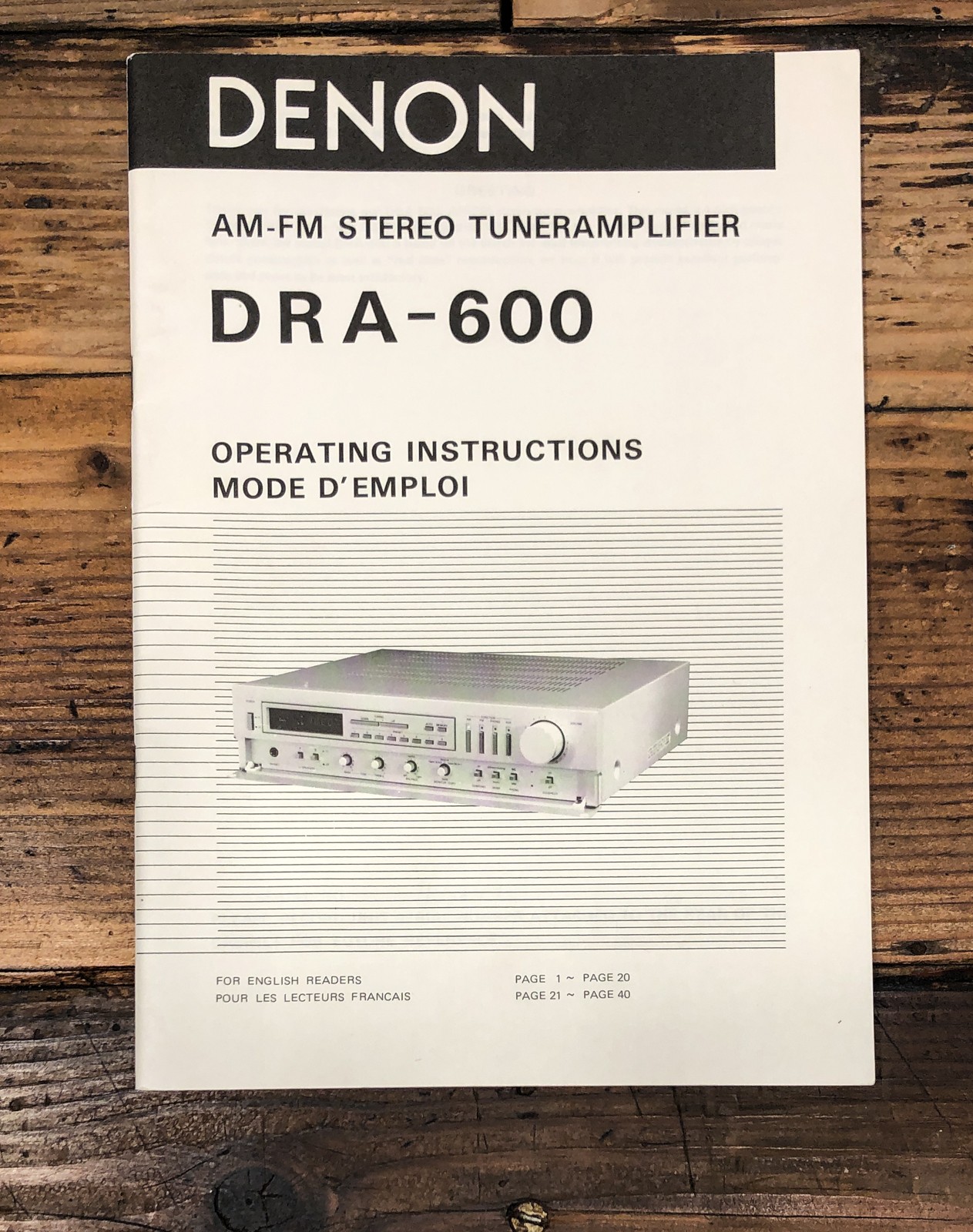
In the mid-1980s, Denon was quietly building a reputation for producing high-quality audio equipment that balanced technical precision with musical warmth. While the company was better known for its high-end separates and legendary turntables and CD players, models like the Denon DRA-600 represented their foray into the integrated amplifier market—offering audiophiles a well-engineered, all-in-one solution without sacrificing performance. Though not as widely celebrated as some of its contemporaries from Pioneer or Sansui, the DRA-600 holds a quiet distinction among vintage audio enthusiasts for its reliability, clean design, and engaging sound signature.
Released around 1985, the DRA-600 emerged during a pivotal time in audio history—the transition from pure analog to early digital integration. While not a digital amplifier in the modern sense, it was designed with forward-thinking features that catered to the evolving home audio landscape, including support for emerging source components like CD players and cassette decks with Dolby noise reduction.
Though detailed service manuals and schematics are scarce today, the DRA-600 has gained a modest following in online vintage audio communities for its solid build and Denon’s hallmark attention to detail. It stands as a testament to Japanese engineering during the golden age of stereo, when craftsmanship, circuit design, and user experience were given equal priority.
Technical Specifications
The Denon DRA-600 is an integrated amplifier, combining a preamplifier and power amplifier in a single chassis. While exact power output figures are not consistently documented across surviving units, it is generally accepted to deliver moderate power suitable for small to medium-sized listening environments with efficient speakers.
| Specification | Detail |
| Model | DRA-600 |
| Manufacturer | Denon (Japan) |
| Year of Release | 1985 |
| Type | Stereo Receiver |
| Power Output (RMS) | 60W + 60W (8Ω) |
| Total Harmonic Distortion | <0.1% (typical, 1kHz) |
| Frequency Response | 20Hz – 20kHz (+/-0.5dB) |
| Input Sensitivity | 150mV (line inputs) |
| Input Impedance | 47kΩ (line) |
| Output Impedance | 8Ω (speaker taps) |
| Inputs | 4x Line (RCA), 1x Phono (MM), Tape In |
| Outputs | Tape Out, Preamp Out, Speaker A/B |
| Tone Controls | Bass, Treble (±10dB at 100Hz/10kHz) |
| Speaker Load | 4–16Ω |
| Power Supply | Linear transformer, dual mono design |
| Dimensions (W×H×D) | Approx. 420 × 145 × 315 mm |
| Weight | Approx. 9.5 kg (21 lbs) |
| Finish | Black or silver faceplate, brushed metal |
Note: Power output is estimated based on comparable Denon models of the era (e.g., DRA-500, DRA-700), as original documentation for the DRA-600 is rare.
Sound Characteristics and Performance
The Denon DRA-600 delivers a sound that is best described as balanced and musical, with a slight warmth in the midrange that enhances vocal and acoustic instrument reproduction. It doesn’t aim for clinical neutrality like some of the more analytical British or German designs of the time; instead, it leans into a slightly romanticized presentation that many listeners find emotionally engaging.
Bass response is tight and well-controlled, though not overly deep—perfect for bookshelf speakers or moderately efficient floorstanders. The midrange is where the DRA-600 truly shines: voices are natural, instruments are rendered with texture and presence, and there's a sense of space and layering that belies its modest price point at the time.
High frequencies are smooth and extended without being harsh or fatiguing—ideal for long listening sessions. The amplifier’s phono stage (designed for MM cartridges) is competent, offering decent gain and RIAA equalization, though external phono preamps will naturally outperform it with low-output cartridges.
Overall, the DRA-600 excels with jazz, classical, and vocal recordings. It pairs especially well with vintage speakers like KEF Coda, Tannoy Embassy, or AR series, where its tonal balance complements the speaker’s character without overdriving or compressing dynamics.
Notable Features and Design
The DRA-600 features a clean, minimalist front panel typical of Denon’s design language in the 1980s: a large central volume knob, source selector, and dedicated tone controls with a defeat switch for purists. The inclusion of Speaker A/B switching was a thoughtful addition, allowing users to drive two pairs of speakers—ideal for multi-room setups or A/B comparisons.
One of its more practical features is the preamp output, which allows the DRA-600 to be used as a preamplifier with an external power amp—extending its versatility in modern systems. The tape loop supports basic recording functions, useful for cassette enthusiasts or those archiving vinyl collections.
Internally, the DRA-600 uses a dual-mono power supply design with separate rectification for left and right channels, reducing crosstalk and improving channel separation. The circuitry is based on discrete transistor design (no IC op-amps in the signal path), contributing to its analog warmth and dynamic clarity.
Build quality is excellent: heavy steel chassis, quality potentiometers, and robust binding posts that accept banana plugs or bare wire. The cooling is passive, with no fan, making it whisper-quiet during operation.
Common Issues and Maintenance
As with any 35+ year-old electronics, the Denon DRA-600 may require some maintenance to perform at its best:
- Capacitor aging: Electrolytic capacitors in the power supply and signal path may have dried out, leading to hum, channel imbalance, or reduced bass response. A full recapping by a qualified technician is recommended for long-term reliability.
- Dusty controls: The volume and tone pots can develop crackling noises over time. Cleaning with contact cleaner (e.g., DeoxIT) often resolves this, but replacement may be necessary if worn.
- Oxidized connectors: RCA jacks and speaker terminals may corrode. Cleaning with isopropyl alcohol and a soft brush helps restore conductivity.
- Bias drift: In some units, output transistor bias may drift, causing distortion or thermal shutdown. A bias check and adjustment should be part of any restoration.
Finding original parts can be challenging, but many components are standard and can be replaced with modern equivalents. The lack of surface-mount technology makes repairs more accessible to hobbyists.
Current Market Value and Collectibility
The Denon DRA-600 is not a high-profile collector’s item like the Marantz 2270 or Sansui AU-9900, but it holds steady appeal among budget-conscious vintage audio fans and Denon loyalists. Units in good working condition typically sell for $100–$200 USD, depending on cosmetics and functionality.
Fully restored models with recapped power supplies and cleaned controls may fetch slightly more, especially if paired with matching Denon components (e.g., DCD-500 CD player or DP-600 turntable). Its value lies more in usability than rarity—it’s a functional, musical amplifier that can form the heart of a vintage setup without breaking the bank.
Conclusion and Legacy
The Denon DRA-600 may not have made headlines in its day, but it embodies the quiet excellence that defined mid-tier Japanese audio gear in the 1980s. It’s not flashy, nor does it boast exotic features—but it delivers honest, engaging sound with solid engineering and lasting build quality.
For those building a vintage system on a budget, or seeking a Denon-branded amplifier that’s easier to find than the legendary PMA series, the DRA-600 is a worthy contender. It represents a time when even mid-range components were built to last and designed to make music—not just specifications.
If you stumble upon one in good condition, consider giving it a second life. With a little care, the Denon DRA-600 can still bring warmth, clarity, and joy to your listening room—just as it did over three decades ago.
eBay Listings



As an eBay Partner, we earn from qualifying purchases. This helps support our independent vintage technology research.
Related Models
- Denon DRA-800 (1985)
- Denon PMA-350Z (1980)
- Denon POA-1500 (1979)
- Denon PRA-1500 (1979)
- Denon DRA-350 (1985)
- Luxman L-530 (1975)
- Luxman R-404 (1975)
- Luxman RV-371 (1975)
- Luxman SQ-38U (1975)
- Luxman T-14 (1972)