Denon DR-W300: The Forgotten Audiophile Reel-to-Reel Gem
In the golden era of analog audio, when magnetic tape reigned supreme and high-fidelity enthusiasts sought the purest sound reproduction possible, Denon stood as a quiet innovator. Known primarily for their exceptional turntables and later for their digital audio breakthroughs, Denon also ventured into the world of reel-to-reel tape recorders—machines that represented the pinnacle of home audio recording and playback fidelity. Among these was the Denon DR-W300, a compact yet sophisticated reel-to-reel recorder introduced in the mid-1980s. Though not as widely recognized as some of its contemporaries from Studer, Tandberg, or even TEAC, the DR-W300 holds a special place for those who appreciate understated engineering excellence and analog warmth.
A Brief Historical Context
By the 1980s, the reel-to-reel format was in decline for mainstream consumers, having been largely supplanted by the convenience of compact cassettes and the emerging promise of digital audio (CDs launched in 1982). However, a dedicated niche of audiophiles, recording enthusiasts, and semi-professional studios still valued the superior dynamic range, frequency response, and low distortion offered by open-reel tape. Denon, with its long-standing commitment to high-fidelity audio, entered this space with a series of reel-to-reel machines aimed at the upper end of the consumer market.
The DR-W300, released around 1985, was part of Denon’s effort to bring professional-grade tape performance to the serious home user. It was not a budget machine, nor was it intended for casual use. Instead, it was engineered for precision, reliability, and sonic transparency—hallmarks of Denon’s design philosophy during this period.
Technical Specifications
| Feature | Specification |
| Format | 1/4" open reel |
| Tape Speeds | 7.5 ips, 15 ips (standard) |
| Tracks | 4-track, 2-channel stereo (full-track or half-track playback) |
| Head Configuration | Separate record, playback, and erase heads |
| Recording System | AC bias, peak limiting |
| Frequency Response | 30Hz – 20kHz (±3dB at 15 ips) |
| Signal-to-Noise Ratio | >68 dB (Dolby B compatible) |
| Wow and Flutter | <0.15% (WRMS) |
| Motor System | Dual capstan servo-controlled DC motors |
| Input/Output | Line in/out (RCA), microphone input (¼" jack) |
| Equalization | 120µs (15 ips), 180µs (7.5 ips) |
| Power Supply | External AC adapter (100–240V compatible) |
| Dimensions | 430 × 135 × 300 mm (W×H×D) |
| Weight | 10.5 kg (23.1 lbs) |
The DR-W300 was designed for ¼-inch tape on standard reels up to 7 inches in diameter, allowing for extended recording times at slower speeds. Its dual-speed capability (7.5 and 15 inches per second) gave users flexibility—15 ips for the highest fidelity mastering and critical listening, and 7.5 ips for longer recordings with still-excellent sound quality.
Sound Characteristics and Performance
The sonic signature of the Denon DR-W300 is best described as clean, detailed, and dynamically expressive. Unlike some reel-to-reel machines that impart a noticeable "tape saturation" coloration, the DR-W300 leans toward neutrality, making it ideal for accurate duplication and archival. Its separate playback and record heads ensure optimal alignment and minimize crosstalk, while the servo-controlled capstan system delivers exceptional speed stability.
At 15 ips, the DR-W300 reveals its true potential: a wide soundstage, deep bass extension, and shimmering highs that rival early digital recordings—but with the organic smoothness that only analog tape can provide. The machine handles transients with precision, making it well-suited for recording acoustic instruments, jazz ensembles, and classical performances.
When paired with Dolby B noise reduction (supported via external circuitry or compatible tapes), the DR-W300 achieves a remarkably quiet background, further enhancing its dynamic range. However, purists often prefer to run the machine without noise reduction to preserve the natural tape warmth and avoid potential decoding artifacts.
Notable Features and Innovations
While the DR-W300 may appear modest in feature set compared to larger studio recorders, it incorporates several thoughtful design elements:
- Three-motor direct-drive system: Ensures precise tape transport with minimal vibration and belt slippage.
- Full logic transport control: Automatic tape threading and direction sensing, reducing user error.
- High-precision tape guides: Ceramic and stainless steel components minimize tape wear and maintain alignment.
- Dual VU meters: Large, centrally mounted analog meters provide real-time level monitoring for both channels.
- Head selector switch: Allows users to choose between playback and calibration modes, useful for alignment and maintenance.
- External power supply: Reduces internal heat and electromagnetic interference, contributing to cleaner audio signals.
The DR-W300 also features a front-panel headphone jack with dedicated volume control—a rare convenience for a machine in its class—allowing for private monitoring during recording or playback.
Common Issues and Maintenance
As with any vintage tape machine, the Denon DR-W300 requires regular maintenance to perform at its best. Common issues include:
- Deteriorated rubber components: Pinch rollers, drive belts (if used in transport), and idler tires can harden or crack over time. Replacement with modern equivalents is essential.
- Dirty or oxidized heads: Tape heads should be cleaned regularly with isopropyl alcohol and demagnetized periodically to maintain frequency response and reduce noise.
- Capstan wear: The capstan shaft and bearing may develop play or rust; inspection and lubrication are recommended.
- Capacitor aging: The external power supply and internal circuitry may suffer from dried-out electrolytic capacitors, potentially leading to noise or failure.
For optimal performance, a full recap and head realignment by a qualified technician is highly recommended before extended use. Additionally, using fresh, high-quality tape (such as Ampex 456 or RMGI SM900) will yield the best results and reduce head clogging.
Current Market Value and Collectibility
The Denon DR-W300 is a rare find on today’s vintage audio market. Unlike more famous models from TEAC, Revox, or Nagra, it never achieved widespread popularity, which contributes to its obscurity—but also to its appeal among collectors seeking under-the-radar gems.
In working condition, the DR-W300 typically sells for $400–$700, depending on cosmetic condition and maintenance history. Machines that have been professionally serviced or come with original accessories (dust cover, calibration tapes, manuals) can command higher prices. Fully restored units with replaced rubber parts and aligned heads are increasingly sought after by analog enthusiasts and home archivists.
While not yet a “blue-chip” collector’s item, the DR-W300’s build quality, Denon’s reputation, and the growing revival of analog tape suggest its value may appreciate over time—especially as reel-to-reel culture experiences a quiet renaissance among audiophiles and musicians.
Conclusion and Legacy
The Denon DR-W300 may not have the fame of a Studer A80 or the cult status of a Sony TC-800B, but it represents a quiet triumph of Japanese engineering during the twilight of the reel-to-reel era. It was built for those who valued accuracy, durability, and musicality—qualities that remain relevant in today’s high-resolution audio landscape.
For the modern listener, the DR-W300 offers more than just nostalgia. It’s a functional tool for tape mastering, analog warm-up in digital workflows, or simply experiencing music as it was captured in one of analog’s most faithful formats. In an age of digital perfection, the DR-W300 reminds us that sometimes, the most authentic sound comes from spinning reels of magnetic tape—and Denon did it with quiet confidence.
If you’re lucky enough to find one in good condition, treat it with care. The Denon DR-W300 may be a forgotten machine, but for those who listen closely, it still has a beautiful story to tell.
eBay Listings
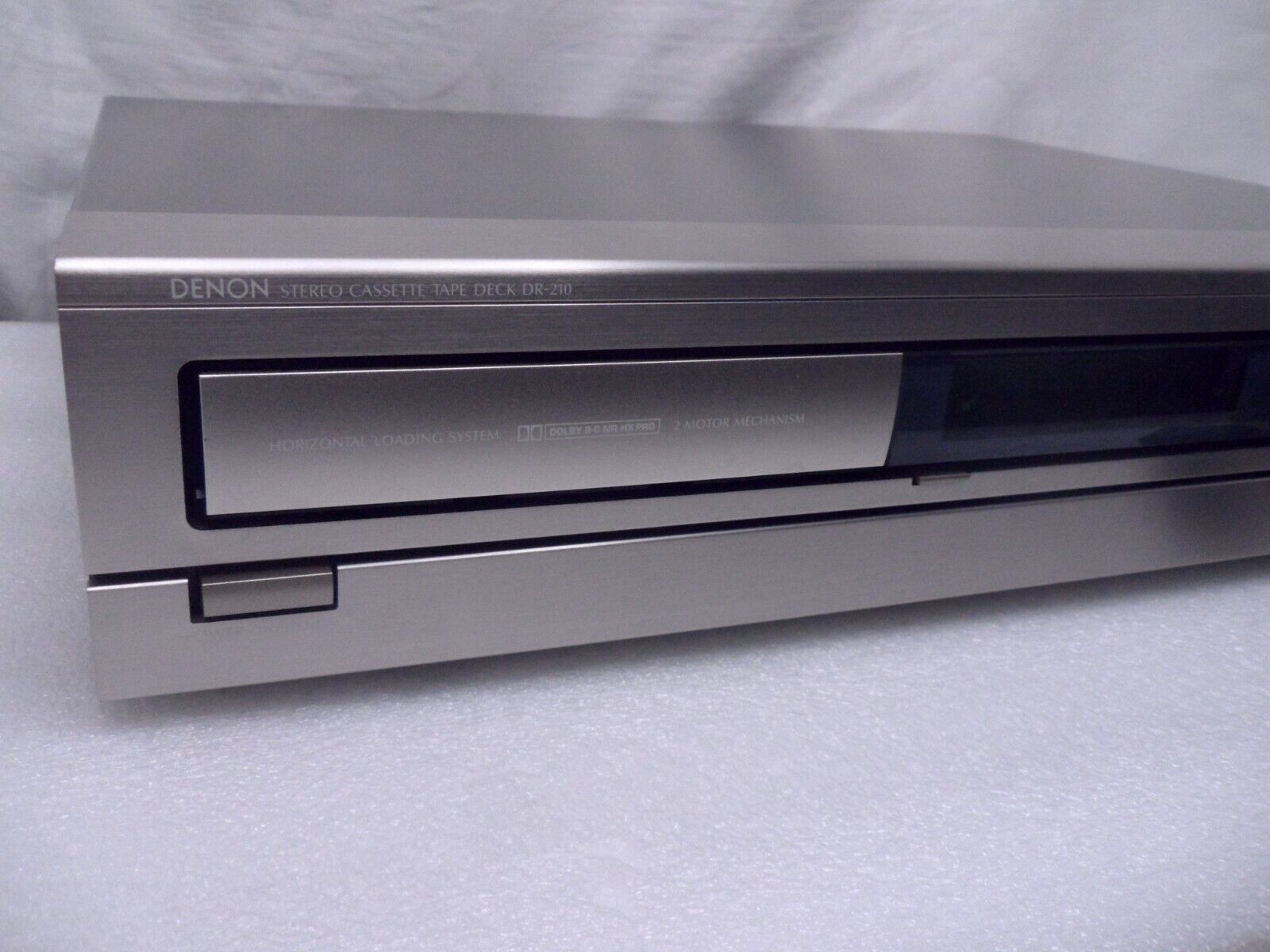
As an eBay Partner, we earn from qualifying purchases. This helps support our independent vintage technology research.
Related Models
- Denon SC-M5K (1995)
- Denon DR-M2 (1985)
- Denon DA-1000 (1982)
- Denon DL-103 (1962)
- Denon DL-110 (1983)
- Akai AM-2850 (1975)
- Akai AP-206 (1975)
- Nakamichi BX-1 (1985)
- Acoustic Research research-ar-17 (1978)
- Acoustic Research AR-19 (1994)