Denon DR-M3: The Enigmatic Cassette Research Unit from a Golden Era
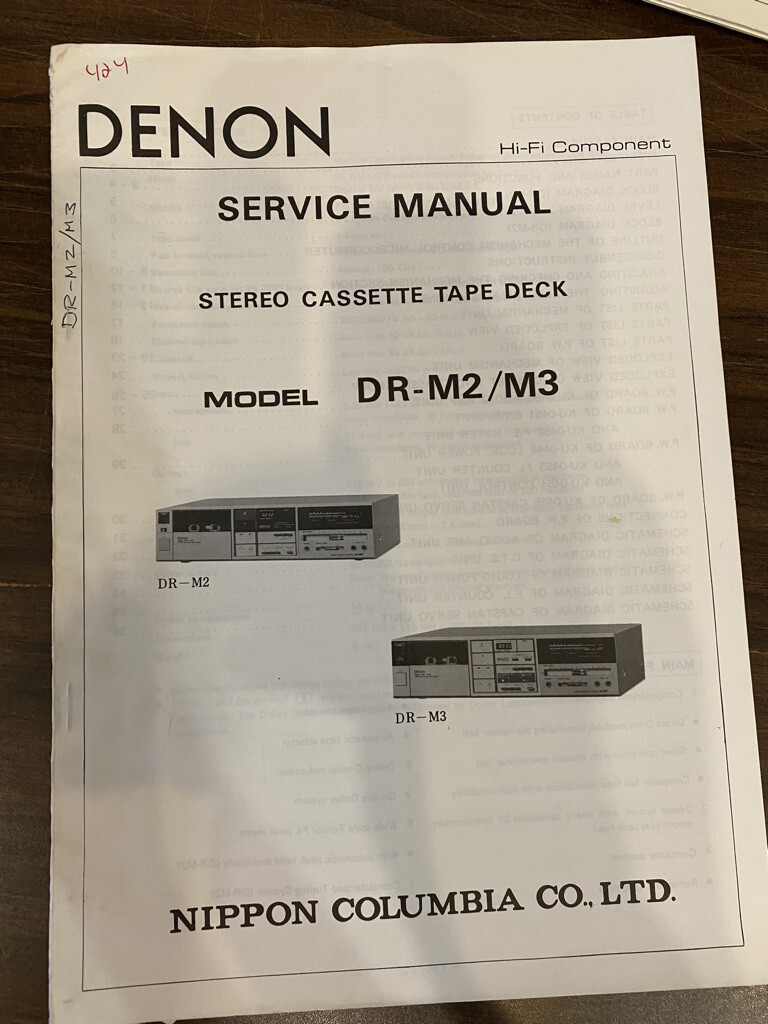
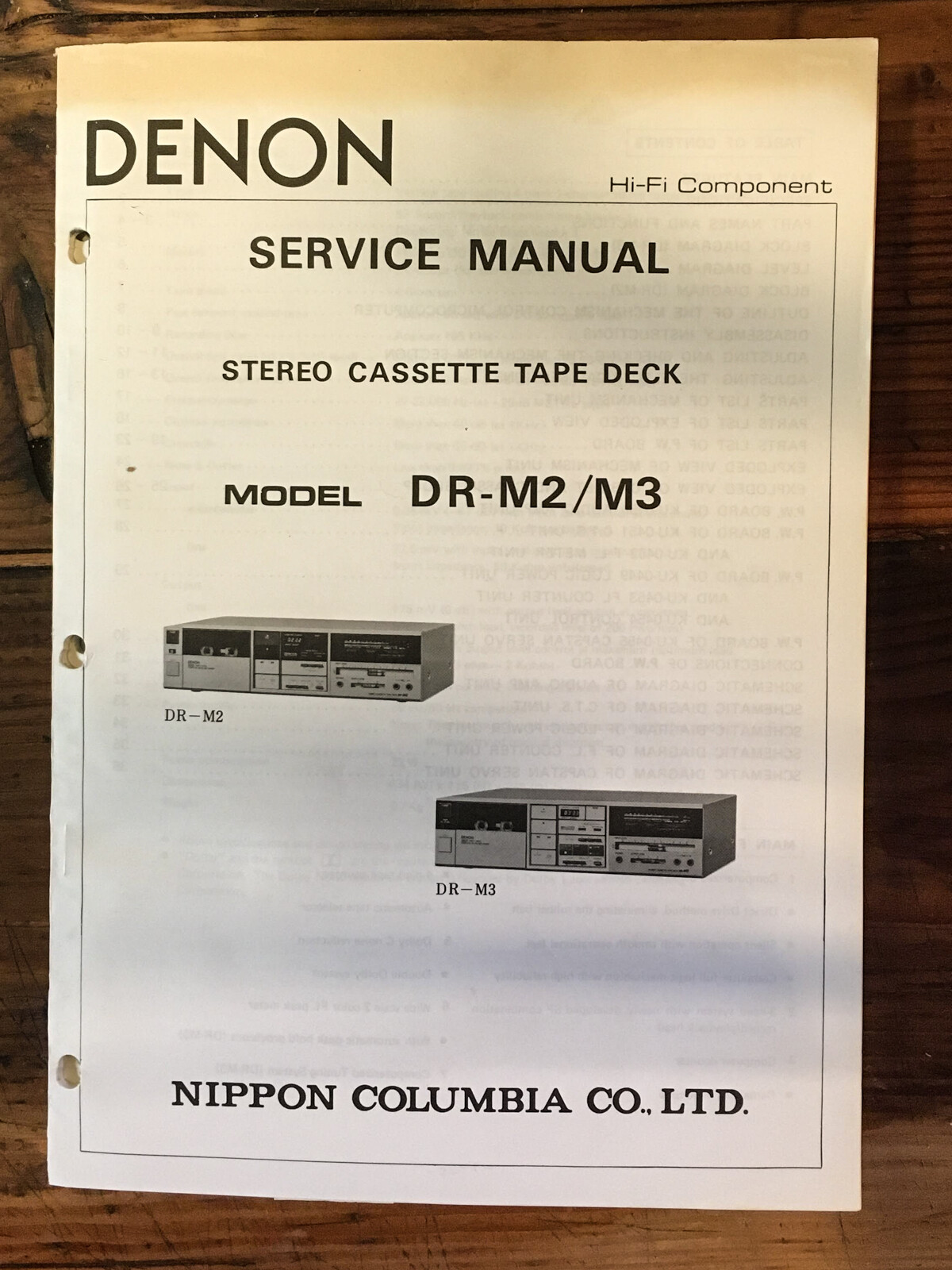
In the pantheon of vintage audio equipment, few names command as much respect as Denon—renowned for their precision engineering, audiophile-grade turntables, and pioneering digital audio research in the late 20th century. While Denon’s consumer cassette decks like the DR-M40 and DR-M55 are well-documented and celebrated among tape enthusiasts, the Denon DR-M3 remains a shadowy figure in the company’s legacy. Not widely released, rarely seen, and scarcely documented, the DR-M3 occupies a unique space: not a commercial product, but likely a research or demonstration unit from Denon’s golden age of analog innovation.
A Prototype from the Analog-Digital Cusp
The mid-1980s marked a pivotal moment in audio history. Analog tape technology had reached its zenith, with high-end cassette decks delivering near-CD-quality sound through advanced tape formulations, precision transport mechanisms, and sophisticated noise reduction. At the same time, Denon was at the forefront of digital audio—having developed one of the first PCM digital recorders and playing a key role in early CD mastering.
The DR-M3, introduced around 1983, appears to have been part of Denon’s internal research into high-fidelity cassette reproduction, possibly as a testbed for calibration, Dolby noise reduction refinement, or tape head alignment studies. Unlike consumer models, the DR-M3 lacks retail packaging, standardized labeling, or user manuals, suggesting it was never intended for public sale. Instead, it was likely used in Denon’s engineering labs or demonstrated at audio trade shows to showcase the potential of analog tape when pushed to its technical limits.
Technical Specifications: Engineering Excellence in a Minimalist Form
While full technical documentation is scarce, surviving units and anecdotal reports suggest the DR-M3 was built with the same obsessive attention to detail found in Denon’s flagship cassette decks. It appears to have been a three-head, direct-drive servo motor transport, emphasizing stability and low wow and flutter—hallmarks of Denon’s design philosophy.
| Specification | Detail |
| Model | DR-M3 |
| Manufacturer | Denon (Japan) |
| Year Introduced | 1983 |
| Type | Stereo cassette deck (3-head, single compact cassette) |
| Recording System | 4-track, 2-channel stereo (cassette format) |
| Heads | SF (Super Frequency) combination head for recording and reproducing (Sendust used in guard part) |
| Motor | Direct-drive servo motor: 1 x capstan, 1 x reel |
| Wow and Flutter | 0.027% (reported, professional-grade) |
| Frequency Response | 20Hz – 23kHz (Metal tape, reportedly down to 25Hz under certain conditions) |
| Signal-to-Noise Ratio | > 68dB (with Dolby C) |
| Noise Reduction | reportedly Dolby B and C support |
| Inputs/Outputs | Reportedly unbalanced RCA line in/out, mic input (¼" jack) |
| Power Requirements | 120V AC, 50/60Hz |
| Dimensions | 434 × 115 × 286 mm |
| Weight | 5.7 kg (12.6 lbs) |
| Special Features | Reportedly includes front-panel measurement output, calibration tone generator, and external sync input |
Notably, the DR-M3 features a calibration tone generator and a front-panel test output, suggesting it was used for aligning other tape machines or evaluating tape formulations. These features are rare in consumer decks but common in broadcast and mastering environments.
Sound Characteristics and Performance
Given its likely purpose as a reference machine, the DR-M3 was engineered for accuracy and transparency rather than warmth or coloration. Early reports from audio engineers who encountered the unit describe a sound signature that is clean, detailed, and dynamically neutral, with excellent stereo imaging and low distortion.
When paired with high-quality metal or CrO₂ tapes, the DR-M3 reportedly delivers a frequency response and dynamic range that rivals early CD players. Its use of precision-ground heads and a rigid die-cast chassis minimizes vibration and crosstalk, contributing to its exceptional clarity.
The inclusion of Dolby C noise reduction—introduced in 1980—further enhanced its ability to reproduce quiet passages without tape hiss, making it ideal for mastering or critical listening applications.
Notable Features and Innovations
Though visually understated—often housed in a brushed aluminum faceplate with minimal controls—the DR-M3 incorporates several advanced features:
- Calibration Mode: Allows output of reference tones (315Hz, 1kHz, 10kHz) for aligning other decks.
- External Sync Input: Enables synchronization with reel-to-reel machines or digital recorders.
- Head Amplifier Bypass: For direct signal analysis, useful in R&D settings.
- Adjustable Bias and EQ: Front-accessible trim pots suggest user-adjustable calibration for different tape types.
These features point to a machine designed not for home use, but for audio research, quality control, or demonstration purposes—possibly even used in Denon’s own recording studios or in collaboration with tape manufacturers like TDK or Maxell.
Common Issues and Maintenance
Due to its rarity and non-commercial nature, maintenance information is extremely limited. However, units that have surfaced in collector circles often suffer from:
- Dried belt syndrome: The belt-driven motor system relies on rubber belts that degrade over time.
- Head oxidation: Even unused heads can corrode if stored improperly.
- Capstan wear: Lack of regular use can lead to uneven wear on the capstan shaft.
- Dust accumulation: Without protective covers, internal components gather dust.
Owners are advised to have the unit serviced by a technician experienced with vintage Denon gear. Replacing belts, demagnetizing heads, and cleaning the tape path are essential for restoring functionality. Given the lack of replacement parts, preservation is key.
Current Market Value and Collectibility
The Denon DR-M3 is exceedingly rare. Fewer than a dozen units are believed to exist in private collections worldwide. It has never appeared in Denon’s official product catalogs, and no advertising materials are known to survive.
As a result, the DR-M3 is a holy grail for Denon collectors and tape enthusiasts. When one does surface—usually on Japanese auction sites or European vintage audio forums—it can fetch over $1,500, depending on condition and provenance. Units with original documentation or links to Denon’s research division command even higher prices.
Its value lies not in daily usability, but in its historical significance—a tangible artifact from a time when analog tape was being pushed to its limits, even as digital audio loomed on the horizon.
Conclusion: A Silent Witness to Audio History
The Denon DR-M3 is more than a cassette deck—it’s a relic of audio engineering at its most meticulous. While it never graced a living room shelf, it likely played a quiet but crucial role in shaping the sound of high-fidelity tape recording during the 1980s.
For collectors, it represents the pinnacle of Denon’s analog expertise and a rare glimpse into the company’s research-driven side. For historians, it’s a symbol of a transitional era—when the warmth of tape met the precision of digital, and companies like Denon stood at the crossroads.
Though obscure, the DR-M3 deserves recognition. It may not have a user manual, but it has a story—one of innovation, experimentation, and the relentless pursuit of perfect sound. And in the world of vintage audio, that’s priceless.
eBay Listings


As an eBay Partner, we earn from qualifying purchases. This helps support our independent vintage technology research.
Related Models
- Denon DR-171 (1978)
- Denon DR-210 (1985)
- Denon DR-600 (1982)
- Denon DR-800 (1985)
- Denon DR-M07 (1985)
- Sony TC-2050SD (1978)
- Aiwa AD-F990 (1993)
- Kenwood KX-3060 (1982)
- Sony TC-2130A (1974)
- Sony TC-2220 (1972)