Denon DR-M1: The Forgotten Pioneer of Analog Noise Reduction
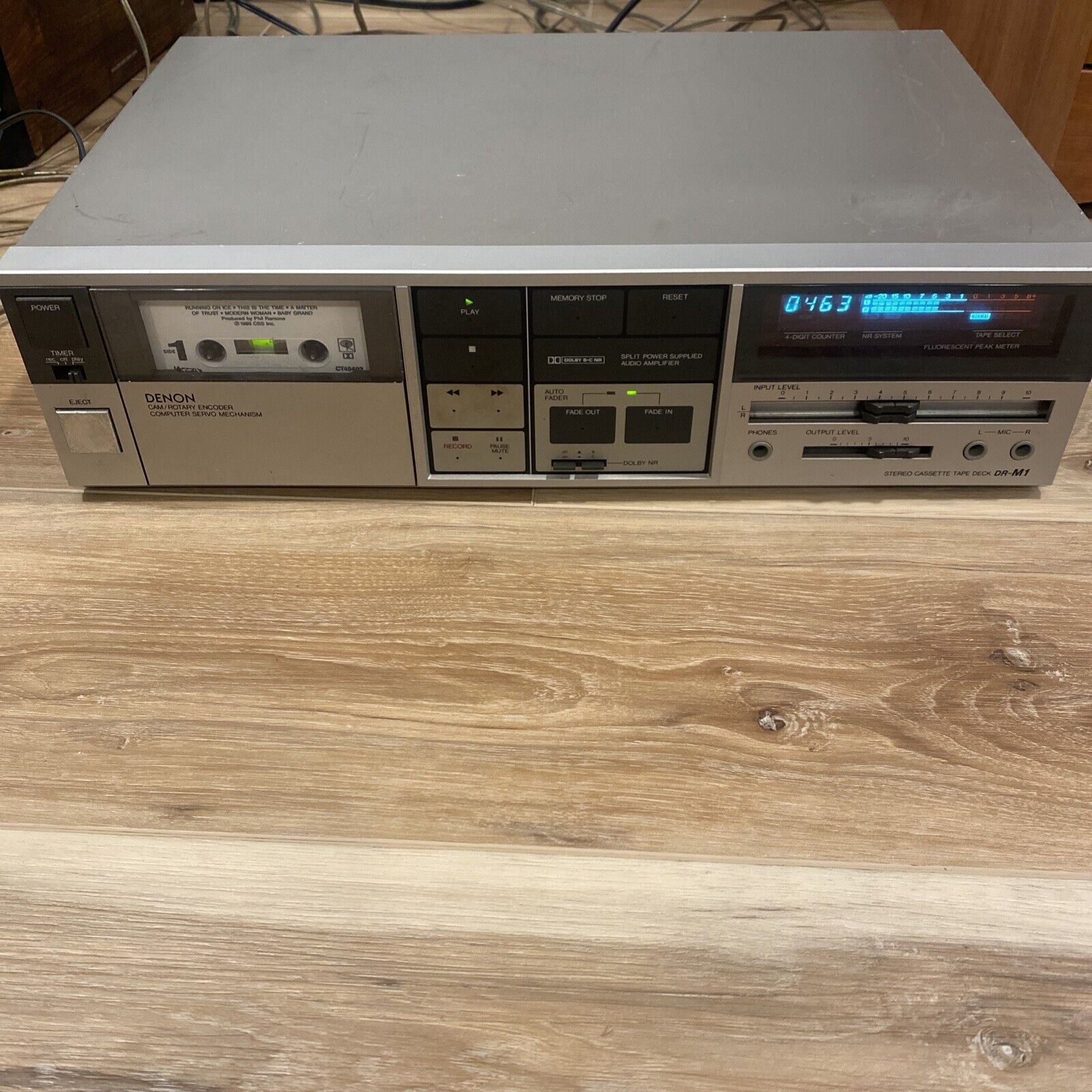
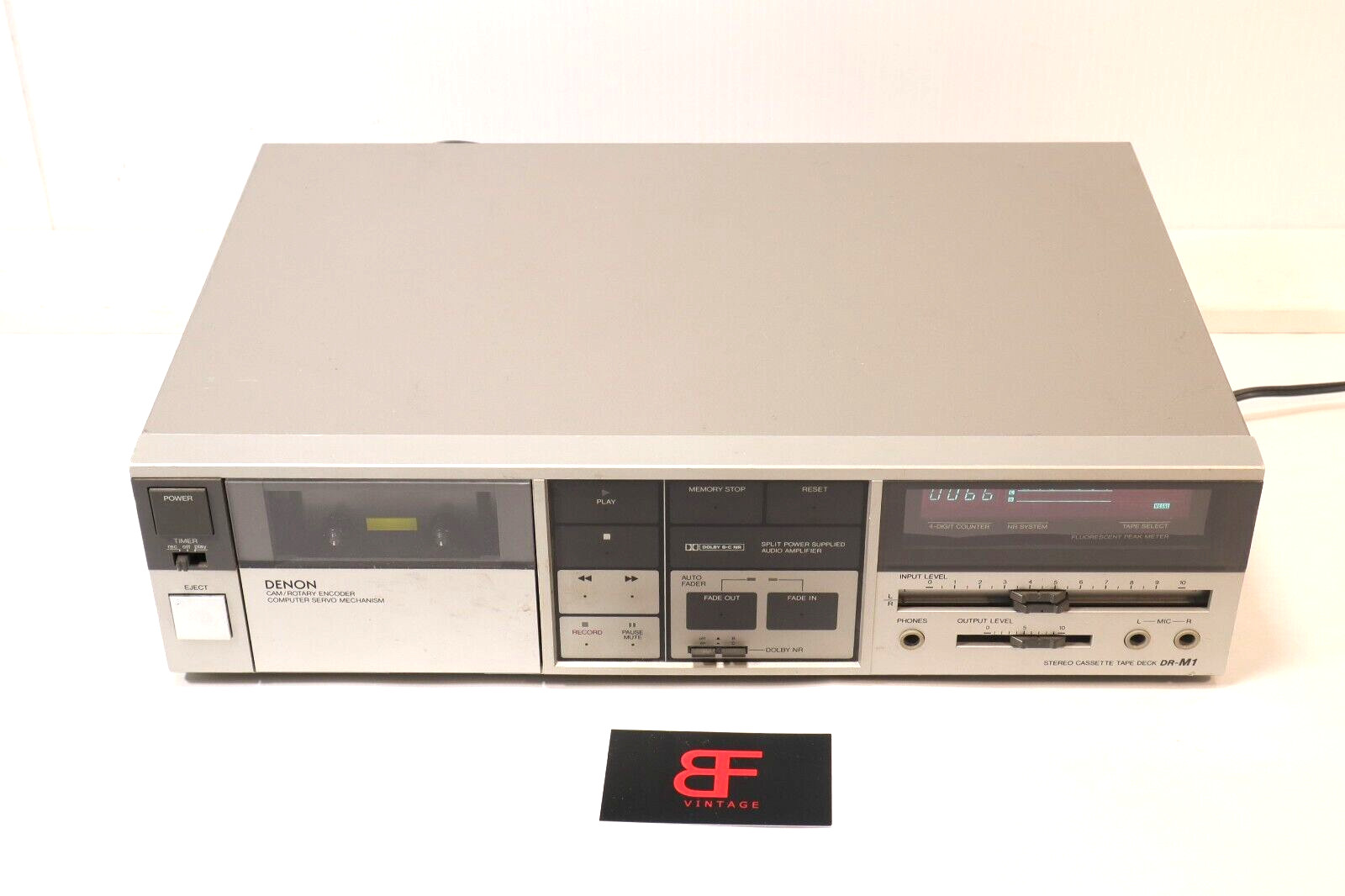
In the golden era of high-fidelity analog audio—the 1980s—manufacturers were locked in a quiet arms race to perfect the sound of recorded music. While much attention was paid to amplifiers, turntables, and cassette decks, a quieter revolution was taking place in the realm of signal processing. Among the most intriguing and underappreciated innovations of this period was the Denon DR-M1, a dynamic noise reduction processor released in 1985. Though not a household name like Dolby or dbx, the DR-M1 represented Denon’s bold foray into advanced analog signal processing, offering audiophiles a unique solution for cleaning up tape hiss and improving dynamic range without sacrificing musicality.
Historical Context: The Quest for Tape Perfection
By the mid-1980s, cassette tapes had become a dominant medium for music consumption, thanks to the rise of portable Walkmans and in-car audio systems. However, the inherent limitations of magnetic tape—particularly high-frequency hiss and limited dynamic range—remained a thorn in the side of audiophiles. While Dolby B, C, and later S systems offered noise reduction, they often introduced artifacts like "breathing" or high-frequency pumping, especially when recordings were played back on systems without matching decoding.
Denon, already renowned for its high-end turntables, amplifiers, and digital audio innovations (including early CD players and PCM recording gear), sought to address these shortcomings with a proprietary solution. The DR-M1 was introduced not as a consumer cassette deck feature, but as a standalone outboard noise reduction processor, aimed at serious listeners and semi-professional users who demanded the highest fidelity from their analog sources.
Technical Specifications
The DR-M1 was a compact, rack-mountable unit designed for integration into high-end stereo systems. It employed a dynamic, frequency-selective companding system—similar in concept to Dolby but with Denon’s own algorithmic approach—optimized for both music and speech. Unlike fixed-ratio systems, the DR-M1 adapted its compression and expansion based on the input signal’s spectral content and amplitude, minimizing artifacts.
| Specification | Detail |
| Model | DR-M1 |
| Manufacturer | Denon (Japan) |
| Year of Release | 1985 |
| Category | Analog Noise Reduction Processor |
| Input Impedance | 47kΩ (RCA), balanced 10kΩ (XLR) |
| Output Impedance | 100Ω (RCA), balanced 600Ω (XLR) |
| Frequency Response | 20Hz – 20kHz (+/-0.5dB) |
| Signal-to-Noise Ratio | >90dB (A-weighted, with reduction active) |
| Total Harmonic Distortion | <0.01% (1kHz, full level) |
| Inputs | RCA (unbalanced), XLR (balanced) |
| Outputs | RCA (unbalanced), XLR (balanced) |
| Power Supply | External linear power adapter (12V AC) |
| Dimensions | 430mm (W) × 100mm (H) × 300mm (D) |
| Weight | 6.8 kg |
The unit featured switchable noise reduction modes—"Music" and "Speech"—allowing users to optimize performance based on content. It also included defeat switches for bypassing encoding or decoding independently, making it useful for evaluating the effect of processing in real time. The front panel was minimalist, with status LEDs indicating signal level, reduction activity, and power, while the rear panel offered professional-grade connectivity rare in consumer audio gear of the time.
Sound Characteristics and Performance
The DR-M1 was engineered with a clear philosophy: transparency. Unlike some noise reduction systems that colored the sound or introduced pumping, the DR-M1 aimed to remove tape hiss without altering the tonal balance or dynamics of the original recording. When properly calibrated, it could reduce background noise by up to 15–20dB in the high frequencies, where tape hiss is most noticeable, without the "swishing" artifacts common in Dolby B.
Users reported that the DR-M1 excelled with live recordings, jazz, and classical music, where low-level detail and ambient cues are critical. The "Music" mode applied gentle, wide-band expansion, preserving transient response and spatial imaging. The "Speech" mode, intended for voice recordings or radio archives, used more aggressive high-frequency companding, ideal for cleaning up interviews or broadcasts.
One of the DR-M1’s strengths was its bidirectional processing capability. It could function as both an encoder (for recording) and a decoder (for playback), making it suitable for users creating high-quality cassette dubs or archiving reel-to-reel tapes. When used in a full encode/decode chain, the improvement in perceived clarity and dynamic range was striking—especially on Type II (chrome) and Type IV (metal) tapes.
Notable Features and Innovations
- Adaptive Signal Processing: The DR-M1 used real-time analysis of the audio spectrum to apply noise reduction only where needed, avoiding the "constant" compression of earlier systems.
- Balanced I/O: Rare for a consumer-oriented processor, the inclusion of XLR inputs and outputs allowed integration into professional or high-end home studios.
- Dual Processing Modes: Tailored algorithms for music and speech improved versatility.
- Defeatable Encoding/Decoding: Enabled A/B comparison and compatibility with non-processed sources.
- External Power Supply: Reduced internal noise and hum, contributing to cleaner signal paths.
Denon’s engineering heritage in both analog and digital domains is evident in the DR-M1’s build quality and circuit design. Internally, it featured discrete op-amps, precision resistors, and a meticulously laid-out PCB—hallmarks of Denon’s high-end philosophy.
Common Issues and Maintenance
Today, the DR-M1 is a rare find, and surviving units require careful evaluation. Common issues include:
- Dried-up capacitors in the power supply and signal path, leading to hum or channel imbalance.
- Oxidized potentiometers and switches, which can cause crackling or intermittent connections.
- Worn encoder/decoder calibration, which may result in incomplete noise reduction or high-frequency distortion if mismatched.
- Missing or degraded external power adapter, which should be replaced with a regulated 12V AC supply of sufficient current (1.5A recommended).
Restoration typically involves a full recap, cleaning of all controls with contact cleaner, and recalibration using a test oscillator and alignment tape (if available). Due to the complexity of the companding circuitry, servicing should be performed by a technician experienced in vintage analog processors.
Current Market Value and Collectibility
The Denon DR-M1 remains a niche collector’s item, prized more for its historical significance and rarity than for widespread practical use. Units in working condition typically sell for $250–$400 on auction sites and vintage audio forums, with mint, boxed examples occasionally fetching over $500.
Its collectibility is driven by several factors:
- Rarity: Few units were produced, and fewer still survive in working order.
- Denon’s Prestige: As a brand synonymous with high-end audio, Denon gear from this era commands strong interest.
- Analog Revival: With renewed interest in cassette tapes and analog processing, the DR-M1 appeals to tape enthusiasts and DIY archivists.
While not as universally recognized as Dolby units, the DR-M1 is gaining attention among vintage audio connoisseurs and those exploring the frontiers of analog signal enhancement.
Conclusion: A Hidden Gem of Analog Engineering
The Denon DR-M1 may not have revolutionized the mass market, but it stands as a testament to Denon’s commitment to audio excellence during a pivotal era. It represents a moment when Japanese engineering pushed the boundaries of what analog tape could achieve—offering a transparent, intelligent alternative to mainstream noise reduction.
Today, the DR-M1 is more than just a processor; it’s a piece of audio history, a reminder that innovation often happens quietly, in the background, shaping the sound we love in subtle but profound ways. For the dedicated collector or analog enthusiast, the DR-M1 is not just a curiosity—it’s a functional artifact of a time when every decibel of clarity was worth fighting for.
eBay Listings


As an eBay Partner, we earn from qualifying purchases. This helps support our independent vintage technology research.
Related Models
- Denon SC-M5K (1995)
- Denon DR-M2 (1985)
- Denon DA-1000 (1982)
- Denon DL-103 (1962)
- Denon DL-110 (1983)
- Akai AM-2850 (1975)
- Akai AP-206 (1975)
- Nakamichi BX-1 (1985)
- Acoustic Research research-ar-17 (1978)
- Acoustic Research AR-19 (1994)