Denon DR-400: The Forgotten Flagship of Analog Tape Fidelity
In the golden age of high-fidelity audio, when reel-to-reel tape recorders were the ultimate benchmark for sound reproduction, Denon stood apart as a Japanese innovator committed to uncompromising engineering and sonic excellence. Among its lineup of professional and semi-professional tape machines, the Denon DR-400 occupies a special, if somewhat obscure, place in audio history. Released around 1980, the DR-400 was not a mass-market product, but rather a precision instrument aimed at serious audiophiles, mastering engineers, and broadcast professionals who demanded the highest fidelity available in analog tape recording.
While Denon is better known today for its high-end turntables, amplifiers, and CD players, its legacy in analog tape technology is profound—particularly in the development of direct-drive transport systems and advanced head design. The DR-400 exemplifies this heritage, representing a bridge between Denon’s professional studio machines and the high-end consumer market. Though overshadowed by more famous contemporaries like the Sony TC-series or the Tandberg 3014, the DR-400 remains a rare and respected machine among reel-to-reel enthusiasts.
Technical Specifications
The Denon DR-400 was engineered with meticulous attention to mechanical stability, transport accuracy, and signal path purity. It featured a three-motor, direct-drive capstan system—a hallmark of Denon’s engineering philosophy—ensuring exceptional speed stability and minimal wow and flutter. This design eliminated the need for rubber drive belts, which degrade over time and introduce speed inconsistencies.
| Specification | Detail |
| Format | 1/4" open-reel tape |
| Speeds | 7.5, 15, 30 ips (inches per second) |
| Tracks | 4-track, 2-channel stereo (full-track or half-track at 7.5/15 ips) |
| Tape Heads | Separate record, playback, and erase heads (ferrite or permalloy) |
| Transport System | Three-motor, direct-drive capstan with electronic speed control |
| Wow and Flutter | < 0.07% (weighted, 30 ips) |
| Frequency Response | 30 Hz – 20 kHz (+/-2 dB, 30 ips, with selected tape) |
| Signal-to-Noise Ratio | > 68 dB (Dolby B/C compatible) |
| Input/Output | Line-level RCA and XLR inputs/outputs, microphone inputs |
| Equalization Settings | 120 μs, 180 μs, 250 μs (switchable for different tape formulations) |
| Noise Reduction | Dolby B and C support |
| Power Supply | 100V AC (Japan), 120V/230V variants for export models |
| Dimensions | 480 mm (W) × 170 mm (H) × 400 mm (D) |
| Weight | Approx. 18 kg (39.7 lbs) |
The DR-400 was designed for compatibility with a wide range of tape formulations, including ferric, chrome dioxide, and metal tapes, thanks to its adjustable bias and equalization settings. This flexibility made it a favorite among users who wanted to experiment with different tape types to achieve the desired tonal balance.
Sound Characteristics and Performance
The sonic signature of the Denon DR-400 is best described as transparent, detailed, and dynamically expressive. Unlike some reel-to-reel machines that impart a "warm" or "colored" character, the DR-400 aims for neutrality—faithfully capturing and reproducing the source signal with minimal coloration.
At 30 ips, the DR-400 delivers a frequency response that extends well beyond the limits of most cassette decks of the era, with tight bass, clear mids, and extended highs. The low wow and flutter contribute to a stable stereo image, making it ideal for critical listening and archival transfers. When paired with high-quality tape—such as Ampex 456 or BASF SM911—the DR-400 can produce results that rival professional studio recorders costing significantly more.
One of the standout qualities of the DR-400 is its dynamic range and low noise floor, especially when Dolby C is engaged. While noise reduction was often criticized for introducing artifacts in consumer gear, Denon’s implementation was clean and effective, preserving transient detail while reducing tape hiss.
Notable Features and Innovations
The DR-400 incorporated several advanced features that set it apart from its contemporaries:
- Direct-Drive Capstan System: Borrowed from Denon’s professional series, this eliminated belt slippage and ensured consistent tape speed across all modes.
- Electronic Speed Control: Utilized a phase-locked loop (PLL) circuit to maintain precise tape speed, minimizing timing errors.
- Separate Playback and Record Heads: Allowed for optimal alignment and reduced crosstalk, a feature typically found in high-end studio machines.
- Dual VU Meters: Large, centrally located analog meters provided accurate level monitoring for both channels.
- Front-Panel Tape Selector: Enabled quick switching between tape types (ferric, chrome, metal) with automatic bias adjustment.
- Remote Control Capability: Some versions included a remote control jack for external start/stop functions, useful in studio environments.
The build quality is exceptional—thick steel chassis, machined aluminum front panel, and high-grade potentiometers and switches throughout. The tape path is designed for minimal friction, with precision guide rollers and a tension control system that prevents tape damage during long playback sessions.
Common Issues and Maintenance
As with any vintage reel-to-reel machine, the Denon DR-400 requires careful maintenance to perform at its best. Common issues include:
- Dried-up lubricants: The capstan shafts, pinch rollers, and mechanical linkages may need cleaning and relubrication with synthetic grease.
- Pinch roller hardening: Over time, the rubber pinch roller can harden or become sticky. Replacement or rejuvenation with specialized cleaners is recommended.
- Head alignment drift: Due to mechanical shocks or age, the record and playback heads may require realignment using alignment tapes and an oscilloscope.
- Capacitor aging: Electrolytic capacitors in the power supply and signal path may need replacement to prevent noise or failure.
- Tape path contamination: Accumulated oxide buildup can degrade sound quality and damage tapes. Regular cleaning with isopropyl alcohol is essential.
Finding replacement parts can be challenging, as Denon no longer supports the DR-400. However, the active vintage audio community has preserved schematics, and some specialists offer refurbishment services.
Current Market Value and Collectibility
The Denon DR-400 is a rare find today. It was never produced in large numbers, and many units were used heavily in professional settings, leading to wear and tear. As a result, fully functional, well-maintained examples command premium prices among reel-to-reel collectors.
In recent years, prices have ranged from $800 to $1,800, depending on condition, included accessories (such as remote controls or calibration tapes), and provenance. Machines that have been professionally restored—especially those with new pinch rollers, cleaned heads, and recapped power supplies—are particularly desirable.
While not as widely recognized as some Tandberg or Revox models, the DR-400 is gaining appreciation among audiophiles who value its engineering integrity and sonic neutrality. It is especially sought after by those digitizing vintage recordings or creating high-resolution analog masters.
Conclusion and Legacy
The Denon DR-400 stands as a testament to Denon’s commitment to analog excellence during a transitional period in audio history. As digital recording began to emerge in the early 1980s, machines like the DR-400 represented the pinnacle of what analog tape could achieve—offering near-studio-quality performance in a semi-professional package.
Though overshadowed by more famous names, the DR-400 deserves recognition for its precision engineering, clean sound, and robust build. For the dedicated vintage audio enthusiast, it is not merely a playback device, but a sonic time machine—capable of preserving and reproducing music with a warmth and realism that digital formats often struggle to match.
Today, the DR-400 is more than just a relic; it’s a working piece of audio history. For those willing to invest in its upkeep, it offers a direct connection to the golden age of high-fidelity sound—where every turn of the reel was a celebration of analog mastery.
eBay Listings
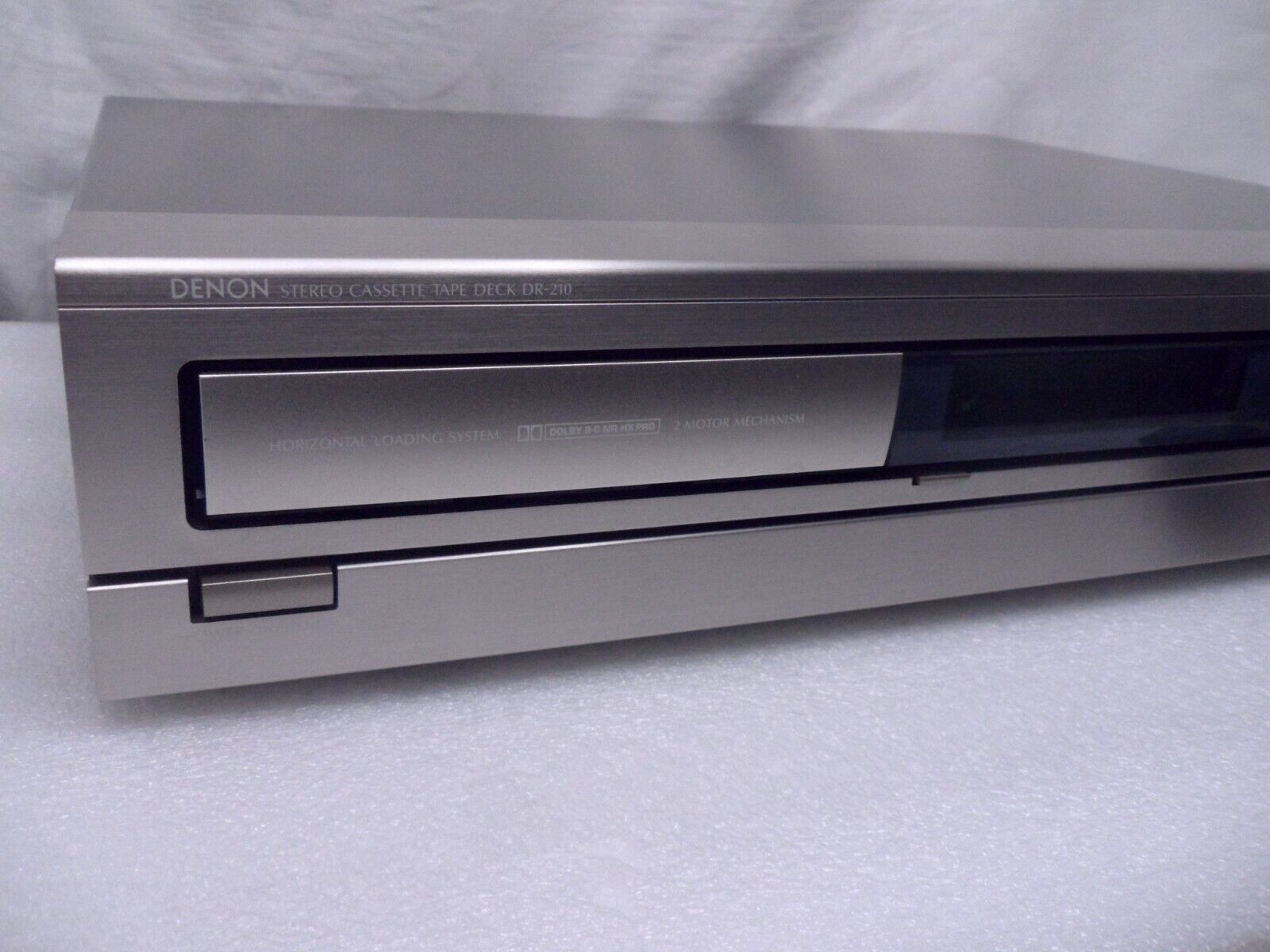
As an eBay Partner, we earn from qualifying purchases. This helps support our independent vintage technology research.
Related Models
- Denon SC-M5K (1995)
- Denon DR-M2 (1985)
- Denon DA-1000 (1982)
- Denon DL-103 (1962)
- Denon DL-110 (1983)
- Akai AM-2850 (1975)
- Akai AP-206 (1975)
- Nakamichi BX-1 (1985)
- Acoustic Research research-ar-17 (1978)
- Acoustic Research AR-19 (1994)