Denon DR-210: A Compact Cassette Workhorse from the 1980s
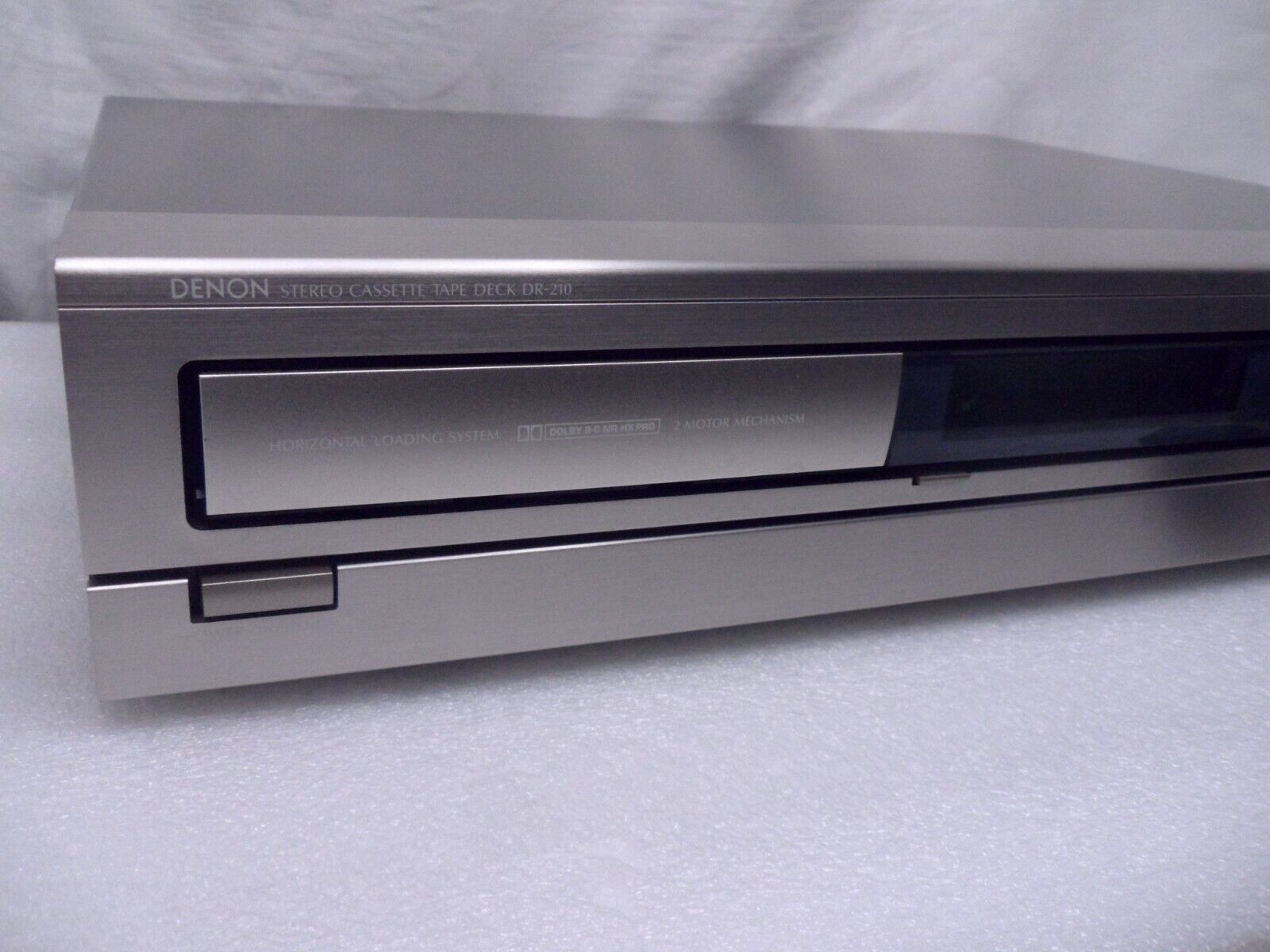
In the mid-1980s, Denon—better known today for its high-end amplifiers and turntables—was actively producing a range of cassette decks aimed at both the budget-conscious consumer and the serious audiophile. Among these was the Denon DR-210, a compact cassette deck that, while not one of the company’s flagship models, represented Denon’s commitment to quality engineering across its product lines. Released around 1985, the DR-210 was designed for everyday use in home stereo systems, portable setups, and personal listening environments, offering reliable tape playback and recording with the trusted Denon name behind it.
Though overshadowed by more advanced models like the DR-M20 or the high-end DR-770X, the DR-210 carved out a niche as a dependable, no-frills cassette solution during the height of the compact cassette era. At a time when cassette tapes were the dominant medium for music portability and home recording, Denon ensured that even its entry-level models maintained a standard of durability and sonic clarity.
Technical Specifications
The Denon DR-210 was built as a 2-head, single-motor cassette deck with a focus on simplicity and functionality. It lacked the dual-capstan drive or Dolby S noise reduction found in Denon’s premium models, but it included essential features for accurate tape reproduction and basic recording.
| Specification | Detail |
| Model | DR-210 |
| Year of Release | 1985 |
| Type | 2-head, single-motor cassette deck |
| Tape Speed | 4.76 cm/s (1⅞ ips) |
| Head Configuration | Separate record/play head, erase head |
| Motor | Single direct-drive motor |
| Noise Reduction | Dolby B only |
| Frequency Response | 40 Hz – 14,000 Hz (at 3% distortion) |
| Wow and Flutter | < 0.25% (weighted) |
| Signal-to-Noise Ratio | 56 dB (Dolby B off), 68 dB (Dolby B on) |
| Input/Output | RCA line in/out, 3.5mm mic input |
| Power Requirement | 120V AC, 60 Hz (North American version) |
| Dimensions (W×H×D) | 110 × 45 × 240 mm |
| Weight | 1.8 kg (approx.) |
The DR-210 supported standard Type I (ferric) and Type II (chrome) tapes, with manual bias and level adjustment via front-panel switches—common for mid-tier decks of the era. Its compact size made it ideal for shelf systems, portable setups, or integration into multi-component entertainment centers.
Sound Characteristics and Performance
While not marketed as a high-fidelity audiophile deck, the DR-210 delivered clean, balanced sound for its class. Its frequency response was typical of compact cassette mechanisms of the time, with a slight roll-off at the high end—common due to tape head gap limitations and motor stability. However, with Dolby B noise reduction engaged, the inherent tape hiss was significantly reduced, improving clarity on softer passages and higher frequencies.
The deck’s single direct-drive motor contributed to stable tape transport, minimizing wow and flutter to acceptable levels for casual listening and home dubbing. Users reported consistent azimuth alignment and good stereo separation, which helped preserve the spatial qualities of stereo recordings.
Though it lacked the precision of three-motor, dual-capstan decks, the DR-210 was praised in period reviews for its reliability and ease of use. It was particularly well-suited for recording from turntables or FM tuners, making it a popular choice for building personal music libraries before the CD era.
Notable Features and Innovations
While the DR-210 was not a technological trailblazer, it incorporated several thoughtful design elements that reflected Denon’s engineering philosophy:
- Dolby B Noise Reduction: A standard feature on most mid-tier decks, but Denon implemented it with precision, ensuring effective noise suppression without over-compression or high-frequency artifacts.
- Manual Tape Type Selection: Users could switch between Type I and Type II tapes, adjusting bias and replay equalization for optimal sound. This flexibility was essential for achieving the best results from different tape formulations.
- Compact and Space-Saving Design: At just over 11 cm wide, the DR-210 fit easily into tight equipment racks or portable setups, making it ideal for secondary systems or travel.
- Front-Panel Mic Input: A useful feature for voice recording, interviews, or karaoke-style applications—common in consumer decks of the 1980s.
Unlike some of Denon’s higher-end models, the DR-210 did not include auto-reverse, digital counters, or level meters. It was a no-nonsense machine built for functionality over flash.
Common Issues and Maintenance
As with any vintage cassette deck, the Denon DR-210 benefits from regular maintenance after decades of dormancy. Common issues include:
- Deteriorated Rubber Components: The pinch roller and drive belt (if present in certain variants) may have hardened or cracked. Replacement with modern equivalents is recommended.
- Dirty or Oxidized Tape Heads: Over time, tape residue and oxidation can degrade sound quality. Cleaning with isopropyl alcohol and a lint-free swab is essential.
- Capstan Shaft Gumming: The metal capstan can accumulate old lubricant, causing speed instability. A gentle cleaning with alcohol often resolves this.
- Worn Motor Brushes: In AC motor versions, carbon brushes may degrade, leading to inconsistent speed or motor failure.
Because the DR-210 used a direct-drive motor system, it avoided the common belt-slip issues of many competitors, contributing to its long-term reliability. However, a full service—including demagnetization of the tape heads—is advised for optimal performance.
Current Market Value and Collectibility
The Denon DR-210 is not a highly sought-after collector’s item, but it holds nostalgic value for enthusiasts of 1980s audio gear. Units in working condition typically sell for $30–$60 USD on online marketplaces like eBay or Reverb, depending on cosmetic condition and included accessories.
Its appeal lies primarily in its Denon branding and compact form factor. While not a showpiece like the chrome-plated decks from Nakamichi or TEAC, the DR-210 represents a well-built, functional piece of audio history. It’s especially valued by those restoring vintage systems or seeking a reliable cassette interface for digitizing old tapes.
Collectors of Denon memorabilia or complete product line histories may seek out the DR-210 to round out their archives, though it remains a budget-friendly entry point into Denon’s cassette legacy.
Conclusion and Legacy
The Denon DR-210 may not have been a star in Denon’s lineup, but it exemplifies the company’s dedication to quality across all market segments. In an era when cassette decks ranged from flimsy portable units to precision audio instruments, the DR-210 struck a balance—offering solid build quality, consistent performance, and everyday usability.
While overshadowed by more advanced models, the DR-210 served countless listeners during the cassette’s golden age. Today, it stands as a quiet testament to Denon’s engineering ethos: even their most modest products were built to last.
For vintage audio enthusiasts, the DR-210 is more than just a relic—it’s a functional bridge to the past, capable of breathing life into old mixtapes and home recordings. With a little care and maintenance, this unassuming deck continues to deliver the warm, analog charm of 1980s cassette audio, one tape at a time.
eBay Listings


As an eBay Partner, we earn from qualifying purchases. This helps support our independent vintage technology research.
Related Models
- Denon DR-M3 (1985)
- Denon DR-171 (1978)
- Denon DR-600 (1982)
- Denon DR-800 (1985)
- Denon DR-M07 (1985)
- Sony TC-2050SD (1978)
- Aiwa AD-F990 (1993)
- Kenwood KX-3060 (1982)
- Sony TC-2130A (1974)
- Sony TC-2220 (1972)