Denon DP-790: The Precision Turntable from Denon’s Analog Heyday
In the mid-1980s, Japanese audio manufacturers were at the peak of their analog engineering prowess, and Denon—renowned for both its high-end audio components and professional recording equipment—was no exception. The Denon DP-790, released in 1985, stands as a testament to the company’s commitment to precision, durability, and sonic excellence in turntable design. Though not as widely celebrated as some of its contemporaries from Technics or Yamaha, the DP-790 carved out a loyal following among audiophiles who valued its understated elegance, rock-solid build, and exceptional speed stability.
Positioned as a high-end direct-drive turntable, the DP-790 was part of Denon’s push to compete in the premium turntable market during the last great analog renaissance before the CD era fully took hold. It followed in the footsteps of earlier Denon models like the DP-6000 and DP-55, but refined their engineering with improved motor control, vibration damping, and platter design. While Denon is perhaps better known today for its amplifiers and CD players, the DP-790 reminds us that the company was once a serious contender in the turntable arena.
Technical Specifications
The DP-790 was engineered with audiophile-grade components and a no-compromise approach to rotational accuracy and isolation. Its direct-drive system eliminated belt-related wear and speed inconsistencies, offering long-term reliability and minimal maintenance.
| Specification | Detail |
| Model | Denon DP-790 |
| Year of Release | 1985 |
| Type | Direct-drive turntable |
| Motor System | Quartz-locked DC direct drive |
| Speeds | 33⅓, 45 RPM (switchable) |
| Speed Accuracy | ±0.03% |
| Wow and Flutter | < 0.025% (weighted) |
| Platter | 300 mm die-cast aluminum with rubber mat |
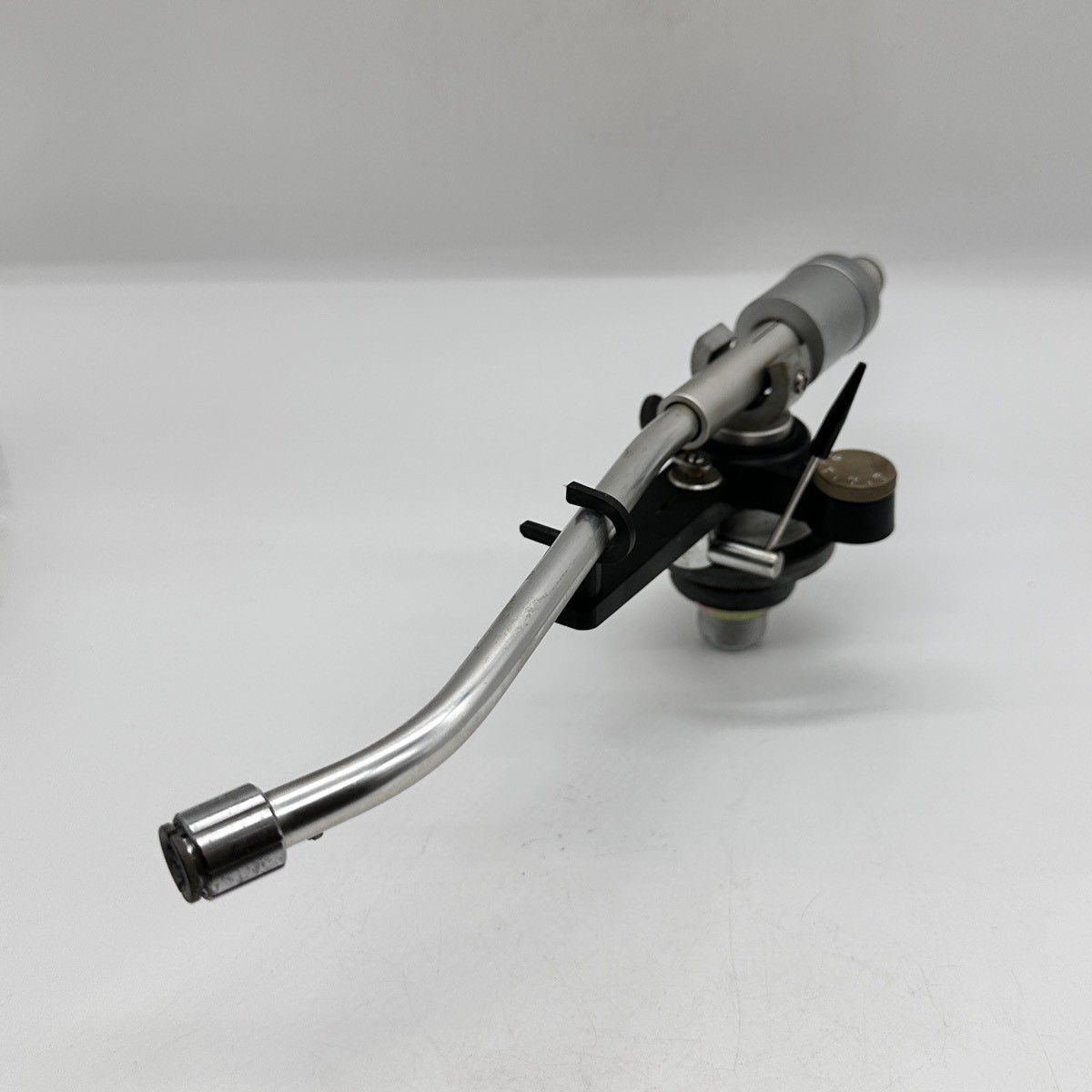
| Tonearm | S-shaped, static-balanced, 9-inch |
| Effective Arm Length | 232 mm |
| Overhang Adjustment | Adjustable via sliding scale |
| Tracking Force | 0–3 grams (adjustable) |
| Anti-Skating | Continuously variable |
| Cartridge Compatibility | Standard mount (e.g., Shure, Denon, etc.) |
| Dimensions | 450 × 160 × 360 mm (W×H×D) |
| Weight | 11.5 kg (25.3 lbs) |
| Power Supply | AC 120V / 60Hz (internal power supply) |
The turntable’s heavy, damped plinth—constructed from a layered composite material—was designed to resist resonance and external vibration. Combined with a low-resonance die-cast aluminum platter and a rigid MDF subchassis, the DP-790 offered excellent isolation from both structural and airborne disturbances.
Sound Characteristics and Performance
The Denon DP-790 delivers a sound signature that is best described as neutral, detailed, and dynamically expressive. Its quartz-locked motor system ensures exceptional speed stability, resulting in tight pitch accuracy and rhythmic precision—qualities that make it particularly well-suited for classical, jazz, and acoustic recordings where timing and tonal purity are paramount.
The 9-inch S-shaped tonearm, while not as advanced as the linear-tracking arms found on some high-end models of the era, is well-engineered with precision bearings and low effective mass. When paired with a quality moving magnet or moving coil cartridge (such as the Denon DL-103 or Shure V15 series), the DP-790 extracts fine detail from vinyl grooves with minimal distortion.
Bass response is taut and well-controlled, thanks to the turntable’s massive platter and rigid construction. Midrange clarity is excellent, with vocals and instruments rendered with natural timbre. High frequencies are extended but never harsh, contributing to a balanced and fatigue-free listening experience over long sessions.
Notable Features and Innovations
The DP-790 was packed with features that reflected Denon’s engineering philosophy of precision and longevity:
- Quartz-Locked Speed Control: One of the standout features, this system uses a quartz crystal reference to maintain exact rotational speed, correcting any drift in real time. This was a hallmark of high-end turntables in the 1980s and placed the DP-790 among the most accurate analog spinners of its time.
- Heavy Die-Cast Platter: The 300 mm aluminum platter provides high inertia, contributing to smooth rotation and resistance to speed fluctuations when the stylus encounters groove variations.
- Adjustable S-Shaped Tonearm: The tonearm offers fine control over tracking force, anti-skating, and overhang, allowing for precise setup. Its rigid construction minimizes resonance and tracking errors.
- Damped Subchassis Design: The internal MDF subchassis is suspended within the outer casing using rubber isolators, reducing the transmission of external vibrations.
- Electronic Speed Switching: A front-panel switch allows quick and accurate toggling between 33⅓ and 45 RPM, with automatic pitch correction to maintain accuracy.
Common Issues and Maintenance
While the DP-790 is known for its durability, like all vintage electronics, it can develop issues after decades of use. Common concerns include:
- Deteriorating Damping Material: The rubber isolators in the suspension system can harden or crack over time, leading to increased vibration transmission. Replacing these with modern equivalents can restore performance.
- Motor Control Circuit Aging: The quartz-locked motor system relies on electronic components that may degrade. Capacitors in the power supply or control board can dry out, leading to speed instability or failure to start.
- Tonearm Wiring Fatigue: The internal tonearm wiring can become brittle or break, especially near the pivot point. Careful inspection and, if necessary, re-wiring are recommended during restoration.
- Worn Stylus or Cartridge: While not a turntable fault per se, many surviving DP-790 units are now used with old or mismatched cartridges. Upgrading to a modern or well-maintained vintage cartridge can dramatically improve sound quality.
Regular cleaning, lubrication of the platter bearing (if needed), and proper setup are essential for optimal performance. As with any vintage turntable, professional servicing is advisable if the unit has been in storage for years.
Current Market Value and Collectibility
The Denon DP-790 is not as widely collected as some of its more famous counterparts—such as the Technics SL-1200 series—but it has seen growing interest among analog enthusiasts seeking high-performance, under-the-radar turntables. In good working condition, the DP-790 typically sells for $400–$700 on the secondary market, depending on condition, included accessories, and whether it has been professionally serviced.
Fully restored units with upgraded cartridges or modern anti-vibration feet may command higher prices, especially in regions with strong vinyl revival movements like Japan, Europe, and North America. Its relative rarity compared to mass-market models adds to its appeal among discerning collectors.
Conclusion and Legacy
The Denon DP-790 may not have achieved the iconic status of some of its peers, but it remains a superb example of 1980s Japanese high-fidelity engineering. Built for accuracy, durability, and musicality, it delivers a listening experience that holds up remarkably well against modern turntables—even those costing significantly more.
For the audiophile who values precision over flash, and performance over popularity, the DP-790 is a hidden gem. It embodies Denon’s legacy of crafting serious audio equipment for serious listeners. In an era when analog is once again celebrated for its warmth and authenticity, the DP-790 deserves a place on the shelves—and in the setups—of vinyl lovers everywhere.
If you’re lucky enough to find one in good condition, consider it not just a vintage curiosity, but a genuine high-end turntable that can form the heart of a world-class analog system.
eBay Listings



As an eBay Partner, we earn from qualifying purchases. This helps support our independent vintage technology research.
Related Models
- Denon DL-305 (1985)
- Denon DP-1000 (1982)
- Denon DP-100M (1978)
- Denon DP-1700 (1976)
- Denon DP-21F (1981)
- Luxman PD-272 (1983)
- Garrard 2025tc (1968)
- Onkyo CP-1010 (1976)
- Pioneer PL-15R (1975)
- Pioneer PL-250 (1979)