Denon DP-7000: The Precision Turntable from Denon’s Golden Era
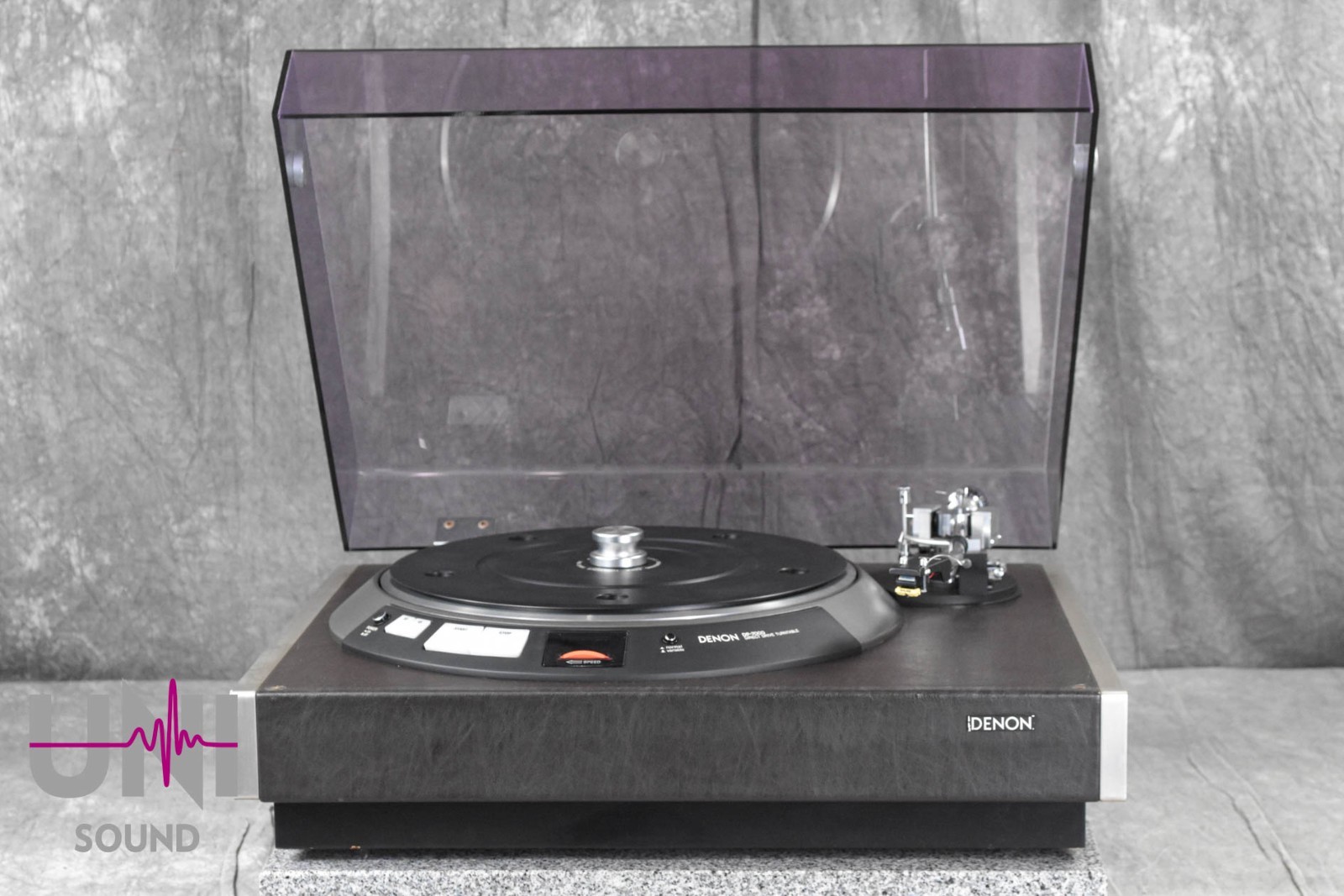
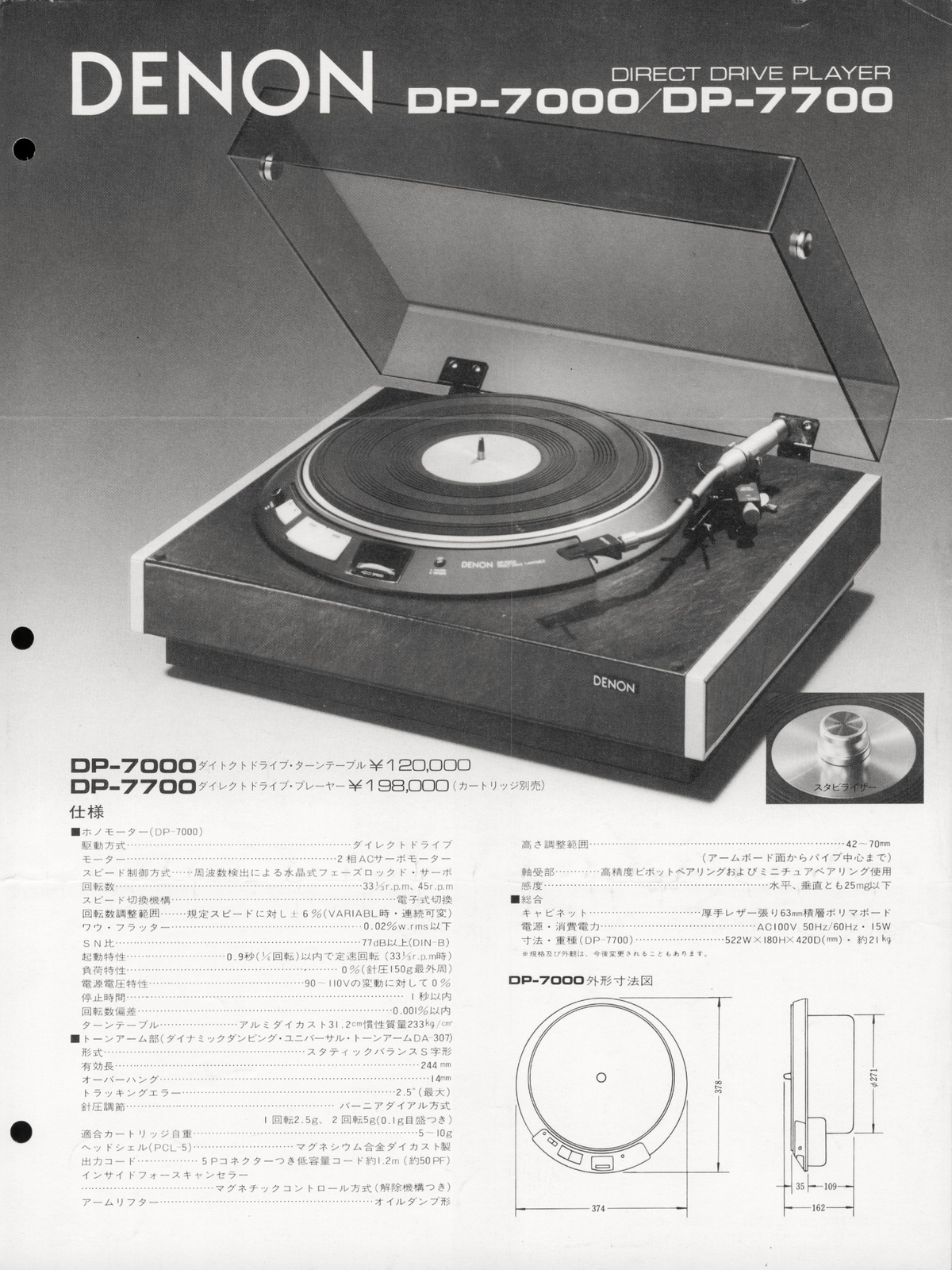
In the mid-1980s, Japanese audio manufacturers were at the peak of their engineering prowess, producing turntables that combined meticulous build quality, advanced materials, and refined sonic performance. Among these, Denon stood out not only for its legendary amplifiers and CD players but also for its high-end turntable offerings. The Denon DP-7000, introduced in 1985, was one of the company’s flagship direct-drive turntables and a testament to Denon’s commitment to analog excellence during the twilight years of vinyl’s dominance.
Though overshadowed in popular memory by contemporaries like the Technics SL-1200 series or the Linn LP12, the DP-7000 carved out a quiet but devoted following among audiophiles who prized accuracy, low noise, and mechanical sophistication. It represented Denon’s philosophy of engineering-first design—where performance was paramount, and every component was selected or developed to minimize resonance, vibration, and speed instability.
Technical Specifications
| Feature | Specification |
| Model | Denon DP-7000 |
| Year Introduced | 1985 |
| Turntable Type | Direct-drive |
| Drive System | Quartz-locked direct drive with servo control |
| Motor Type | Brushless DC motor |
| Platter | 300mm die-cast aluminum with felt mat |
| Speeds | 33⅓, 45 RPM (switchable) |
| Speed Accuracy | ±0.03% |
| Wow and Flutter | <0.025% (WRMS) |
| Tonearm | S-shaped, static-balance, aluminum alloy |
| Effective Length | 234 mm |
| Overhang | 17.7 mm |
| Tracking Force Range | 0–3.0 grams |
| Cartridge Compatibility | High-compliance moving magnet (MM) and moving coil (MC) |
| Dimensions (W×H×D) | 450 × 145 × 360 mm |
| Weight | 12.5 kg |
| Power Supply | External AC adapter with internal regulation |
| Chassis | Rigid double-layer MDF plinth with vibration-damping feet |
Sound Characteristics and Performance
The Denon DP-7000 was engineered for neutrality and transparency. Unlike some turntables of the era that leaned toward a warmer or more "forgiving" sonic signature, the DP-7000 aimed for clinical precision—revealing the true character of the recording without coloration.
Its low wow and flutter, combined with a rock-steady quartz-locked motor, ensured exceptional pitch stability. This made it particularly well-suited for classical and jazz recordings, where timing and tonal accuracy are critical. The heavy die-cast platter contributed to excellent inertia, minimizing speed fluctuations and enhancing bass response with a tight, controlled delivery.
The S-shaped tonearm, while not as advanced as the linear-tracking arms found on some high-end models, was well-engineered with precision bearings and adjustable VTA (vertical tracking angle). When paired with a high-quality cartridge—such as the Denon DL-103 or the more refined DL-110—the DP-7000 delivered a balanced, detailed sound with excellent stereo imaging and soundstage depth.
Users often note the turntable’s remarkably low noise floor. Thanks to Denon’s isolation techniques and the motor’s quiet operation, background hiss and mechanical hum are virtually nonexistent. This allowed subtle nuances in recordings—reverb tails, finger noise on guitar strings, or the breath of a vocalist—to emerge with startling clarity.
Notable Features and Innovations
The DP-7000 was packed with features that reflected Denon’s engineering ambition:
- Quartz-Locked Speed Control: Unlike many direct-drive turntables that relied on basic electronic regulation, the DP-7000 used a quartz crystal reference to maintain precise speed. This ensured long-term stability and eliminated drift, even during extended playback sessions.
- Double-Layer MDF Plinth: The chassis was constructed from dense, layered MDF (medium-density fiberboard) to dampen external vibrations and internal resonances. This was a significant upgrade over the plastic or lightweight wood used in mid-tier models.
- Advanced Motor Servo System: The brushless DC motor was governed by a sophisticated servo circuit that continuously monitored platter speed and made micro-adjustments in real time. This contributed to the impressively low wow and flutter figures.
- External Power Supply: By moving the AC/DC conversion outside the main unit, Denon reduced electromagnetic interference within the turntable’s sensitive signal path. This design choice was shared with only a few elite turntables of the era.
- Adjustable Isolation Feet: The three-point suspension system with adjustable feet allowed users to level the turntable precisely, further enhancing stability and minimizing the transmission of floor-borne vibrations.
Common Issues and Maintenance
While the Denon DP-7000 is a robust machine, it is not immune to age-related wear. As with all vintage turntables, proper maintenance is essential for optimal performance.
- Belt and Motor Issues: Despite being direct-drive, some internal rubber components (such as damping rings or idler elements in the speed sensor) can degrade over time. While the motor itself is durable, capacitor aging in the power regulation circuit can lead to speed instability. A recapping of the internal power board is often recommended for units that have been dormant.
- Tonearm Wear: The tonearm bearings can stiffen or develop play after decades of use. Cleaning and lubrication by a qualified technician can restore smooth operation.
- Platter Mat and Surface: The original felt mat may be worn or missing. Replacement with a high-quality felt or cork mat can improve grip and damping.
- Dust and Oxidation: Internal dust accumulation and oxidation on connectors or switch contacts can affect performance. A thorough cleaning and contact treatment are advisable during servicing.
Given its relative rarity compared to Technics or Sony turntables, finding replacement parts can be challenging. However, the DP-7000 shares some design principles with other Japanese high-end models, allowing skilled technicians to fabricate or adapt components when necessary.
Current Market Value and Collectibility
The Denon DP-7000 remains a somewhat under-the-radar gem in the vintage audio market. While not as widely collected as the Technics SL-1200 or the Yamaha GT-2000, it is gaining recognition among discerning audiophiles and turntable enthusiasts.
In good working condition, the DP-7000 typically sells for $400–$700 on the secondary market, with fully serviced and calibrated units commanding prices closer to $900. Original packaging, manuals, and accessories can add significant value, especially for collectors.
Its collectibility is bolstered by Denon’s reputation for quality and the turntable’s relative scarcity. Unlike mass-market models, the DP-7000 was produced in limited numbers, primarily for the Japanese and European markets. This exclusivity, combined with its technical sophistication, makes it a compelling choice for those building a high-fidelity analog system with vintage character.
Conclusion and Legacy
The Denon DP-7000 may not have achieved the iconic status of some of its contemporaries, but it stands as a powerful example of what Japanese high-end audio engineering could achieve in the 1980s. It was a turntable built not for show, but for sound—engineered with precision, assembled with care, and designed to deliver faithful analog playback.
Today, the DP-7000 appeals to a niche but passionate audience: audiophiles who value transparency, engineers who admire its build, and collectors who seek underappreciated classics. For those willing to seek one out and restore it to full health, the Denon DP-7000 offers a listening experience that rivals far more famous models—quiet, detailed, and deeply engaging.
In an era where vinyl has seen a resurgence, the DP-7000 reminds us that the golden age of analog produced not just legends, but also quiet masterpieces waiting to be rediscovered.
eBay Listings


As an eBay Partner, we earn from qualifying purchases. This helps support our independent vintage technology research.
Related Models
- Denon DL-305 (1985)
- Denon DP-1000 (1982)
- Denon DP-100M (1978)
- Denon DP-1700 (1976)
- Denon DP-21F (1981)
- Luxman PD-272 (1983)
- Garrard 2025tc (1968)
- Onkyo CP-1010 (1976)
- Pioneer PL-15R (1975)
- Pioneer PL-250 (1979)