Denon AU-310: A Vintage Preamplifier of Precision and Poise
In the golden era of high-fidelity audio during the 1970s, Denon—renowned for its meticulous engineering and dedication to sonic excellence—crafted a series of preamplifiers that quietly set benchmarks in transparency and control. Among these was the Denon AU-310, a compact yet sophisticated preamplifier released around 1975. Though not as widely documented as some of its contemporaries, the AU-310 stands as a testament to Denon’s philosophy of understated performance, precision circuitry, and long-term reliability.
While Denon is perhaps best known today for its high-end turntables and AV receivers, its vintage preamplifiers like the AU-310 represent a less celebrated but equally important chapter in the brand’s history. Positioned as a mid-tier model in Denon’s lineup of the time, the AU-310 was designed for audiophiles who valued clean signal routing, low noise, and a neutral tonal balance—qualities that allowed it to pair seamlessly with a wide range of power amplifiers and source components.
Technical Specifications
The Denon AU-310 is a solid-state, dual-mono preamplifier featuring a minimalist feature set focused on core audio performance. It lacks the phono stage found in many all-in-one preamps of the era, suggesting it was intended to be paired with a separate phono preamp or used primarily with line-level sources such as tuners, tape decks, and later, CD players.
| Specification | Detail |
| Model | AU-310 |
| Manufacturer | Denon (Nippon Columbia Co., Ltd.) |
| Year of Release | 1975 |
| Type | Solid-state line preamplifier |
| Inputs | 3 line-level inputs (RCA) |
| Outputs | 1 main output (RCA), 1 tape loop (RCA) |
| Frequency Response | 20Hz – 20kHz (+/-0.5dB) |
| Total Harmonic Distortion | <0.05% (1kHz, rated output) |
| Signal-to-Noise Ratio | >80dB (A-weighted) |
| Gain | Approx. 10dB |
| Input Impedance | 47kΩ |
| Output Impedance | 600Ω |
| Power Supply | Internal linear transformer |
| Dimensions (W×H×D) | 420 × 135 × 300 mm |
| Weight | 7.5 kg (16.5 lbs) |
| Finish | Black or silver metallic casing |
Notably, the AU-310 employs discrete transistor circuitry rather than integrated op-amps, a hallmark of Denon’s design ethos at the time. This approach allowed for greater control over the signal path and contributed to the unit’s reputation for clarity and dynamic expression.
Sound Characteristics and Performance
The Denon AU-310 delivers a sound signature that can best be described as transparent, balanced, and dynamically articulate. It avoids the warm coloration common in many Japanese preamps of the 1970s, instead favoring a more neutral presentation that lets the source material speak for itself.
Bass response is tight and well-controlled, with excellent definition and minimal overhang. Midrange clarity is exceptional—vocals and acoustic instruments are rendered with lifelike presence and minimal veil. Treble is smooth and extended, free from harshness or sibilance, making the AU-310 a forgiving match even with bright or forward speakers.
One of the standout qualities of the AU-310 is its low noise floor. When paired with high-quality cabling and a clean power source, the preamp delivers a silent background, allowing subtle details in recordings to emerge with startling clarity. This makes it particularly well-suited for critical listening and analog sources like high-resolution reel-to-reel tapes or well-maintained vinyl.
Its dual-mono design—where left and right channels are physically and electrically isolated—minimizes crosstalk and enhances stereo imaging. The result is a spacious soundstage with precise instrument placement, offering a listening experience that feels both immersive and accurate.
Notable Features and Innovations
While the AU-310 may appear modest in terms of features, its design reflects several thoughtful engineering choices:
- Discrete Transistor Amplification: Unlike many competitors who began adopting op-amps in the mid-70s, Denon stuck with discrete components, allowing for tighter control over gain stages and bandwidth.
- Dual-Mono Layout: The separation of left and right channel circuitry reduces interference and improves channel separation, a rare feature at this price point.
- High-Quality Potentiometer: The volume control uses a precision Alps or equivalent dual-gang potentiometer, known for smooth operation and long life.
- Tape Loop Functionality: A dedicated tape monitor circuit allows users to switch between live and recorded signals, a valuable feature for those building analog recording setups.
- Robust Chassis Construction: The heavy steel chassis with vibration-damping feet helps reduce microphonics and external interference.
Though it lacks tone controls—a feature some may find limiting—the AU-310’s fixed, line-only design speaks to its purpose: to pass the audio signal with minimal coloration or degradation.
Common Issues and Maintenance
As with any vintage electronic equipment, the Denon AU-310 may require servicing after decades of use. Common issues include:
- Capacitor Aging: The electrolytic capacitors in the power supply and signal path may have dried out, leading to hum, reduced output, or channel imbalance. A full recapping by a qualified technician is often recommended.
- Potentiometer Noise: The volume and input selector pots can develop crackling or channel dropouts. Cleaning with contact cleaner may help, but replacement with modern equivalents (e.g., Alps RK27) is often necessary.
- Oxidized Switches: The input selector switch can accumulate oxidation, causing intermittent connections. Regular use and occasional cleaning can prevent this.
- Transformer Health: While Denon used high-quality transformers, checking for winding resistance and output voltage is wise during servicing.
Despite these potential issues, the AU-310 is generally considered a reliable unit. Its conservative design and over-engineered components contribute to long-term durability, especially when stored and used in stable environments.
Current Market Value and Collectibility
The Denon AU-310 is not a highly sought-after collector’s item like the Marantz 2270 or Luxman L-550, but it holds a quiet respect among vintage audio enthusiasts who value performance over prestige. Units in good working condition typically sell for $150–$300, depending on finish, included accessories, and geographic region.
Its value is primarily functional rather than nostalgic—buyers are usually audiophiles looking for a no-nonsense preamp to integrate into a vintage or hybrid system. Because it lacks a phono stage, it’s often paired with a separate phono preamp or used in digital-analog hybrid setups with DACs.
While original boxes and manuals are rare, their presence can slightly increase resale value. Fully serviced units with replaced capacitors and cleaned controls command a premium.
Conclusion and Legacy
The Denon AU-310 may not have the fame of some of its contemporaries, but it embodies the quiet excellence that defined Denon’s analog-era engineering. It’s a preamplifier built for those who prioritize accuracy, reliability, and musical honesty over flashy features or bold styling.
In an age where many vintage preamps lean toward warmth or romanticism, the AU-310 stands apart with its clean, transparent voice. It’s a component that doesn’t call attention to itself—yet its absence is immediately felt. When properly maintained, it remains a compelling choice for audiophiles building a classic system or seeking a neutral preamp to anchor a modern setup.
For those who appreciate the subtleties of well-executed analog design, the Denon AU-310 is a hidden gem—one that continues to deliver exceptional performance more than four decades after its debut.
eBay Listings
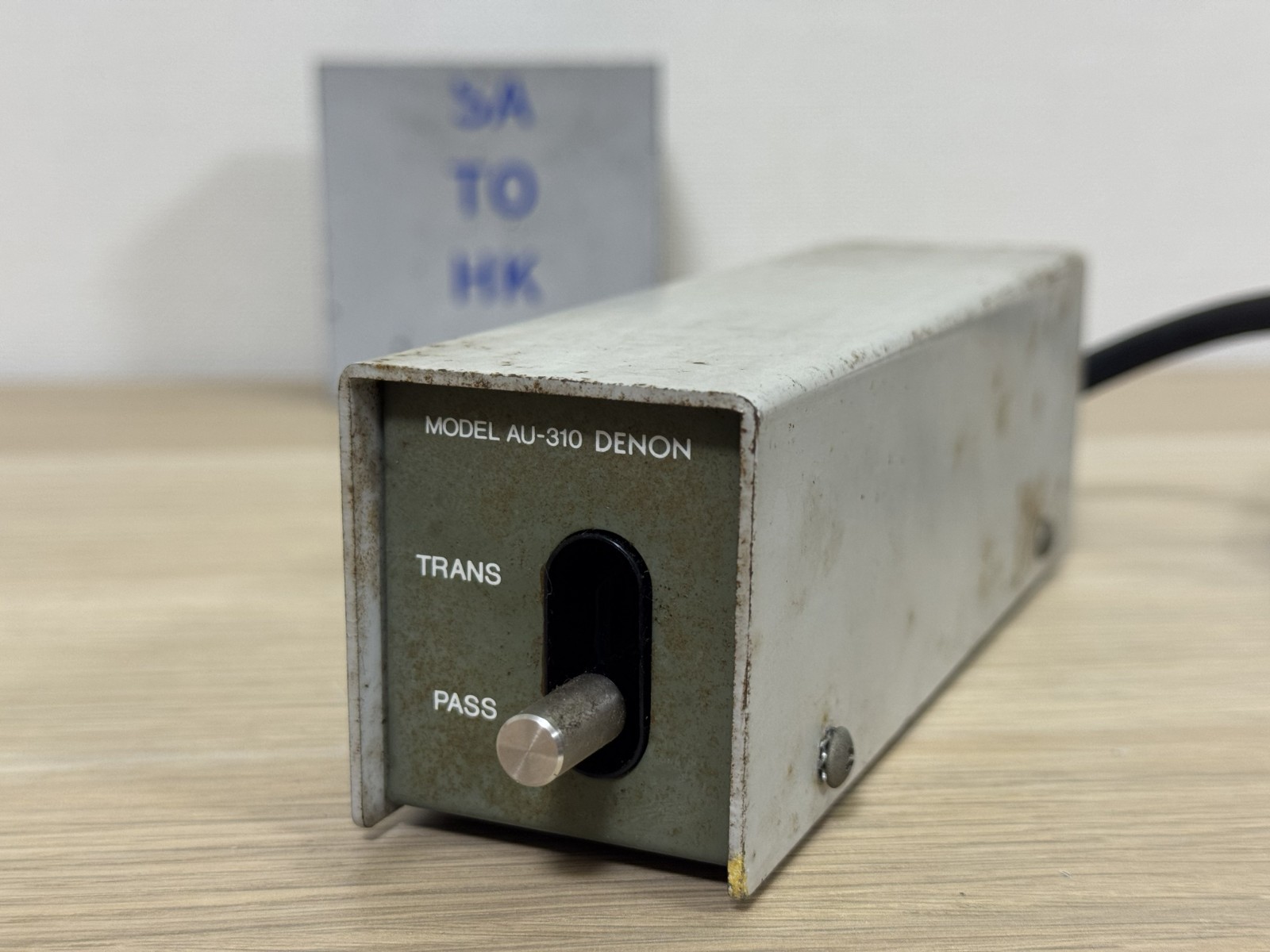

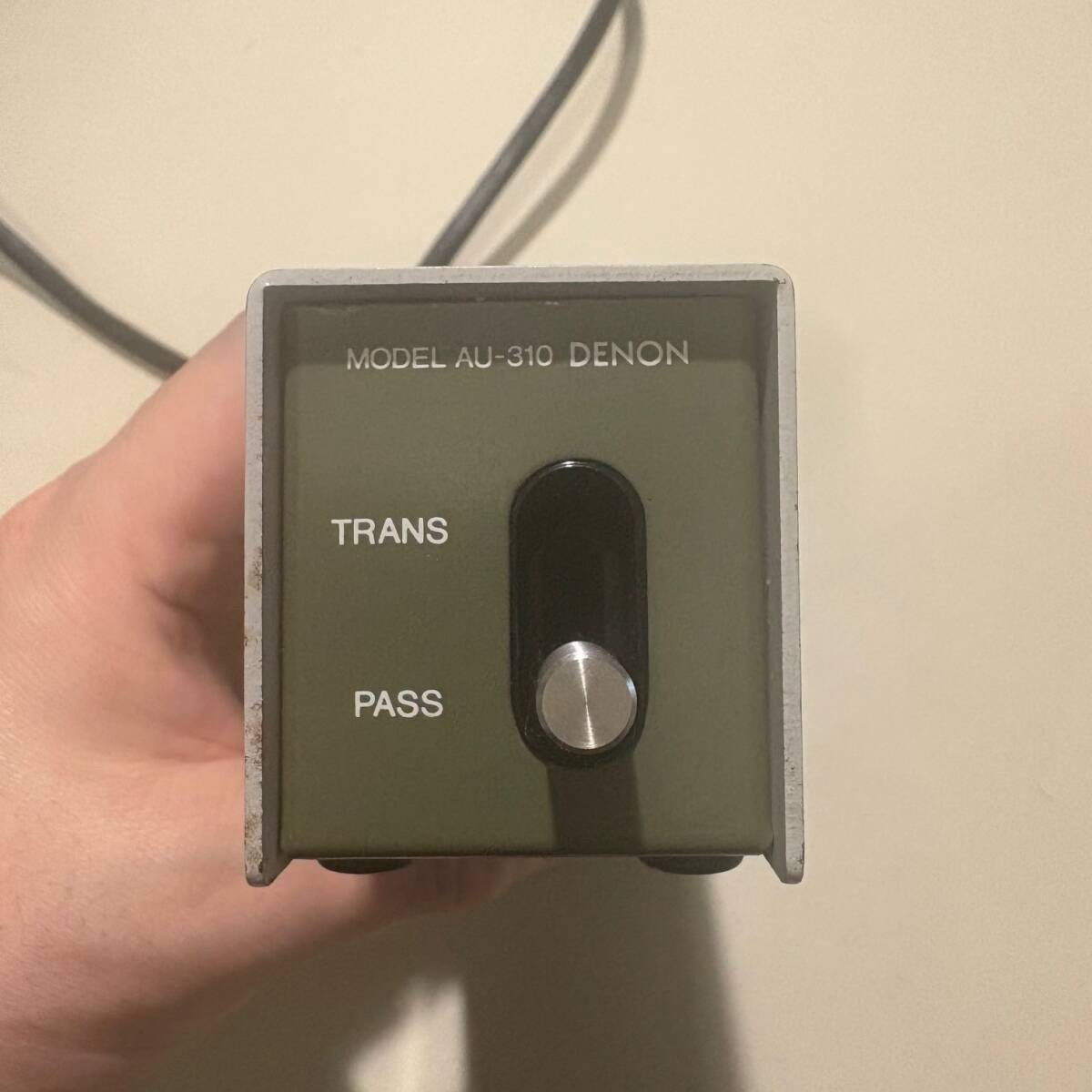

As an eBay Partner, we earn from qualifying purchases. This helps support our independent vintage technology research.
Related Models
- Denon DRA-800 (1985)
- Denon PMA-350Z (1980)
- Denon POA-1500 (1979)
- Denon PRA-1500 (1979)
- Denon DRA-350 (1985)
- Luxman L-530 (1975)
- Luxman R-404 (1975)
- Luxman RV-371 (1975)
- Luxman SQ-38U (1975)
- Luxman T-14 (1972)