Dahlquist DQ-8: The Pinnacle of Time-Aligned Speaker Design
In the late 1970s, when high-fidelity audio was undergoing a renaissance of innovation and refinement, few loudspeakers captured the imagination of audiophiles quite like the Dahlquist DQ-8. Designed by the visionary engineer John Dahlquist, this floorstanding speaker was not merely another entry in the crowded field of high-end audio—it was a bold statement about time, phase, and sonic coherence. The DQ-8 emerged during a golden era of speaker design, standing shoulder to shoulder with legendary models from Quad, Celestion, and Spica, yet distinguished itself through its unique time-aligned driver array and unwavering commitment to accurate sound reproduction.
Introduced in 1977, the DQ-8 was the flagship of Dahlquist’s early lineup and quickly became a benchmark for time-coherent speaker design. At a time when most manufacturers prioritized raw output or bass extension, Dahlquist focused on something more fundamental: ensuring that all sound waves from the drivers reached the listener’s ear at the same instant. This philosophy gave the DQ-8 a clarity and realism that continue to resonate with vintage audio enthusiasts today.
Technical Specifications
| Specification | Detail |
| Model | DQ-8 |
| Manufacturer | Dahlquist Acoustic Laboratory |
| Year Introduced | 1977 |
| Type | 3-way, time-aligned floorstanding |
| Driver Configuration | 1" dome tweeter, 5.25" midrange, 12" woofer |
| Crossover | 2nd order, passive, time-aligned design |
| Frequency Response | 35 Hz – 20 kHz (±3 dB) |
| Sensitivity | 88 dB (2.83V/1m) |
| Nominal Impedance | 8 ohms (compatible with most amplifiers) |
| Recommended Power | 20–150 watts |
| Dimensions (H×W×D) | 44" × 12" × 18" (112 cm × 30 cm × 46 cm) |
| Weight | 75 lbs (34 kg) per speaker |
| Enclosure | Acoustic suspension (sealed) |
| Finish Options | Walnut, rosewood, black walnut veneers |
Sound Characteristics and Performance
The Dahlquist DQ-8 was engineered for one primary goal: time coherence. This was achieved through a stepped baffle design, where the tweeter, midrange, and woofer were physically offset so that their acoustic centers aligned in depth. As a result, high, mid, and low frequencies arrived at the listener’s ears simultaneously—eliminating phase distortion and creating a remarkably cohesive soundstage.
Listeners often describe the DQ-8’s sonic signature as transparent, natural, and emotionally engaging. The midrange is particularly lauded for its purity and presence, making it ideal for vocal and acoustic recordings. The 5.25-inch midrange driver, crafted from treated paper, delivers a smooth, uncolored timbre that many consider among the best of its era. The 12-inch woofer provides solid bass extension down to 35 Hz, though it favors accuracy over deep sub-bass rumble—typical of sealed (acoustic suspension) designs.
The 1-inch silk dome tweeter offers extended highs without harshness, contributing to a balanced and fatigue-free listening experience. While not the most dynamic or powerful speaker by modern standards, the DQ-8 excels in imaging and soundstage depth, creating a three-dimensional sonic picture that pulls listeners into the music.
Paired with tube amplifiers or high-quality solid-state gear, the DQ-8 reveals its full potential. Its 8-ohm impedance and 88 dB sensitivity make it relatively easy to drive, though it benefits from clean, well-controlled amplification to maintain its tonal balance.
Notable Features and Innovations
The DQ-8’s most revolutionary feature was its time-aligned driver array—a concept pioneered by Dahlquist and inspired by the work of Dr. Harry F. Olson. By staggering the drivers on a stepped front baffle, Dahlquist ensured that sound waves from each driver traveled the same distance to the listener, minimizing phase interference. This design was both acoustically and visually distinctive, giving the DQ-8 a futuristic look that stood out in any listening room.
Another hallmark was the fully sealed enclosure. Unlike ported designs that enhance bass output at the expense of transient accuracy, the DQ-8’s acoustic suspension cabinet delivers tight, controlled bass with excellent transient response. This made it especially well-suited for jazz, classical, and vocal performances, where timing and clarity are paramount.
The crossover network, while not externally accessible in most production models, was carefully tuned to preserve phase alignment across drivers. Dahlquist avoided complex filtering, opting instead for a minimalist second-order design that prioritized signal purity.
Finally, the DQ-8 was built to last. Each cabinet was hand-assembled with high-quality veneers and internal bracing, reflecting a level of craftsmanship that rivaled the best European speakers of the time.
Common Issues and Maintenance
As with any vintage audio equipment, the DQ-8 requires careful attention to remain in top condition. The most common issues stem from aging components:
- Driver deterioration: The original foam surrounds on the woofer and midrange drivers are prone to disintegration after 30–40 years. Re-foaming or full reconing is often necessary to restore bass response and prevent distortion.
- Tweeter degradation: While more durable, the silk dome tweeter can suffer from age-related fatigue or oxidation. Some owners opt for careful cleaning or professional restoration.
- Crossover capacitors: Electrolytic capacitors in the crossover may dry out over time, leading to tonal imbalances or loss of high frequencies. Replacing these with modern audiophile-grade components can significantly improve performance.
- Cabinet finish: Original wood veneers may show wear or fading. Gentle polishing and proper humidity control help preserve their beauty.
Finding original replacement parts can be challenging, but a dedicated community of Dahlquist enthusiasts and specialist restoration shops (such as Audio Classics and The Speaker Exchange) offer reconing kits and technical support.
Current Market Value and Collectibility
Today, the Dahlquist DQ-8 is a highly collectible piece of audio history. Well-maintained pairs in original condition typically sell for $1,200 to $2,500, with prices rising for fully restored models or rare finishes like black walnut. Its status as a pioneer in time-aligned design has cemented its legacy among vintage speaker aficionados.
While not as widely known as some contemporaries like the AR-3a or Klipschorns, the DQ-8 holds a special place in the hearts of those who value technical innovation and sonic purity. It is frequently featured in vintage audio shows and forums, and its influence can be seen in modern time-aligned designs from companies like MBL and Wilson Audio.
Conclusion and Legacy
The Dahlquist DQ-8 was more than a loudspeaker—it was a philosophical statement about how audio should be reproduced. In an age increasingly obsessed with specifications and power, John Dahlquist reminded us that timing and coherence are just as important as frequency response or efficiency.
Its elegant design, both acoustically and visually, continues to inspire. The DQ-8 represents a rare convergence of engineering rigor and artistic intent, making it one of the most respected vintage speakers of the 1970s.
For the discerning collector or audiophile seeking a window into the golden age of high-fidelity, the DQ-8 offers not just sound—but a sense of presence, realism, and timelessness. It remains a testament to the idea that in audio, as in life, timing is everything.
eBay Listings


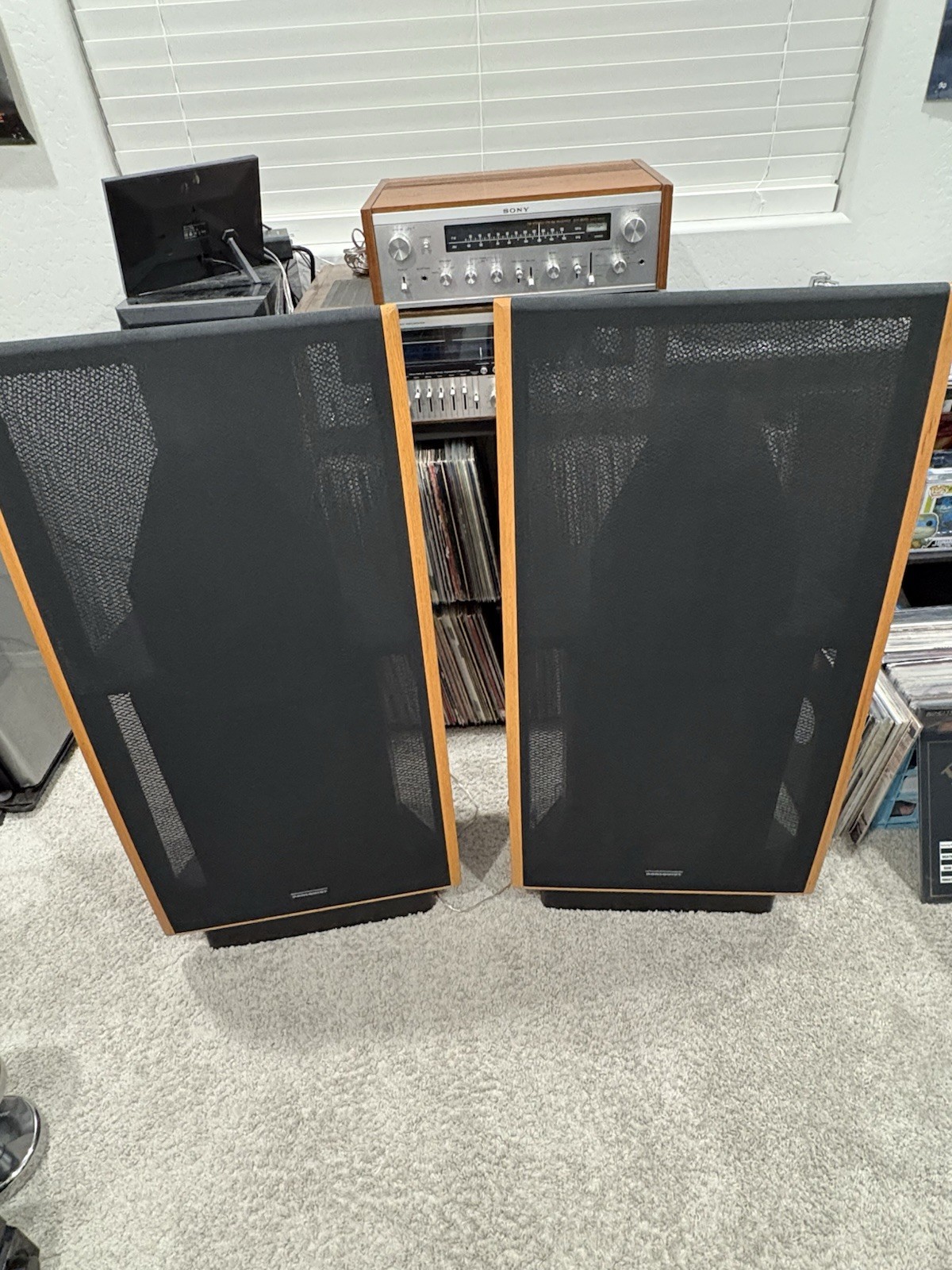

As an eBay Partner, we earn from qualifying purchases. This helps support our independent vintage technology research.
Related Models
- Dahlquist ALS-3 (1978)
- Dahlquist DQ-20I (1978)
- Dahlquist DQ-6C (1978)
- Dahlquist DQ-10 (1974)
- Dahlquist DQ-10A (1978)
- Akai AM-2850 (1975)
- Akai AP-206 (1975)
- Nakamichi BX-1 (1985)
- Acoustic Research research-ar-17 (1978)
- Acoustic Research AR-19 (1994)