Dahlquist DQ-28: The Forgotten Hybrid Pioneer of High-End Audio
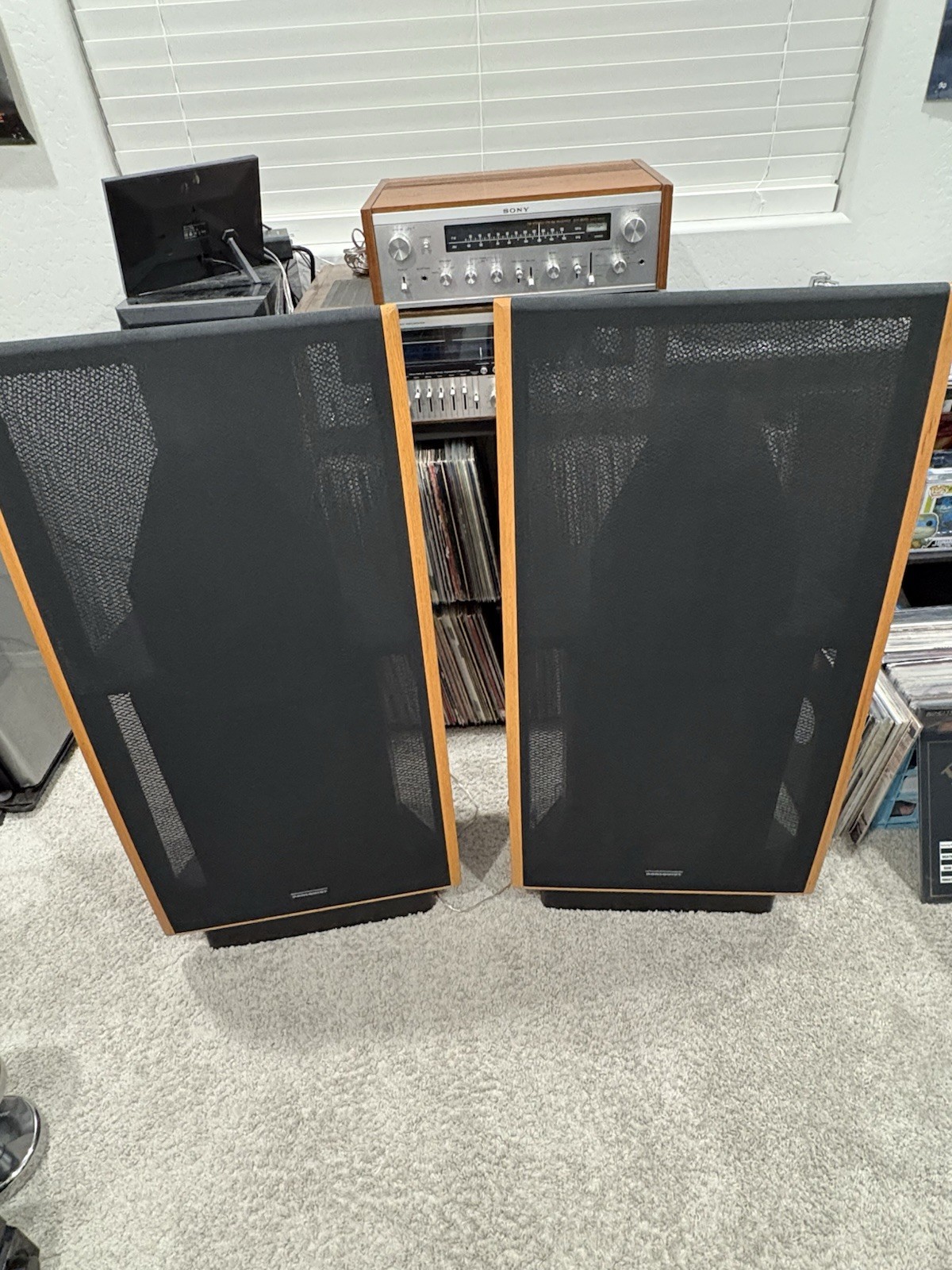
In the pantheon of vintage high-end loudspeakers, few names evoke the same reverence among audiophiles as Dahlquist, the boutique American speaker company founded by the visionary engineer Jon Dahlquist in the early 1970s. While the brand is best known for the legendary DQ-10, its lesser-known sibling, the DQ-28, occupies a unique and fascinating niche in audio history. Introduced around 1975, the DQ-28 was not a conventional dynamic loudspeaker — it was a bold, experimental hybrid design that combined electrostatic midrange and high-frequency reproduction with a dynamic bass driver. This rare and ambitious speaker stands as a testament to the golden era of American high-end audio, when innovation, craftsmanship, and sonic purity were paramount.
Though the DQ-28 never achieved the commercial success or widespread recognition of its more famous counterparts, it remains a prized curiosity among vintage audio collectors and a symbol of Jon Dahlquist’s relentless pursuit of sonic transparency.
Historical Context: The Rise of Dahlquist
Jon Dahlquist began his journey in audio engineering in the late 1960s, working for companies like KLH and Acoustic Research, where he gained deep experience in loudspeaker design. By 1972, he had founded his own company, Dahlquist, with a mission: to create speakers that delivered time-coherent, phase-accurate sound with minimal coloration. The result was the DQ-10, a time-aligned three-way floorstander that became an instant classic.
The DQ-28, introduced a few years later, represented a departure from the DQ-10’s conventional dynamic driver array. Instead, it embraced the emerging electrostatic technology popularized by brands like Quad and MartinLogan, but with a uniquely Dahlquist twist: a hybrid architecture that sought to marry the speed and clarity of electrostatic panels with the deep bass response of a dynamic driver.
Technical Specifications
| Specification | Detail |
| Model | DQ-28 |
| Manufacturer | Dahlquist Acoustic Laboratory |
| Year Introduced | 1975 |
| Type | Hybrid electrostatic/dynamic loudspeaker |
| Configuration | 2.5-way (electrostatic mid-tweeter + dynamic woofer) |
| Frequency Response | 38 Hz – 20 kHz (±3 dB) |
| Sensitivity | 86 dB (2.83V/1m) |
| Nominal Impedance | 8 ohms (compatible with most tube and solid-state amps) |
| Crossover Type | Passive external crossover network |
| Bass Driver | 10-inch treated paper cone, sealed cabinet |
| Mid/High Driver | Full-range electrostatic panel (vertically oriented) |
| Crossover Frequency | ~400 Hz (bass to electrostatic) |
| Dimensions (H×W×D) | 48" × 16" × 18" (122 cm × 41 cm × 46 cm) |
| Weight | 65 lbs (29.5 kg) per speaker |
| Finish Options | Walnut or rosewood veneer |
| Recommended Amp Power | 40–100 watts (clean, high-current) |
Sound Characteristics and Performance
The DQ-28 delivered a sound signature that was nothing short of revelatory for its time. The electrostatic panel — a tall, vertically oriented diaphragm — was responsible for all frequencies above 400 Hz, producing exceptional clarity, low distortion, and pinpoint imaging. Listeners often describe the midrange as “ethereal” and “lifelike,” with a transparency that made vocals and acoustic instruments sound startlingly present.
The lower register, handled by the 10-inch dynamic woofer in a sealed enclosure, provided a tight, controlled bass response that extended down to 38 Hz — impressive for a hybrid design of the 1970s. While not as deep or thunderous as larger bass reflex cabinets, the DQ-28’s bass was remarkably articulate and well-integrated with the electrostatic section, thanks to a carefully tuned passive crossover.
One of the DQ-28’s most praised attributes was its spatial performance. The speaker projected a wide, deep soundstage with precise instrument placement, making it a favorite among classical and jazz enthusiasts. Its time-coherent design — a hallmark of all Dahlquist speakers — ensured that all sound waves arrived at the listener’s ear in perfect phase, enhancing realism and reducing listener fatigue.
Notable Features and Innovations
The DQ-28 was more than just a speaker — it was an engineering statement. Its most notable innovation was the integration of electrostatic and dynamic technologies in a single, cohesive design. At a time when most manufacturers stuck to one driver type, Dahlquist dared to blend the best of both worlds.
- Vertically Aligned Electrostatic Panel: Unlike the wide, horizontal panels of some electrostats, the DQ-28’s narrow vertical panel helped maintain a coherent wavefront and improved off-axis dispersion.
- Time-Aligned Crossover: The crossover network was designed to ensure that sound from both drivers reached the listener simultaneously, preserving transient accuracy.
- Handcrafted Cabinet: Each enclosure was built with meticulous attention to detail, using high-quality wood veneers and internal bracing to minimize resonance.
- External Crossover Option: Some high-end models featured an external crossover unit, allowing for easier maintenance and tuning.
Common Issues and Maintenance
As with any vintage electrostatic design, the DQ-28 requires careful maintenance. The electrostatic panel is sensitive to humidity and can suffer from arcing or diaphragm sag if not stored properly. Over time, the thin conductive coating on the diaphragm may degrade, leading to reduced output or distortion.
Owners should:
- Keep the speakers in a dry, climate-controlled environment
- Avoid placing them near windows or in high-humidity areas
- Periodically inspect the stators (metal grids) for dust or corrosion
- Use a soft brush or compressed air for cleaning — never liquid
- Have the crossover capacitors checked and replaced if necessary (common aging issue)
Finding replacement parts today is extremely difficult, as Dahlquist ceased operations in the early 1980s. However, a small but dedicated community of vintage audio restorers occasionally services these rare units, and some have successfully rebuilt panels using modern materials.
Current Market Value and Collectibility
The Dahlquist DQ-28 is a rare find. Fewer than 500 pairs are believed to have been produced, and even fewer remain in working condition. As such, it has become a collector’s item among vintage audio enthusiasts.
In recent years, working pairs in good condition have sold at auction and through specialty dealers for $2,500 to $4,500, depending on originality, finish, and performance. Fully restored units with rebuilt electrostatic panels can command even higher prices, especially when paired with original documentation or accessories.
While not as widely recognized as the DQ-10, the DQ-28 holds a special place for collectors who appreciate technical innovation and American high-end heritage. Its hybrid design predates similar approaches by MartinLogan and others by nearly a decade, making it a true pioneer.
Conclusion: A Legacy of Innovation
The Dahlquist DQ-28 may not have been a commercial blockbuster, but it was a bold experiment in sonic fidelity — one that showcased Jon Dahlquist’s unwavering commitment to audio excellence. As a hybrid electrostatic speaker from the mid-1970s, it was ahead of its time, blending technologies in a way that few manufacturers dared to attempt.
Today, the DQ-28 stands as a rare artifact of American audio ingenuity, a speaker that rewards patient restoration and careful listening. For those lucky enough to own or hear a pair, it offers a window into a pivotal moment in high-fidelity history — when the pursuit of perfect sound knew no bounds.
If you’re a collector of vintage speakers, an admirer of electrostatic technology, or simply a lover of audio innovation, the Dahlquist DQ-28 deserves a place in your story.
eBay Listings


As an eBay Partner, we earn from qualifying purchases. This helps support our independent vintage technology research.
Related Models
- Dahlquist ALS-3 (1978)
- Dahlquist DQ-20I (1978)
- Dahlquist DQ-6C (1978)
- Dahlquist DQ-10 (1974)
- Dahlquist DQ-10A (1978)
- Akai AM-2850 (1975)
- Akai AP-206 (1975)
- Nakamichi BX-1 (1985)
- Acoustic Research research-ar-17 (1978)
- Acoustic Research AR-19 (1994)