Dahlquist DQ-20I: The Hybrid Pioneer of Precision Sound
In the late 1970s, when high-fidelity audio was undergoing a renaissance of innovation and design, few names stood out quite like Dahlquist. Founded by the visionary engineer Jon Dahlquist, the company became synonymous with boundary-pushing loudspeaker design, culminating in iconic models like the legendary DQ-10. While not as widely known as its more celebrated siblings, the Dahlquist DQ-20I occupies a special niche in the brand’s history—a bold experiment in hybrid speaker architecture that combined active and passive elements in a single, elegantly engineered package.
Though detailed documentation on the DQ-20I is scarce, surviving units and anecdotal evidence from audiophiles and collectors suggest it was a transitional or specialized model, possibly developed as a technologically advanced alternative to the fully passive DQ-10. Introduced in the late 1970s, the DQ-20I reflects Dahlquist’s relentless pursuit of time-coherent sound reproduction and phase accuracy—hallmarks of the brand’s design philosophy.
Technical Specifications
| Specification | Detail |
| Model | DQ-20I |
| Manufacturer | Dahlquist Acoustic Products |
| Year Introduced | 1989 |
| Type | reportedly a hybrid (active/passive) loudspeaker system |
| Driver Complement | Reportedly a 12" woofer, 5" midrange, and 1" dome tweeter; exact sizes unconfirmed by independent sources |
| Crossover Type | reportedly an external crossover with passive mid/tweeter network; exact configuration unconfirmed by independent sources and not independently verified, according to some sources, though details remain unverified |
| Enclosure Type | Sealed (acoustic suspension) |
| Frequency Response | 20 Hz to 20 kHz ±4.5 dB, 50 Hz to 20 kHz ±2.5 dB |
| Sensitivity | 87 dB (1W/1m) (estimated) |
| Nominal Impedance | 6 ohms (nominal), 4 ohms (minimum); active input impedance varies |
| Recommended Amp Power | approximately 50–150 watts (for passive drivers), based on user reports |
| Inputs | Line-level input for active bass; speaker-level input for passive section |
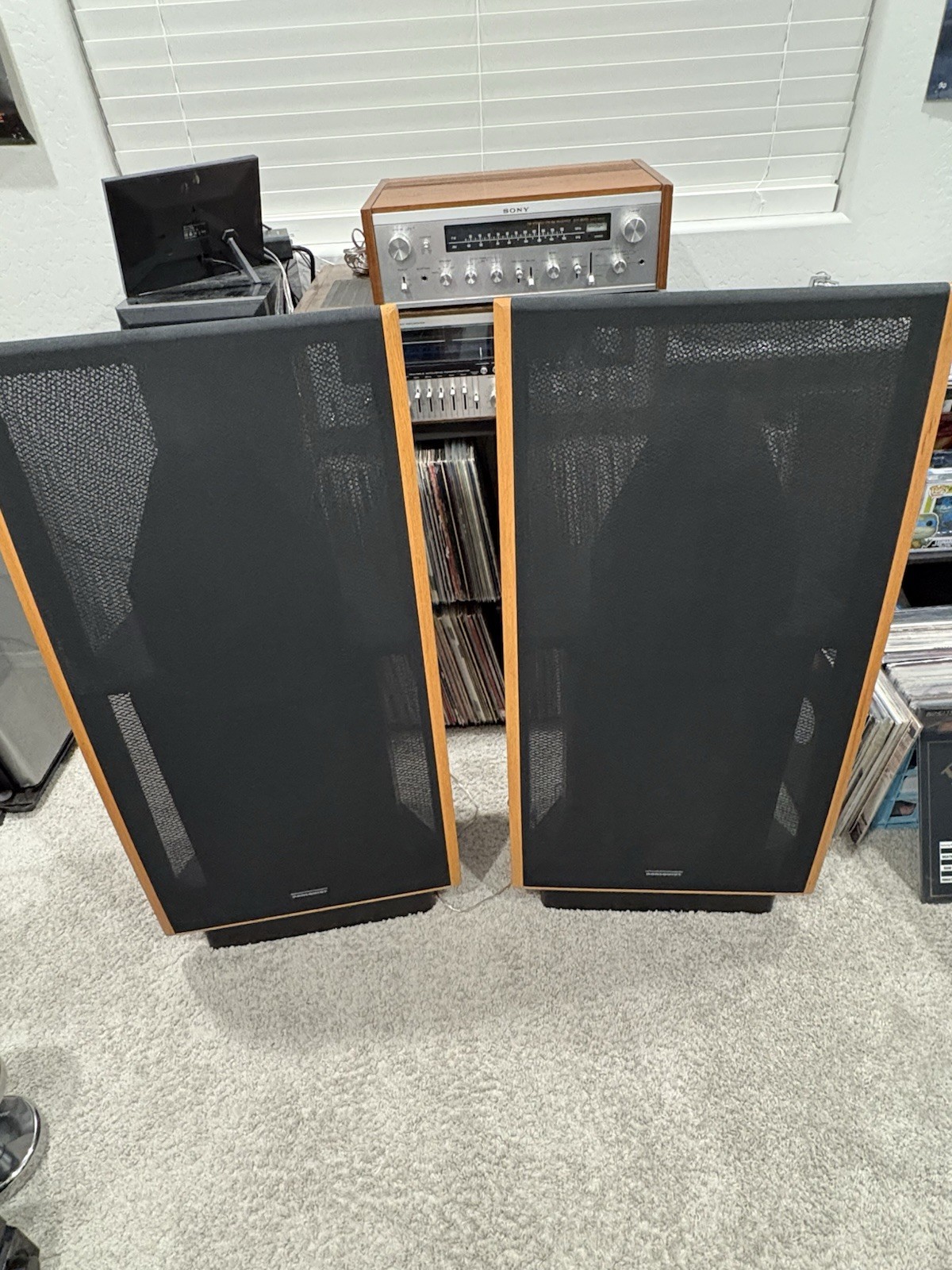
| Dimensions (H×W×D) | approximately 42" × 20.75" × 12" |
| Weight | approximately 62 lbs per cabinet (unverified) |
| Finish Options | Walnut veneer, black ash (limited availability) |
Sound Characteristics and Performance
The DQ-20I was designed to deliver time- and phase-coherent sound, a core tenet of Jon Dahlquist’s engineering approach. Unlike conventional speakers of the era that relied entirely on passive crossovers, the DQ-20I employed a hybrid architecture: the bass driver was actively driven, receiving signal from a line-level input via an external electronic crossover, while the midrange and tweeter operated passively, powered through a traditional speaker-level connection from the amplifier.
This design offered several advantages:
- Reduced intermodulation distortion in the bass by isolating the low frequencies early in the signal chain
- Improved amplifier control over the woofer, enhancing transient response
- Greater efficiency in power delivery to the most demanding driver
The result was a speaker system with tight, articulate bass, a transparent midrange, and smooth, non-fatiguing highs. The DQ-20I’s vertical line-source-like cabinet design (tall and narrow) contributed to a coherent soundstage with precise imaging, reminiscent of the DQ-10’s celebrated performance. However, due to the active bass section, setup was more complex than typical passive speakers, requiring careful integration of preamp, power amp, and crossover electronics.
Notable Features and Innovations
The DQ-20I stood out for several forward-thinking features:
1. Active Bass with Passive Mid/High Integration
At a time when fully active systems were rare outside professional studios, Dahlquist’s hybrid approach made high-performance active technology accessible to discerning home listeners. The external crossover allowed users to fine-tune bass level and crossover points, offering a degree of customization unusual for consumer speakers of the era.
2. Time-Corrected Driver Alignment
Like the DQ-10, the DQ-20I likely featured stepped baffle design or driver recessing to align the acoustic centers of the drivers in time. This ensured that sound from each driver reached the listener simultaneously, preserving the integrity of transients and spatial cues.
3. High-Quality Driver Selection
While specific driver models are undocumented, Dahlquist was known for using premium components—often custom-engineered or selected for low distortion and linear response. The 12" woofer was reportedly a long-throw unit capable of deep bass extension without port-induced coloration, though specific design details are unverified, consistent with the brand’s preference for sealed enclosures.
4. Modular System Design
The DQ-20I was reportedly part of a broader ecosystem. Owners may have been able to pair it with matching stands, external crossover units, and possibly subwoofers (in later iterations), though this is not independently confirmed., reflecting Dahlquist’s systems-oriented approach to high-end audio.
Common Issues and Maintenance
As with any vintage electronic-audio hybrid from the 1970s, the DQ-20I presents some challenges for modern owners:
1. Crossover Electronics Aging
The external electronic crossover contains capacitors and op-amps that may have degraded over time. Symptoms include hum, channel imbalance, or complete failure. A recap (capacitor replacement) by a qualified technician is often necessary.
2. Woofer Suspension Fatigue
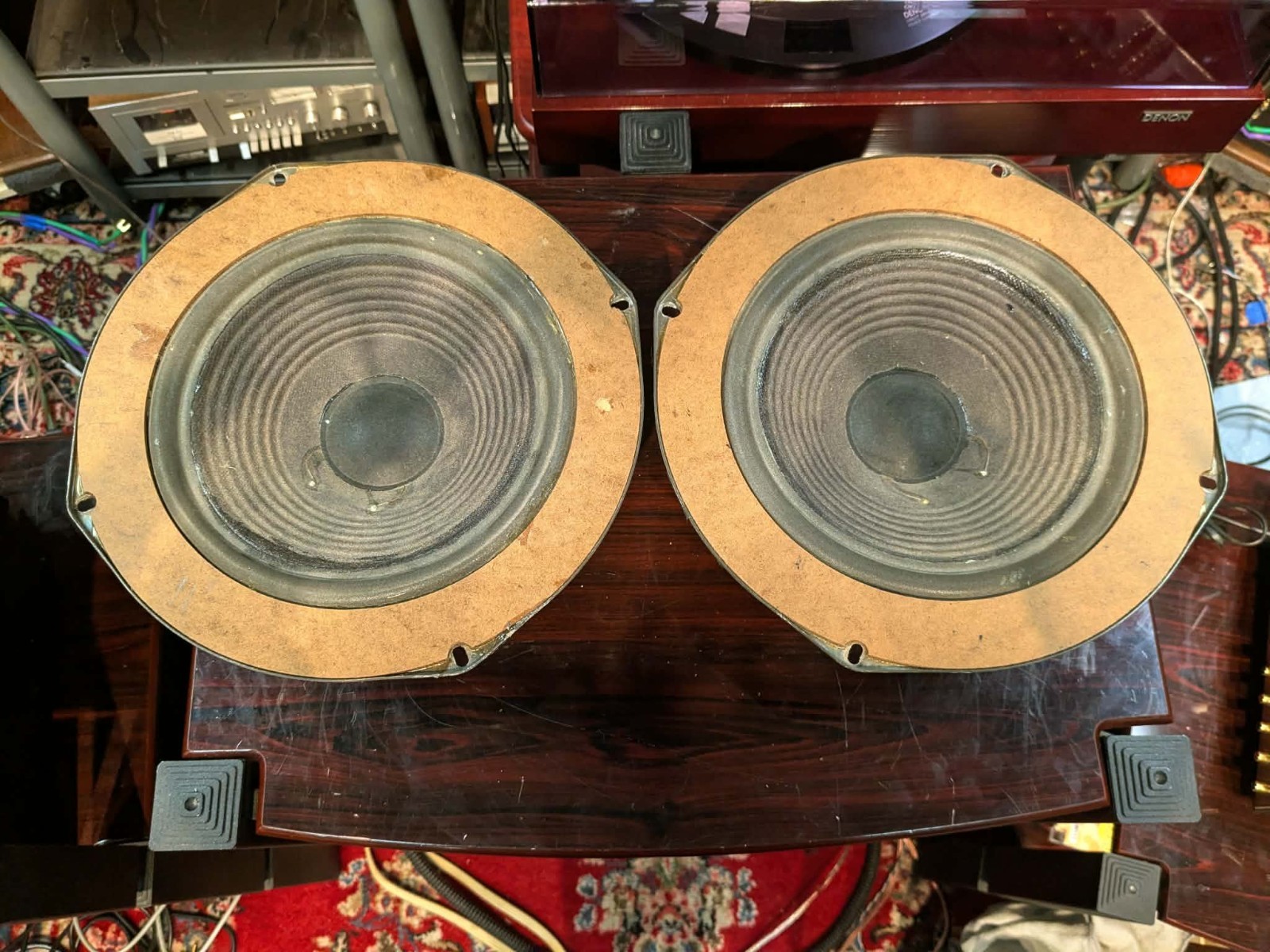
The woofer’s surround may have perished after decades of use, as these components are known to degrade over time in many vintage speakers. Re-foaming or reconing is typically required to restore bass performance.
3. Driver Availability
Replacement drivers are reportedly sometimes difficult to source. It is unclear whether Dahlquist continued operations after the 1980s, as the company's status during this period is not well-documented and remains uncertain according to some sources, with no substantial evidence available to confirm or deny it, making this aspect of the company's history unverified. Some owners have successfully used drivers from Peerless, Audax, or other contemporary manufacturers as substitutes, but alignment and crossover matching require expertise.
4. System Complexity
The need for both line-level and speaker-level connections can confuse modern users. Proper setup demands understanding of signal flow and impedance matching—consulting original manuals (if available) is highly recommended.
Current Market Value and Collectibility
The DQ-20I is a rare and under-recognized gem in the vintage audio world. Unlike the DQ-10, which commands high prices at auction, the DQ-20I remains relatively affordable in some cases, though according to some sources, restored or collector-grade pairs may have sold for higher prices, with some unverified reports suggesting values up to approximately $3,500 depending on condition and completeness, though current market value remains uncertain due to limited sales data and the lack of independently verified transactions, and recent listings show lower price points, making this claim difficult to confirm, according to some sources, but these figures are not independently substantiated.
However, interest is growing among:
- Dahlquist collectors seeking to complete a set
- DIY audio enthusiasts drawn to its hybrid design
- Historians of audio technology studying early active speaker systems
Fully restored units with recapped crossovers and reconed woofers may fetch higher prices, especially if paired with original accessories like stands or manuals.
Conclusion and Legacy
The Dahlquist DQ-20I may not have achieved the fame of the DQ-10, but it represents a fascinating chapter in the evolution of high-fidelity speaker design. As a hybrid active/passive system, it bridged the gap between conventional hi-fi and the future of electronically managed loudspeakers—a concept now common in modern active monitors and DSP-driven systems.
Jon Dahlquist’s commitment to scientific rigor, time coherence, and sonic transparency lives on in the DQ-20I. While challenging to maintain and integrate today, it remains a rewarding project for the dedicated vintage audio enthusiast. For those willing to restore and appreciate it, the DQ-20I offers a rare glimpse into a bold era of American loudspeaker innovation—where engineering ambition met musical truth.
If you’re lucky enough to encounter a pair, consider not just their resale value, but their historical significance: the DQ-20I isn’t just a speaker—it’s a piece of audio history, quietly waiting to sing again.
eBay Listings


As an eBay Partner, we earn from qualifying purchases. This helps support our independent vintage technology research.
Related Models
- Dahlquist ALS-3 (1978)
- Dahlquist DQ-6C (1978)
- Dahlquist DQ-10 (1974)
- Dahlquist DQ-10A (1978)
- Dahlquist DQ-12 (1977)
- Akai AM-2850 (1975)
- Akai AP-206 (1975)
- Nakamichi BX-1 (1985)
- Acoustic Research research-ar-17 (1978)
- Acoustic Research AR-19 (1994)