Dahlquist DQ-10: The Pioneering Time-Aligned Loudspeaker
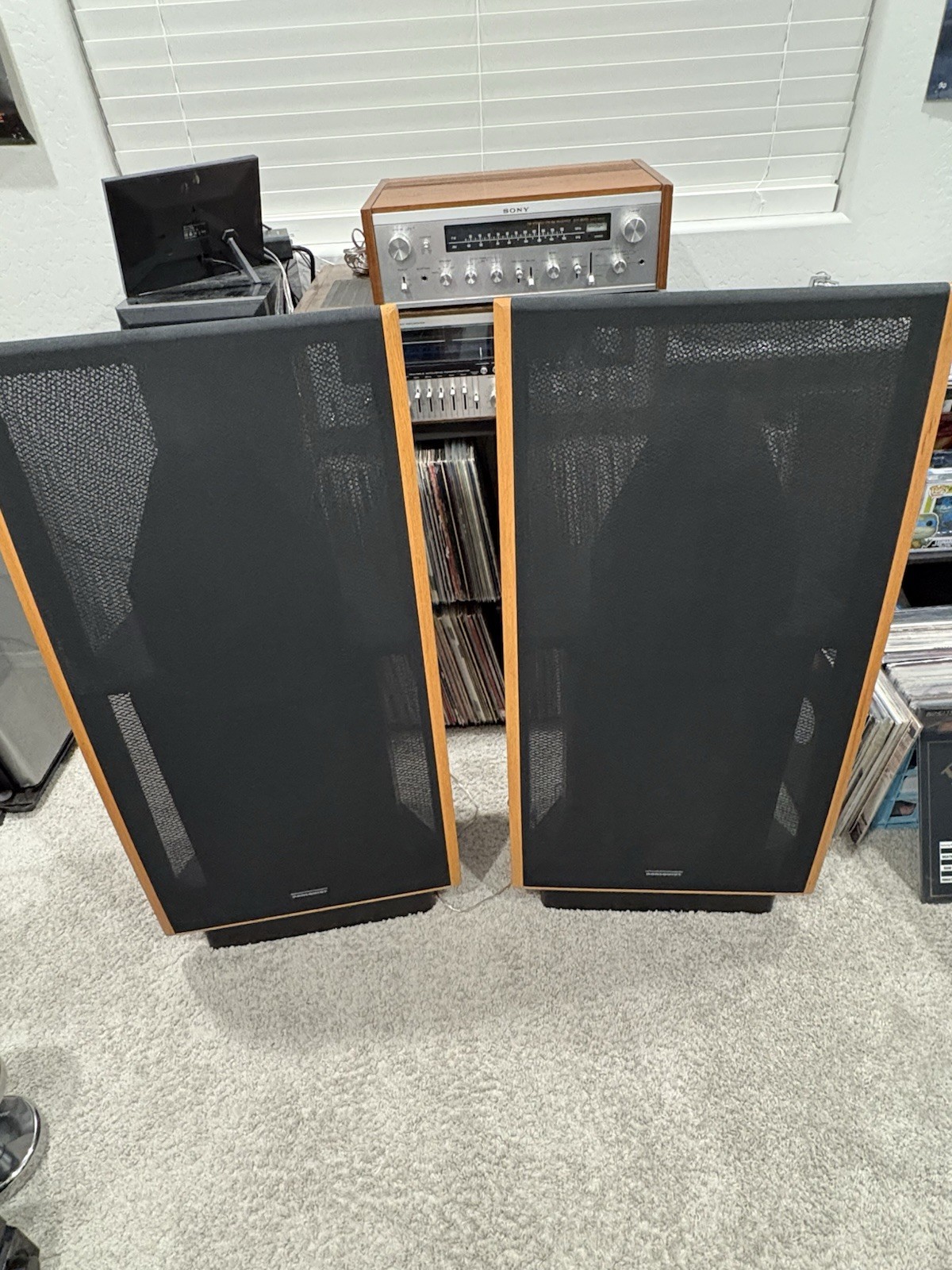
In the mid-1970s, when high-fidelity audio was undergoing a renaissance of innovation, few speakers captured the imagination of audiophiles quite like the Dahlquist DQ-10. Introduced in 1974 by Swedish-American engineer John Dahlquist, the DQ-10 wasn’t just another bookshelf or floor-standing speaker—it was a bold statement about time, phase, and sonic accuracy. As one of the first commercially available time-aligned loudspeakers, the DQ-10 redefined what was possible in speaker design and laid the foundation for a new era of precision audio reproduction.
At a time when most loudspeakers used conventional crossover networks and staggered driver placement—leading to phase distortions and smeared imaging—the DQ-10 stood apart. Its revolutionary acoustic time alignment ensured that sound from each driver reached the listener’s ear simultaneously, preserving the temporal integrity of the original recording. This focus on time coherence made the DQ-10 a favorite among critical listeners and recording engineers who prized transparency and realism.
Technical Specifications
| Specification | Detail |
| Model | DQ-10 |
| Manufacturer | Dahlquist Acoustic Laboratories |
| Year Introduced | 1974 |
| Type | 2-way, time-aligned floorstanding speaker |
| Driver Configuration | 1 x 12" woofer, 1 x 3" midrange/tweeter (full-range) |
| Crossover | 2nd order at ~500 Hz |
| Time Alignment | Stepped baffle design for phase coherence |
| Frequency Response | 40 Hz – 18 kHz (±3 dB) |
| Sensitivity | 86 dB (2.83V/1m) |
| Nominal Impedance | 8 ohms |
| Recommended Amplifier | 25–100 watts (tube or solid-state) |
| Enclosure Type | Ported, transmission line influence |
| Dimensions (H×W×D) | 40" × 12" × 14" (102 × 30 × 36 cm) |
| Weight | 65 lbs (29.5 kg) per speaker |
| Finish Options | Walnut veneer, black ash |
Sound Characteristics and Performance
The DQ-10’s sound is best described as coherent, transparent, and deeply immersive. Thanks to its time-aligned design, the speaker produces a remarkably stable and three-dimensional soundstage. Instruments appear with precise localization, and vocal performances are rendered with uncanny realism. Listeners often describe the midrange as “liquid” and “present,” with a natural tonal balance that avoids the harshness sometimes associated with early solid-state amplification.
The 12-inch woofer provides solid bass extension down to 40 Hz, making the DQ-10 suitable for a wide range of musical genres—from orchestral works to rock and jazz. However, the true magic lies in the 3-inch full-range midrange/tweeter, which handles frequencies above 500 Hz with exceptional clarity. This driver, mounted on a stepped baffle, is physically set back from the woofer, ensuring that sound waves from both drivers arrive at the listening position in phase.
Because of its relatively modest sensitivity (86 dB), the DQ-10 benefits from being paired with amplifiers that have strong current delivery and clean power reserves. While it can work with tube amps (especially EL34 or 300B-based designs), it also pairs beautifully with high-quality solid-state amplifiers from brands like Mark Levinson, Audio Research, or even early Krell models.
Notable Features and Innovations
The stepped baffle is the DQ-10’s most iconic feature. Unlike conventional speakers where drivers are mounted flush on the same plane, the DQ-10’s midrange/tweeter is recessed by several inches—approximately the distance sound travels in the time it takes the woofer to respond. This mechanical delay compensates for the phase lag inherent in crossover networks, achieving what engineers call acoustic time alignment.
This design was revolutionary in the 1970s. While the concept had been explored in professional studio monitors and by pioneers like Harry F. Olson, the DQ-10 brought time alignment to the consumer market in an accessible, production-ready form. It predated more famous time-aligned designs like the BBC LS3/5A (which used time correction via crossover) and influenced later high-end speakers from companies like Vandersteen and MBL.
Another notable aspect is the crossover design. Using a second-order (12 dB/octave) slope at 500 Hz, it strikes a balance between driver protection and phase coherence. The crossover components were of high quality for the era—metal-film resistors, polypropylene capacitors, and air-core inductors—reflecting Dahlquist’s commitment to signal purity.
Common Issues and Maintenance
As with any vintage speaker, the DQ-10 requires careful attention to maintain optimal performance. The most common issues include:
- Aging foam surrounds: The original foam on the woofer can degrade over time, leading to flaking and loss of bass response. Many owners have replaced these with modern rubber or butyl surrounds, significantly extending the speaker’s life.
- Capacitor drift in crossovers: Electrolytic capacitors in the crossover network may dry out or lose capacitance. Replacing them with modern film capacitors can restore clarity and balance.
- Cabinet integrity: While the cabinets were well-built, decades of use and environmental exposure can lead to veneer lifting or joint separation. Refinishing and structural reinforcement are often worthwhile investments.
Restoration is highly recommended for vintage DQ-10s. Given their historical significance and limited production numbers (fewer than 2,000 pairs were made), well-maintained units are prized by collectors and audiophiles alike.
Current Market Value and Collectibility
Today, the Dahlquist DQ-10 is considered a cult classic among vintage loudspeakers. While not as widely known as some contemporaries like the AR-3a or JBL L100, it holds a special place in the hearts of phase-coherence enthusiasts and speaker designers.
In excellent original condition, a pair of DQ-10s typically sells for $1,200 to $2,000. Restored units with new surrounds and upgraded crossovers can command $2,500 or more, especially if accompanied by original documentation or accessories. Rarity, provenance, and cosmetic condition significantly influence value.
The DQ-10 is particularly sought after by collectors of American high-end audio from the 1970s, and its influence on later time-aligned designs adds to its historical appeal. It’s not uncommon to see DQ-10s in museums or featured in audiophile retrospectives.
Conclusion and Legacy
The Dahlquist DQ-10 was more than a speaker—it was a philosophical statement about fidelity. At a time when many manufacturers focused on loudness, bass punch, or flashy aesthetics, John Dahlquist chose to prioritize accuracy, coherence, and time-domain performance. The result was a speaker that didn’t just play music, but revealed it.
Though production ended in the early 1980s, the DQ-10’s legacy lives on. It inspired a generation of speaker designers to think critically about phase and timing, and its principles are now standard in high-end audio. Modern time-aligned speakers from Vandersteen, Spatial, and others owe a debt to Dahlquist’s pioneering work.
For the vintage audio enthusiast, owning a pair of DQ-10s is like holding a piece of audio history—one that still sounds breathtakingly real today. Whether you're a collector, a restorer, or simply a lover of truthful sound, the Dahlquist DQ-10 remains a timeless icon of American high-fidelity innovation.
eBay Listings


As an eBay Partner, we earn from qualifying purchases. This helps support our independent vintage technology research.
Related Models
- Dahlquist ALS-3 (1978)
- Dahlquist DQ-20I (1978)
- Dahlquist DQ-6C (1978)
- Dahlquist DQ-10A (1978)
- Dahlquist DQ-12 (1977)
- Akai AM-2850 (1975)
- Akai AP-206 (1975)
- Nakamichi BX-1 (1985)
- Acoustic Research research-ar-17 (1978)
- Acoustic Research AR-19 (1994)