Crown DC-300: The Legendary Powerhouse of Solid-State Amplification
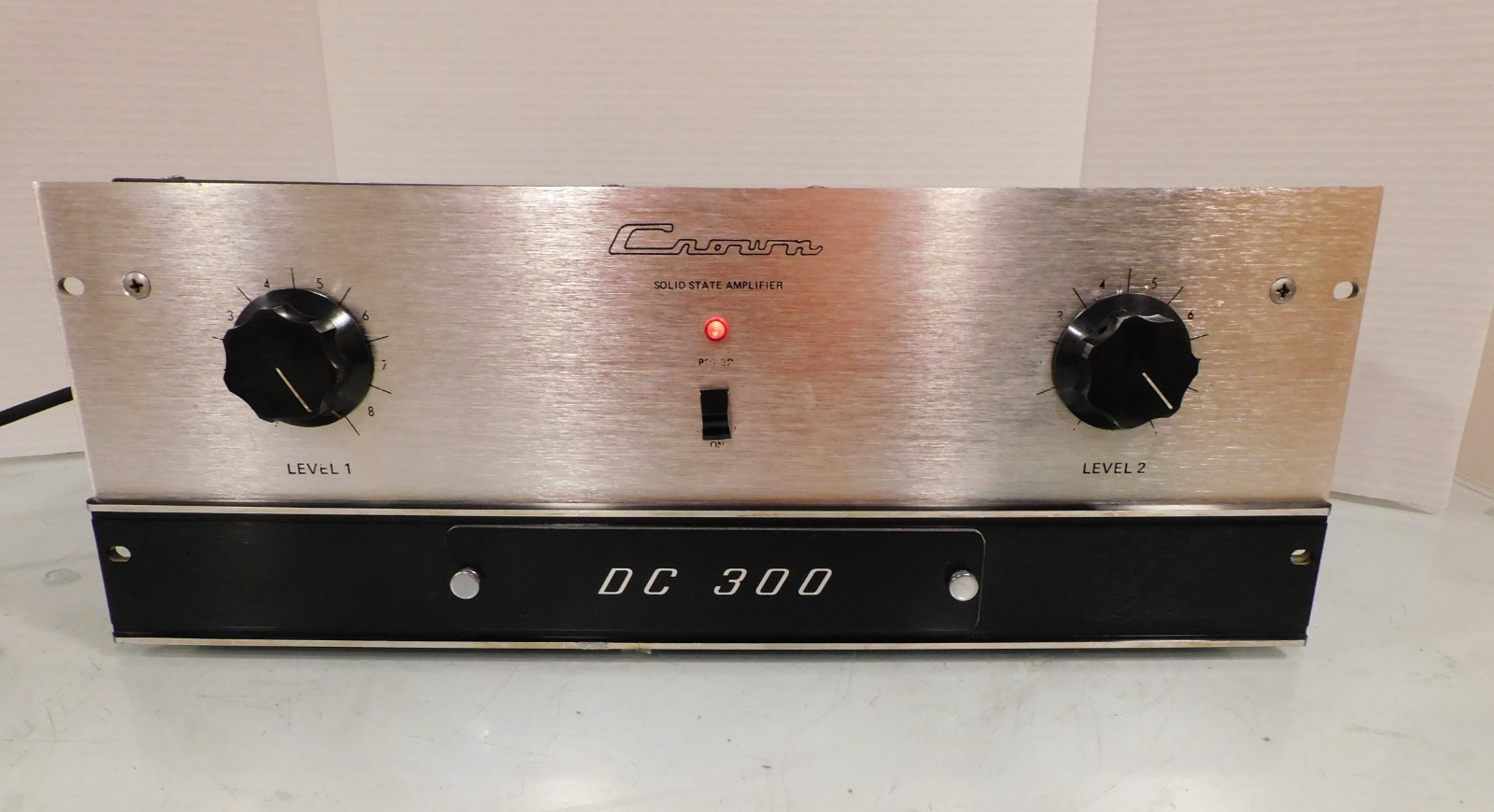
When it comes to vintage audio amplifiers that bridged the gap between professional sound reinforcement and high-fidelity home audio, few names command as much respect as the Crown DC-300. Introduced in 1971, this dual-mono power amplifier was not just a product of its time—it helped define it. Revered for its robust build, massive output, and remarkable reliability, the DC-300 became a staple in recording studios, concert venues, and the racks of discerning audiophiles who demanded clean, uncolored power.
At a time when many amplifiers still relied on tube technology or early, unstable transistor designs, Crown Audio Engineering—based in Elkhart, Indiana—delivered a solid-state powerhouse that set new standards for performance and durability. The DC-300 wasn’t just powerful; it was dependable, a trait that earned it the nickname “the workhorse of professional audio.”
Technical Specifications
The Crown DC-300 was engineered with precision and built to last. Its dual-mono configuration meant each channel operated independently, minimizing crosstalk and ensuring stability even under demanding loads. Designed with a regulated power supply and advanced thermal management, the DC-300 could deliver sustained high power without thermal shutdown—a rarity in early solid-state designs.
| Specification | Detail |
| Model | DC-300 |
| Manufacturer | Crown International |
| Year Introduced | 1971 |
| Configuration | Dual-mono power amplifier |
| Power Output | 150W per channel into 8Ω (stereo) |
| 300W into 8Ω (mono bridged) | |
| Frequency Response | 20Hz – 20kHz (+0, -1 dB) |
| Total Harmonic Distortion | <0.04% (at full power, 1kHz) |
| Input Sensitivity | 1.4V for full output |
| Input Impedance | 20kΩ balanced, 10kΩ unbalanced |
| Damping Factor | >200 (into 8Ω) |
| Slew Rate | ~50 V/µs (estimated, based on era tech) |
| Protection | Thermal, over-current, short-circuit |
| Cooling | Forced air (internal fan) |
| Weight | ~65 lbs (29.5 kg) |
| Dimensions (W×H×D) | 19" × 8.75" × 18.5" (48.3 × 22.2 × 47 cm) |
| Inputs | XLR and 1/4" TRS (balanced/unbalanced) |
| Outputs | Binding posts and SpeakON-compatible |
Sound Characteristics and Performance
The DC-300 was never marketed as a “warm” or “romantic” amplifier—its sonic signature was one of clarity, neutrality, and authority. It delivered power with surgical precision, making it a favorite among engineers who needed to hear exactly what was being recorded or reproduced.
In high-fidelity systems, the DC-300 brought a level of control and dynamics that many contemporary amplifiers couldn’t match. Its high damping factor allowed it to tightly control difficult speaker loads, especially bass drivers, resulting in tight, articulate low frequencies. The midrange was clean and transparent, while the highs remained detailed without harshness.
When paired with high-sensitivity speakers or demanding electrostatics like the Quad ESL-57 or Acoustat models, the DC-300 revealed its true potential—effortless dynamics, wide soundstaging, and an almost complete absence of amplifier-induced coloration. Audiophiles appreciated its “wire with gain” philosophy: the amplifier stayed out of the way, letting the source and speakers shine.
Notable Features and Innovations
The DC-300 was a trailblazer in several key areas:
- Dual-Mono Design: Each channel had its own dedicated amplifier circuitry, reducing inter-channel interference and improving stereo imaging.
- Regulated Power Supply: Unlike many amplifiers of the era that used unregulated rails, the DC-300 featured a tightly regulated power supply, ensuring consistent voltage delivery under dynamic loads.
- Forced Air Cooling: An internal fan maintained safe operating temperatures, allowing the amplifier to sustain high output for extended periods—critical in live sound environments.
- Comprehensive Protection Circuitry: Thermal overload, over-current, and short-circuit protection made the DC-300 incredibly resilient, even when driving reactive or low-impedance loads.
- Professional Connectivity: Equipped with both XLR and 1/4" inputs, the DC-300 could integrate seamlessly into both professional and consumer systems. Its robust output terminals handled thick speaker cables with ease.
Perhaps most impressively, the DC-300 was designed with serviceability in mind. Its modular construction and clearly labeled circuit boards made repairs and maintenance straightforward—a hallmark of Crown’s engineering philosophy.
Common Issues and Maintenance
While the DC-300 is legendary for its durability, decades of use mean that surviving units often require attention. Common issues include:
- Fan Failure: The internal cooling fan is critical. If it fails, the amplifier can overheat. Replacement with a modern equivalent (with similar voltage and airflow) is recommended.
- Capacitor Aging: Electrolytic capacitors in the power supply and signal path may dry out over time. A full recapping by a qualified technician can restore performance and reliability.
- Relay Clicking or Failure: The output relay, which protects speakers at turn-on, can wear out. A failing relay may cause no sound or intermittent operation.
- Bias Drift: Transistor bias can drift over time, leading to increased distortion or thermal runaway. Periodic bias adjustment is essential for optimal performance.
- Dust and Corrosion: Units used in dusty or humid environments may have corroded connectors or clogged heatsinks. Cleaning and inspection are important before powering up a long-dormant unit.
Despite these potential issues, the DC-300’s straightforward design and widespread use mean that parts and technical knowledge are still available. Many units from the 1970s remain in service today—a testament to their rugged construction.
Current Market Value and Collectibility
The Crown DC-300 is not typically collected for its “exotic” appeal, but rather for its legendary performance and historical significance. On the vintage audio market, working units in good condition typically sell for $400 to $800, depending on cosmetic condition, service history, and whether they’ve been professionally restored.
Fully refurbished DC-300s with new capacitors, cleaned internals, and tested output often command the higher end of that range. Units with original packaging, manuals, or service records are rare but can attract premium prices from collectors of professional audio gear.
While not as flashy as some boutique tube amps, the DC-300 holds a special place among engineers, audiophiles, and vintage gear enthusiasts who value substance over style. It’s increasingly sought after by DIY audio builders as a donor chassis for modern upgrades or as a reliable power backend in hybrid systems.
Conclusion and Legacy
The Crown DC-300 was more than just an amplifier—it was a benchmark. At a time when solid-state audio was still proving itself, the DC-300 demonstrated that transistors could deliver not only power but also fidelity, reliability, and sonic integrity. Its influence can be seen in every high-current, high-damping-factor amplifier that followed.
Used in everything from rock concerts to broadcast studios to high-end listening rooms, the DC-300 earned its reputation as one of the most dependable and sonically capable amplifiers of the 1970s. It helped Crown establish itself as a leader in professional audio, paving the way for later classics like the Macro-Tech series.
Today, the DC-300 stands as a monument to honest engineering—no gimmicks, no hype, just raw, unflinching performance. For those who appreciate amplifiers that do the job without drawing attention to themselves, the Crown DC-300 remains a towering achievement in the history of audio. Whether powering vintage speakers in a retro hi-fi setup or anchoring a studio monitoring system, the DC-300 continues to deliver, just as it did over 50 years ago.
eBay Listings



As an eBay Partner, we earn from qualifying purchases. This helps support our independent vintage technology research.
Service Manuals & Schematics
Related Models
- Crown 800 Series (Various Models) (1970)
- Crown C-4 (1965)
- Crown GOLD CROWN STEREO X (1975)
- Crown CX-844 (1985)
- Crown D-60 (1958)
- Luxman L-530 (1975)
- Luxman R-404 (1975)
- Luxman RV-371 (1975)
- Luxman SQ-38U (1975)
- Luxman T-14 (1972)