Cerwin Vega VS150
At 4 ohms and built to handle serious power, these floor-standing speakers demand an amplifier that won’t flinch.
Overview
The Cerwin Vega VS150 isn’t a subtle introduction to high-end audio—it’s a declaration. These loudspeakers, bearing the bold name of a brand known for brute-force efficiency and stadium-filling output, were clearly designed for impact. Owners report them as a first taste of “nice” audio gear, often acquired in youth with hard-earned cash, suggesting they occupied a niche where performance met attainability. While no official production timeline exists in the documentation, their presence in collections from the 1980s onward—and the age of replacement parts like the DXM6 midrange driver—anchors them firmly in that era of booming cabinets and high-wattage receivers. They aren’t marketed as analytical monitors; instead, user experience paints them as powerful, engaging, and capable of ear-bleeding volume, especially when paired with amplifiers like the MC-100B or even overpowered by models like the M282s, which can deliver more than 100 watts per channel. One owner notes they “sound great,” while another finds them “not as flat” as desired—confirming these are not neutral transducers, but rather dynamic performers with a character all their own.
Specifications
| Manufacturer | Cerwin Vega |
| Model | VS150 |
| Type | Loudspeakers |
| Impedance | 4 Ohm |
| Power Handling | 300 watts |
| Power Handling (RMS/Peak) | 400 watts |
| Frequency Response | 28Hz-22kHz (conflicting reports: 28Hz-28kHz, 35Hz-20kHz) |
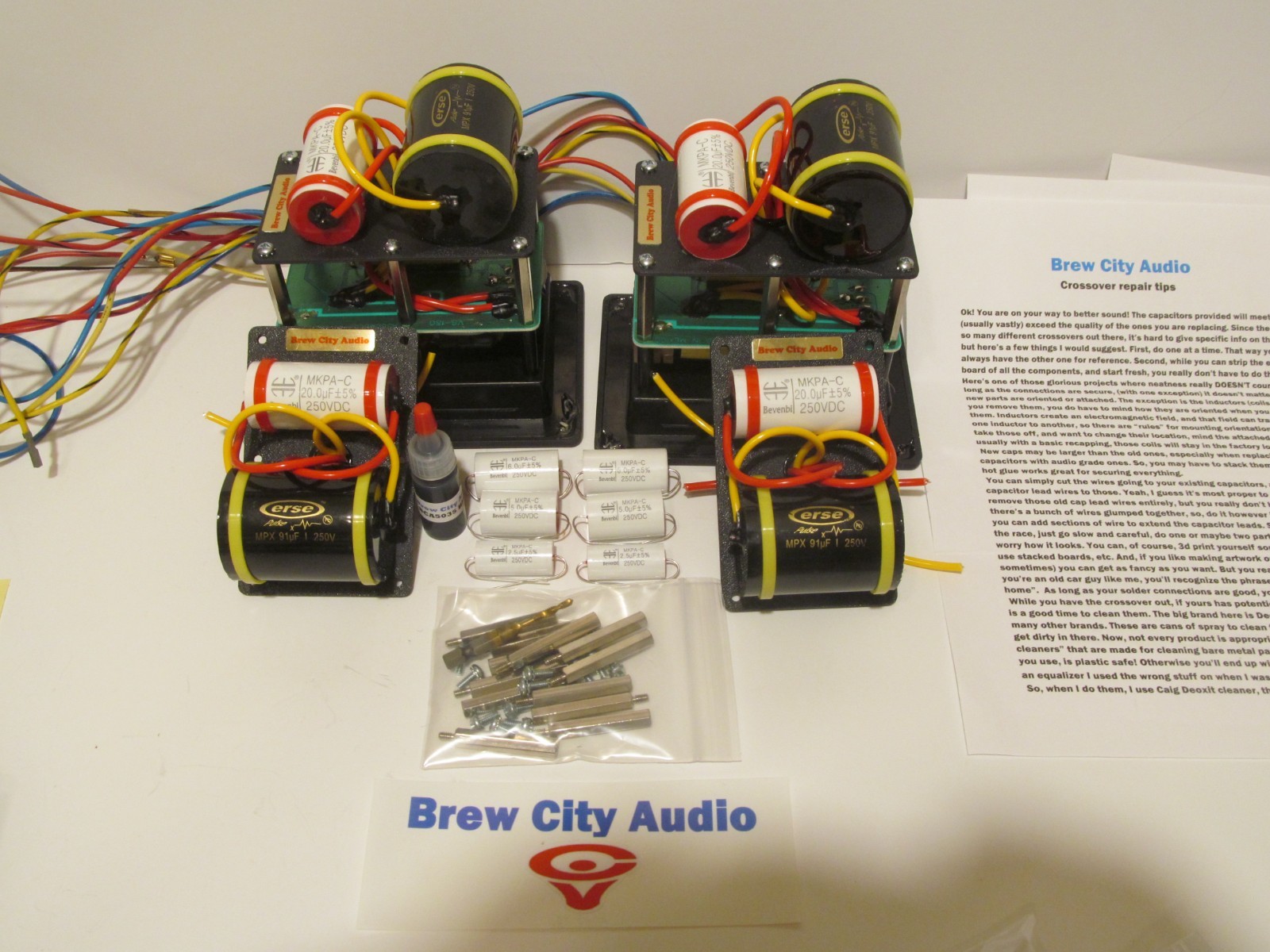
| Crossover Capacitor Values | 2.5 5.0 6.0 20.0 91.0 |
Key Features
DXM6 Mid-Range Driver
Central to the VS150’s sonic character is the DXM6 mid-range driver, a component notable enough that individual units from the 1980s appear on the market in excellent condition for $60. This driver contributes to the speaker’s dynamic delivery in the critical vocal and instrumental midband, offering a level of articulation that owners associate with the Cerwin Vega signature—forward, energetic, and never recessed. Its replacement cost and availability suggest it’s a serviceable, identifiable component, not a proprietary mystery part lost to time.
Customizable Crossover Design
While factory-specified capacitor values (2.5, 5.0, 6.0, 20.0, and 91.0 µF) are documented for the original crossover, the existence of recap kits and forum discussions about custom crossovers indicate a degree of modularity. Enthusiasts have taken liberties with the crossover network, suggesting the original design was not sacrosanct and could be upgraded or tailored. This openness to modification has likely extended the usable life of many pairs, allowing owners to refresh aged components or tweak tonal balance. However, the absence of a full schematic—only a parts list is confirmed—means any restoration requires careful measurement or reliance on community-sourced values.
High-Power, Low-Impedance Design
With a 4-ohm nominal impedance and power handling rated between 300 and 400 watts (depending on source), the VS150 is built to be driven hard. This low impedance presents a demanding load, requiring amplifiers with strong current delivery to avoid strain or distortion. The consensus among users is that these speakers thrive under power, easily handling outputs beyond 100 watts per channel without distress. This robustness made them a natural fit for the high-output receivers and separates of the 1970s and 1980s, though modern amplifiers must also be chosen with care to ensure stability into 4 ohms.
Collectibility & Value
The current market values for the Cerwin Vega VS150 reflect their status as functional vintage gear rather than pristine audiophile relics. A complete pair has been listed for $400, described as a “steal of a deal,” while another in “Used - Fair” condition fetched $450. These prices suggest strong demand at the lower end of the vintage speaker market. However, condition is a major factor—multiple owners report that cabinets often suffer, described as “not in great shape,” “seen better,” or outright “crap.” Structural cabinet damage is reportedly not worth repairing, making cosmetic condition a significant determinant of value. The availability of a dedicated capacitor recap kit helps mitigate one of the most common failure points—the aging crossover capacitors—making electrical restoration more accessible than full cabinet refinishing.
eBay Listings


As an eBay Partner, we earn from qualifying purchases. This helps support our independent vintage technology research.