Celestion SL6SI: The Compact British Classic with a Big Voice
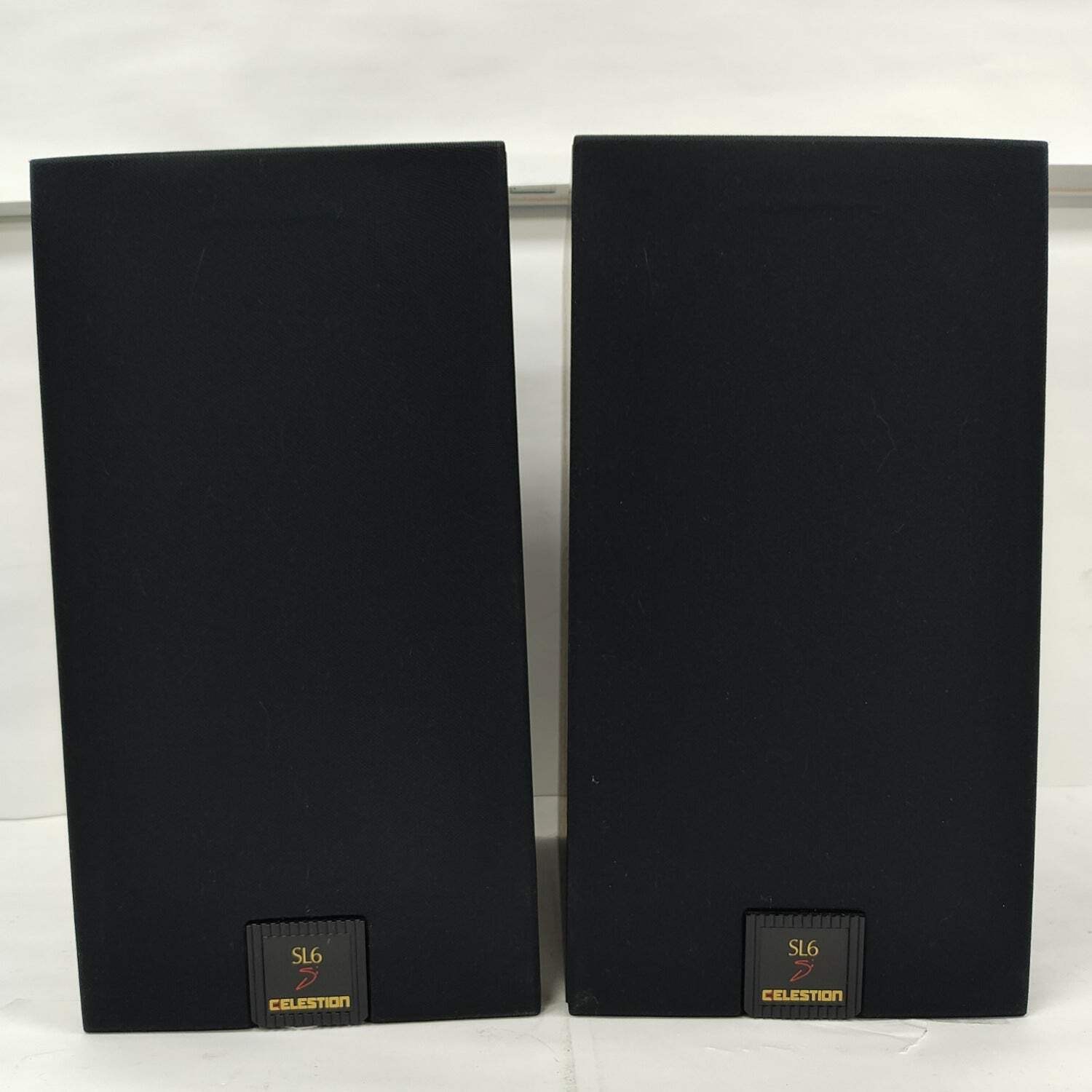
In the early 1980s, British loudspeaker manufacturer Celestion made a bold move into the hi-fi consumer market with a series of compact, high-performance bookshelf speakers that stood apart from the norm. Among these, the Celestion SL6SI emerged as a cult favorite—praised for its clarity, efficiency, and surprisingly full sound from a small cabinet. Though not as widely known as some of its contemporaries from Bowers & Wilkins or Linn, the SL6SI carved out a loyal following among audiophiles who appreciated its musicality, build quality, and the distinctive character of its proprietary driver technology.
Originally developed from Celestion’s expertise in professional audio and studio monitor design, the SL6SI brought pro-grade engineering to the home listener. It was part of a broader SL (Studio Line) series that included models like the SL6, SL7, and SL700, but the SL6SI—often referred to simply as the "SL6"—was the compact flagship of the range. Its release in 1983 coincided with a golden era for British loudspeaker design, and while Celestion would later shift focus back to professional drivers and exit the consumer market, the SL6SI remains a sought-after gem for vintage audio enthusiasts.
Technical Specifications
The SL6SI is a compact two-way bookshelf speaker, designed for nearfield listening, small rooms, or as a secondary system where space is limited. Despite its modest size, it delivers a performance that belies its footprint.
| Specification | Detail |
| Model | Celestion SL6SI |
| Type | 2-way, bass reflex |
| Driver Configuration | 1x 150mm (6") SL6 mid/bass, 1x 19mm (3/4") soft dome tweeter |
| Frequency Response | 60 Hz – 20 kHz (±3 dB) |
| Sensitivity | 89 dB (1W/1m) |
| Nominal Impedance | 8Ω (compatible with most tube and solid-state amps) |
| Recommended Amp Power | 20–100 watts |
| Crossover Frequency | 3.5 kHz |
| Cabinet Dimensions | 300 mm (H) × 180 mm (W) × 260 mm (D) |
| Weight | 7.5 kg (16.5 lbs) per speaker |
| Enclosure Type | Rear-ported, medium-density fiberboard |
| Finish Options | Rosewood, walnut, black vinyl veneer |
One of the most notable aspects of the SL6SI is its use of the SL6 driver, a custom-designed 6-inch cone developed specifically for this series. This cone featured a unique doped paper composite with a distinctive "ribbed" or "whizzer" profile, engineered to reduce breakup modes and deliver a smoother midrange. Paired with a high-temperature voice coil and a well-damped rubber surround, the SL6 driver offered excellent transient response and low distortion—critical for accurate reproduction of vocals and acoustic instruments.
The soft dome tweeter, mounted in a small waveguide, provided a smooth and non-fatiguing high-frequency response. Unlike some of its contemporaries that leaned toward brightness, the SL6SI’s tweeter was voiced to integrate seamlessly with the mid-bass unit, resulting in a balanced and natural tonal character.
Sound Characteristics and Performance
The Celestion SL6SI is best described as musical, transparent, and dynamic. With a sensitivity of 89 dB, it’s easy to drive and works exceptionally well with lower-powered amplifiers, including vintage tube gear. This makes it a favorite among owners of classic amplifiers from brands like NAD, Rotel, and Cambridge Audio.
Its bass response, while not earth-shaking, is tight and well-controlled thanks to the rear-firing port. In a typical room, the SL6SI can reach down to around 60 Hz, which is impressive for a speaker of its size. With proper placement—ideally on sturdy stands and slightly toed-in—it creates a wide and stable soundstage with precise imaging.
The midrange is where the SL6SI truly shines. Vocals are rendered with remarkable clarity and presence, making it ideal for jazz, folk, and vocal-centric recordings. The SL6 driver’s low coloration ensures that instruments like acoustic guitars and pianos sound natural and uncolored.
High frequencies are smooth and detailed without being harsh—a trait that sets it apart from some of the more aggressive-sounding British speakers of the era. The tweeter’s integration with the mid-bass unit is seamless, avoiding the "crossover dip" that plagued some budget designs.
Notable Features and Innovations
The SL6SI’s most significant innovation was the SL6 driver itself. At a time when many manufacturers were using off-the-shelf units, Celestion invested in proprietary driver development. The SL6 cone’s ribbed profile was designed to increase rigidity while maintaining low mass, allowing for faster transient response and reduced resonance.
Another standout feature was the crossover design. Using high-quality components and a relatively simple first-order slope for the tweeter (with a second-order for the woofer), Celestion prioritized phase coherence and time alignment. This contributed to the speaker’s lifelike imaging and natural tonal balance.
The cabinet, while not as massive as some high-end designs, was well-braced and finished in real wood veneer options (rosewood and walnut were most common). The rear port was flared to reduce turbulence, and the overall build quality reflected Celestion’s commitment to durability and performance.
Common Issues and Maintenance
As with any vintage speaker, the Celestion SL6SI can suffer from age-related wear. The most common issue is deterioration of the rubber surround on the SL6 driver. After 40+ years, these can dry out, crack, or lose flexibility, leading to a loss of bass response or audible "farting" sounds at low volumes.
Fortunately, reconing services are available from specialist firms in the UK and US. Many owners have successfully restored their SL6SIs with new surrounds or full recones, often improving performance beyond original specs.
The crossover capacitors may also degrade over time, particularly if the speakers have been exposed to heat or humidity. Replacing these with modern film capacitors can rejuvenate clarity and dynamics.
Other maintenance tips:
- Check for loose binding posts and tighten or replace if necessary.
- Clean grilles gently—original fabric can be fragile.
- Avoid placing near radiators or direct sunlight to preserve veneer and internal adhesives.
Current Market Value and Collectibility
The Celestion SL6SI is not a mass-market collectible like the LS3/5A, but it has a dedicated following among vintage audio enthusiasts. Pairs in good condition typically sell for $250–$450, depending on finish, driver condition, and originality.
Fully restored pairs with reconed drivers and upgraded crossovers can command higher prices, especially when paired with matching stands or original packaging. The rosewood finish is particularly desirable and tends to fetch a premium.
While Celestion no longer supports the SL6SI with spare parts, the availability of third-party restoration services keeps these speakers viable for long-term use. Their compact size and high sensitivity also make them excellent candidates for modern desktop or secondary systems.
Conclusion and Legacy
The Celestion SL6SI may not have achieved the fame of some of its British contemporaries, but it represents a high point in compact speaker design from the early 1980s. With its proprietary SL6 driver, coherent sound, and elegant build, it delivers a listening experience that remains compelling today.
For the vintage audio lover, the SL6SI offers a rare combination: British voicing, pro-inspired engineering, and compact practicality. Whether you're building a period-correct system or simply want a pair of efficient, musical speakers for small-space listening, the SL6SI deserves serious consideration.
It stands as a quiet testament to a time when British loudspeaker engineering was at its peak—and a reminder that sometimes, the best sound comes in small, unassuming packages.
eBay Listings



As an eBay Partner, we earn from qualifying purchases. This helps support our independent vintage technology research.
Related Models
- Celestion COUNTY (1978)
- Celestion SL12SI (1985)
- Celestion 5000 (1975)
- Celestion 7000 (1978)
- Celestion BC1 (1975)
- Akai AM-2850 (1975)
- Akai AP-206 (1975)
- Nakamichi BX-1 (1985)
- Acoustic Research research-ar-17 (1978)
- Acoustic Research AR-19 (1994)