Celestion SL6: The British Bookshelf Classic with Studio DNA
The Celestion SL6 is a vintage loudspeaker that occupies a special place in the hearts of classic audio enthusiasts and studio monitor aficionados. Introduced in the mid-1970s, the SL6 emerged during a golden era when British speaker engineering was pushing boundaries in both home audio and professional recording environments. Though Celestion had long been renowned for its high-quality drive units—especially in the guitar speaker market—the SL6 marked a bold step into the realm of high-fidelity domestic loudspeakers with a design ethos rooted in studio accuracy.
Unlike many consumer speakers of the era that leaned toward warm, forgiving tonality, the SL6 was engineered to be transparent and revealing—a trait inherited from Celestion’s work supplying drivers to broadcast and recording studios. The result was a compact bookshelf speaker that punched far above its size in terms of clarity, dynamics, and neutrality. Though not as widely known as contemporaries like the BBC LS3/5A or the Quad ESL-57, the SL6 has developed a cult following over the decades, prized for its honest sound and vintage British engineering.
Technical Specifications
| Specification | Detail |
| Model | SL6 |
| Manufacturer | Celestion Ltd., UK |
| Production Years | Circa 1975–1982 |
| Type | 2-way passive bookshelf speaker |
| Driver Configuration | 1 x 8" bass-mid driver, 1 x 1" soft-dome tweeter |
| Frequency Response | 55 Hz – 20 kHz (±3 dB) |
| Sensitivity | 89 dB (2.83V/1m) |
| Nominal Impedance | 8 ohms |
| Recommended Amp Power | 25–100 watts |
| Crossover Frequency | 2.8 kHz |
| Enclosure Type | Ported (bass reflex) |
| Dimensions (H×W×D) | 380 × 220 × 270 mm (15 × 8.7 × 10.6 in) |
| Weight | 9.5 kg (21 lbs) per speaker |
| Finish Options | Walnut veneer, black ash, rosewood |
Sound Characteristics and Performance
The Celestion SL6 delivers a balanced, detailed, and dynamically expressive sound signature that reflects its studio monitor lineage. With its 8-inch bass-mid driver and soft-dome tweeter, the SL6 manages to produce a surprisingly full-bodied sound for a speaker of its size. The bass extends down to around 55 Hz, offering solid low-end presence—especially when placed near a wall or in a bookshelf—which makes it well-suited to smaller listening rooms.
One of the SL6’s most celebrated traits is its midrange clarity. Vocals and acoustic instruments are rendered with exceptional transparency and realism, making the SL6 a favorite for jazz, classical, and vocal-centric recordings. The soft-dome tweeter contributes a smooth, non-fatiguing top end that avoids the harshness sometimes associated with early metal domes. While not as ultra-precise as the LS3/5A, the SL6 offers a more generous soundstage and greater dynamic headroom, giving it an edge in liveliness and musical engagement.
The ported cabinet design enhances bass response but requires careful placement to avoid boominess. When properly positioned—ideally away from corners and with some toe-in—the SL6 reveals its true potential: a coherent, well-integrated sound with excellent imaging and a natural tonal balance.
Notable Features and Innovations
The SL6 stood out in its time for several reasons. First, it was one of the few consumer speakers to use Celestion’s own high-quality drive units, which were already trusted in professional environments. The 8-inch bass-mid cone was made from a proprietary paper composite, doped for rigidity and low resonance, while the soft-dome tweeter was designed to minimize breakup modes and deliver extended high-frequency response.
Another key feature was the crossover design. Utilizing high-quality components for the era—including air-core inductors and metal-film resistors—the crossover was carefully tuned to ensure seamless integration between drivers. The 2.8 kHz crossover point was chosen to keep the tweeter out of the critical vocal range, reducing listener fatigue and improving long-term clarity.
The cabinet construction was also noteworthy. Made from dense MDF with extensive internal bracing, the enclosure minimized panel resonances that could color the sound. The front baffle was slightly curved to reduce diffraction effects, and the port was flared to minimize turbulence and chuffing at high volumes.
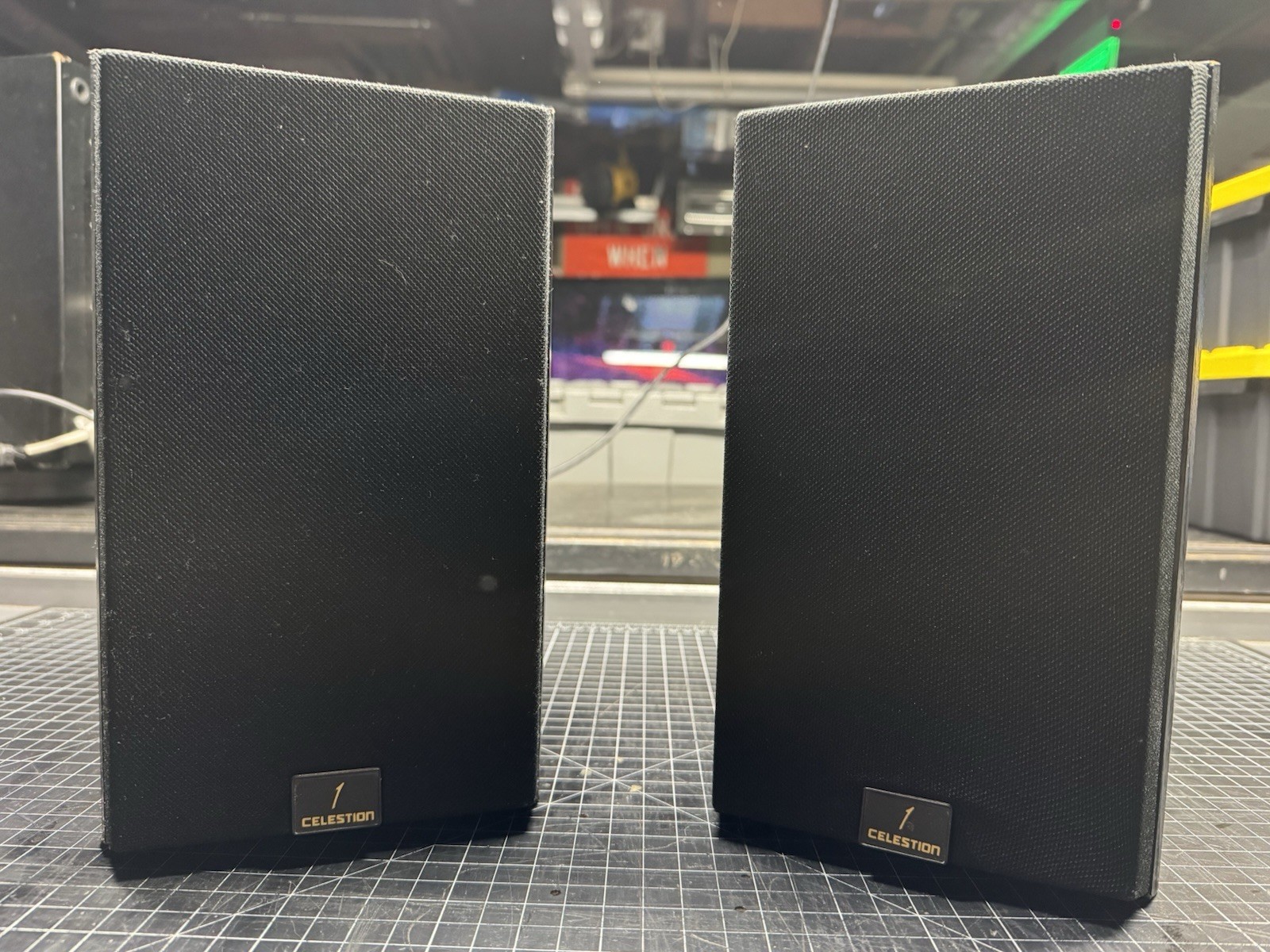
Aesthetically, the SL6 followed the understated British tradition: clean lines, real wood veneer finishes, and a minimalist cloth grille. It was designed to blend into a living room while still projecting a sense of serious engineering.
Common Issues and Maintenance
As with any vintage speaker, the Celestion SL6 can suffer from age-related wear. The most common issue is degradation of the foam surround on the bass-mid driver, which typically begins to disintegrate after 30–40 years. This results in flapping, reduced bass response, and potential damage to the voice coil. Fortunately, replacement foam kits are available from specialist restoration suppliers, and reconing services are widely offered.
The crossover components, while robust for their time, may also need attention. Electrolytic capacitors can dry out, and older resistors may drift in value. A full inspection and, if necessary, recapping of the crossover can restore the SL6 to optimal performance.
Grille cloth may be faded or torn on older units, but replacement fabric in period-correct patterns can be sourced. Additionally, the original binding posts, while functional, are often replaced with modern five-way posts for better connectivity and compatibility with today’s speaker cables.
Proper maintenance not only preserves the SL6’s performance but can significantly enhance its value and longevity. Given their relative rarity compared to other British classics, well-restored SL6s are increasingly sought after.
Current Market Value and Collectibility
The Celestion SL6 is not as common on the vintage market as some of its peers, which contributes to its appeal among collectors. In original, fully working condition, a pair typically sells for $400–$700, depending on finish, condition, and geographic region. Fully restored models with new surrounds and upgraded cabling can command upwards of $900, especially if paired with matching vintage amplifiers from brands like NAD, Linn, or Rotel.
While not yet a “blue chip” vintage speaker like the LS3/5A, the SL6’s reputation is growing. Its combination of studio-inspired design, strong build quality, and engaging sound makes it a compelling choice for listeners who want vintage British character without sacrificing clarity.
Conclusion and Legacy
The Celestion SL6 may not have achieved the same level of fame as some of its contemporaries, but it remains a quietly influential speaker in the history of British hi-fi. It bridged the gap between professional monitoring and domestic listening, offering a level of honesty and transparency that was rare in consumer speakers of the 1970s.
Today, the SL6 is appreciated not just as a nostalgic artifact, but as a genuinely musical speaker that holds its own against modern designs. For vintage audio enthusiasts, it represents a rewarding project—restoring an SL6 is not only technically feasible but deeply satisfying. And once properly maintained, the SL6 delivers a listening experience that is both accurate and emotionally engaging.
In an era where many vintage speakers are valued more for their looks than their sound, the Celestion SL6 stands out as a true performer—a bookshelf speaker with studio soul and timeless British charm.
eBay Listings



As an eBay Partner, we earn from qualifying purchases. This helps support our independent vintage technology research.
Related Models
- Celestion COUNTY (1978)
- Celestion SL12SI (1985)
- Celestion 5000 (1975)
- Celestion 7000 (1978)
- Celestion BC1 (1975)
- Akai AM-2850 (1975)
- Akai AP-206 (1975)
- Nakamichi BX-1 (1985)
- Acoustic Research research-ar-17 (1978)
- Acoustic Research AR-19 (1994)