Celestion G12H: The Voice of British Rock
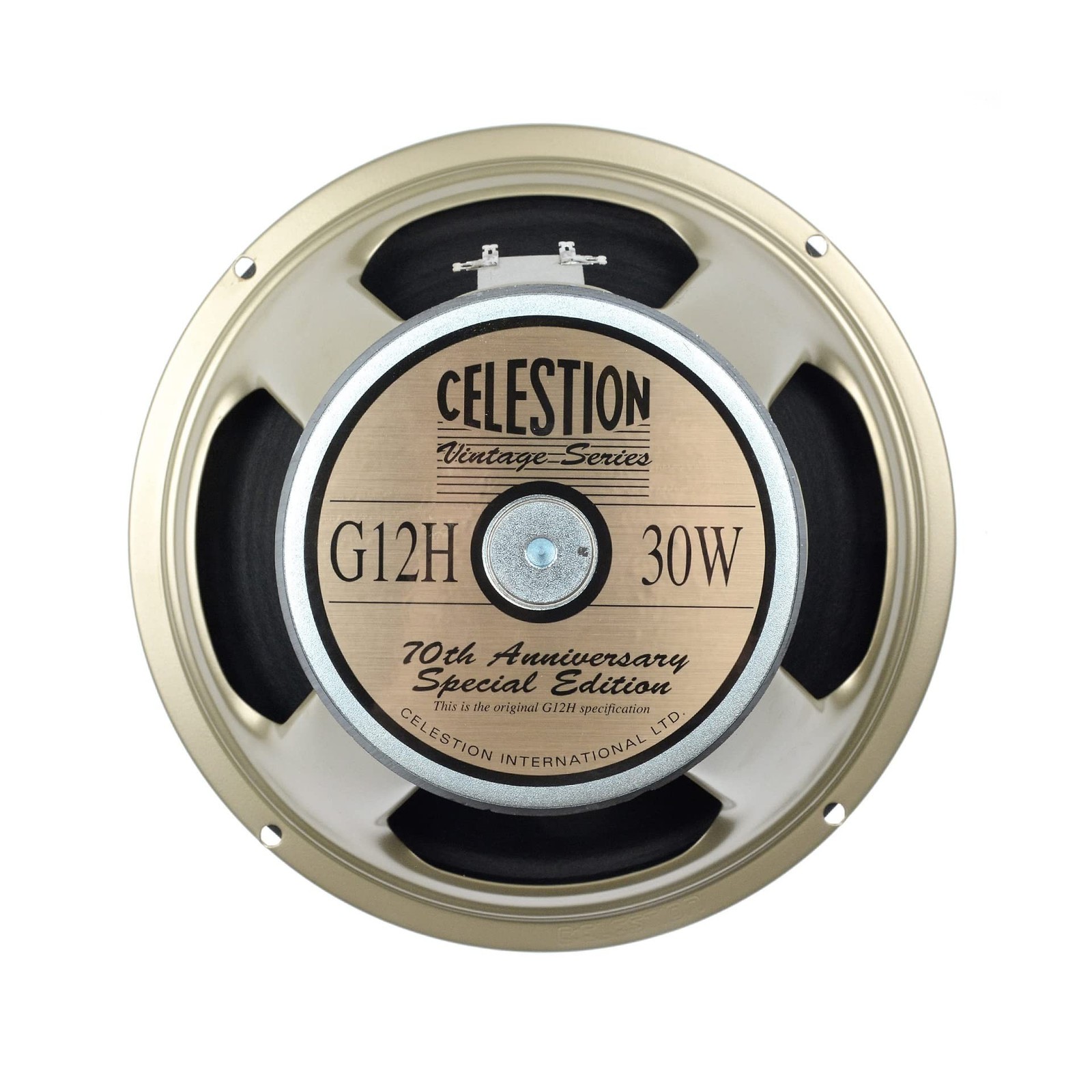
The Celestion G12H is more than just a guitar speaker—it’s a cornerstone of rock and roll history. Introduced in the mid-1960s, the G12H helped define the sonic character of British amplification during a pivotal era in music. Revered for its expressive midrange, warm tonal balance, and dynamic response, this 12-inch speaker became a favorite among guitarists seeking a voice that could cut through a mix with authority while retaining musicality and soul. Though technically classified as a component rather than a complete audio device, the G12H holds a revered place in the vintage audio world and remains a holy grail for tone chasers and speaker collectors alike.
Historical Context
Celestion, a British company founded in 1924, began manufacturing loudspeakers for radios and public address systems before shifting focus to professional audio in the post-war era. By the early 1960s, the burgeoning electric guitar scene in the UK created demand for robust, high-performance speakers capable of handling the increasingly powerful amplifiers being developed by companies like Marshall, Vox, and Hiwatt.
The original G12 was introduced in 1965 as a 25-watt, 12-inch speaker with a paper cone and a ceramic magnet. The "H" in G12H stood for "High Output," reflecting its improved efficiency and power handling over earlier models. It quickly became the speaker of choice for Jim Marshall, who installed pairs and quartets of G12Hs in his newly developed Marshall 4x12 cabinets. These cabinets, often paired with Marshall’s JTM45 and later plexi amps, became the backbone of rock guitar tone.
The G12H of the 1960s—often referred to by collectors as the "blue label" or "paper label" era—used a characteristic cream-colored cone with a distinctive "water drip" texture. These early versions are now highly sought after, with original units from the late '60s fetching premium prices on the vintage market.
Technical Specifications
| Specification | Detail |
| Manufacturer | Celestion |
| Model | G12H |
| Year Introduced | 1965 |
| Speaker Type | 12-inch guitar loudspeaker |
| Power Handling | 25W RMS |
| Nominal Impedance | 8Ω (also available in 16Ω) |
| Frequency Response | 70Hz – 5kHz (approx.) |
| Sensitivity | 96 dB (1W/1m) |
| Magnet Type | Ceramic (Ferrite) |
| Voice Coil Diameter | 1.75 inches (44mm) |
| Cone Material | Paper with textured finish |
| Dust Cap | Domed, cloth-covered |
| Mounting | 8-hole pattern |
Sound Characteristics and Performance
The G12H is celebrated for its rich, organic tonal profile. Its most defining characteristic is a pronounced upper midrange presence—often described as a "growl" or "snarl"—that gives guitar tones a vocal-like quality. This makes it particularly effective for blues, classic rock, and early hard rock genres where articulation and presence are key.
When driven hard, the G12H exhibits a smooth, musical compression. Unlike some modern speakers that remain clean and tight at high volumes, the G12H breaks up earlier, adding harmonic complexity and a pleasing soft clipping effect. This natural overdrive complements tube amplifiers beautifully, enhancing the interaction between amp and speaker.
The bass response is tight but not overpowering, while the highs are warm and rounded—never harsh or brittle. This balance makes the G12H exceptionally well-suited for vintage Marshall amps, where it tames some of the brightness while adding body and punch.
Many guitarists describe the G12H as “alive” and “responsive,” noting that it reacts dynamically to picking intensity and guitar volume adjustments. This touch sensitivity is a hallmark of vintage Celestion design and contributes to its enduring appeal.
Notable Features and Innovations
While the G12H may appear simple by modern standards, it incorporated several design choices that contributed to its legendary status:
- Textured Paper Cone: The "water drip" cone not only gave the speaker a distinctive look but also added stiffness to the cone material, improving transient response and reducing distortion.
- Ceramic Magnet: At a time when alnico magnets were common in high-end speakers, Celestion’s use of a ceramic magnet offered greater reliability and lower cost while still delivering a powerful magnetic field.
- High Efficiency: With a sensitivity of 96 dB, the G12H was loud for its time, allowing guitarists to achieve stage-filling volume without excessive amplifier power.
- Durability: Built for the rigors of touring, the G12H could withstand the high output of 50W and 100W tube amps, especially when used in multi-speaker cabinets that distributed the load.
The G12H also played a crucial role in shaping the concept of the guitar speaker cabinet as an integral part of the tone chain—not just a passive output device, but an active contributor to the sound.
Common Issues and Maintenance
As with any vintage speaker, original G12H units from the 1960s and '70s require careful handling and inspection:
- Surround Deterioration: The foam or treated cloth surrounds can dry out and crack over time, especially in dry or humid environments. Re-coning by a specialist is often necessary to restore performance.
- Voice Coil Damage: Speakers that have been overdriven or mismatched with amplifiers may suffer from a burnt voice coil, resulting in distortion or complete failure.
- Magnet Weakening: While ceramic magnets are generally stable, physical shocks or extreme heat can reduce magnetic strength, affecting sensitivity and output.
- Wiring and Terminals: Corrosion or loose connections at the terminal strip can degrade signal transfer. Cleaning and re-soldering are recommended during restoration.
Because of their age and value, many players choose to use reissue models or modern equivalents for gigging, reserving original G12Hs for collection or low-use applications.
Current Market Value and Collectibility
Original Celestion G12H speakers—particularly those with blue or paper labels from 1965 to 1968—are highly collectible. A pair of verified, working vintage G12Hs can sell for $800 to $1,500 or more, depending on condition, date codes, and provenance. Speakers pulled from early Marshall cabinets or associated with famous artists command even higher prices.
Celestion has reissued the G12H several times, most notably as the G12H-30 (30W version) and the G12H Heritage 68 as part of their Vintage Series. These reissues aim to capture the tone and construction of the originals using modern quality control and materials. While purists may argue they lack the "mojo" of NOS (New Old Stock) units, the reissues are widely praised for their authenticity and are a practical choice for working musicians.
Conclusion and Legacy
The Celestion G12H is not merely a speaker—it’s a sonic time capsule. Its voice echoes through decades of recordings, from the bluesy wail of Eric Clapton’s Bluesbreakers tone to the thunderous roar of early Led Zeppelin riffs. It helped shape the sound of British rock and remains a benchmark for guitar speaker design.
Even as modern speakers offer higher power handling, extended frequency response, and greater consistency, the G12H endures because of its character. It doesn’t just reproduce sound—it performs it, with all the nuance, imperfection, and soul that makes electric guitar music so compelling.
For vintage audio enthusiasts, amp builders, and guitarists alike, the Celestion G12H represents a golden era of tone—one where simplicity, passion, and raw musicality converged in a single 12-inch speaker. Whether in a museum, a studio, or a dimly lit stage, the G12H continues to speak, and the world still listens.
eBay Listings



As an eBay Partner, we earn from qualifying purchases. This helps support our independent vintage technology research.
Related Models
- Celestion COUNTY (1978)
- Celestion SL12SI (1985)
- Celestion 5000 (1975)
- Celestion 7000 (1978)
- Celestion BC1 (1975)
- Akai AM-2850 (1975)
- Akai AP-206 (1975)
- Nakamichi BX-1 (1985)
- Acoustic Research research-ar-17 (1978)
- Acoustic Research AR-19 (1994)